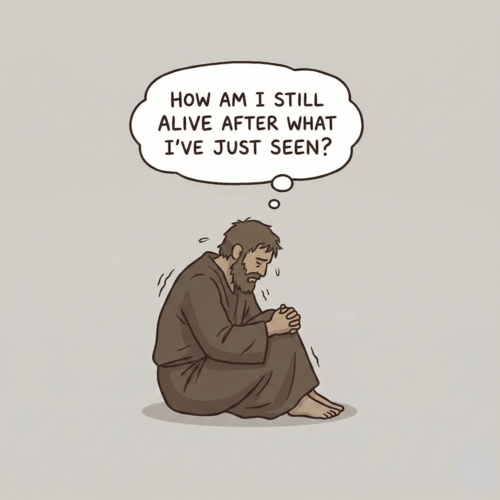
The scene is unforgettable: Isaiah stands in the temple, and suddenly the veil between heaven and earth tears open. He sees the Lord, high and lifted up, seated on a throne. The train of His robe fills the sanctuary. Seraphim hover above, crying “Holy, holy, holy is the LORD of hosts; the whole earth is full of his glory!” The doorposts shake. Smoke fills the house. Isaiah falls undone before the blazing holiness of God.
But here’s the question that has captivated theologians for millennia: Who did Isaiah see enthroned in glory? Was this God the Father? Or was this a vision of the pre-incarnate Christ—the eternal Son before Bethlehem?
The answer isn’t speculation. Scripture itself settles the matter.
THE APOSTOLIC INTERPRETATION: JOHN 12:41
When we’re uncertain how to interpret an Old Testament passage, we should look first to see if the New Testament interprets it. And on this question, the apostle John—writing under the inspiration of the Holy Spirit—gives us a direct, unambiguous answer.
In John 12, the evangelist reflects on Israel’s rejection of Jesus despite His miraculous signs. He quotes Isaiah twice: first from Isaiah 53:1 (“Lord, who has believed our report?”) and then from Isaiah 6:10 (the hardening of Israel’s hearts). Then John writes: “Isaiah said these things because he saw his glory and spoke of him” (John 12:41).
The grammar is crystal clear. The antecedent of “his glory” and “him” is Jesus Christ, mentioned repeatedly in the preceding verses. John explicitly tells us that when Isaiah saw the Lord high and lifted up in that throne-room vision, he was seeing the glory of Jesus—the pre-incarnate Son of God.
This is inspired apostolic testimony, giving us the authoritative interpretation of Isaiah 6. The same Spirit who moved Isaiah to write also moved John to reveal what Isaiah saw. When Scripture interprets Scripture, the case is closed.
THE OLD TESTAMENT PATTERN: THE ANGEL OF THE LORD
This conclusion shouldn’t surprise us. Throughout the Old Testament, God reveals Himself through a mysterious figure called the Angel of the LORD—a person who is simultaneously distinct from YHWH and is yet identified as YHWH Himself.
Hagar meets this Angel and exclaims, “Have I really seen God and remained alive after seeing him?” (Genesis 16:13). Moses encounters Him in the burning bush, where the Angel of the LORD speaks as God: “I am the God of your father, the God of Abraham, the God of Isaac, and the God of Jacob” (Exodus 3:6). Manoah and his wife see Him and cry out, “We shall surely die, for we have seen God!” (Judges 13:22).
Who is this mysterious divine person? The Reformed tradition identifies Him as the pre-incarnate Christ—the Second Person of the Trinity, making Himself visible before the Incarnation. Isaiah 6 fits this pattern perfectly. The prophet sees the Lord enthroned, just as others before him encountered God through this divine mediator.
This understanding also harmonises with clear New Testament teaching: “No one has ever seen God; the only God, who is at the Father’s side, he has made him known” (John 1:18). The Father remains invisible, dwelling in unapproachable light (1 Timothy 6:16). But the Son is “the image of the invisible God” (Colossians 1:15), “the radiance of the glory of God and the exact imprint of his nature” (Hebrews 1:3). When God reveals Himself visibly in the Old Testament, He does so through the Son.
THE WITNESS OF THE CHURCH: FROM THE EARLY CHURCH FATHERS
This isn’t novel interpretation. From the earliest centuries, the church has read Isaiah 6 christologically. Justin Martyr, Irenaeus, Tertullian, Athanasius—the entire patristic tradition—understood Isaiah’s vision as a revelation of the Son. This wasn’t controversial; it was simply the received interpretation of John 12:41.
The Reformed tradition stands in unbroken continuity with this ancient consensus. The Westminster Larger Catechism (Q&A 36) affirms the doctrine of pre-incarnate appearances of Christ. Geerhardus Vos, in Biblical Theology, writes plainly: “John 12:41 settles the matter: Isaiah saw the glory of our Lord Jesus Christ” (p. 329).
John Owen, in his work Christologia, argues, “the person enthroned in Isaiah 6 is the same person who, in the fullness of time, was ‘despised and rejected of men’—the Son.” Charles Hodge, BB Warfield, Louis Berkhof—no major Reformed theologian in five centuries has denied this identification.
This isn’t theological innovation. This is the church’s historic faith, rooted in apostolic testimony and confirmed by centuries of biblical reflection.
WHY THIS MATTERS
Probing who Isaiah saw isn’t merely an academic exercise. It carries profound theological weight.
- First, it provides Trinitarian clarity. It distinguishes between the invisible Father and the Son who reveals Him, protecting both divine transcendence and God’s gracious self-disclosure to His people.
- Second, it establishes Christological depth. Long before Bethlehem, the eternal Son possessed divine glory and received angelic worship. Christ’s deity didn’t begin at the Incarnation—He is the eternal God who “emptied himself, by taking the form of a servant” (Philippians 2:7).
- Third, it reveals biblical-theological unity. John 12 quotes both Isaiah 6 (the enthroned Lord) and Isaiah 53 (the suffering Servant), applying both passages to Jesus. The Holy One on the throne is the same One who would be “despised and rejected.” The King is the Crucified.
- Finally, it transforms our worship. Isaiah’s response to Christ’s holiness—“Woe is me! For I am lost; for I am a man of unclean lips” (Isaiah 6:5)—anticipates our own encounter with the risen Christ. And the gospel message shines brighter: the Holy One who struck Isaiah clean with a coal from the altar is the same One who cleanses us through His blood shed at Calvary.
CONCLUSION
The question is settled. By apostolic testimony, patristic consensus, confessional witness, and Reformed tradition, we confess Isaiah saw the pre-incarnate Christ. This isn’t speculation—it’s biblical theology, grounded in John 12:41 and confirmed by the entire trajectory of redemptive history.
When you read Isaiah 6, you’re reading about Jesus. The thrice-holy God is the Triune God. The One on the throne is the Son—the same One who would later say, “Before Abraham was, I am” (John 8:58), the same One John would see in Revelation enthroned as the Lamb who was slain.
The glory Isaiah saw is Christ’s. And so, by faith, shall we.
RELATED FAQs
How do modern Reformed scholars interpret Isaiah 6 today?
Contemporary Reformed scholarship overwhelmingly affirms the traditional Christological reading. DA Carson, in his commentary on John’s Gospel, treats John 12:41 as straightforward apostolic identification of Christ in Isaiah’s vision. James Hamilton (God’s Glory in Salvation through Judgement) sees Isaiah 6 as part of a larger biblical pattern of the Son mediating divine glory. Michael Horton (The Christian Faith) connects Isaiah’s vision to the incarnational principle that the Son is eternally the “speaking God” who reveals the Father. Sinclair Ferguson regularly teaches this interpretation, noting the New Testament authors show no hesitation in applying Old Testament YHWH texts directly to Jesus. The academic consensus within confessional Reformed circles remains unchanged: Isaiah saw the pre-incarnate Christ.
If Isaiah saw Christ, does that mean Christ is YHWH?
Yes—and this is precisely the point. When John identifies the figure in Isaiah 6 as Jesus, he’s making a staggering claim about Christ’s deity. In Isaiah 6:3, the seraphim cry, “Holy, holy, holy is YHWH of hosts.” In verse 5, Isaiah declares, “My eyes have seen the King, YHWH of hosts.” John 12:41 says Isaiah saw Jesus’ glory. The implication is inescapable: Jesus is YHWH. This is why the Jewish leaders accused Jesus of blasphemy when He claimed, “Before Abraham was, I am” (John 8:58)—using the divine name from Exodus 3:14. Isaiah’s vision, properly understood, is one of Scripture’s clearest affirmations of Christ’s eternal deity.
Why does Isaiah 6:1 say “I saw the Lord” (Adonai) rather than using the divine name YHWH?
This is actually significant. The Hebrew text uses Adonai (Lord/Master) in verse 1, but YHWH appears in verses 3, 5, and 11. The Jewish scribal tradition shows special reverence here—some manuscripts have the scribal note indicating this is one of the places where YHWH was changed to Adonai out of reverence. But here’s what matters theologically: the New Testament consistently applies both titles to Jesus. He is Kyrios (Lord), the Greek equivalent of both Adonai and YHWH. Paul quotes Joel 2:32 (“everyone who calls on the name of YHWH shall be saved”) and applies it directly to Jesus in Romans 10:13. Philippians 2:9-11 gives Jesus “the name that is above every name”—the divine name itself. So the Son shares the Father’s name, nature, and throne.
How do Unitarians interpret Isaiah 6, and why is the Reformed reading more compelling?
Unitarians (who deny the Trinity and Christ’s deity) typically argue Isaiah saw God the Father alone, and that John 12:41 simply means Isaiah’s prophecies pointed forward to Jesus without Jesus literally being the one enthroned. They treat “saw his glory” as figurative—Isaiah foresaw Christ’s ministry, not Christ Himself. But this interpretation fails on multiple fronts. First, it requires torturing John’s grammar. The natural reading of “he saw his glory and spoke of him” is that Isaiah directly witnessed Christ’s glory, not merely predicted future events. Second, it ignores the broader New Testament pattern of identifying Jesus as YHWH. When John wants to say someone prophesied about Christ, he says so clearly (John 5:46: “Moses wrote of me”). But John 12:41 uses different language—Isaiah “saw” and “spoke of him” because he encountered Him directly. Third, the Unitarian reading undermines the force of John’s argument. John isn’t just saying Isaiah predicted rejection; he’s explaining why Isaiah could predict the hardening of Israel’s hearts—because Isaiah stood in the presence of the Holy One whom Israel would reject. Fourth, it creates theological incoherence with passages like John 8:56 (“Abraham rejoiced that he would see my day. He saw it and was glad”). If Abraham could “see” Christ’s pre-existence, why couldn’t Isaiah? The Reformed reading takes John at face value, harmonises with Trinitarian theology, and makes sense of the entire canonical witness.
What about Isaiah 6:5, where the prophet says he saw “the King, the LORD of hosts”? Can God be seen?
This is where careful Trinitarian theology shines. Scripture teaches both that “no one has ever seen God” (John 1:18) and that people like Moses, Isaiah, and the elders of Israel saw God (Exodus 24:9-11; Numbers 12:8; Isaiah 6:1). How do we reconcile this? The answer lies in the distinction between the persons of the Trinity. No human has ever seen God the Father in His essence—He “dwells in unapproachable light” (1 Timothy 6:16). But the Son is “the image of the invisible God” (Colossians 1:15), the One who makes the Father known (John 1:18). When Scripture speaks of people “seeing” God in the Old Testament, they’re encountering the Second Person—the eternal Son in pre-incarnate manifestation. This is why Jesus could tell Philip, “Whoever has seen me has seen the Father” (John 14:9). The Son doesn’t reveal Himself instead of the Father; He reveals the Father by revealing Himself. Isaiah saw the King—the Son—and in seeing Him, he encountered the fullness of divine glory, holiness, and majesty that he would later describe as belonging to YHWH.
Does this mean every Old Testament appearance of God was the pre-incarnate Christ?
The consistent Reformed position is that all visible manifestations of God—theophanies—were manifestations of the Son. The Father, being invisible and dwelling in unapproachable light, does not appear visibly. But the Son, as the eternal Word and Image of God, is the one through whom the Father reveals Himself. This includes the Angel of the LORD appearances, the figure walking in Eden (Genesis 3:8), the fourth man in Nebuchadnezzar’s furnace (Daniel 3:25), and the commander of the LORD’s army who appears to Joshua (Joshua 5:13-15). Calvin writes in the Institutes (1.13.10): “For though he was the sole God, he was, however, in the Father… the beginning of every appearance was always from the Son.” Augustine similarly taught Christ was the visible manifestor of the invisible God throughout redemptive history. This doesn’t mean the Father was absent—the whole Trinity is always at work—but the Second Person uniquely takes the role of making God known to human eyes and ears.
How does understanding Isaiah 6 as a vision of Christ deepen our reading of the book of Isaiah?
This transforms everything. Once you see Isaiah encountered the pre-incarnate Christ in chapter 6, the entire prophecy becomes a editation on the person and work of the One he met in the temple. The “Holy One of Israel” (used 25 times in Isaiah) isn’t an abstract title—it’s the Christ whom Isaiah saw and whose holiness undid him (Isaiah). When Isaiah 9:6 promises a child called “Mighty God” and “Everlasting Father,” we recognise this as the same divine person enthroned in chapter 6. The Suffering Servant of Isaiah 53, despised and rejected, is shockingly revealed to be the same glorious King before whom seraphim veiled their faces. Isaiah 40’s proclamation—”the glory of the LORD shall be revealed” (40:5)—echoes the glory Isaiah witnessed in the throne room. And when Isaiah 52:13 says “my servant shall be high and lifted up, and shall be exalted”—using the same Hebrew phrase (rum v’nissa) as Isaiah 6:1—the connection is unmistakable. The exalted Lord of chapter 6 is the exalted Servant of chapter 52-53. John saw this. The early church saw this. And when we see it, Isaiah’s prophecy explodes with Christological richness. Every promise, every judgement, every call to repentance flows from Isaiah’s encounter with Christ—the Holy One who would become the sin-bearer, the King who would wear a crown of thorns, the Lord of glory crucified for us.
OUR RELATED POSTS
- The Terror of Meeting God: What Isaiah 6 Reveals About Divine Holiness
- Isaiah’s Servant Songs: Why Are They Central to Messianic Prophecy?
- Who Is Isaiah 53’s Suffering Servant: The Messiah or Israel?
- The Angel of the Lord: Can We Be Certain It Was Christ All Along?
- Christophany Unveiled: Who is The Angel in Zechariah 3?