Unpacking Luke 2:52: How Did Jesus Grow in Favour with God?
Luke 2:52 presents us with a puzzle that has intrigued many: “Jesus increased in wisdom and in stature and in favour with God and man.” We can understand a child growing taller and wiser, but how exactly does the eternally beloved Son of God increase in favour with His Father? Did God love Jesus any less as an infant or any more as an adult? The question seems to strike at the heart of Christ’s deity itself.
The Reformed tradition offers compelling answers that preserve both the unchanging love of the Father and the genuine humanity of the Son…
BIBLICAL FOUNDATION
The Two Natures of Christ: The key to solving this puzzle lies in a crucial distinction. When Scripture speaks of Jesus growing in favour with God, it’s describing the development of His human nature, not a change in His divine person. As John Calvin explained in his commentary on Luke 2:52, “The nature which was assumed…was endowed with capacity for increase…He grew in grace before God in the sense that He advanced in the evidences and fruits of that grace which had been given Him.”
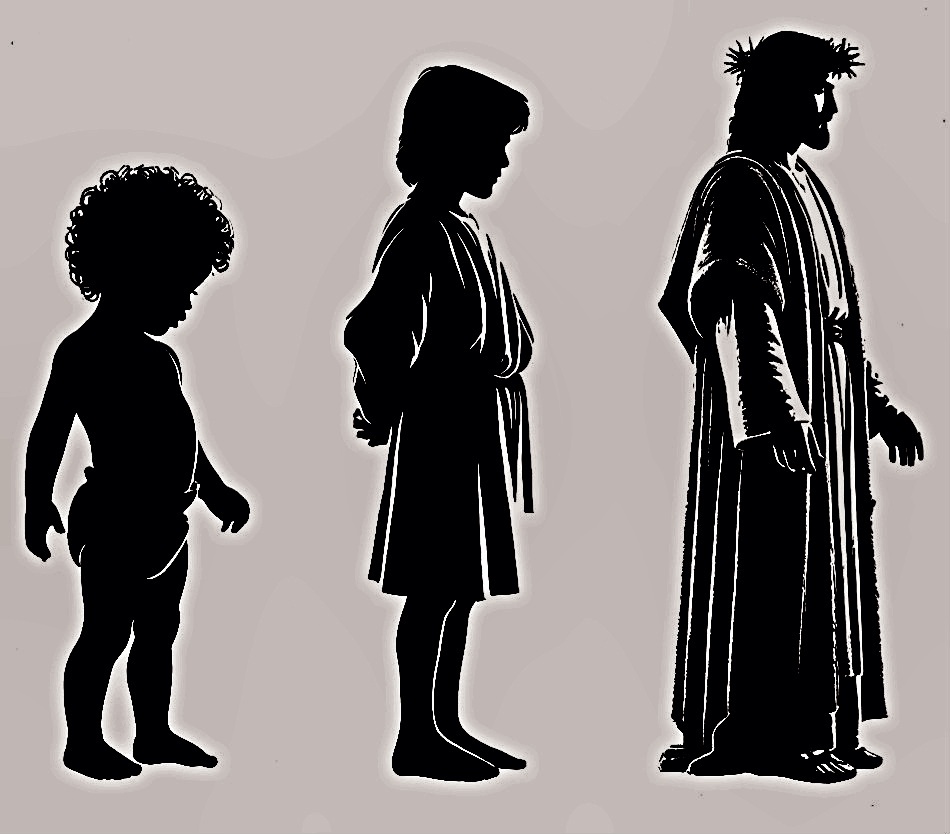
Consider what Scripture tells us about the incarnation. Philippians 2:7 says Christ “emptied himself, by taking the form of a servant, being born in the likeness of men.” Hebrews 2:17 declares He “had to be made like his brothers in every respect.” This wasn’t playacting—Jesus assumed a genuine human nature that experienced authentic human development. As a true human being, He grew physically from infancy to adulthood. He learned to walk, to speak, to read the Torah. And yes, He grew spiritually.
But here’s the crucial point: while His human nature developed, His person remained the eternally beloved Son. Before the foundation of the world, the Father loved Him with infinite, unchanging love (John 17:24). That love didn’t increase—it couldn’t—because it was already perfect and complete. To Learn More, Do Check Out Our Post, Why do We Affirm Jesus is Fully God and Fully Man?
ESSENTIAL APPROVAL VS. MANIFESTED APPROVAL
The Reformed scholastic Francis Turretin sharpened this distinction further. “The approbation was always the same essentially,” he wrote, “but was manifested successively according to the successive degrees of obedience.” In other words, the Father’s approval of the Son was always complete in essence, but it was revealed progressively as Jesus advanced in His messianic mission.
Watch how this unfolds in the Gospel narratives.
- At Jesus’ baptism, before He’d performed a single miracle or preached a single sermon, the Father declared: “This is my beloved Son, with whom I am well pleased” (Matthew 3:17). The pleasure was already there, complete, infinite.
- Yet later, at the Transfiguration, after Jesus had demonstrated faithful obedience through His ministry, the Father spoke the same affirmation again (Matthew 17:5).
- Finally, after the ultimate act of obedience at the cross, God raised Him from the dead and gave Him the name above every name (Philippians 2:9-11).
The Father’s love didn’t grow, but His public vindication of the Son increased with each progressive act of obedience. Think of it like a parent’s love for a child. A mother loves her newborn completely and perfectly. That love doesn’t increase when the child takes her first steps, speaks her first words, or graduates from college. But the mother’s delight finds new expressions, new manifestations, at each milestone. The love was always there; the occasions for expressing it multiply.
THE COVENANT FRAMEWORK
Herman Bavinck captures this dynamic for us: “Though personally He was the object of eternal delight, economically His obedience was rewarded step by step.” This points us to the covenant of redemption—the pre-temporal agreement between Father and Son regarding our salvation.
Within this covenant structure, the Father promised to reward the Son’s obedience with glory, honour, and a redeemed people. As Jesus progressively fulfilled His messianic work, He earned these covenant blessings. Hebrews 5:8-9 puts it plainly: “Although he was a son, he learned obedience through what he suffered. And being made perfect, he became the source of eternal salvation.” The word “perfect” here (teleiōtheis) means “brought to completion” or “brought to the goal.” Jesus’ human nature reached its appointed end through progressive obedience.
This explains passages that otherwise seem puzzling. When Jesus prayed, “Father, glorify me in your own presence with the glory that I had with you before the world existed” (John 17:5), He was asking for the manifestation of glory He had earned through completing His work. When Romans 1:4 says He was “declared to be the Son of God in power…by his resurrection from the dead,” it’s describing the Father’s public vindication of what was always true.
BB Warfield summarises it: “The approbation of the Father followed the Son’s course of obedience…not because the love increased, but because the obedience increased in manifestation.”
WHY THIS MATTERS
This Reformed answer isn’t theological hairsplitting—it protects essential truths about Christ and our salvation.
- It guards God’s immutability—His never-changing nature. The Father’s essential nature and love toward His Son never changed. God is not fickle to grow more or less pleased based on the Son’s performance.
- It affirms Christ’s genuine humanity. Jesus didn’t merely appear to grow—He actually experienced real human development, faced genuine temptations, and progressed through stages of obedience. This makes Him the perfect high priest who can sympathise with our weaknesses (Hebrews 4:15).
- It secures our salvation. The rewards Christ earned through His progressive obedience become ours through union with Him. His increased favour with God is credited to us.
- It encourages us in sanctification. If even Jesus grew in grace progressively, we should expect the same pattern in our own lives. We don’t grow in obedience to earn God’s love—we already have it in Christ. But like our Saviour, we manifest that grace step by step, milestone by milestone, as we mature in faith.
The Father’s love for His Son was eternally perfect, complete from before the foundation of the world. But His public approval and covenantal rewards increased as Jesus progressively obeyed, until at last the Father could say of the crucified and risen Lord: “I have glorified it, and I will glorify it again” (John 12:28). The love never grew. The glory did.
And in Christ, so does ours.
RELATED FAQs
Does Jesus become perfect, or was He born perfect? Jesus was born without sin and perfectly righteous from conception—what theologians call the “impeccability” of Christ. Michael Horton explains, “Christ’s sinlessness was not an achievement but a given reality of His person.” However, His human nature still needed to mature and develop. Just as an acorn is perfectly an acorn but must grow into an oak, Jesus’ human nature was perfect at every stage while still progressing toward its appointed goal. Reformed theologian Robert Letham notes Christ’s perfection “was not static but dynamic, reaching its telos through obedience.”
- If Jesus is God, how could He learn anything? Doesn’t God know everything? This question highlights why we must carefully distinguish between Christ’s two natures. In His divine nature, Jesus possessed all knowledge eternally and infinitely—He never learned anything because He already knew all things. But in His human nature, He genuinely learned and grew in knowledge. Reformed theologian Louis Berkhof clarifies: “The human nature of Christ had a finite knowledge which increased with His development.” Modern scholar Gerald Bray adds that “the human mind of Jesus had to acquire knowledge in the normal human way.” Luke 2:46 shows the boy Jesus “listening and asking questions” of the teachers in the temple. This wasn’t pretence—He truly learned as any Jewish boy would, studying Scripture, memorising Torah, growing in understanding.
- What do theologians say about Jesus’ psychological development? Kevin Vanhoozer emphasises that Jesus developed emotionally and psychologically as a real human being, experiencing the full range of human emotions and relationships. Michael Allen and Scott Swain note Jesus progressed through normal developmental stages—infant dependence, childhood curiosity, adolescent identity formation, adult maturity. Kelly Kapic writes Jesus experienced “genuine human limitations in knowledge, wisdom, and emotional maturity” while remaining sinless. This includes developing emotional regulation, social skills, and practical wisdom. Bruce McCormack observes that denying Jesus’ real psychological development risks denying His full humanity.
- How does Jesus’ growth relate to His baptism? Was that when He “became” the Messiah? No, Jesus didn’t become the Messiah at His baptism—He was always the Messiah from conception. Sinclair Ferguson explains the baptism was “a public declaration and empowerment, not an ontological transformation.” What happened at Jesus’ baptism was threefold: a public divine attestation (“This is my beloved Son”), an anointing by the Spirit for His public ministry (though the Spirit had been with Him from conception). Third, His formal identification with sinners He came to save. Richard Gaffin Jr notes Jesus’ baptism marked “the transition from His private preparation to His public manifestation.” Michael Bird describes it as Jesus’ “messianic commissioning ceremony,” where His identity was confirmed and His mission inaugurated before witnesses.
What practical difference does this doctrine make for how we read the Gospels? Understanding Jesus’ real growth transforms how we read the Gospel narratives. When we see Jesus weeping at Lazarus’ tomb (John 11:35), we’re not watching a divine performance—we’re seeing a man who had developed deep emotional bonds and felt genuine grief. When Jesus prayed in Gethsemane with “loud cries and tears” (Hebrews 5:7), He was drawing on years of cultivated prayer discipline and relationship with the Father. When He spoke with authority at age 12 in the temple (Luke 2:47), we see the fruit of faithful Jewish education and spiritual formation. Kelly Kapic writes recognising Jesus’ development “makes the Gospels come alive as the story of a real human life.” It also affects our discipleship—Jesus models progressive growth in godliness for us. Finally, it deepens our appreciation for the incarnation—God didn’t just appear as a man, He lived a fully human life from helpless infancy to mature adulthood.
OUR RELATED POSTS
Editor's Pick

The Throne-Room Vision: Who Did Isaiah See?
The scene is unforgettable: Isaiah stands in the temple, and suddenly the veil between heaven and earth tears open. He [...]

The Angel of the Lord: Can We Be Certain It Was Christ All Along?
Throughout the Old Testament, a mysterious figure appears: the Angel of the LORD. He speaks as God, bears God’s name, [...]
SUPPORT US:
Feel the Holy Spirit's gentle nudge to partner with us?
Donate Online:
Account Name: TRUTHS TO DIE FOR FOUNDATION
Account Number: 10243565459
Bank IFSC: IDFB0043391
Bank Name: IDFC FIRST BANK