
John 15:4: What Does It Mean to Abide in Christ?
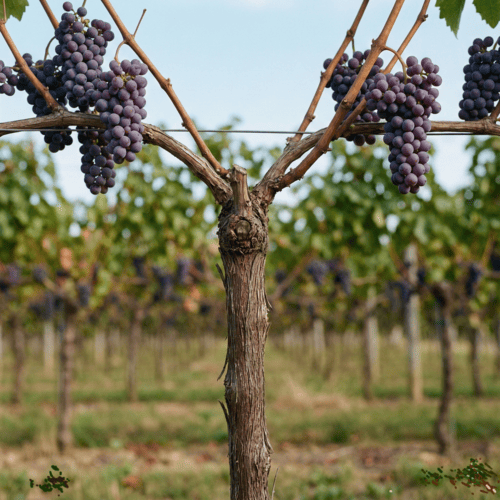
“Abide in me, and I in you. As the branch cannot bear fruit by itself, unless it abides in the vine, neither can you, unless you abide in me.” (John 15:4, ESV)
Jesus speaks these words on the eve of His crucifixion, in an upper room thick with tension and sorrow. Within hours, His disciples would scatter. Yet here He is, offering them—and us—one of Scripture’s most beautiful metaphors: the vine and branches. But what does it actually mean to “abide” in Christ? How do we live out this command in our daily lives?
THE FOUNDATION: ALREADY CONNECTED
Before we can understand how to abide, we must grasp what Jesus assumes: if we’re believers, we’re already connected to the Vine. This isn’t about becoming a branch; it’s about consciously living as the branches we already are.
The apostle Paul reinforces this reality throughout his letters. We are “in Christ” (2 Corinthians 5:17), having been “buried with him in baptism” and “raised with him through faith” (Colossians 2:12). This union isn’t something we achieve through spiritual effort; it’s a gift secured by God’s grace through faith alone (Ephesians 2:8-9).
Think of it this way: a branch doesn’t strive to become part of the vine. It simply is. The gardener grafts it in, and from that moment, the branch shares the vine’s life. Similarly, God has united us to Christ. Our calling now is to live consciously in that reality, drawing upon the resources already available to us.
This transforms the Christian’s life from anxious striving to grateful receiving. We’re not climbing a ladder to reach Jesus; we’re learning to rest in the One who already holds us fast (John 10:28-29).
WHAT ABIDING IS NOT
Clarity requires us to strip away common misconceptions.
- Abiding is not about feelings. Some Christians worry they’re not truly abiding because they don’t feel close to God. But branches don’t feel their connection to the vine—they simply draw life from it. Your emotions fluctuate; Christ’s faithfulness does not. Even when the psalmist felt cast down, he commanded his soul to “hope in God” (Psalm 42:5). Abiding persists through seasons of spiritual dryness.
- Abiding is not sinless perfection. Notice that in John 15:2, Jesus acknowledges that branches abiding in Him still need pruning. We remain works in progress. The Christian life involves ongoing sanctification, not instantaneous perfection. We abide not because we’ve arrived, but because we’re being transformed (2 Corinthians 3:18).
- Abiding is not passive inactivity. While we can’t produce fruit through sheer willpower, neither are we called to quietist withdrawal from life’s responsibilities. Jesus Himself, perfectly abiding in the Father, engaged the world around Him with purpose and energy. We follow His example.
HOW WE ABIDE: THE MEANS OF GRACE
So how do we actually obey Jesus’ command? The Christian tradition identifies concrete means through which Christ nourishes His people.
First, we abide through God’s Word. Notice Jesus’ direct connection: “If you abide in me, and my words abide in you…” (John 15:7). Scripture isn’t peripheral to abiding; it’s central. When we regularly read, meditate on, and obey the Bible, we’re positioning ourselves to receive Christ’s life.
Think of Scripture as the channel through which the Vine’s sap flows. The psalmist describes the blessed person as one who meditates on God’s law “day and night,” becoming “like a tree planted by streams of water” (Psalm 1:2-3). This isn’t legalistic box-checking; it’s spiritual nourishment. We encounter Christ Himself in His Word, for Scripture testifies about Him (John 5:39).
Second, we abide through prayer. Jesus continues in John 15:7, “ask whatever you wish, and it will be done for you.” Prayer is conscious communion with the Vine—talking with Jesus, listening for His voice, bringing our needs and desires before Him.
The early Christians understood this. They “devoted themselves” to prayer (Acts 2:42). Paul urged believers to “pray without ceasing” (1 Thessalonians 5:17)—not meaning we never stop vocalizing words, but that we maintain an ongoing awareness of God’s presence throughout our day. Prayer is the breath of the Christian life; without it, we suffocate spiritually.
Third, we abide through worship and the sacraments. When we gather with God’s people for worship, participating in baptism and the Lord’s Supper, we’re reminded of our union with Christ and nourished in it. Paul writes that in the Lord’s Supper, we “participate in the body of Christ” (1 Corinthians 10:16). These aren’t empty rituals but real means of grace.
Fourth, we abide through Christian community. Jesus immediately follows His teaching about the vine with commands about loving one another (John 15:12-17). We don’t abide in isolation. The local church provides encouragement, accountability, and shared life. When we gather, we “stir up one another to love and good works” (Hebrews 10:24). We’re branches on the same Vine, interconnected and interdependent.
THE PROMISE: FRUITFULNESS AND JOY
When we abide in Christ, Jesus makes stunning promises. Fruit comes inevitably and abundantly, but it’s not produced by our striving—it flows naturally from our connection to the Vine. Consider what abiding produces:
- Christlike character. The branch that remains in the Vine displays the fruit of the Spirit: “love, joy, peace, patience, kindness, goodness, faithfulness, gentleness, self-control” (Galatians 5:22-23). These virtues aren’t manufactured by willpower but grown through our union with Christ. As we spend time in His presence through Word and prayer, we gradually reflect His character more clearly.
- Answered prayer and effective witness. Jesus promises, “If you abide in me, and my words abide in you, ask whatever you wish, and it will be done for you” (John 15:7). When we’re walking closely with Christ, our desires increasingly align with His purposes, and our prayers reflect His will. Furthermore, Jesus says we’re appointed to “go and bear fruit” that remains (John 15:16)—fruit that includes bringing others into the kingdom through our witness.
- Deep and lasting joy. Perhaps most surprisingly, Jesus grounds His entire teaching in this promise: “These things I have spoken to you, that my joy may be in you, and that your joy may be full” (John 15:11). Abiding isn’t grim religious obligation; it’s the pathway to profound satisfaction. When branches stay connected to the Vine, they don’t merely survive—they flourish with a joy that circumstances cannot steal.
- Love for fellow believers. Jesus immediately connects fruitful abiding with love for one another: “This is my commandment, that you love one another as I have loved you” (John 15:12). Branches on the same Vine naturally care for each other. As we draw life from Christ, we find ourselves empowered to love sacrificially, serve generously, and bear one another’s burdens (Galatians 6:2).
LIVING AS BRANCHES
The Christian life, then, is both gift and responsibility. We rest in what Christ has secured—our union with Him is as solid as His finished work on the cross. But we also actively engage the means He’s provided: immerse ourselves in Scripture, pray persistently, worship faithfully, and live in community with other believers.
We’re already branches if we trust in Christ. Now we live like one. Let’s draw deeply from the Vine today, and watch as His life produces fruit we could never manufacture on our own. That’s what it means to abide.
RELATED FAQs
Does “abiding” mean the same thing as “perseverance of the saints”? Not quite, though they’re closely related. Perseverance of the saints is the Reformed doctrine that true believers will continue in faith until the end because God preserves them (Philippians 1:6). Abiding, however, focuses on the believer’s conscious, active experience of union with Christ through the means of grace. JI Packer explains perseverance is God’s work of keeping us connected to the Vine, while abiding is our responsive activity of drawing life from Him. Both are true simultaneously: God secures our position, and we actively cultivate our communion with Christ.
- Can a true branch ever be “cut off” from the Vine in John 15:6? This is one of the most debated verses in Reformed interpretation. Most Reformed scholars understand John 15:6 as referring to false professors—people who appeared to be branches but never truly had living union with Christ. Sinclair Ferguson notes Jesus says “if anyone does not abide in me, he is thrown away like a branch”—the simile suggests these were never genuinely connected. John’s first epistle confirms this: “They went out from us, but they were not of us; for if they had been of us, they would have continued with us” (1 John 2:19). True branches may be pruned (John 15:2) but never severed.
- How does abiding relate to the doctrine of sanctification? Abiding is essentially the relational dimension of sanctification. While sanctification describes our progressive growth in holiness, abiding describes the communion with Christ through which that growth occurs. Michael Horton emphasises sanctification isn’t merely moral improvement but participation in Christ’s life. Kevin DeYoung adds we often treat sanctification as a self-improvement project, but John 15 makes it clear it’s fundamentally about remaining connected to Jesus. The fruit of holiness grows from the root of relationship, not from religious effort detached from Christ.
Is there a connection between abiding in John 15 and Jesus abiding in the Father? Absolutely—and it’s crucial. Earlier in the upper room discourse, Jesus said, “I am in the Father and the Father is in me” (John 14:10-11). The vine metaphor extends this pattern: just as Jesus abides in the Father and draws all His life and mission from that union, we abide in Jesus and draw everything from Him. John Murray described this as a “chain of union”—the Father in the Son, the Son in us, we in the Son, and through Him, in the Father. This isn’t just imitation of Christ; it’s participation in the very life of the Trinity through our union with the Son.
- What did the Reformers mean by saying we’re “passive” in abiding? This language can be confusing. Calvin and Luther didn’t mean we’re literally inactive, but that we cannot produce spiritual fruit through our own resources. The branch is “passive” in that it receives rather than generates life—the sap flows from the vine to the branch, not vice versa. Tim Keller clarifies this as “active receptivity”: we actively position ourselves (through Word, prayer, community) to receive what only Christ can provide. It’s like eating—you must open your mouth and chew, but the food itself nourishes you by its own nutritional power, not by your chewing effort.
- How does abiding in Christ relate to spiritual disciplines? The spiritual disciplines (prayer, Scripture reading, fasting, worship, etc.) are not ends in themselves but means of abiding. Donald Whitney distinguishes between disciplines that merely make us “disciplined” and those that connect us to Christ. The danger is practicing disciplines for self-improvement rather than communion. John Piper warns against “treadmill spirituality”—going through religious motions without actually meeting with Jesus. The disciplines are like a trellis that supports the branch, positioning it toward the sun; they don’t produce fruit directly, but they facilitate the flow of life from the Vine.
Can we abide in Christ during times of suffering or depression? Yes—in fact, some of the deepest abiding happens in darkness. The Puritans spoke of God’s “sensible presence” (what we feel) versus His “real presence” (objective reality). John Owen taught that Christ never abandons His branches even when they cannot sense His nearness. During depression, doubt, or suffering, abiding becomes an act of faith that trusts the Vine’s faithfulness despite our emotional weather. David Powlison notes the Psalms model this: believers crying out from despair while still clinging to God. The branch may feel withered, but if it remains attached, the Vine sustains it through the winter season until spring comes.
OUR RELATED POSTS
Editor's Pick
The Throne-Room Vision: Who Did Isaiah See?
The scene is unforgettable: Isaiah stands in the temple, and suddenly the veil between heaven and earth tears open. He [...]

The Angel of the Lord: Can We Be Certain It Was Christ All Along?
Throughout the Old Testament, a mysterious figure appears: the Angel of the LORD. He speaks as God, bears God’s name, [...]
SUPPORT US:
Feel the Holy Spirit's gentle nudge to partner with us?
Donate Online:
Account Name: TRUTHS TO DIE FOR FOUNDATION
Account Number: 10243565459
Bank IFSC: IDFB0043391
Bank Name: IDFC FIRST BANK