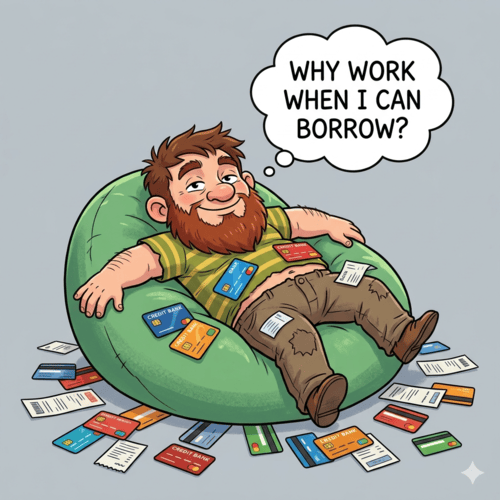
A man interrupts the sermon with the question eating him alive. “Teacher, tell my brother to divide the inheritance with me” (Luke 12:13). He’s no heckler. He’s a younger brother with a grievance, and under the law of Moses he may well have been in the right.
Jesus will not touch it. “Man, who made me a judge or arbitrator over you?” Instead He warns the crowd against covetousness—the restless craving for what belongs to someone else—“for one’s life does not consist in the abundance of his possessions” (Luke 12:14–15).
Every family has that man. Often he is us. Behind the man’s question stands a quieter one that Christian parents ask, bank statement in hand: should I leave my children an inheritance?
The Short Answer, and Why It Settles Nothing
Yes. Scripture nowhere commands a will and nowhere forbids one, but the whole gravitational pull of the Bible is that parents build forward. They plant trees whose shade they’ll never sit in.
That answer takes four seconds. But wait, there are harder questions yet to come. How much? Equally? What about the child who will squander it in drink? What about the daughter whom your culture wants you to send off with a dowry instead of a share of the estate? And what about the strange truth that the same Bible that tells you to leave an inheritance also warns that money may help your children far less than you think?
The argument in one line
Scripture commends inheritance as an act of love towards people you’ll never meet, and demolishes inheritance as a project for making yourself immortal. Leave it. Don’t live for it.
What the Bible Plainly Says
- Parents build forward. “A good man leaves an inheritance to his children’s children, but the sinner’s wealth is laid up for the righteous” (Proverbs 13:22). Note the reach—not children, but grandchildren, two generations past the edge of your memory.
- Paul assumes it without arguing for it. “For children are not obligated to save up for their parents, but parents for their children” (2 Corinthians 12:14). He’s explaining why he refuses Corinthian money, and reaches for inheritance as the example everybody already grants.
- Provision is a test of faith. “But if anyone does not provide for his relatives, and especially for members of his household, he has denied the faith and is worse than an unbeliever” (1 Timothy 5:8). Paul means care for the living, but the logic runs forward: a Christian plans for those who depend on him.
- The work is meant to outlive the worker. The command to fill the earth and subdue it (Genesis 1:28) is a task no lifetime finishes. It was always a relay.
The Westminster Larger Catechism, expounding the eighth commandment, lists among our duties “a provident care and study to get, keep, use, and dispose of those things which are necessary”—and, in the same answer, “giving and lending freely, according to our abilities, and the necessities of others.” Provision and generosity aren’t rivals. One commandment requires both.
A Proverb Isn’t a Promise
Then Ecclesiastes turns the lights off. “I hated all my toil in which I toil under the sun, seeing that I must leave it to the man who comes after me, and who knows whether he will be wise or a fool?” (Ecclesiastes 2:18–19).
Same Bible, same wisdom literature, opposite mood. Don’t let one verse cancel the other; see what each is doing. A proverb tells you how life usually works for a wise person. It’s a general observation, not a promise we can hold God to. Proverbs 13:22 doesn’t guarantee godly people will always die rich. Neither does Proverbs 22:6 guarantee a well-raised child will never turn away. Both verses tell us the way things normally go, not the way they always must go. Ecclesiastes states the limit of the world: death cuts our hand off our money, and we cannot control the heir.
Hold both together and we have biblical wisdom on the subject: Build for your grandchildren. Do not imagine you can govern them from the grave.
If we have nothing to leave
- Most Christians who ever lived died with nothing. The widow Jesus praised gave two copper coins (Mark 12:41–44); our Lord owned one garment, and soldiers gambled for it.
- Proverbs 13:22 is no criticism of the believer who dies with a Bible, a good name, and no debt. If we read it as an order to pile up money, it turns into a prosperity message dressed up in Bible words.
What “Inheritance” Actually Meant in Israel
Here’s where discussions of generational wealth quietly go wrong. When an Israelite heard the word inheritance—nachalah—he didn’t picture a portfolio. He pictured a field.
A Timeline of Inheritance in Israel
- The conquest (1400 BC): Joshua parcels out the land, family by family. Inheritance is soil, not savings. It cannot be moved, hidden or sent abroad.
- Leviticus 25—the owner speaks. “The land shall not be sold in perpetuity, for the land is mine. For you are strangers and sojourners with me.” Property is real, and the eighth commandment protects it. But it’s held on lease from God, never absolutely.
- Every 50th year—the Jubilee. Any land a family had lost went back to them, and debts were cancelled. Inheritance was a way of slowing down any piling up of wealth, not a way of building it.
- Numbers 27 and 36—the daughters of Zelophehad. Five sisters petition Moses because their father died without sons. God rules for them: the inheritance passes to the daughters. Fix that verdict in mind; it matters later.
- Deuteronomy 21:15–17—no favourites. A father may not shift the firstborn’s double portion to the son of the wife he prefers. Affection does not rewrite the will.
- The 9th century BC—Naboth’s vineyard. “The LORD forbid that I should give you the inheritance of my fathers” (1 Kings 21:3). He is refusing to liquidate a trust given by God to men now dead, for men not yet born. Ahab sees an asset; Naboth guards a covenant.
The pattern is unmistakable. An inheritance is a trust to be transmitted, not a fortune to be enjoyed. So the modern question—how do I build generational wealth?—isn’t quite the biblical one. The biblical question is: what am I holding on behalf of people who cannot yet speak?
Jesus Refuses to Be Your Estate Lawyer
Back to Luke 12. The man’s legal case may have been sound. Jesus doesn’t rule on it. He goes behind the claim, inspects the heart making it, and tells a story.
A rich man’s land yields a bumper crop. He builds bigger barns and tells his soul to relax. God answers: “Fool! This night your soul is required of you, and the things you have prepared, whose will they be?” (Luke 12:20). That last question is Ecclesiastes, word for word.
His sin isn’t farming well, and not saving. It’s treating accumulation as security, in a monologue whose only other character is himself. Heirs are nowhere in view and God is nowhere in view—one blindness, not two.
Three chapters later, a younger son takes his inheritance early. The money doesn’t make him bad; it just pays his way, quickly, in the direction he was already going. The older brother, who has the rest of the estate coming to him—”all that is mine is yours”—stands outside the party, filled with bitterness. One son is ruined by getting the money; the other is made bitter by waiting for it. An inheritance makes no one holy.
The Inheritance We Cannot Lose
Inheritance doesn’t fade from the New Testament. It’s relocated. Christ is appointed heir of all things (Hebrews 1:2), and those united to him by faith become “fellow heirs with Christ” (Romans 8:17). The Spirit is the guarantee or surety of that inheritance (Ephesians 1:13–14)—the Greek term is the ordinary commercial word for a deposit, the first instalment pledging the rest.
Peter then describes what’s coming: “an inheritance that is imperishable, undefiled, and unfading, kept in heaven for you” (1 Peter 1:4). Each adjective negates what happens to estates. Money perishes. Money is defiled—by how it was got and how it is fought over. Money fades, by inflation, by division, by a fourth generation who never knew the man who earned it. Peter isn’t being poetic. He’s being actuarial.
Levi received no land at all, and God didn’t apologise: “I am your portion and your inheritance among the people of Israel” (Numbers 18:20). David, who owned a kingdom, wanted what the Levites had (Psalm 16:5–6). Abraham, to whom the land was promised, died owning nothing but a burial cave, “looking forward to the city that has foundations, whose designer and builder is God” (Hebrews 11:10).
This reframes everything. We cannot give our children anything permanent. We give something temporary in the service of something permanent. Invert that order and the gift curdles.
Two Ways to Get This Wrong
Four Dangers of Leaving Money
- You may fund your child’s ruin. “An inheritance gained hastily in the beginning will not be blessed in the end” (Proverbs 20:21). Capital in unformed hands isn’t a blessing; it’s petrol. Rehoboam inherited the richest kingdom in the region and lost ten tribes of it in a week.
- You might turn your estate into your monument. The rich fool built bigger barns to secure a future he did not actually have. Wanting our name to live on through our money is idol worship with good manners.
- You may start a war among people you love. Luke 12 opens with two brothers at war. Vague wills, unwritten promises, quiet unequal gifts, and dying intestate—with no will, letting the state decide—have wrecked more Christian families than persecution ever has.
- You may hand your children a disadvantage. “How difficult it is for those who have wealth to enter the kingdom of God!” (Luke 18:24). If money makes the road harder, leaving money makes their road harder. Do it with eyes open, and with a plan to counteract it.
Four Dangers of Leaving Nothing
- Abdication dressed as piety. 2 Corinthians 12:14 and 1 Timothy 5:8 aren’t suggestions. Spiritual language makes a poor cover for having made no provision.
- A false choice. “I am leaving them my values, not my money” sounds noble. Usually it describes a decision never actually made. Scripture expects both.
- Someone else fills the gap. Abraham Kuyper argued that a family with no money of its own is left at the mercy of whoever does hold the money—the government, the lender, the employer. A small inheritance can let a family obey God when obeying gets costly.
- Stewardship spent on yourself. John Calvin taught that we hold earthly goods as stewards who must one day give an account. An estate wholly consumed within one lifetime has not been stewarded. It has been enjoyed.
Ten Questions to Settle Before You Sign the Will
| The Question | The Wisdom |
|---|---|
| Character or capital first? | Character, always. Money magnifies whatever is already in a person. Formation comes before transfer. |
| When should they receive it? | Some now, most later. Giving while living lets you teach, correct, and see the fruit. |
| How much? | Scripture gives no figure; this is Christian liberty. Enough to launch them, not enough to insulate them. |
| Equally? | Default to equal shares (Deuteronomy 21:15–17). Depart only for reasons you can name, document and explain while you live. |
| Do daughters inherit as sons do? | Indeed. Numbers 27 settles it. God vindicated Zelophehad’s daughters, and no custom outranks that verdict. |
| The prodigal or the addict? | Neither a lump sum nor disinheritance. Use a trust and a trustee. Provide, without handing over the petrol. |
| The church and the poor? | Tithe the estate. The catechism puts provision and generosity under one commandment; your will should too. |
| My debts? | “The borrower is the slave of the lender” (Proverbs 22:7). Dying debt-free is a gift; dying in debt bequeaths chains. |
| The greater estate? | Teaching them the faith, leaving a good name to carry, a marriage they watched up close, and a faith like the one Timothy received from his grandmother Lois and his mother Eunice (2 Timothy 1:5). |
| Have I written it down? | Write the will. Then tell your children what’s in it, and why, to their faces. Staying silent is like leaving a bomb with a timer running. |
A Word for Indian Families
In India this is no abstraction, and the church here has an uncomfortable history.
Indian Christians are governed in succession by the Indian Succession Act of 1925, not by Hindu personal law, so reforms that transformed daughters’ rights in Hindu families never touched Christian ones. In Kerala, Christian daughters long fell under the Travancore Christian Succession Act, which gave a daughter a small fraction of a son’s share. It took a woman named Mary Roy, and a Supreme Court judgement in 1986, to have the Indian Succession Act applied. So Christian daughters now have an equal share.
Sit with that. A church that reads Numbers 27 every year had to be told by a secular court to do what God had already told Moses. The custom hasn’t died: in many families the daughter is still “settled” with a dowry and quietly written out of the estate. That’s Zelophehad’s daughters in reverse.
Your Will Is Your Last Sermon
A will is one of few documents you write knowing you will not be in the room when it’s read. Your children will sit while a stranger reads out your handwriting, and in that hour they will learn what you valued, whom you trusted, whether you remembered the poor, and whether you thought them equals.
So leave them something—a house, a small field, or just a good name with no debt attached. But most of all, leave them the inheritance Peter promised: one that cannot rot, cannot be spoiled, and cannot fade—one you cannot give them yourself, and one they can never lose. Everything else in the estate is only a signpost, and a signpost is worth something only if someone follows it home.
Tough Questions, Honest Answers
Is Proverbs 13:22 a command or a promise?
Neither, strictly. It’s a proverb: a truthful observation about how life generally runs for the wise, given to shape our instincts rather than to guarantee outcomes. It commends the impulse of a good man to provide for grandchildren he may never hold. It doesn’t promise faithful people will die wealthy, nor condemn the believer who dies poor. Read as a divine guarantee of prosperity, it becomes a contract God never signed.
What if I have nothing to leave my children?
Then you stand with most Christians in history, including the widow of Mark 12 and Christ himself. Scripture never measures a parent by the size of the estate, only by faithfulness. Dying without debt is an inheritance. A marriage your children watched and wish to imitate is an inheritance. A faith handed down as Lois handed hers to Eunice, and Eunice to Timothy, outlasts any property and never depreciates. Provide what you can, provide honestly, and refuse to nurse guilt.
Should I divide my estate equally among my children?
Start there. Deuteronomy 21:15–17 forbids a father to redirect a portion towards the child he prefers, which shows how seriously God takes parental favouritism. Legitimate reasons to deviate exist: a disabled child needing lifelong care, a child already given a large gift, a child who surrendered years of income to nurse us. Where we deviate, we can do three things. Write the reason down. Tell every child while we’re alive. And ask honestly whether the reason is stewardship or grievance.
Should daughters inherit the same as sons?
Yes. When Zelophehad died leaving five daughters and no son, they brought their case to Moses and God ruled for them (Numbers 27:1–11). Under Christ the point is sharper still: sons and daughters alike are heirs of the grace of life (1 Peter 3:7). Where custom, dowry or family pressure conspires to write daughters out of the estate, that custom stands under judgment—and no appeal to tradition can survive a verdict God has already delivered.
Is it wrong to leave most of my estate to the church or the poor?
Not wrong, but not automatically wise. The commandment requiring provident care for our households also requires generous giving to those in need, and neither duty may be used to silence the other. Starving the church to enrich children who don’t need it is worldliness. Neglecting dependent children to fund a building project isn’t piety; it’s 1 Timothy 5:8. Where children are grown and secure, giving heavily to gospel work and the poor is a fitting last act. Where they are not, provide first, then give.
What should I do if one of my children is a prodigal or an addict?
Don’t hand over a lump sum, and don’t disinherit. Both fail to love; they simply fail in opposite directions. A lump sum funds the destruction; disinheritance abandons the person. The wise course is structure: a trust, a trustee chosen prayerfully, staged distributions, provision tied to shelter, treatment and necessities rather than cash. The prodigal’s father gave freely, then waited on the road. He didn’t chase his son, and he never stopped watching for him.
Should I give my children money now rather than after I die?
Giving while living has real advantages. You can explain the gift, watch what’s done with it, teach through it, and correct course while correction is still possible. You also see the fruit, which every will denies you. The dangers are equally real: gifts given early, unequally or in secret breed resentment among siblings that outlives you by decades. So give openly, tell everyone, keep it fair, and retain enough that you never become a burden your children must silently carry.