You’ve probably seen the video. A blackened mountain peak in the Saudi desert. A giant boulder split down the middle. Coral-covered shapes on the seabed that look exactly like chariot wheels. A voice saying the words that make your heart beat faster: proof that the Bible is true.
Most of these claims come from one man: Ron Wyatt, an American who died in 1999.
This article asks a simple question: do the claims hold up? The answer, we’re sorry to say, is no. But please read on, because how we reach that answer matters as much as the answer itself.
Who was Ron Wyatt?
Ron Wyatt (1933–1999) worked as a nurse anaesthetist in Tennessee. He wasn’t a trained archaeologist. He held no degree in archaeology, ancient languages or geology, and he never directed a licensed excavation.
That alone isn’t reason to dismiss him, since amateurs have made real discoveries. But it explains the shape of his work. From 1960 he travelled the Middle East looking for places and objects that resembled things described in the Bible, and announced a very long list of finds.
| What Wyatt announced | Where | Independently verified? |
|---|---|---|
| Noah’s ark | Durupınar formation, eastern Turkey | No |
| Mount Sinai | Jabal al-Lawz / Jabal Maqla, Saudi Arabia | No |
| The Red Sea crossing | Nuweiba beach, Gulf of Aqaba | No |
| Pharaoh’s chariot wheels | Seabed, Gulf of Aqaba | No |
| Sodom and Gomorrah | Near the Dead Sea, Israel | No |
| The ark of the covenant | A chamber beneath Jerusalem | No |
| Samples of Christ’s blood | The same chamber | No |
Every item on this list was announced publicly. Not one has ever been placed in a museum or laboratory where another can examine it.
Now, let’s look at the Sinai claims one at a time.
THREE QUESTIONS TO ASK OF ANY BIBLICAL DISCOVERY
1. Can it be checked? Is there an object, in a known place, that someone other than the discoverer can examine?
2. Has it been published where experts can push back? Not a video or a book for the general public, but a report that specialists can test and criticise.
3. Does the Bible actually say what the claim assumes it says? Many claims quietly add details to the biblical text that are not there.
Keep these three questions in mind as we go. They’re not hostile questions. They’re questions honest researchers apply to their own work first.
Claim 1: the blackened peak
The mountain at the centre of the story isn’t actually Jabal al-Lawz, the tallest peak in the range, but a slightly lower peak about seven kilometres south called Jabal Maqla, which in Arabic means something close to “the burnt mountain”. Its summit is dark, almost black, while the slopes below are pale. The claim is that this darkness is scorching left behind when God came down on the mountain in fire (Exodus 19:18).
It’s a striking image. It’s also ordinary geology.
| The claim | What geologists actually find |
|---|---|
| The black summit is burn damage from divine fire. | The dark cap is hornfels and metamorphosed volcanic rock lying over pale granite. The colour comes from the minerals in the rock, not from anything that happened on the surface. |
| Only this one peak is blackened, which makes it unique. | The same dark rock continues across a very large area of north-west Arabia. Jabal Maqla simply stands at the visible edge of the field, so the contrast catches the eye. |
| Fire from heaven scorched the stone black. | Granite and basalt contain no carbon to burn. Fire does not turn granite black. Geologist John Morris, who examined rock from the mountain, reported that it is normal metamorphic rock with nothing unusual about it. |
Hornfels: a hard, dark rock formed when older rock is baked by molten rock pushing up beneath it, deep underground, long before any human being stood there.
The most telling detail is this: even Glen Fritz, who holds a doctorate in environmental geography and who argues for this mountain as Mount Sinai, rejects the blackened peak as evidence. He says plainly the colour is natural. When strong supporters of a site will not use an argument, that argument needs a relook.
Claim 2: the split rock at Horeb
Behind the mountain stands a huge boulder, several storeys tall, cracked from top to bottom into two halves. It sits on a mound. Below it, the ground shows channels and smoothing that look like the marks of running water.
The claim is that this is the rock Moses struck in Exodus 17.
Before we look at the geology, read the verse itself. This is the point almost every video skips.
“Behold, I will stand before you there on the rock at Horeb, and you shall strike the rock, and water shall come out of it, and the people will drink.” (Exodus 17:6)
Water comes out of the rock. The rock isn’t said to split. It isn’t said to break in two, to fall apart, or to change shape at all. The image of a rock cracking open is something readers have supplied from imagination, and the claim then treats that imagined detail as the thing to look for.
And the rock itself?
- Split rocks are common. Water gets into a crack, freezes, expands and widens it. Repeat that for a few thousand winters and a boulder splits. Geologists call this frost wedging. Add exfoliation, where the outer layers of granite peel away like the skin of an onion, and you have a formation found in deserts and highlands worldwide.
- The “water erosion” is disputed. The smoothing at the base is also what you would expect from flash floods, which are normal in desert valleys, and from wind carrying sand for thousands of years.
- Its own supporters have walked away from it. Glen Fritz first thought the erosion looked like high-pressure water flow. After visiting the site in person he changed his mind, and now describes the formation as a hoodoo, a tall pillar of rock shaped by ordinary weathering. He also argues the location doesn’t fit the route of the journey.
- Nothing was ever excavated there. No dig, no dated deposit, no report. There is nothing to check.
Claim 3: the 12 pillars and the golden calf altar
At the foot of the mountain is a fenced-off site with a low pile of stones carrying carvings of cattle, and nearby a set of standing stone columns. The claim is that these are the altar where Aaron made the golden calf (Exodus 32) and the twelve pillars Moses set up for the twelve tribes (Exodus 24:4).
Four problems, and the last one is the heaviest.
- Rock carvings can’t be dated by looking at them. Carvings on stone leave no organic material to date. Charles Whittaker, who wrote a doctoral dissertation sympathetic to this site, admits that dating rock art is “a highly inexact science”. The Saudi antiquities authorities place these carvings anywhere between the Neolithic period and the Nabataean period. That is a window several thousand years wide.
- Cattle carvings are everywhere. Images of bulls and cows are among the most common rock art in Arabia and across the ancient world, because cattle mattered to almost everyone. Gordon Franz, a field archaeologist who has studied this material closely, notes that similar carvings are scattered widely across north-west Arabia. A drawing of a cow near a mountain is not a golden calf.
- The pillars are cut stone, and that is fatal. David Rohl, an Egyptologist who is not a Christian believer and has no theological reason to object, points out that the pillars at this site are chiselled and smoothed. Scripture forbids exactly that: “If you make me an altar of stone, you shall not build it of hewn stones, for if you wield your tool on it you profane it” (Exodus 20:25). The same principle governs the standing stones of the patriarchs (Genesis 28:18). Israelites at Sinai would not have dressed these stones. Somebody else did.
- The text removes the object anyway. Moses burnt the golden calf, ground it to powder, scattered it on water and made the people drink it (Exodus 32:20). Whatever the Israelites left behind at Sinai, a golden calf is not on the list.
What about the fence and the guards?
Videos often present the fenced enclosure and the police post as proof of a cover-up. The Saudi antiquities authorities say the structure is Nabataean, roughly a 1000 years after any date for the exodus, and was probably housing for quarry workers.
They may be right or wrong. But fencing a known archaeological site and posting a guard is completely ordinary heritage protection, practised by governments everywhere including Israel. A fence proves that a site is protected. It does not tell us what the site is.
Claim 4: the chariot wheels in the Gulf of Aqaba
This is the most powerful claim emotionally, and the most instructive. Diving off Nuweiba beach on the Egyptian side of the Gulf of Aqaba from 1978 onwards, Wyatt reported coral-covered shapes on the seabed that he identified as chariot wheels: four-spoked, six-spoked, eight-spoked, and one apparently covered in gold. He also reported human and horse bones.
Everything here turns on a distinction that videos never draw, so we will draw it clearly.
| Photographed | Recovered and examined |
|---|---|
| Coral shapes on the seabed. Photographs exist and can be looked at. | Nothing. No wheel, no axle, no bone has ever been deposited in a museum or tested in a laboratory by anyone independent. |
| The gold-covered wheel was said to be too fragile to lift, so it was left in the water. | It has never been relocated by anyone else, in nearly forty years of diving at a shallow, accessible site. |
| A wheel hub was said to have been shown to an Egyptian antiquities official in Cairo, who dated it to the Eighteenth Dynasty. | No report, no record, no photograph of that examination, and nobody knows where the hub is now. |
A photograph shows a shape. Only a recovered object shows what the shape is made of, how old it is, and whether human hands made it.
This matters because coral is a shape-maker. Marine biologist Robert Carter, whose doctoral work was on coral reefs, points out many coral species grow a broad flat plate on top of a narrow stalk. To a diver who is not used to coral, that is a wheel on an axle. Coral will also grow over any hard object and settle into rounded, symmetrical, spoke-like patterns.
Claim 5: the “Yahweh inscription”
A more recent addition to the collection is a stone said to come from the Jabal al-Lawz area bearing the name of God in ancient letters. If genuine, this would be the strongest evidence in the whole set, because writing is datable in a way that a black rock is not.
The letters, however, are not early Hebrew and not proto-Sinaitic, the early alphabet that would be expected in the second millennium BC. Michael Heiser, a specialist in ancient Semitic languages, identified the script as Old South Arabian, a writing system from the other end of the peninsula and from a much later period. Gordon Franz worked through the inscription in detail and reached the same conclusion. Some scholars who examined the object questioned whether it was even ancient.
An inscription in the wrong script, from the wrong region, in the wrong century, is not evidence for the exodus. It is evidence that the collection grows without quality control.
The pattern behind all five claims
Step back and something becomes visible. The claims fail in different ways, but they fail for the same reason.
| Claim | What is offered | What is missing |
|---|---|---|
| Blackened peak | Photographs of dark rock | Any chemical or geological analysis showing surface burning |
| Split rock | Photographs of a cracked boulder | An excavation, a date, and a biblical text that mentions splitting |
| Calf altar and pillars | Photographs of carvings and columns | A date for the carvings; an explanation for cut stone |
| Chariot wheels | Underwater photographs | One recovered wheel, anywhere, examined by anyone |
| Yahweh inscription | A photograph and a drawing | Correct script, correct region, correct century |
The same gap appears in every row. Objects are reported, photographed and described, but never deposited where another person can test them.
A note on method: why “it looks like the Bible” isn’t evidence
Every one of these claims rests on resemblance. A dark peak resembles scorching. A cracked rock resembles a split. Carved cattle resemble a calf. A coral shape resembles a wheel.
Resemblance is where investigation starts. It is never where investigation ends. The world is full of shapes, and we are built to find meaning in them: faces in clouds, animals in rock. That instinct is useful for survival and useless for history.
There is a simple way to test whether we’re reasoning honestly. Reverse it.
The reversibility test
Imagine a man from another religion tells us he has found the physical proof of his own scriptures. He has photographs. The objects themselves are gone, or too fragile to move, or held by someone who cannot be named. No specialist has examined them. No report has been published. He asks us to believe on the strength of the pictures and his testimony.
We wouldn’t believe him. A standard of evidence we would reject when it is used against us isn’t a standard at all.
There’s an older warning here too. In 1543 John Calvin wrote a short book on the relics displayed across Europe, and simply counted them. He found the same bone of the same saint in several cities at once, and enough fragments of the true cross to load a ship. His concern was pastoral. He saw that when people attach their confidence to objects, those objects end up carrying weight they cannot bear, and honest faith is put at risk by dishonest evidence.
What this doesn’t mean
A critical article can leave a reader feeling that something has been taken away. So let us be exact about what has and has not been removed.
- It doesn’t mean the exodus didn’t happen. Wyatt’s claims were never the reason to believe in the exodus, so they cannot be the reason to doubt it. The exodus rests on the testimony of Scripture, on the whole shape of Israel’s law, festivals and worship, which are built around it, and on the witness of Jesus and the apostles, who treated it as history (Luke 9:31; 1 Corinthians 10:1–4).
- It doesn’t mean Mount Sinai is in the Sinai Peninsula rather than Arabia. That is a separate question, argued by serious scholars on both sides, and it does not stand or fall with Ron Wyatt. Some of the strongest critics of these claims, such as Michael Heiser, still thought a case could be made for an Arabian location on other grounds.
- It doesn’t mean archaeology is the enemy of faith. Real excavation has repeatedly confirmed people, places and practices that critics once dismissed as invention. We welcome the spade. We simply insist that it actually be used.
Where our confidence rests
There’s a reason God didn’t leave us a museum.
Israel had physical evidence in abundance. They saw the sea open. They ate bread from the sky each morning for forty years. They watched the mountain burn. And within weeks they were dancing around a calf made of their own jewellery. Objects didn’t hold them, and objects won’t hold us.
What God gave instead was His word, and a Son who came in the flesh and rose in public before hundreds of witnesses who could be questioned and were. John Calvin argued Scripture carries its own evidence with it, as light shows itself to the eye and sweetness to the tongue, and that the Spirit persuades the heart of its truth. That confidence doesn’t need a chariot wheel underneath it. It also can’t be knocked over when a chariot wheel turns out to be coral.
So share the pictures less and the gospel more. And when the next video appears, ask the three quiet questions: can it be checked, has it been published, and does the Bible actually say that? A faith that asks those questions is not a smaller faith. It is a sturdier one.
Tough Questions, Honest Answers
Wyatt was a believer who wanted to defend the Bible. Is it right for Christians to criticise him publicly?
Yes, and gently. Scripture never treats sincerity as a substitute for accuracy. Paul commends the Bereans for examining even his own preaching against the Scriptures (Acts 17:11), and the ninth commandment binds us to truthful speech even when a falsehood would serve a cause we love. Public claims invite public examination; that is simply what going public means. What we may not do is assign motives, mock a man who cannot answer, or treat error as though it were malice.
If God performed real miracles, why would he not leave physical evidence behind?
He sometimes did, and it did not have the effect we imagine. Israel kept a jar of manna and Aaron’s staff in the ark (Hebrews 9:4), and the nation still rebelled repeatedly. Jesus taught that people who reject Moses and the Prophets will not be persuaded even by a resurrection (Luke 16:31), because unbelief is a matter of the will rather than a shortage of data. God is free to leave traces or not, and he owes us no receipts. What he has bound himself to is his word, and that is where he directs our confidence.
Does rejecting these claims mean accepting the exodus is only a story?
Not at all, and the two questions are entirely separate. The exodus is affirmed as history by the whole of Scripture, structured into Israel’s calendar and law, assumed by the prophets, and treated as fact by Christ and the apostles. Its truthfulness rests on the testimony of God, which is a stronger foundation than any artefact could provide. Sensational claims are not the pillar holding up the exodus; they are scaffolding somebody else attached to the outside of the building. Removing bad scaffolding does not weaken a wall.
Some of Wyatt’s ideas came from his Seventh-day Adventist convictions. Does that matter here?
It matters for understanding him, but it isn’t the reason his claims fail. Wyatt was a committed Adventist and some of his conclusions, particularly about the ark of the covenant, were shaped by that framework and by the writings of Ellen White. We hold the church has no continuing prophetic office beyond the apostles and that Scripture alone is our final authority, so we would part company with that framework on principle. Even so, the claims examined here collapse on ordinary evidential grounds that any Christian of any tradition can check. Notably, some of the most detailed refutations were written by Adventists themselves.
Are there any archaeological discoveries that genuinely support the Bible?
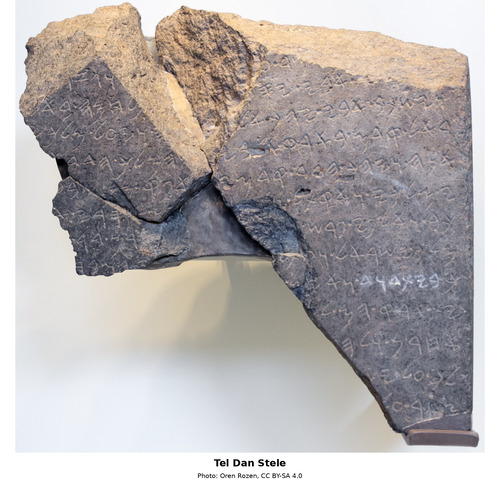
Many, and they look completely different from these. The Tel Dan inscription names the house of David. Hezekiah’s tunnel and its inscription match the account in 2 Kings and 2 Chronicles. The Ketef Hinnom silver amulets carry the priestly blessing of Numbers 6 in writing older than any surviving biblical manuscript. Every one of these was excavated under licence, catalogued, published in journals and placed in museums where critics could inspect them. That is the difference: real finds survive examination, and they gain strength as they are studied rather than losing it.
Should Christians visit these sites, or is that endorsing the claims?
Visiting is fine, provided we go as travellers rather than pilgrims. Seeing the landscape of Midian and the Gulf of Aqaba can make the biblical narrative vivid in a way that reading alone does not. The danger is not geography; it is the assumption that standing somewhere confers certainty about what happened there. Scripture places no holiness in locations under the new covenant, since we come to the heavenly Zion rather than to a mountain that can be touched (Hebrews 12:18–22). Go, look, enjoy God’s world, and hold the identifications loosely.
How can I raise this with a friend or relative who firmly believes these claims?
Begin by affirming what is right in them, because their instinct is love for the Bible and that instinct is worth honouring out loud. Ask questions rather than making pronouncements: where is that wheel kept, and has anyone else examined it? Questions invite thought, while contradiction invites defence. Be willing to leave the conversation unfinished, since people rarely change their minds while another person is watching. And keep the stakes visible: the concern is not that they are wrong about a mountain, but that a faith propped up by unverifiable objects can be badly shaken when those objects fail.
Related Reads
- Where Is Mount Sinai? Weighing the Candidates
- Mount Sinai in Arabia: What Paul Meant in Galatians 4:25
- Was Mount Sinai a Volcano?
- BC 1446 or 1250: When Did the Exodus Really Happen?
- The Ketef Hinnom Scrolls: The Oldest Biblical Text Ever Found
- Did the Hittites Exist? How Archaeology Vindicates the Bible
- Was the Tomb of the Exodus Pharaoh Ever Found?