Imagine someone today telling you the name of the small village where a great world ruler will be born—700 years from now. You’d laugh. Nobody can see that far ahead.
Yet that is exactly what a country preacher called Micah did. About 700 years before Jesus was born, he named the town: Bethlehem. Not Jerusalem, the proud capital. He named a tiny farming town most people ignored.
Was it a lucky guess? A story Christians made up later? Or was God speaking through Micah about His own Son? In this post, we find 7 clear pointers to Jesus in Micah. Some are direct promises. Some are pictures. All of them lead to one person.
Jesus in the Old Testament — Book 33 of 39
This post is the 33rd instalment in our series tracing Christ through every book of the Old Testament. See the full series index.
Who Was Micah?
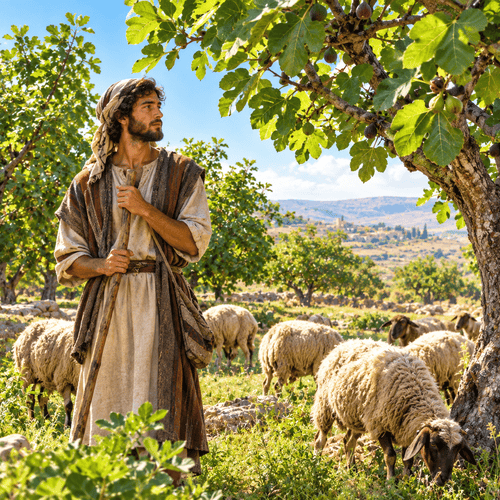
Micah was a prophet from Moresheth, a small town about 35 kilometres south-west of Jerusalem (Micah 1:1). He was a man of the countryside, and he spoke up for poor farmers who were being cheated by the rich and powerful (Micah 2:1–2).
His name means ‘Who is like the LORD?’ Keep that name in mind. It will matter a great deal at the end of his book.
Micah’s World: A Short Timeline
- About 735–700 BC: Micah preaches while Jotham, Ahaz and Hezekiah rule Judah (Micah 1:1). The great prophet Isaiah is preaching at the same time.
- 722 BC: The Assyrian army destroys Samaria, capital of the northern kingdom of Israel—just as Micah warned (Micah 1:6).
- 701 BC: The Assyrian king Sennacherib attacks Judah. Jerusalem is spared after King Hezekiah turns to God.
- About 5 BC: Jesus is born in Bethlehem, seven centuries after Micah named the town.
Can We Really Find Jesus in the Old Testament?
Some say Christians ‘force’ Jesus into the Old Testament. But the idea did not start with us. It started with Jesus. After He rose from the dead, He walked with two confused followers:
And beginning with Moses and all the Prophets, he interpreted to them in all the Scriptures the things concerning himself. (Luke 24:27, ESV)
Jesus also said of the Scriptures, ‘it is they that bear witness about me’ (John 5:39). So we read carefully, let the Bible explain the Bible, and follow the lines the New Testament itself draws. We do not invent hidden meanings.
The English preacher Charles Haddon Spurgeon once said that just as every village in England has a road to London, ‘so from every text in Scripture there is a road to the metropolis of the Scriptures, that is Christ.’ (A metropolis is a great capital city.)
3 WAYS THE OLD TESTAMENT POINTS TO JESUS
Direct prophecy: A clear promise that comes true in Jesus, such as His birth in Bethlehem (Micah 5:2).
Typology: A ‘type’ is a real person, event or thing that works like a preview of Jesus. For example, a king of Israel struck on the face pictures Jesus struck at His trial.
Fulfilled themes: Big Bible ideas that reach their goal in Jesus, such as God’s promise to forgive sin.
The 7 Pointers to Christ in Micah at a Glance
| POINTER | WHERE IN MICAH | HOW JESUS FULFILS IT |
|---|---|---|
| 1. The Ruler from Bethlehem | 5:2 | Born in Bethlehem (Matthew 2:1–6) |
| 2. The judge struck on the cheek | 5:1 | Struck and spat on at His trial (Matthew 27:30) |
| 3. The Shepherd-King who breaks through | 2:13; 5:4 | The Good Shepherd who leads His sheep out (John 10:4, 11) |
| 4. The faithful Leader | 3:5–11 | The true Prophet, Priest and King |
| 5. The firstborn given for sin | 6:6–8 | God gave His own Son (Romans 8:32) |
| 6. The God who passes over sin | 7:18–20 | Sin fully paid for at the cross (Romans 3:25) |
| 7. The Lord who comes down | 1:3; 4:1–4 | God became man; the gospel goes to all nations |
Pointer 1: The Ruler from Bethlehem (Micah 5:2)
But you, O Bethlehem Ephrathah, who are too little to be among the clans of Judah, from you shall come forth for me one who is to be ruler in Israel, whose coming forth is from of old, from ancient days. (Micah 5:2, ESV)
This is Micah’s most famous verse. It makes three bold claims.
A Tiny Town, a Great King
Bethlehem was ‘too little’ to matter. But it was King David’s home town (1 Samuel 16:1). So Micah is saying: God will start again from the beginning. A new and greater David will come from David’s small town.
Notice the word Ephrathah, the old name for the area around Bethlehem (Genesis 35:19; Ruth 4:11). Since another Bethlehem lay in Zebulun (Joshua 19:15), this is like adding a postcode to an address.
Jewish Readers Already Saw the Messiah Here
The word Messiah means ‘anointed one’—the promised King God would send. Christians did not invent the idea that Micah 5:2 speaks of Him. When the wise men arrived, Herod’s chief priests and teachers of the law answered at once, ‘In Bethlehem of Judea’, and quoted Micah (Matthew 2:4–6). Even ordinary crowds knew it:
Has not the Scripture said that the Christ comes from the offspring of David, and comes from Bethlehem, the village where David was? (John 7:42, ESV)
An ancient Jewish Aramaic paraphrase of the Bible, called the Targum, even adds the word ‘Messiah’ into this verse.
A King Older Than Bethlehem
Now look at the end of the verse. How can a baby born in Bethlehem have a ‘coming forth’ that is ‘from of old, from ancient days’?
WHAT DOES ‘FROM OF OLD, FROM ANCIENT DAYS’ MEAN?
Some scholars say it only means the King comes from David’s ancient family line. That is possible (compare Micah 7:14, 20). But several clues point further:
‘Goings forth’: The Hebrew word is plural, as if this ruler was active long before one birth in one town.
‘For me’: He comes forth for God. His story begins with God, not with a family tree.
Divine majesty: He rules ‘in the majesty of the name of the LORD’ (Micah 5:4).
Isaiah agrees: Micah’s fellow prophet called the same coming child ‘Mighty God’ (Isaiah 9:6).
At the very least, this King existed in God’s plan long before Bethlehem. The New Testament shows He existed before time began.
The French Reformer John Calvin read these words as pointing past the manger to Christ’s eternal existence as God. The German scholar Ernst Wilhelm Hengstenberg agreed, arguing that no merely human king could fit this description. Jesus said the same of Himself: ‘before Abraham was, I am’ (John 8:58).
Micah adds a lovely line about this King: ‘And he shall be their peace’ (Micah 5:5). Paul later wrote of Jesus, ‘For he himself is our peace’ (Ephesians 2:14).
Pointer 2: The Judge Struck on the Cheek (Micah 5:1)
…siege is laid against us; with a rod they strike the judge of Israel on the cheek. (Micah 5:1, ESV)
Just before the Bethlehem promise, enemies surround Jerusalem and strike Israel’s ‘judge’—its ruler—on the face. It pictured Judah’s kings being shamed by foreign armies.
But look at the order: first the struck ruler, then the promised Ruler. At Jesus’ trial, men slapped Him (Matthew 26:67), and soldiers ‘spit on him and took the reed and struck him on the head’ (Matthew 27:30). This is typology: Judah’s shamed kings are the picture; Jesus is the real thing. He carried our shame.
Pointer 3: The Shepherd-King Who Breaks Through
Bible kings were often called shepherds, because a good shepherd feeds, leads and protects. Micah’s shepherd is also a king:
And he shall stand and shepherd his flock in the strength of the LORD… for now he shall be great to the ends of the earth. (Micah 5:4, ESV)
- He breaks open the way (2:13): ‘He who opens the breach goes up before them… Their king passes on before them.’ A breach is a hole smashed in a wall. Like a rescuer breaking through a prison wall, this King leads His people out. Jesus, the Good Shepherd, ‘goes before them, and the sheep follow him’ (John 10:4).
- He gathers the weak (4:6): God promises to ‘assemble the lame and gather those who have been driven away’. Jesus welcomed ‘the poor and crippled and blind and lame’ (Luke 14:21).
- He answers Micah’s prayer (7:14): Micah prays, ‘Shepherd your people with your staff.’ Jesus answers: ‘I am the good shepherd. The good shepherd lays down his life for the sheep’ (John 10:11).
Pointer 4: The Faithful Leader Israel Never Had (Micah 3)
Micah chapter 3 is like a school report on Israel’s leaders—and it is a very bad report. Israel had three kinds of leaders: prophets, priests and kings. All three failed.
Israel’s Failed Leaders and the Faithful Leader Jesus
| OFFICE | WHAT MICAH SAW | WHAT JESUS DOES |
|---|---|---|
| Prophet (speaks God’s word) | Prophets promised ‘peace’ to anyone who fed them (3:5) | Speaks God’s truth freely, because He is the Word of God (John 1:1, 14) |
| Priest (brings people to God) | Priests would ‘teach for a price’ (3:11) | Offers Himself as the one perfect sacrifice (Hebrews 9:26) |
| King (rules and protects) | Rulers ‘tear the skin’ off the people they should protect (3:2) | Came ‘not to be served but to serve, and to give his life’ (Mark 10:45) |
Christians call this the threefold office of Christ. The Heidelberg Catechism (1563), a much-loved summary of Christian teaching, says Jesus is called ‘Christ’, meaning anointed, because He is our chief Prophet, our only High Priest and our eternal King (Question 31). Micah shows us why we need all three.
Pointer 5: The Firstborn God Did Not Ask For (Micah 6:6–8)
In chapter 6, God takes His people to court. A worried worshipper asks what he could bring to make things right. His offers grow bigger and bigger: young calves, thousands of rams, rivers of oil. Then comes his final, shocking offer:
Shall I give my firstborn for my transgression, the fruit of my body for the sin of my soul? (Micah 6:7, ESV)
Child sacrifice was a horrible practice of the nations around Israel, and God hated it (Jeremiah 7:31). God refuses every offer and points instead to a changed life:
He has told you, O man, what is good; and what does the LORD require of you but to do justice, and to love kindness, and to walk humbly with your God? (Micah 6:8, ESV)
But here is the wonderful twist. God would never accept a sinner’s firstborn. Yet, in love, God gave His own Son: ‘He who did not spare his own Son but gave him up for us all, how will he not also with him graciously give us all things?’ (Romans 8:32). The answer to Micah’s question is not what we give God, but what God gives us.
IS MICAH 6:8 A WAY TO EARN SALVATION?
Micah 6:8 isn’t a list of steps to earn God’s favour. It shows what a truly godly life looks like—and none of us lives it perfectly.
Do justice: Only Jesus always treated every person rightly.
Love kindness: The Hebrew word is hesed, God’s faithful, loyal love. Only Jesus loved like this without fail.
Walk humbly with your God: Only Jesus walked in perfect humility, even to death on a cross (Philippians 2:8).
Jesus echoed Micah when He rebuked leaders who neglected ‘justice and mercy and faithfulness’ (Matthew 23:23). Micah 6:8 shows our need—and the life Jesus lived in our place.
Pointer 6: The God Who Passes Over Sin (Micah 7:18–20)
Remember Micah’s name: ‘Who is like the LORD?’ At the end of his book, Micah turns his own name into a song of worship:
Who is a God like you, pardoning iniquity and passing over transgression for the remnant of his inheritance? He does not retain his anger forever, because he delights in steadfast love. (Micah 7:18, ESV)
This raises a big question. God is perfectly just. A fair judge cannot simply ignore crimes. So how can God ‘pass over’ sin and still be fair? Micah does not fully answer. The answer comes 700 years later, when Paul writes about Jesus:
whom God put forward as a propitiation by his blood, to be received by faith. This was to show God’s righteousness, because in his divine forbearance he had passed over former sins. (Romans 3:25, ESV)
God ‘passed over’ sins in the past because He was looking ahead to the cross, where Jesus would pay for them in full. Propitiation means a sacrifice that turns away God’s anger by completely paying for sin. Micah asked the question. Calvary answered it.
Micah ends with God’s oath ‘sworn to our fathers’ (7:20). Before Jesus’ birth, Zechariah had assured us God was keeping the oath (Luke 1:72–73).
Pointer 7: The Lord Who Comes Down and Gathers the Nations
For behold, the LORD is coming out of His place, and will come down and tread upon the high places of the earth. (Micah 1:3, ESV)
Micah’s book opens with God stepping down from heaven to judge. Yet the whole Bible shows God coming down in an even more amazing way. In Jesus, God became a real man: ‘the Word became flesh and dwelt among us’ (John 1:14).
Micah also sees a day when many nations climb God’s mountain, because ‘out of Zion shall go forth the law, and the word of the LORD from Jerusalem’ (Micah 4:2). This began when the gospel went out from Jerusalem to the world (Acts 1:8), and people from every nation are still coming.
DID YOU KNOW? JESUS QUOTED MICAH
Micah described a broken society where ‘a man’s enemies are the men of his own house’ (Micah 7:6). Jesus used these very words in Matthew 10:35–36 to warn that following Him might divide families, because loyalty to Him must come first.
Answering the Sceptics
Here are 4 common objections, with short, honest answers.
- ‘Micah 5 was only about the Assyrian war.’ Assyria is mentioned (5:5–6), but no king of Micah’s time became ‘great to the ends of the earth’ (5:4). Only Jesus fits.
- ‘Matthew changed Micah’s words.’ Micah calls Bethlehem ‘too little’; Matthew says ‘by no means least’ (Matthew 2:6). Matthew is explaining the result: Christ’s birth made the little town great.
- ‘Christians invented the Bethlehem birth.’ Matthew and Luke tell the story independently, yet both place it in Bethlehem. Justin Martyr (about AD 150) and Origen (about AD 248) mention a Bethlehem cave that local people pointed to as His birthplace.
- ‘Micah’s prophecies failed.’ Micah warned that Jerusalem would become ‘a heap of ruins’ (3:12). Jeremiah 26:18–19 records that King Hezekiah repented, so God held back the disaster. Many warnings were calls to repent.
Who Is a God Like You?
Micah began with a question hidden in his own name, and ended with it on his lips. The whole Bible gives one answer: Jesus. He’s the eternal King born in a little town, the struck ruler who carried our shame, and the Shepherd who breaks the way open. He is the Son God gave, and the reason a just God can pass over our sin.
Micah pointed to the same person we can know today. So the question isn’t only ‘Who is like the LORD?’ It’s also: will we come to Him?
Tough Questions, Honest Answers
Is Micah the same person as Micaiah in 1 Kings 22?
No. Micaiah son of Imlah lived around 850 BC and spoke to King Ahab of Israel. Micah of Moresheth lived over a hundred years later and spoke mainly to Judah. Their names are closely related—both mean ‘Who is like the LORD?’ Interestingly, Micah’s book opens with ‘Hear, you peoples, all of you’ (Micah 1:2), which echoes Micaiah’s last words, ‘Hear, all you peoples!’ (1 Kings 22:28). Micah may have been deliberately standing in the line of that brave, lonely prophet.
Why are Micah 4:1–3 and Isaiah 2:2–4 almost the same?
Micah and Isaiah were contemporaries, so it’s no surprise their words overlap. Perhaps one prophet used the other’s words, or perhaps both used a well-known prophecy of their day. Either way, the Holy Spirit chose to give this promise twice. In the Bible, 2 witnesses make a matter firm (Deuteronomy 19:15). God wanted His people to be very sure the nations would one day come to Him—as indeed they’re coming now through the gospel of Jesus.
If Jesus was born in Bethlehem, why is He called “Jesus of Nazareth”?
Jesus was born in Bethlehem but grew up in Nazareth, a small town in Galilee (Matthew 2:23; Luke 2:39). People named Him after the town where He lived, just as we often do today. Some people in His day wrongly thought this meant He could not be the Messiah (John 7:41–42). John records this with gentle irony, because his readers already knew the truth. Both towns matter: Bethlehem shows He is David’s promised King, and Nazareth shows He came humbly, from a place people looked down on.
What does “beat their swords into ploughshares” mean?
A ploughshare is the metal blade of a plough, used to break up soil for farming. Micah 4:3 pictures a day when nations turn their weapons into farming tools, because war is over. A famous statue with this theme stands at the United Nations in New York. But the Bible says this peace will not come through human effort alone. It comes only through Christ, who begins it now in changed hearts and will complete it when He returns.
What does “cast all our sins into the depths of the sea” mean, and what is Tashlich?
Micah 7:19 is a picture of complete forgiveness. What’s thrown into the deepest sea is gone for ever and can’t be found. Many Jewish people practise a ceremony called Tashlich on their New Year, throwing pieces of bread into flowing water as a symbol of casting away sins, based on this verse. Christians agree the picture is beautiful, but no ceremony can remove sin. Only the blood of Jesus can do that. Because of Him, God removes our sins ‘as far as the east is from the west’ (Psalm 103:12).
How do Jewish readers understand Micah 5:2 today?
Many Jewish teachers agree that Micah 5:2 speaks of the Messiah from David’s family. But most say Jesus cannot be that Messiah, because the world still doesn’t have full peace. The Bible’s answer is that the Messiah comes twice—first to suffer and save, then to rule in glory. Isaiah 53 describes a suffering servant, and Micah 5:3 itself hints at a waiting time. Christians should share this with respect and love, remembering that Jesus and His first followers were Jewish.
Does Micah 6:8 teach social justice?
Micah certainly cared about how people were treated. He strongly condemned rich people who stole land from the poor (Micah 2:1–2). But in the Bible, ‘justice’ means doing what is right by God’s standard, as shown in His law—not by any modern political theory. It applies both to how each person lives and to how rulers use power. Christians should care for the poor and oppressed. But true justice grows out of being made right with God through Jesus, not as a replacement for the gospel.