‘It’s just a piece of paper.’
That’s what many couples say when they move in together without getting married. They share a home. Even a bed and a bank account. So what difference could a wedding possibly make?
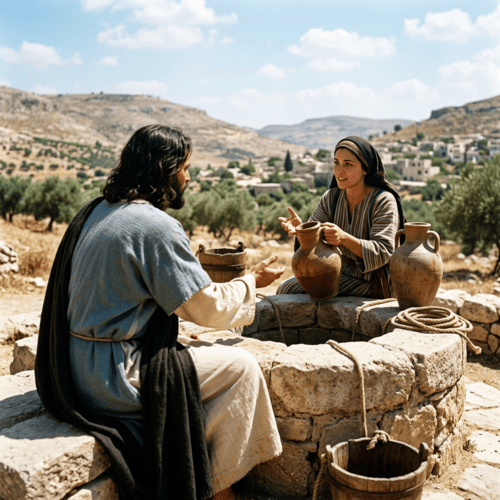
Jesus thought it made all the difference. He once met a woman at a well who was living with a man, and he said, in effect, ‘That man is not your husband.’ In one short sentence, he drew a line that our culture has spent 60 years trying to rub out.
Today that line is very faint. In 2019, the Pew Research Center found that 69% of American adults think it is fine for a couple to live together even if they never plan to marry. Among white evangelical Christians, 58% said it was acceptable if the couple planned to marry later. In India, the state of Uttarakhand now requires live-in couples to register with the government. Living together is no longer hidden. It is normal.
So, is cohabitation a sin? Let’s walk through what the Bible teaches, step by step, and then answer the most common objections.
What Is Cohabitation?
Cohabitation (say: koh-hab-ih-TAY-shun) means an unmarried man and woman living together as if they were married. Usually this means sharing a bed and a sexual relationship. People often call it a ‘live-in relationship’.
Not every shared roof is a problem. The table below shows what counts as cohabitation.
| LIVING ARRANGEMENT | WHAT IT LOOKS LIKE | IS IT COHABITATION? |
|---|---|---|
| Flatmates | Friends share the rent, with separate rooms and no romance | No |
| Joint family | Relatives of different generations live in one home | No |
| Engaged couple | They plan to marry but live apart until the wedding | No |
| Live-in couple | A romantic couple share a home, and usually a bed, without being married | Yes |
| Married couple | A man and a woman joined by public promises before God | No—this is marriage |
So the real question isn’t ‘Do you share an address?’ It is ‘Are you living as husband and wife without being husband and wife?’
Step 1: God Invented Marriage
Marriage wasn’t invented by governments, priests or lawyers. God created it in the Garden of Eden, long before there was any state or church.
‘Therefore a man shall leave his father and his mother and hold fast to his wife, and they shall become one flesh.’
Genesis 2:24 (ESV)
Jesus quoted this very verse when people asked him about marriage. Then he added: ‘What therefore God has joined together, let not man separate’ (Matthew 19:6). Notice who does the joining. It is God, not the couple alone.
Genesis 2:24 describes three steps, and the order matters:
| STEP IN GENESIS 2:24 | WHAT IT MEANS | WHAT COHABITATION DOES |
|---|---|---|
| 1. Leave father and mother | A public change. Everyone knows a new family has begun. | Often private and unclear. Families may not even be told. |
| 2. Hold fast to his wife | A firm, lifelong promise of loyalty | Keeps a back door open. Either person can simply walk out. |
| 3. Become one flesh | Sexual union, which seals the marriage | Jumps straight to this step and skips the first two |
Scottish theologian John Murray called marriage a ‘creation ordinance’. That simply means a pattern God built into the world from the very beginning, for all people, not only for Christians. Dutch theologian Herman Bavinck taught the family is the first and most basic building block of human society. When marriage is weakened, everything built on top of it begins to shake.
Step 2: Marriage Is a Covenant, Not Just a Feeling
KEY TERM: COVENANT
A covenant is a serious, binding promise made before witnesses, and above all before God. It is more than a contract. A contract says, ‘I will do my part if you do yours.’ A covenant says, ‘I will be faithful to you, whatever happens.’
The Bible calls marriage a covenant. Through prophet Malachi, God says ‘the LORD was witness between you and the wife of your youth … she is your companion and your wife by covenant’ (Malachi 2:14). Proverbs 2:17 also describes marriage as ‘the covenant of her God’.
The reformer John Calvin, writing on Malachi, pointed out God Himself stands as the witness at every wedding. So when someone breaks faith with their spouse, they offend God, not just another person. Marriage is a three-way promise: husband, wife and God.
Covenants in the Bible are always public. They are spoken out loud, witnessed by others and remembered:
- Boaz and Ruth were married at the town gate, before the elders. Boaz told the crowd, ‘You are witnesses this day’ (Ruth 4:9–10).
- Jacob’s wedding was marked by a feast for the whole community (Genesis 29:22).
- Jesus himself attended a wedding celebration at Cana and performed his first miracle there (John 2:1–11).
British pastor Christopher Ash gives a helpful definition. Marriage, he writes, is ‘the voluntary sexual and public social union of one man and one woman from different families’. Notice the word public. A private arrangement, however loving it feels, is missing something God requires.
This is where ‘it’s just a piece of paper’ falls apart. If the paper means nothing, why not sign it? Refusing to make public promises usually means one thing: someone wants to keep a way out.
Step 3: Sex Doesn’t Make a Marriage
Some people argue, ‘In God’s eyes, once we have slept together, we are married.’ The Bible says no. Three passages show this clearly:
- The woman at the well. Jesus said to her, ‘You are right in saying, “I have no husband”; for you have had five husbands, and the one you now have is not your husband’ (John 4:17–18). She was living with this man, yet Jesus refused to call it marriage. This is the clearest word on cohabitation in the whole Bible, and it comes from Jesus himself.
- The father’s right to say no. Under the Law of Moses, a man who slept with an unmarried woman had to offer to marry her. But ‘if her father utterly refuses to give her to him’, there was no marriage (Exodus 22:16–17). Sex had happened. Marriage had not.
- Sex with a prostitute. Paul says that a man ‘who is joined to a prostitute becomes one body with her’ (1 Corinthians 6:16). Yet nobody would say he has married her. Sex creates a deep bond, but it does not create a covenant.
Think of it this way. Sex is the seal on a marriage, not the doorway into it. Putting a seal on an empty envelope does not turn it into a letter.
Step 4: God Keeps Sex for Marriage
KEY TERM: SEXUAL IMMORALITY
In the New Testament, the Greek word porneia (say: por-NAY-ah) covers every kind of sex outside the marriage of a man and a woman. Our English Bibles usually translate it as ‘sexual immorality’. It includes sex between unmarried partners, whether or not they live together.
Since a cohabiting couple is not married, sex between them falls outside God’s design. The Bible is not unclear on this:
- Hebrews 13:4: ‘Let marriage be held in honour among all, and let the marriage bed be undefiled, for God will judge the sexually immoral and adulterous.’
- 1 Thessalonians 4:3: ‘For this is the will of God, your sanctification: that you abstain from sexual immorality.’
- 1 Corinthians 6:18: ‘Flee from sexual immorality.’
Now notice what Paul says to people with strong sexual desire. He does not say, ‘Move in together and see how it goes.’ He says, ‘If they cannot exercise self-control, they should marry. For it is better to marry than to burn with passion’ (1 Corinthians 7:9). God’s answer to desire is marriage, not a trial version of it.
This isn’t because God thinks sex is dirty. Sex is so precious that God keeps it safe, the way we keep jewels in a locker. The Song of Solomon warns three times ‘that you not stir up or awaken love until it pleases’ (Song of Solomon 2:7). Love has a right time, and God sets it.
Step 5: Engagement Isn’t Marriage
‘But we are engaged. We will marry anyway.’ This is the most common reason Christian couples give for moving in. Mary and Joseph answer it.
KEY TERM: BETROTHAL
Betrothal was the formal engagement of Bible times. It was so serious that ending it required a divorce. Yet a betrothed couple still did not live together or sleep together until the wedding.
Mary and Joseph were betrothed. Matthew tells us that the events of Jesus’ birth began ‘when his mother Mary had been betrothed to Joseph, before they came together’ (Matthew 1:18). Only after the angel spoke did Joseph take Mary home as his wife (Matthew 1:24).
Their betrothal was far stronger than a modern engagement ring, yet they did not set up home early. If betrothal did not give a couple the right to live together, a modern engagement certainly does not.
Step 6: ‘But We’re Not Sleeping Together’
Some Christian couples move in together but promise to stay pure, perhaps using separate bedrooms. Scripture gives 4 strong reasons to say no:
- It plays with fire. ‘Can a man carry fire next to his chest and his clothes not be burned?’ (Proverbs 6:27). Scripture tells us to flee temptation (2 Timothy 2:22), not to share a kitchen with it.
- It makes room for sin. Paul says, ‘make no provision for the flesh, to gratify its desires’ (Romans 13:14). A shared home is a very large provision.
- It sends the wrong message. Sexual immorality ‘must not even be named among you’ (Ephesians 5:3). Our lives should not even raise the question.
- It can harm others. Younger believers watch what we do. Paul warned against using our freedom in a way that makes a weaker brother or sister stumble (1 Corinthians 8:9–13).
The Westminster Larger Catechism, a teaching summary written by English and Scottish pastors in the 1640s, puts this wisely. It says the seventh commandment requires ‘shunning all occasions of uncleanness’. Among the sins it forbids, it even lists ‘undue delay of marriage’. In plain English: if you love each other enough to live together, you probably love each other enough to marry. So marry.
What the Research Shows
The Bible’s case does not depend on statistics. Still, the research closely matches what God has already said.
WHAT THE RESEARCH SHOWS—AND WHAT IT DOESN’T
- Higher divorce risk. Couples who live together before marriage have been about 33% more likely to divorce than couples who do not.
- Sliding, not deciding. Psychologist Scott Stanley found that many couples ‘slide’ into living together without really deciding. Once rent, furniture and pets are shared, leaving a bad relationship gets harder. He calls this ‘inertia’.
- Moving in before engagement. His colleague Galena Rhoades found the greatest risk among couples who move in before they are engaged.
- A fair warning. Some researchers think part of the risk comes from who chooses to cohabit and how young they are, not only from cohabitation itself.
Pastor Tim Keller summed it up memorably. He described cohabitation as ‘one long audition’. In an audition, you’re always being tested and can always be rejected. That’s the very opposite of covenant love, which says, ‘I am yours, no matter what.’ Nobody feels safe in an audition.
Common Objections Answered
| WHAT PEOPLE SAY | A BIBLICAL REPLY |
|---|---|
| ‘The Bible never mentions cohabitation.’ | Jesus did, in John 4:18. And every New Testament warning against sexual immorality covers it. |
| ‘Marriage is just a piece of paper.’ | Marriage is a public covenant before God and witnesses. If the paper means nothing, signing it costs nothing. |
| ‘We need to test our compatibility first.’ | Marriage is a promise, not a trial run. The research does not show that testing works. |
| ‘We are saving money on rent.’ | Obeying God may cost more. But it is always worth it, and the church should help couples in real need. |
| ‘Abraham and Jacob had concubines.’ | The Bible records what they did; it does not approve it. Jesus pointed back to Genesis 2 as God’s design. |
| ‘God looks at the heart, not at a ceremony.’ | God sees a heart that refuses to make promises. Real love is willing to say ‘I do’ out loud. |
| ‘The law now allows it.’ | Even laws like Uttarakhand’s treat live-in relationships and marriage as different things. Legal is not the same as right. |
Living Together Now? There’s a Way Forward
If you’re cohabiting right now, please hear this: this article isn’t written to shame you. It’s written to bring you home.
Remember the woman at the well. Jesus didn’t ignore her sin, but He didn’t crush her with it either. He named it gently, and then offered her ‘living water’, the new life that only He can give (John 4:10, 14). She left her water jar and ran into town to tell everyone about Him.
The church in Corinth was full of people with sexual sin in their past. Paul wrote to them: ‘And such were some of you. But you were washed, you were sanctified, you were justified in the name of the Lord Jesus Christ and by the Spirit of our God’ (1 Corinthians 6:11).
KEY TERM: REPENTANCE
Repentance means turning around. It’s more than feeling sorry. It means turning away from sin and turning towards God, trusting Jesus to forgive us and to change us.
For a cohabiting couple, repentance usually means taking these practical steps:
- Marry soon. If you’re both believers, committed to each other and free to marry, set a date and keep it simple. A small, honest wedding is better than a big, delayed one.
- Or move out. If you’re not ready to marry, or one of you doesn’t follow Christ (2 Corinthians 6:14), live apart and stop sleeping together now.
- Talk to your pastor. Ask for help with the practical side: housing, money and marriage preparation.
- Protect any children. If you share children, get wise help as you put things right. For many families, marriage is the best way forward.
Churches have a duty too. Pastors should speak kindly and clearly before young people move in, not only afterwards. When a church member refuses to change, Jesus gives a careful process of loving correction (Matthew 18:15–17). The goal is always restoration.
Conclusion: Better Than a Trial Run
So, is cohabitation a sin? Yes. It takes the gift of sex outside the covenant God designed for it. It swaps public promises for private convenience. And it keeps a back door open in a relationship that God means to last for life.
But God’s ‘no’ always protects a bigger ‘yes’. He offers something far better than a trial run: a covenant in which two people say, before God and everyone they love, ‘I am yours, for life.’ That is a picture of the gospel itself. Christ did not test his bride first. He loved the church and ‘gave himself up for her’ (Ephesians 5:25).
So don’t settle for a piece of paper you refuse to sign. Say ‘I do’, or say ‘not yet’ and wait. Either way, honour Christ with your home.
Tough Questions, Honest Answers
Is a live-in relationship legal in India?
For adults, generally yes. Indian courts have said that two adults living together by their own choice is not a crime. A woman in a ‘relationship in the nature of marriage’ can also seek protection under the Domestic Violence Act. In Uttarakhand, couples must now register their live-in relationship within a month. But legal and right are not the same thing. The state may allow what God does not approve, and Christians follow the higher law of God’s Word (Acts 5:29).
Is a court or registry marriage valid before God?
Yes. The Bible requires a public covenant, not a church building or a particular ceremony. Protestant churches have always taught that marriage is God’s gift to all people, not a church sacrament. A registry wedding is public, legal and witnessed, so it fits the biblical pattern. Many Christian couples marry at the registry office and then ask their church to pray for them. What matters most is that both make faithful promises before God.
Will a pastor marry a couple who are already living together?
Many will, and they should be glad to, because marriage is the right next step. But a faithful pastor will usually ask the couple to repent first. That often means living apart, or at least stopping sex, until the wedding. Some pastors suggest bringing the wedding date forward instead of waiting many months. The goal is not to punish the couple but to help them begin marriage with a clean conscience.
Should a cohabiting couple stop sleeping together before the wedding?
Yes. Repentance means turning from sin now, not after the ceremony. Even if the wedding is only weeks away, sex before it is still outside God’s design. Waiting a short time is also a powerful act of trust in God. If living under one roof makes that too hard, one partner should stay elsewhere until the wedding.
Can my adult child and their partner share a room when they visit us?
You are not required to offer an unmarried couple a shared bed in your home. You can welcome them warmly, feed them well and still give them separate rooms. Explain your reasons kindly and privately, ideally before the visit. Your home can show love and conviction at the same time. Keep the door open, because your kindness may be what draws them back to Christ.
Is it wrong for an engaged couple to go on holiday or stay the night together?
The Bible gives no rule about holidays. But it does tell us to flee temptation and to avoid even the hint of immorality (2 Timothy 2:22; Ephesians 5:3). Spending nights alone together puts a heavy weight on self-control. Wise couples book separate rooms, travel with friends or plan day trips. This protects both their purity and their witness.
How long should a Christian engagement last?
Scripture gives no fixed time. But it does warn against delay when desire is strong: ‘it is better to marry than to burn with passion’ (1 Corinthians 7:9). An engagement should be long enough for marriage preparation, family conversations and simple planning. Many pastors suggest somewhere between three and nine months. Focus on preparing for the marriage, not just the wedding day.
Related Reads
- Sexual Regret in Marriage: Can God Heal What Came Before?
- What Does the Bible Say About Premarital Sex? A Clear Christian Answer
- What Does the Bible Say About Dating, Courtship and Marriage?
- Leaving and Cleaving: What Genesis 2:24 Means for the Married
- ‘Flee Sexual Sin’: Why Does Paul Single This Sin Out?
- The Sexual Revolution’s Broken Promises: The Bible Was Right All Along
- Unequally Yoked in Marriage: Recipe for Disaster?
- What Role Does Repentance Play in the Christian Life?
- Saving a Hasty Marriage: God’s Perspective