
“Unless you eat the flesh of the Son of Man and drink his blood, you have no life in you.”
These are some of the most shocking words Jesus ever spoke. When He said them in John 6, many of His followers were so disturbed they stopped following Him altogether. Even today, these words puzzle and unsettle readers. Sure, we know Jesus wasn’t advocating cannibalism: What then could He possibly have intended?
The answer is both simpler and more profound than you might think.
THE CONTEXT: FROM PHYSICAL BREAD TO SPIRITUAL FOOD
Jesus spoke these words during Passover season, the day after He miraculously fed 5,000 people with five loaves and two fish. The crowd tracked him down, hoping for another free meal. Jesus confronted them directly: “You’re not seeking me because you saw signs, but because you ate the loaves and were filled” (John 6:26).
Then He pivoted: “Don’t work for food that perishes, but for food that endures to eternal life.”
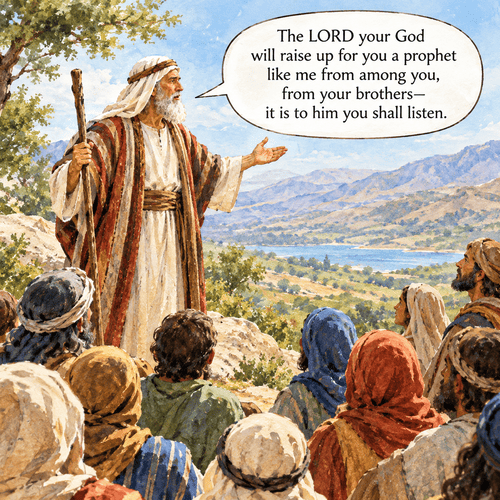
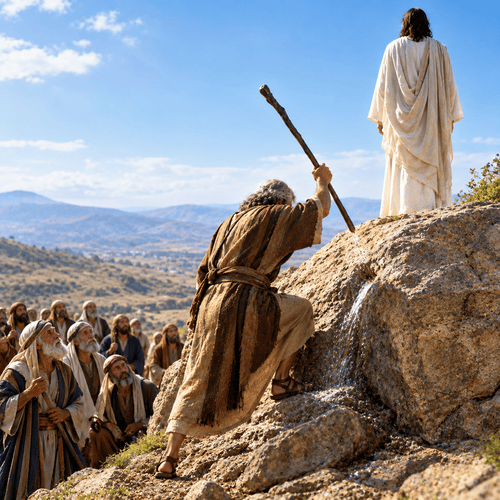
What follows is a discourse where Jesus systematically shifts the conversation from physical bread to spiritual nourishment. He declares Himself “the bread of life”—whoever comes to Him will never hunger. But the crowd wants proof, reminding Him Moses gave their ancestors manna in the wilderness.
Jesus responds by escalating His language: “I am the living bread that came down from heaven. If anyone eats of this bread, he will live forever. And the bread that I will give for the life of the world is my flesh” (John 6:51).
Then come the shocking words: “Unless you eat the flesh of the Son of Man and drink his blood, you have no life in you.”
For a Jewish audience, this was deliberately offensive. The Law of Moses strictly forbade consuming blood. This language was designed to separate genuine disciples from those merely following for earthly benefits.
WHAT JESUS ACTUALLY MEANT
Here’s the key: Jesus wasn’t talking about literal eating. He was describing saving faith and spiritual union with Him.
How do we know? Jesus Himself tells us. Throughout John 6, He equates eating and drinking with believing:
“Everyone who looks to the Son and believes in him shall have eternal life” (v. 40)
“Whoever believes has eternal life” (v. 47)
“Whoever comes to me shall not hunger, and whoever believes in me shall never thirst” (v. 35)
Coming, believing, eating, drinking—Jesus uses these interchangeably. To eat His flesh and drink His blood means to believe in Him and receive Him by faith.
John Calvin explained it this way: just as bread nourishes our physical bodies, Christ nourishes our souls. We “feed on Christ” by faith through the Holy Spirit’s work. The Puritan John Owen put it simply: “The soul feeds on Christ as the body feeds on food.”
But there’s more. Jesus couldn’t separate “flesh and blood” from what was about to happen. His flesh would be broken and his blood shed on the cross. We cannot benefit from Christ’s sacrificial death by merely admiring it from a distance. We must personally receive it, appropriate it, make it ours—just as food must be eaten to nourish us.
As the 19th-century Anglican bishop JC Ryle wrote: “To eat Christ’s flesh and drink His blood is to believe on Christ with the heart, to receive and rest upon Him as the Saviour of the soul.”
WHAT THIS MEANS FOR OUR DAILY LIFE
This isn’t abstract theology. It has practical implications for how Christians are to live.
We need Christ daily. Just as we eat physical food every day to survive, we must daily trust and commune with Christ. Yesterday’s faith won’t sustain us today any more than yesterday’s breakfast will.
Christ is sufficient. We don’t need Christ plus something else—good works, religious performance, spiritual experiences. Christ alone nourishes our soul. He is enough.
Faith is active, not passive. We actively feed on Christ through regular Scripture reading (hearing his words), prayer (communing with him), participation in the Lord’s Supper (the visible sign of this spiritual reality), and meditation on his person and work.
We have assurance. Jesus promises: “Whoever feeds on my flesh and drinks my blood has eternal life, and I will raise him up on the last day” (John 6:54). If we’re trusting in Christ, we have this guarantee.
We will be transformed. Physical food literally becomes part of us—it’s metabolised into our cells. Similarly, Christ’s life transforms us from the inside out as we feed on Him by faith.
Finally, there’s a warning. Many in the crowd walked away when Jesus said these things (John 6:66). Let’s ask ourselves: Am I following Jesus for earthly benefits, or am I truly feeding on him?
COMMON OBJECTIONS ANSWERED
“This sounds Catholic—isn’t this about transubstantiation?” No. Jesus spoke these words in John 6, before He instituted the Lord’s Supper at the Last Supper. This passage is about faith, not the sacrament. The Reformed tradition teaches us the Lord’s Supper is a sign pointing to the reality Jesus describes here—real spiritual feeding, but not a physical transformation of bread and wine. Most importantly, the text itself defines eating and drinking as believing (verses 35, 40, 47).
“You’re making it too metaphorical—Jesus said ‘truly, truly’!” Jesus regularly used vivid metaphors even with “truly, truly.” In John 10:7, he says “Truly, truly, I am the door”—yet no one thinks he’s literally made of wood. A literal interpretation of John 6 creates absurdity: Jesus was standing before them with his flesh and blood intact.
More decisively, Jesus Himself explains: “The Spirit gives life; the flesh counts for nothing. The words I have spoken to you—they are full of the Spirit and life” (John 6:63). He’s telling them plainly: this is spiritual, not physical.
THE BOTTOM LINE
Jesus used shocking, visceral language to communicate a vital truth: we must completely depend on His sacrificial death through faith. Just as we cannot live physically without eating, we cannot live spiritually without Christ.
The question isn’t whether these words are offensive to some—they probably are. The question is: are we truly feeding on Christ daily, or merely following the crowd?
If we’re feeding on Him by faith, we have this glorious promise: eternal life, and resurrection on the last day.
RELATED FAQs
Did Jesus’s disciples understand what He meant immediately?
No, and that’s significant. John 6:60 tells us even His disciples said, “This is a hard saying; who can listen to it?” Jesus then explained His words are “spirit and life” (v. 63), helping them understand the spiritual nature of His teaching. The fact that the Twelve stayed while others left (v. 67-69) suggests they grasped, perhaps dimly at first, that Jesus was speaking about faith and dependence on Him. Peter’s response—”Lord, to whom shall we go? You have the words of eternal life”—shows He understood Jesus Himself was essential, even if the full meaning became clearer only later.
How does DA Carson interpret this passage?
DA Carson, one of today’s leading evangelical scholars, emphasises “eating and drinking” are “metaphors for believing” in his commentary on John’s Gospel. He argues the offense Jesus caused was intentional—designed to reveal who had genuine faith versus who followed for material benefits. Carson notes Jesus progressively intensified His language (from “bread” to “flesh and blood”) to force a decision, and He stresses the entire discourse focuses on the necessity of Jesus’s death and our faith-response to it.
What’s the connection between John 6 and the Lord’s Supper?
While John 6 isn’t directly about the Lord’s Supper (it happened before Jesus instituted it), there’s a clear thematic connection. Reformed theologian Herman Bavinck explained that the Lord’s Supper is the visible enactment of what Jesus taught in John 6—we spiritually feed on Christ by faith, and the bread and wine signify this reality. The Supper doesn’t create the spiritual feeding; it represents and seals what’s already true for believers. Modern Reformed scholar Michael Horton notes that the sacrament is a “means of grace” that strengthens our faith as we participate, reminding us physically of the spiritual reality of our union with Christ.
Why did Jesus use such offensive language to a Jewish audience?
Reformed exegete James Montgomery Boice argued Jesus deliberately used language that would scandalise his Jewish hearers to separate true disciples from the crowd. Eating blood violated Levitical law (Leviticus 17:10-14), making this teaching repulsive. Jesus wasn’t being needlessly provocative—he was revealing people’s hearts. Those who stayed demonstrated they valued Jesus himself over their comfort or cultural sensibilities, while those who left showed they wanted Jesus’s benefits without Jesus himself.
How does this relate to Jesus being “the Lamb of God”?
This connection is crucial. Earlier in John’s Gospel, John the Baptist called Jesus “the Lamb of God, who takes away the sin of the world” (John 1:29). At Passover, Jewish families ate the Passover lamb as part of remembering their deliverance from Egypt. Reformed scholar Sinclair Ferguson notes Jesus is our Passover Lamb whose flesh must be “consumed” (received by faith) for His sacrifice to benefit us personally. Just as the lamb’s blood on doorposts didn’t save anyone who didn’t apply it, Christ’s death only saves those who personally receive Him by faith.
What did the Reformers say about the Roman Catholic view of this passage?
The Reformers uniformly rejected the Catholic interpretation that John 6 teaches transubstantiation (the bread and wine literally becoming Christ’s body and blood). Martin Luther, John Calvin, and later Reformed theologians argued John 6 is about faith, not the Eucharist, since it predates the Last Supper chronologically. They pointed out if Jesus meant literal eating, His body would have been consumed before the crucifixion even happened! Contemporary Reformed scholar RC Sproul emphasised conflating John 6 with transubstantiation “does violence to the text” by imposing later sacramental theology onto a passage about believing in Christ.
How does this passage speak to assurance of salvation?
John 6 contains some of Scripture’s strongest promises about eternal security. Jesus says four times He “will raise up” those who come to him “on the last day” (vv. 39, 40, 44, 54). Reformed theologian JI Packer noted this passage teaches that those who truly feed on Christ by faith cannot lose their salvation—Christ himself promises to preserve them. Modern Reformed scholar Kevin DeYoung emphasises that if we’re trusting in Christ (feeding on him), we can have rock-solid assurance: “Whoever feeds on my flesh and drinks my blood has eternal life” (v. 54). The promise isn’t conditional on our performance but on Christ’s faithfulness to raise us up.
OUR RELATED POSTS