
—AND WHY DO SO MANY GET IT WRONG?
“Be filled with the Spirit.” Five words. One command. Endless confusion.
Ephesians 5:18 is one of the most quoted verses in Christendom—and yet, one of the most misunderstood. Some hear it as the gateway to a dramatic second-tier spiritual experience.
Others treat it as a call to emotional intensity or to a private mystical encounter.
Many sincere believers quietly wonder whether they’ve ever truly experienced it at all.
But what if the confusion dissolves the moment we read the verse carefully—on its own terms, in its own context, with fresh eyes?
THE GRAMMAR THAT CHANGES EVERYTHING
Paul writes: “Don’t be drunk with wine, because that will ruin your life. Instead, be filled with the Holy Spirit.” (Ephesians 5:18).
The key word is the Greek verb plērousthe—”be filled.” Three grammatical features matter enormously here, and together they reframe the entire discussion.
- First, it’s a present tense command, meaning continuous, ongoing action—not “get filled once” but “keep on being filled.” This isn’t a crisis moment to be reached; it’s a daily reality to be sustained.
- Second, it’s passive voice—the filling comes from outside us. We do not generate or manufacture it. We receive it. God is the agent; we’re the recipients. As scholar FF Bruce observed, the passive voice here points to a work that’s entirely God’s initiative and gift.
- Third, it’s plural—Paul is speaking to the whole congregation, not coaching individual spiritual athletes. This is a command for every believer in every pew, not a prize for the spiritually advanced.
Thomas Schreiner puts it well: the present imperative signals “not a dramatic, once-for-all experience but a continuous, ongoing work of the Spirit in the believer’s life.”
WHAT SPIRIT-FILLING ACTUALLY LOOKS LIKE
Here’s where the text becomes genuinely surprising. Paul doesn’t leave “be filled” undefined. He immediately follows it with five participles—five descriptions of what a Spirit-filled person actually looks like in practice (vv. 19–21):
- Speaking to one another in psalms, hymns, and spiritual songs
- Singing to the Lord—vocal, congregational praise
- Making melody in our hearts to the Lord—the inward devotion that gives the outward song its depth
- Giving thanks always and for everything to God the Father
- Submitting to one another out of reverence for Christ
It’s worth pausing on the second and third participles. In the Greek, singing and making melody are two distinct words. Paul is deliberately holding together the outward and the inward dimensions of worship. Spirit-filled praise is never merely performance, nor merely private feeling. It’s both, together, directed toward God.
Notice what’s conspicuously absent from this list: ecstatic experiences, dramatic sensations, private visions. What Paul describes is profoundly communal and ethical—singing together, thanking God, deferring to one another. The evidence of Spirit-filling is not emotional intensity. It’s transformed community life.
John Stott captures this perfectly: “Being filled with the Spirit is a social, not a solitary, experience.”
THE KEY THAT UNLOCKS IT ALL: WORD AND SPIRIT TOGETHER
Turn to Paul’s parallel letter—Colossians 3:16—and something remarkable appears. “Let the word of Christ dwell in you richly,” Paul writes there—and then produces the exact same five outcomes: singing, thanksgiving, mutual submission.
This isn’t coincidence. It’s a theological signal. Being filled with the Spirit and being saturated with the Word of Christ produce identical fruit—because they’re, in practice, the same reality experienced from two angles.
The Spirit fills us through the Word. He does not work around it, above it, or independently of it. As Sinclair Ferguson writes, “The Spirit does not act independently of Scripture; His peculiar and chosen ministry is to glorify Christ—and He does so through the Word.”
This is the most liberating truth in the entire passage. The pathway to Spirit-filling isn’t a new technique, a special tarrying meeting, or an unusual emotional experience. It’s immersion in Scripture, faithful prayer, and gathered worship—the ordinary means of grace, used expectantly.
FOUR THINGS THIS VERSE DOES NOT MEAN
1. A “Second Blessing” for Advanced Believers
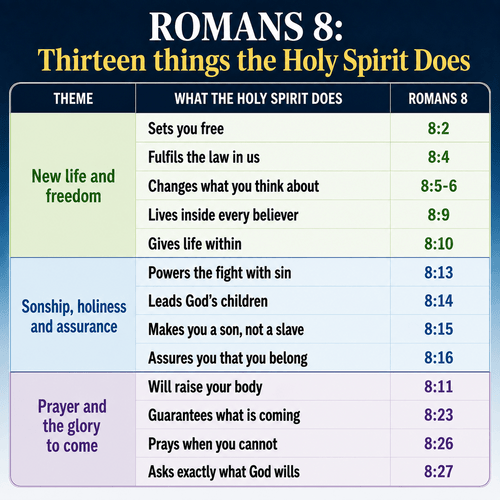
Some traditions teach that Spirit-filling is a post-conversion experience, a spiritual upgrade available to those who press further in. But Paul is writing to all the Ephesians—there is no two-tier audience here. The New Testament elsewhere makes clear every believer receives the Spirit at conversion (Romans 8:9; 1 Corinthians 12:13). The command to be filled isn’t an invitation to a higher class; it’s the normal expectation for every Christian.
2. An Ecstatic or Emotional Experience
The filling of the Spirit is often associated with overwhelming feelings, spiritual highs, or extraordinary phenomena. But the five participles of verses 19–21 are stubbornly ordinary—song, gratitude, humility. As Anthony Thiselton notes, enthusiasm-based readings import a Corinthian framework onto a passage that’s deliberately domestic and ecclesial in character. Feelings may accompany the Spirit’s filling; they don’t define or measure it.
3. Passive Waiting—”Let Go and Let God”
Because the verb is passive, some conclude the believer’s role is simply to wait, surrender, and do nothing. But the passive voice tells us the source of the filling, not the posture of the recipient. The verses immediately before (vv. 15–17) are full of active imperatives: walk carefully, redeem the time, understand God’s will. God’s sovereign work and our diligent use of his appointed means are not rivals—they belong together.
4. A Private, Interior Experience
Perhaps the most pervasive misreading in individualistic cultures is that Spirit-filling is a personal, inward experience between the believer and God alone. But every participle in Paul’s description is relational. “Speaking to one another.” Submitting to one another.” The grammar throughout is plural. Spirit-filling is, at its core, ecclesial—it happens in the body, through the body, and for the body.
SO HOW DO WE KEEP BEING FILLED?
The answer flows naturally from the text itself.
- Sit under the Word. Read it, hear it preached, memorise it, meditate on it. The Spirit fills those who place themselves under His chosen instrument.
- Worship corporately. The singing of verse 19 isn’t a warm-up act before the sermon. It’s a means by which the Spirit works among His people. Do not treat gathered worship as optional.
- Cultivate gratitude and humility. Verses 20–21 describe a posture—a life oriented toward thankfulness and mutual deference. These aren’t the results of a single spiritual experience; they’re daily disciplines that the Spirit both produces and deepens.
Michael Reeves writes “The Spirit’s work is always Christ-exalting—to be filled with the Spirit is to be increasingly consumed with Christ Himself.” That’s the horizon Paul is pointing toward.
CONCLUSION
Plērousthe. Keep on being filled—today, tomorrow, and every day after.
This isn’t a command for a spiritual elite. It’s not an invitation to chase extraordinary experiences. It’s a daily, corporate, Word-anchored call to every believer: come to the Scriptures with open hands, come to worship with a ready heart, come with thanksgiving on your lips—and trust the Spirit of the living God to do what He has promised.
The same Spirit who raised Jesus Christ from the dead dwells in us who believe. That is no small thing. May we live accordingly.
HARD QUESTIONS, HONEST ANSWERS
If every believer already has the Holy Spirit, why does Paul command us to be filled? Isn’t that a contradiction?
Receiving the Spirit at conversion and being continuously filled by the Spirit are distinct but complementary realities. Think of it this way: a sail may be permanently attached to a boat, yet it still needs the wind to fill it afresh for forward motion. Gordon Fee helpfully distinguishes between the Spirit’s indwelling—which is permanent and universal for all believers—and His filling—which is dynamic, renewable, and directly tied to our ongoing responsiveness to God through His Word and worship. The command exists precisely because what God gives permanently, He also applies progressively.
Does the parallel with drunkenness suggest that Spirit-filling should feel like an altered state—something overwhelming and beyond rational control?
The parallel with drunkenness is rhetorical contrast, not spiritual prescription. Paul is saying the Spirit, not wine, should be the controlling influence over a believer’s life. The comparison highlights the source of control, not the intensity of sensation. Just as wine progressively dominates the person who drinks it, so the Spirit is to progressively govern every dimension of the believer’s thought, speech, and conduct. The outcome Paul immediately describes—song, gratitude, submission—is ordered, relational, and deeply rational, not frenzied or uncontrolled.
Aren’t there clear biblical examples—Pentecost, Cornelius’s household, the Ephesian disciples in Acts 19—where Spirit-filling was dramatic and visible? Why downplay that?
Those narrative accounts in Acts are descriptive of historically unrepeatable moments in the unfolding of redemptive history, not prescriptive patterns for ongoing Christian experience. Luke’s purpose in Acts is to show the Spirit advancing the gospel through distinct, epoch-marking events—Pentecost inaugurates the new covenant age, Cornelius demonstrates the Gentile inclusion, and so on. As DA Carson argues, confusing Luke’s redemptive-historical narrative with Paul’s pastoral commands produces the recurring error of building normative doctrine from exceptional events. Ephesians 5:18 is Paul’s pastoral instruction for the ongoing life of the whole church—and its evidence is ethical, not spectacular.
If Spirit-filling comes primarily through the Word and worship, does that make it purely intellectual—just about knowing more Bible?
This is a serious misunderstanding of what the Word actually does when the Spirit works through it. Scripture isn’t merely information to be processed by the mind; it’s living and active (Hebrews 4:12), and when the Spirit uses it, it reaches the affections, reshapes desires, and produces genuine experiential transformation. Sinclair Ferguson is careful to insist that Word-and-Spirit ministry is never cold or merely cerebral. The Spirit illumines, warms, convicts, and empowers through the text in ways that engage the whole person. The five participles Paul lists—singing, thanksgiving, mutual submission—are themselves deeply affective and relational, not academic exercises.
Can a believer grieve or quench the Spirit and thereby lose this filling—and if so, how is it restored?
Yes—Paul explicitly warns against grieving the Spirit in Ephesians 4:30 and in 1 Thessalonians 5:19 against quenching Him. And these warnings are pastorally serious. Sin, unresolved conflict, persistent neglect of Scripture and prayer, and habitual ingratitude all act as barriers to the Spirit’s filling work in a believer’s life. Restoration comes through what the Puritans called “the ordinary means of grace”—repentance, confession, renewed immersion in the Word, and return to corporate worship. Michael Reeves helpfully frames it as returning to Christ Himself: since the Spirit’s singular aim is to glorify Christ, anything that draws us back to Christ also draws us back into the Spirit’s fullness.
Some argue Ephesians 5:18 supports the idea of a “baptism of the Spirit” as a distinct experience. How do we respond?
The language of Spirit-baptism appears in the New Testament, but it consistently refers to the once-for-all incorporation of the believer into the body of Christ at conversion, not a subsequent experience (1 Corinthians 12:13). Paul deliberately chooses the word filling in Ephesians 5:18, not baptism—and that lexical choice is not accidental. Thomas Schreiner points out that Spirit-baptism in Paul’s theology is the unrepeatable initiating act, while Spirit-filling is the repeatable, ongoing, renewable experience of every believer who walks in step with the Spirit. To import the language of baptism into a passage about filling is to create a theological category the text itself does not support.
Is there any place for genuine spiritual experience and emotion in this view, or does it reduce Spirit-filling to mere duty and discipline?
The answer is an emphatic no—genuine affective experience is not only permitted but expected. The Spirit is a person, not a mechanism, and personal encounter with Him naturally produces joy, assurance, love, and wonder. The Puritans called it the “witness of the Spirit” (Romans 8:16). John Stott was careful to affirm the Reformed tradition has never been allergic to spiritual experience; what it resists is the elevation of experience as the criterion by which Spirit-filling is measured or verified. The goal, as Michael Reeves beautifully puts it, is not the pursuit of experience for its own sake, but the pursuit of Christ— nd genuine, often deeply felt experience follows in His wake.
OUR RELATED POSTS