
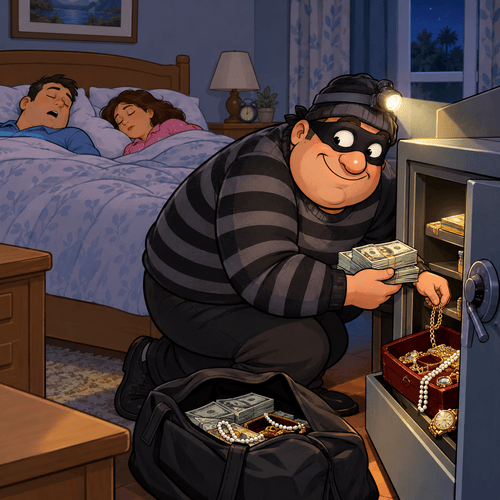
Here’s a question most people will never ask out loud: if you could cheat on your husband or wife and be completely sure they’d never find out, would it still be wrong?
Many people quietly think the answer is no. “What they don’t know won’t hurt them,” they say. It even sounds kind—as if keeping a secret protects the other person.
This isn’t a new idea. Around 2,400 years ago, Greek thinker Plato told a story about a shepherd who found a magic ring that made him invisible. What did he do with his new power? He seduced the queen, killed the king and took the throne. Plato’s question was simple: are people good only because they’re afraid of getting caught?
We’re still asking that question today—in marriages, exam halls, offices and tax forms. In this post, we shall see from the Bible, from wise thinkers and even from science that “no one gets hurt” rests on 2 big mistakes—and that there’s real hope for anyone who has already cheated.
What Does “No One Gets Hurt” Really Mean?
The idea behind “no one gets hurt” has a name: the harm principle. English thinker John Stuart Mill made it famous in his book On Liberty (1859). Mill wrote that the only good reason to stop a person doing something is “to prevent harm to others”. Today, many people use his idea as a rule for all of life: if nobody is harmed, nothing is wrong.
KEY TERMS EXPLAINED
- Harm principle: the idea that an action is only wrong if it causes harm to another person.
- Cheating: secretly breaking a promise of faithfulness or honesty—in a marriage, a relationship, an exam, a job or a game.
When someone asks, “Is cheating okay if no one gets hurt?”, they’re really making 2 claims:
- Claim 1: something is only wrong if it causes hurt.
- Claim 2: if it stays secret, it causes no hurt.
The Bible shows both claims are false.
Mistake 1: Thinking “Wrong” Only Means “Hurt”
God Is Always the First One Wronged
In Genesis 39, young Joseph was pressured day after day by his master’s wife to sleep with her. Her husband was away. Nobody would ever know. Joseph said no, and listen to his reason: “How then can I do this great wickedness and sin against God?” (Genesis 39:9).
Joseph’s first thought wasn’t, “What if I get caught?” It was, “What will this do to my relationship with God?” Bible commentator Matthew Henry pointed out the fear of God was Joseph’s strongest protection, because it works even when no one else is watching.
Years later, King David did what Joseph refused to do. He slept with Bathsheba and arranged for her husband Uriah to be killed. When he finally confessed, he prayed: “Against you, you only, have I sinned and done what is evil in your sight” (Psalm 51:4).
Had David not hurt Bathsheba and Uriah? Of course he had. But John Calvin explained that David meant the deepest wrong in his sin was against God, the Judge whose law he had broken. So there’s no such thing as a “victimless” sin. Every sin has at least one victim: God’s honour.
You Can Be Wronged Without Knowing It
Imagine your friends laugh at you behind your back but smile kindly to your face. You never find out. Have they done nothing wrong? Philosopher Thomas Nagel used this kind of example to show that a person can be harmed even if they never feel any pain.
Robert Nozick imagined an “experience machine” that gives you happy feelings for life—but none of it is real. Most people would refuse it, because we want a real life, not just pleasant feelings. A person with a secretly unfaithful spouse is living in that machine. As Timothy Keller wrote in The Meaning of Marriage:
“To be loved but not known is comforting but superficial. To be known and not loved is our greatest fear. But to be fully known and truly loved is, well, a lot like being loved by God.”
Cheating steals that gift.
Hurt or Wronged? Seeing the Difference
Feeling hurt and being wronged are not the same thing. Each example below shows a person who feels nothing, yet has still been wronged.
| WHAT HAPPENED | DOES THE PERSON FEEL HURT? | HAVE THEY BEEN WRONGED? |
|---|---|---|
| A friend takes money from your account without asking and puts it back before you check. | No | Yes—your trust and your property were misused. |
| A husband has an affair that his wife never discovers. | No | Yes—his promise to her and God’s law were both broken. |
Mistake 2: Thinking “Secret” Means “Safe”
Nothing Is Hidden From God
The Bible says: “No creature is hidden from his sight, but all are naked and exposed to the eyes of him to whom we must give account” (Hebrews 4:13). David thought his affair was hidden, but God told him: “For you did it secretly, but I will do this thing before all Israel and before the sun” (2 Samuel 12:12).
Theologian RC Sproul often used a Latin phrase: coram Deo. It means “before the face of God”. Every moment of our lives—including the private ones—happens in front of God.
You Can Never Promise “No Harm”
Even if we only think about people, “no one gets hurt” is a promise no cheater can keep. “Can a man carry fire next to his chest and his clothes not be burned?” (Proverbs 6:27). Think about what is at risk:
- The secret may come out. Phones, messages and friends reveal far more than people expect. “Be sure your sin will find you out” (Numbers 32:23).
- Bodies may pay. Sexual infections and unplanned pregnancies do not care whether anyone knows.
- Other families may suffer. The other person may have a spouse too, and children often sense tension at home even when they cannot explain it.
- Your heart will change. This may be the biggest cost of all, as we will see.
Marriage Is a Covenant, Not a Feelings Deal
Behind “Does anyone get hurt?” is a small view of marriage—a deal that is fine as long as both people feel happy. The Bible sees something much bigger.
KEY TERM: COVENANT
A covenant is a serious, binding promise made before God. It is not like a phone contract that you can cancel or quietly break. In a marriage covenant, God himself is a witness.
Malachi told unfaithful husbands “the LORD was witness between you and the wife of your youth, to whom you have been faithless, though she is your companion and your wife by covenant” (Malachi 2:14). Jesus added: “What therefore God has joined together, let not man separate” (Matthew 19:6).
Notice who does the joining: God. Think of a football match where the referee has secretly taken a bribe. Even if the fans never find out, the match is still corrupt. In the same way, secret cheating breaks the marriage covenant whether or not anyone ever knows.
This also answers the question, “What if my spouse agrees?” Some couples now have “open marriages”. But husbands and wives didn’t write the rules of marriage, so they cannot rewrite them. “Let the marriage bed be undefiled, for God will judge the sexually immoral and adulterous” (Hebrews 13:4).
The Person Most Hurt May Be the Cheater
“He who commits adultery lacks sense; he who does it destroys himself” (Proverbs 6:32). Apostle Paul says the sexually immoral person “sins against his own body” (1 Corinthians 6:18).
Science has noticed something similar. In 2013, researchers Nicole Ruedy, Celia Moore, Francesca Gino and Maurice Schweitzer found that people who cheated and believed no one was hurt often felt happier afterwards, not guilty. They called it the “cheater’s high”. The Bible described this long ago: “Stolen water is sweet”—“but he does not know that the dead are there” (Proverbs 9:17–18).
In 2016, Neil Garrett, Stephanie Lazzaro, Dan Ariely and Tali Sharot studied the brain while people told small, selfish lies. With each lie, the brain’s “alarm” reaction became weaker and the lies grew bigger. The Bible calls this being “hardened by the deceitfulness of sin” (Hebrews 3:13).
The Bible Said It First
Modern research keeps confirming what Scripture already taught about secret wrongdoing.
| WHAT RESEARCH HAS FOUND | WHAT THE BIBLE SAYS |
|---|---|
| Cheating can leave people feeling good, not guilty. | “Stolen water is sweet” (Proverbs 9:17). |
| Repeated lying weakens the brain’s alarm system. | Liars can have consciences that “are seared”—burnt until they can no longer feel (1 Timothy 4:2). |
| Small lies tend to grow into bigger lies. | “One who is dishonest in a very little is also dishonest in much” (Luke 16:10). |
John Owen put it sharply: “Be killing sin or it will be killing you.” Another Puritan, Thomas Brooks, said Satan’s first trick is “to present the bait and hide the hook”. “No one gets hurt” is the bait. The hook is a hardened heart.
One Lie Needs Many More
Cheating almost never comes alone. Keeping it secret means deleting messages, inventing reasons for coming home late and giving false answers. So “harmless” cheating usually breaks several of the Ten Commandments at once: “You shall not commit adultery” (Exodus 20:14), “You shall not bear false witness” (Exodus 20:16) and often “You shall not steal” (Exodus 20:15).
Where Cheating Really Begins
Most people think cheating starts with an action. Jesus says it starts earlier: “Everyone who looks at a woman with lustful intent has already committed adultery with her in his heart” (Matthew 5:28). Calvin pointed out that Jesus was not adding new rules here. He was explaining what God’s law had always meant.
The Westminster Larger Catechism (a teaching guide from the 1640s) says God’s law “is spiritual, and so reacheth the understanding, will, affections, and all other powers of the soul”. In simple words: God’s law reaches our thoughts, choices and desires, not only our actions. So when a person asks, “Can I get away with it?”, the heart has already started to wander (Proverbs 4:23).
What About Cheating in Exams, Taxes or Work?
Many people think cheating on a test or a tax form is “victimless”. But “a false balance is an abomination to the LORD” (Proverbs 11:1). A false balance was a dishonest weighing scale used to cheat customers. An abomination is something God hates.
“Victimless” Cheating: Who Really Pays?
Every kind of cheating has a cost. This table shows who pays for some common “harmless” cheats.
| THE “HARMLESS” CHEAT | WHO ACTUALLY PAYS |
|---|---|
| Copying answers in an exam | Honest students who are ranked lower; future patients or clients who trust your qualification; you, because you never learn the skill. |
| Hiding income from the tax office | Neighbours who pay their fair share; the schools, roads and hospitals everyone depends on. |
| Adding false claims to work expenses | Your employer, who is being robbed; colleagues, who lose trust; your own good name. |
Common Excuses—and Honest Answers
Excuses for Cheating: What God’s Word Says
People who cheat usually have a reason. Each common excuse on the left is answered by Scripture on the right.
| THE EXCUSE | WHAT THE BIBLE SAYS |
|---|---|
| “Everyone does it.” | “You shall not fall in with the many to do evil” (Exodus 23:2). |
| “God will forgive me anyway.” | “Are we to continue in sin that grace may abound? By no means!” (Romans 6:1–2). |
| “I’m unhappy, so I deserve this.” | “Each person is tempted when he is lured and enticed by his own desire” (James 1:14). |
A Better Way to Ask the Question
If harm is our only rule, then the person who wants to cheat gets to decide what counts as harm. That is like letting a player referee his own match. We need a standard outside ourselves: God’s holy character (Leviticus 19:2). The theologian John Frame teaches that every moral choice should be seen from three perspectives, or angles.
3 Questions Every Moral Choice Should Ask
John Frame’s 3 perspectives, and how the “no one gets hurt” idea measures up against each one.
| THE QUESTION | WHAT IT LOOKS AT | DOES “NO ONE GETS HURT” ASK IT? |
|---|---|---|
| What does God say? | God’s law—the standard | No. It ignores God completely. |
| What will happen? | The situation and its results | Yes—but it guesses wrongly, as we have seen. |
| What does my heart want? | Motives and desires | No. It hides the heart’s real desire. |
Is There Hope If You Have Already Cheated?
If you have cheated, please hear this: the Bible isn’t only a book of rules. It’s the story of a God who rescues unfaithful people.
David, the adulterer and murderer, prayed, “Create in me a clean heart, O God” (Psalm 51:10), and God forgave him. To a woman caught in adultery, Jesus said, “Neither do I condemn you; go, and from now on sin no more” (John 8:11). And Paul wrote to a church that included former adulterers and thieves: “And such were some of you. But you were washed, you were sanctified, you were justified” (1 Corinthians 6:11).
Justified means declared right with God. This is possible because Jesus was perfectly faithful where we were unfaithful, and on the cross he took the punishment we deserved. But this hope begins with honesty. As Puritan Thomas Watson wrote: “Till sin be bitter, Christ will not be sweet.”
IF YOU’RE CHEATING RIGHT NOW
- Stop: end the secret relationship or dishonest habit today. Do not wait for a “better time”.
- Confess to God: “If we confess our sins, he is faithful and just to forgive us our sins” (1 John 1:9).
- Talk to a pastor: secrets grow in the dark. A wise church leader can help you take the next steps.
- Choose honesty: “He who confesses and forsakes them will obtain mercy” (Proverbs 28:13).
You’re Always Wearing the Ring
Let’s go back to Plato’s magic ring. The Bible tells us the truth: no ring can hide us from God. We all live coram Deo—before His face. That sounds frightening, but it’s actually freeing. A faithful life has no secrets to guard, no lies to remember and no hook waiting behind the bait.
So, is cheating okay if no one gets hurt? No—because someone always gets hurt. God is wronged. Your spouse is wronged, even if they never know. And your own heart is slowly hardened. But the God who sees everything is also the God who forgives everyone who comes to him through Jesus Christ.
Tough Questions, Honest Answers
Should I tell my spouse about a past affair that is already over?
Usually, yes—but with wisdom and help. A marriage built on a hidden lie is not fully honest, and the secret keeps standing between you even after the affair has ended (Proverbs 28:13). Confession also protects your spouse, who has a right to know about any health risks and about the true state of the marriage. However, how and when you tell them matters a great deal. Speak first to a wise pastor or Christian counsellor who can help you prepare and support you both afterwards. Do not confess only to relieve your own guilt; confess to bring truth back into the marriage.
Is texting or flirting with someone else cheating?
It can be. Jesus taught that faithfulness begins in the heart, not only in the body (Matthew 5:28). If you are sharing private feelings, secret jokes or romantic attention with someone who is not your spouse, you are giving away something that belongs to your marriage. A simple test helps: would you be comfortable if your spouse read every message? If the answer is no, something is already wrong. Job said, “I have made a covenant with my eyes” (Job 31:1)—a wise example for how we use our phones too.
Is watching pornography cheating on your spouse?
Jesus said that looking at someone “with lustful intent” is adultery of the heart (Matthew 5:28). Pornography is exactly that kind of looking, so the Bible treats it as unfaithfulness, even though no physical affair takes place. It also trains the mind to see people as objects, and it often damages real closeness in marriage. The good news is that freedom is possible through confession, accountability and the power of the Holy Spirit (1 Thessalonians 4:3–4). If this is your struggle, please speak to someone you trust today.
Is adultery a reason for divorce in the Bible?
Jesus said: “Whoever divorces his wife, except for sexual immorality, and marries another, commits adultery” (Matthew 19:9). Many careful Bible teachers, including the writers of the Westminster Confession of Faith (24.5), understand this to mean that adultery gives the innocent spouse the right to divorce. But a right is not a command. Many couples, with God’s help, choose the hard road of forgiveness and rebuild their marriage. Anyone facing this decision should seek wise pastoral counsel and not decide alone or in a hurry.
Can a marriage recover after infidelity?
Yes, many marriages do—though it takes time, honesty and hard work. Recovery usually needs full confession, a complete end to the affair, and openness about phones, money and time. The hurt spouse needs space to grieve and ask questions, and should not be rushed into “getting over it”. Christian marriage counselling can be a great help. Above all, the gospel gives us a pattern: “forgiving one another, as God in Christ forgave you” (Ephesians 4:32). God is able to restore “the years that the swarming locust has eaten” (Joel 2:25).
What should I do if I find out my spouse is cheating?
First, know that you are not to blame for another person’s choice to sin (James 1:14). Take time to pray, and do not make major decisions in the first wave of shock and anger. Speak to a trusted pastor or Christian counsellor, and get a medical check if there is any health risk. It is right to expect full honesty and a complete end to the affair. Above all, remember that God sees your pain: “The LORD is near to the brokenhearted and saves the crushed in spirit” (Psalm 34:18).
Is cheating on a boyfriend or girlfriend a sin if you’re not married?
Yes. Breaking a promise, lying and acting behind someone’s back are wrong in any relationship, because God wants our words to be true: “Let what you say be simply ‘Yes’ or ‘No’” (Matthew 5:37). Dating is not a covenant like marriage, but the way you treat a partner now trains your character for the future. If you no longer want the relationship, the honest thing is to end it, not to cheat. And if the cheating involves sex, the Bible also calls that sexual immorality, because God made sex for marriage alone (1 Thessalonians 4:3).
Related Reads
- The Seventh Commandment: Why Does God Care About Adultery?
- The Ninth Commandment: Why Does God Care About Truth?
- The Eighth Commandment: Why Does God Forbid Stealing?
- Grounds For Divorce: Does the Bible Affirm More Than Two?
- ‘Flee Sexual Sin’: Why Does Paul Single This Sin Out?
- Why Does God Call David a Man After His Own Heart?
- Can Repentance be Real If We Struggle With Habitual Sin?
- Satan’s War On Marriage: What’s His Real Motive?