A tweet from 2011 ends a career in 2026. Nobody re-read it in context. An algorithm surfaced it, a screenshot spread, and by lunchtime the verdict was in: cancelled. No trial, no defence, no path back.
We’ve built a strange kind of courtroom. It keeps sin and it keeps judgement, but it has thrown out mercy, evidence. And any hope of pardon. And here’s the twist most of us would rather not name: we hate cancel culture when it comes for us, yet we reach for it eagerly when it comes for our opponents.
So how should Christians respond? Not, it turns out, with a softer version of the same instinct. The gospel isn’t cancel culture with the volume turned down. It’s the only real answer to it—because it takes our sin more seriously than the mob ever could. And it offers grace more freely than the mob ever will.
What Cancel Culture Actually Is
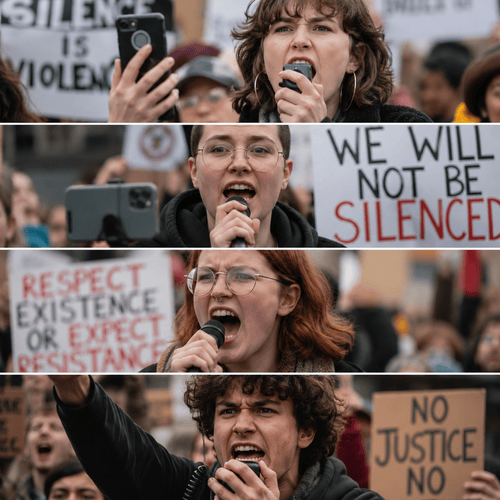
Cancel culture is the collective withdrawal of support from a person or organisation judged to have said or done something unacceptable—usually amplified on social media, and often ending in real-world loss: a job, a platform, a reputation. At its best it looks like accountability. At its worst it’s a public execution of someone’s good name, carried out by a crowd that appointed itself judge, jury, and executioner.
It helps to see where it came from and where it’s going.
A short timeline:
- Mid-2010s: The practice takes shape online, gathering force through the #MeToo movement and viral call-outs. A single ill-judged post could unravel a life within hours.
- 2019–2021: The peak. JK Rowling, James Gunn, and countless lesser-known people face pile-ons; “cancelled” becomes a household verb.
- 2024–2025: Commentators begin declaring cancel culture dead, pointing to cultural exhaustion and a shift in the political winds.
- 2025–2026: The obituaries prove premature. The tactic simply crosses the aisle—now practised by right and left alike—and rebrands itself as “accountability culture,” complete with talk of restorative justice and rehabilitation.
The lesson is sobering: the mob is quiet, not gone. It has changed its clothes, and sometimes now it wears ours. Whatever label it takes next, the underlying instinct is as old as Eden and needs a Christian answer, not merely a political one.
The Grain of Truth: Why the Impulse Isn’t All Wrong
Christians should resist the temptation to dismiss cancel culture wholesale. That’s because buried inside it is a genuine longing for justice—and that longing isn’t evil. Scripture itself commands us to “take no part in the unfruitful works of darkness, but instead expose them” (Ephesians 5:11). The prophet Micah tells us what the Lord requires: “to do justice, and to love kindness, and to walk humbly with your God” (Micah 6:8). A world that shrugs at genuine wrongdoing is no more Christian than one that overreacts to it.
Here the older theologians help us. John Calvin insisted even people outside the church retain a God-given sense of justice and order, a restraint on chaos upon which the whole of society depends. Abraham Kuyper and Herman Bavinck developed this into the doctrine of common grace: the goodness God pours out on all people indiscriminately, restraining sin and preserving a moral order even among those who don’t know him. Common grace means a secular crowd can stumble onto a true intuition—that some deeds should carry consequences, that evil ought to be named.
So the desire behind cancel culture isn’t the problem. Real abusers should be exposed. Real corruption should be confronted. The impulse to hold the powerful accountable is, in part, the image of God flickering in us despite our fallen conscience.
The problem is what happens next. Cancel culture takes a true instinct—justice matters—and severs it from everything that makes justice bearable: mercy, proportion, due process, repentance, and the possibility of a way back. It keeps the courtroom and burns down the mercy seat. And a justice with no mercy in it isn’t the justice of God; it’s something far more frightening.
Where It Goes Wrong: A Religion Without a Cross
To understand cancel culture rightly, we must see it for what it really is: a rival religion, with its own doctrine of sin, its own day of judgement, and its own verdict. It’s a gospel—but a hopeless one. Consider how neatly it mirrors the Christian story, and where it breaks.
- Its doctrine of sin. Sin is no longer transgression of God’s law but transgression of the current cultural consensus—and that consensus shifts constantly. What’s celebrated today may be condemned tomorrow, and yesterday’s words are judged by today’s standards with no allowance for change. Sin is measured not against God’s fixed word but against a moving popular vote.
- Its day of judgement. The screenshot is the summons; the viral thread is the trial. “The one who states his case first seems right, until the other comes and examines him” (Proverbs 18:17)—but the mob doesn’t wait for cross-examination. Judgement is instant, rendered by thousands who know nothing of the accused but a ‘decontextualised’ clip.
- Its verdict. Here’s the fatal flaw. The sentence is permanent. There’s no atonement, no absolution, no restoration. Repentance changes nothing. Once cancelled, always cancelled.
That last point is where cancel culture and the gospel stand furthest apart. Cancel culture keeps the concept of guilt but abolishes the possibility of grace. It can condemn, but it can’t forgive. It can expose sin, but it has no cross with which to deal with it.
And this is precisely why the gospel answers it so completely. Where cancel culture defines sin by a shifting crowd, Scripture roots it in the unchanging character of God. Where cancel culture’s verdict on my sin is final, the gospel announces a Judge “who justifies the ungodly” (Romans 4:5). Where cancel culture leaves the guilty to their shame, Christ cries “It is finished” (John 19:30)—tetelestai, a word merchants used to mean paid in full. The debt of my sin isn’t deferred or reduced. It’s cancelled outright, and the record is nailed to the cross (Colossians 2:14).
The Mirror: Christians Cancel Too
Before we grow too comfortable as cancel culture’s critics, honesty demands a look in the mirror. The uncomfortable truth is that Christians are often quick to condemn the practice when we’re its target and quick to employ it when we’re not.
This should not surprise anyone who takes the Bible’s teaching seriously: sin runs through every human heart—including the redeemed one. We’re all, by nature, prone to the very self-righteousness cancel culture runs on. It feels good to stand among the accusers. It flatters the ego to be certain of another’s guilt while conveniently forgetting my own.
Jesus named this instinct precisely: “Why do you see the speck that is in your brother’s eye, but do not notice the log that is in your own eye?” (Matthew 7:3). He wasn’t forbidding all moral judgement—He goes on to say “first take the log out of your own eye” so that you can see clearly to help your brother. He was forbidding the hypocrisy of the self-appointed judge, the one who condemns in others what he excuses in himself.
If we would respond to cancel culture as Christians, we must first repent of our own share in it. We cannot credibly call the world to grace while running our own quieter pile-ons against those we dislike. The log comes out first. Only then do we see clearly enough to speak.
How Jesus Met a Shaming Culture
Jesus lived and died in an honour-and-shame world every bit as brutal as our own. He was mocked, exposed, falsely accused, and finally executed by a literal mob. And yet watch how He handled the shaming of others—it looks nothing like cancellation, and nothing like indifference either.
- Consider the woman caught in adultery (John 8:1–11). Her accusers had the facts and the law on their side; by the standards of the day, this was a legitimate cancellation. Jesus doesn’t deny her sin. But He turns the crowd’s judgement back on itself: “Let him who is without sin among you be the first to throw a stone at her” (John 8:7). One by one they leave. Then, alone with her, He says the two things cancel culture can never hold together: “Neither do I condemn you” and “go, and from now on sin no more” (John 8:11). Grace, truth, and restoration in a single breath.
- Consider Zacchaeus, the collaborator and cheat the whole town had written off. Jesus does not join the crowd’s contempt; he invites himself to dinner—and the man who was beyond redemption in every neighbour’s eyes is transformed (Luke 19:1–10).
- Consider the Samaritan woman at the well, whose past would have made her radioactive. Jesus exposes her sin plainly and offers her living water in the same conversation (John 4:1–42).
The pattern never varies. Jesus exposes sin in order to restore, never merely to destroy. He tells the truth without joining the mob, and He extends grace without excusing the wrong. Cancel culture cannot imagine this posture, because it has only one tool—condemnation—and Christ carried two.
Five Marks of a Christian Response
How, then, should we actually respond when the outrage cycle spins up—whether we’re watching, participating, or in its crosshairs? Five marks distinguish a Christian response from a merely reactive one.
- Speak the truth, but never join the mob. Christians aren’t called to silence in the face of real evil; we’re called to “speak the truth in love” (Ephesians 4:15). There’s a world of difference between naming a wrong with clarity and piling on with a crowd hungry for a scalp. Disagree openly. Argue honestly. Refuse the anonymous swarm.
- Extend grace without excusing sin. Grace isn’t the pretence that nothing happened; it’s mercy shown to someone who genuinely did wrong. That’s the only kind of grace there is—“while we were still sinners, Christ died for us” (Romans 5:8). We can name a fault and still refuse to treat the person as beyond redemption.
- Pursue accountability that aims at restoration. The church has always had a way to confront sin—and its goal is never destruction. “If anyone is caught in any transgression, you who are spiritual should restore him in a spirit of gentleness” (Galatians 6:1). Jesus’s own procedure in Matthew 18 moves toward winning a brother back, not cutting him off. Real accountability restores where it can; cancellation only removes.
- Refuse to let reputation be our righteousness. Much of the terror of being cancelled comes from staking our identity on what others think of us. The Christian’s standing rests elsewhere entirely—on Christ’s righteousness credited to us, not our own record (2 Corinthians 5:21). A mob can take our platform. It cannot touch our justification.
- Be willing to be cancelled for Christ—but only for Christ. Peter draws a sharp line: suffer, if you must, “as a Christian” and not “as a murderer or a thief or an evildoer or as a meddler” (1 Peter 4:15–16). If the world cancels us for faithfulness, let’s count it an honour (Matthew 5:11). But let’s not mistake being cancelled for our own foolishness, rudeness, or pride as persecution for the gospel. The two aren’t the same.
Taken together, these marks describe something the outrage cycle cannot produce: a person who can tell the truth without cruelty, show mercy without cowardice, and stand firm without fear. That combination isn’t natural to any of us. It’s the fruit of having been forgiven much.
When We’re the Ones Cancelled
Sooner or later, Christians who speak honestly in this age may find the crowd turning. What then?
- First, let’s remember where our worth actually rests. If our identity is anchored in our reputation, being cancelled feels like annihilation. If it’s anchored in Christ, the ground holds. “There’s therefore now no condemnation for those who’re in Christ Jesus” (Romans 8:1). The court of public opinion can render its verdict; it cannot overturn God’s.
- Second, let’s resist the hunger for revenge. Everything in us wants to fight fire with fire—to expose the exposers, to cancel back. Scripture points the other way: “Never avenge yourselves, but leave it to the wrath of God” (Romans 12:19). This isn’t weakness; it’s trust that a just God sees what the crowd cannot, and will settle every account rightly in the end.
- Third, we must forgive—even here, even them. This is the hardest word, and the most defining. We forgive our accusers not because their conduct was acceptable but because we ourselves have been forgiven an unpayable debt. The servant in Jesus’s parable who was released from a fortune yet throttled a man over pennies stands as a permanent warning (Matthew 18:21–35). We who’ve been forgiven much cannot withhold forgiveness from others without denying the very grace we live by.
None of this is possible by gritted teeth. It flows from a settled confidence that the worst verdict against us has already been answered at the cross.
The Only Verdict That Matters
Return, for a moment, to that resurfaced tweet and the career it ended. Cancel culture offers exposure without absolution—it can drag our worst moments into the limelight, but it has nothing to say once it gets there except guilty.
The gospel meets us at exactly that point. For there was One who was truly and unjustly cancelled: falsely accused, publicly shamed, condemned by a literal mob, and executed outside the city walls. And from that ultimate cancellation He prayed, “Father, forgive them, for they know not what they do” (Luke 23:34)—and then rose, vindicated, three days later.
Because of Him, Christians can neither run the mob nor be destroyed by it. We don’t need to cancel others, because judgement belongs to God. We don’t need to fear being cancelled, because the only verdict that finally matters was rendered at Calvary and answered in full.
In a world that offers shame with no way back, the church should be the one community on earth where sin is named honestly and yet forgiven completely. That isn’t cancel culture softened. It’s its glorious opposite—and it’s the best news a shaming age can possibly hear.
Tough Questions, Honest Answers
Is it a sin for a Christian to cancel someone?
Cancelling, as commonly practised, involves several things Scripture plainly forbids: rushing to judgement before hearing the facts (Proverbs 18:17), delighting in another’s downfall, refusing forgiveness to the repentant, and treating a person made in God’s image as beyond redemption. A Christian can and should oppose genuine evil, but doing so through anonymous pile-ons, permanent condemnation, and a refusal of any path back is not accountability—it is the very self-righteousness Jesus condemned. So while confronting sin isn’t sinful, the spirit and methods of cancel culture usually are.
What’s the difference between biblical accountability and cancel culture?
Both confront wrongdoing, but aim at opposite ends. Biblical accountability seeks to restore the offender (Galatians 6:1) and follows a careful, escalating process that begins privately (Matthew 18:15–17). Cancel culture seeks to remove the offender, begins publicly, skips due process, and offers no route to reconciliation. Accountability is driven by love for the person and the truth; cancellation is often driven by outrage, tribalism, or the thrill of the chase. One aims at redemption; the other at destruction.
How did Jesus respond to public shaming and mobs?
Jesus consistently exposed sin in order to restore, never merely to destroy. With the woman caught in adultery He refused both the mob’s condemnation and any excusing of her sin, saying “Neither do I condemn you…go, and from now on sin no more” (John 8:11). He befriended social outcasts like Zacchaeus (Luke 19:1–10) and spoke truth with grace to the Samaritan woman (John 4). When He himself was cancelled by a literal mob, He prayed for their forgiveness (Luke 23:34). He always held grace and truth together—something cancel culture cannot do.
Does forgiving someone mean there are no consequences for what they did?
No. Forgiveness and consequences are distinct. Forgiveness releases our personal claim to vengeance and restores our willingness to seek the other’s good; it doesn’t necessarily remove every earthly consequence of wrongdoing. A repentant thief is forgiven but may still make restitution; a disqualified leader may be forgiven yet still step down. Scripture holds both together: God forgives fully, yet actions still bear fruit in this life. What the gospel refuses is the idea that consequences must be permanent and hopeless, with no possibility of repentance, restoration, or a future.
Should Christians ever call for someone to lose their job or platform?
Sometimes—but carefully and rarely. Where someone has genuinely abused power, harmed the vulnerable, or disqualified themselves from a position of trust, seeking just consequences can be an act of love for potential victims (Ephesians 5:11; Micah 6:8). The tests are whether the facts have been fairly established, whether the response is proportionate, and whether restoration remains the ultimate hope. What Christians must avoid is the “ends justify the means” reflex that punishes on rumour, demands destruction rather than justice, and forecloses any path back.
How do I recover spiritually after being cancelled or publicly shamed?
Begin by relocating your identity. If your sense of worth was resting on your reputation, cancellation feels like annihilation; if it rests on Christ, the ground holds even when your standing with others collapses (Romans 8:1). Resist the urge to retaliate, entrusting justice to God rather than seizing it yourself (Romans 12:19). Where you genuinely sinned, repent honestly—but do not accept the crowd’s verdict that you are beyond grace. Stay rooted in a real community of believers who know you, and let their fellowship, not the internet’s judgement, define you.
Is cancel culture even still a thing in 2026?
Yes, though it has changed shape. After many declared it dead following the political shifts of 2024, the tactic has proved remarkably durable—crossing the political spectrum and rebranding itself with softer language like “accountability culture” and “restorative justice.” The mob is quieter than it was at its 2019–2021 peak, but it isn’t gone; it waits for the next cultural shift and fresh prey. The underlying human instinct—to shame, to exclude, to condemn without grace—is as old as the fall, which is why Christians need an answer rooted in something deeper than the news cycle.
Related Reads
- ‘Judge Not, Lest…’: Making Sense of Jesus’ Dire Warning
- Caught in Adultery: How Reliable Is the John 8 Story?
- Retributive Vs Restorative Justice: Which Does the Bible Affirm?
- Common Grace Vs Saving Grace: How Are They Different?
- Why Can’t There Be Forgiveness Without the “Shedding of Blood”?
- Is Marxism Good or Bad for Humanity? A Biblical Answer
t