You screenshot a paragraph from a paywalled article and paste it into a group chat. You download a movie you’d never have paid to watch anyway. You ask an AI tool to write a paragraph “in the style of” an author whose books you own. None of it feels like stealing. Or does it?
Is Copyright Infringement Sin? Answering the Question Directly
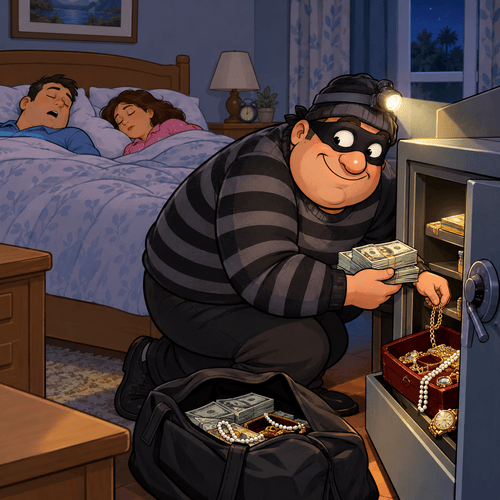
Short answer: generally, yes. Copyright infringement—taking someone’s creative work without permission or payment—falls under the Eighth Commandment’s prohibition on theft (Exodus 20:15). The medium changes; the ethic doesn’t. Digital files feel less “real” than a shoplifted book, but the person who made them is owed the same honesty either way.
That said, not every use of someone else’s work is theft—quotation, commentary, and fair use exist for good reason, and the Bible’s own logic of honouring labour actually supports them. The rest of this article works through where the line sits, including in places Scripture never anticipated: AI-generated content, scraped training data, and the “everyone does it” culture of digital sharing.
The Eighth Commandment and Intellectual Property
“You shall not steal” (Exodus 20:15) establishes private property as a real, God-honoured category—and intellectual property is still property. A song, a photograph, a paragraph of prose is a genuine creation belonging to whoever made it, not a freely available natural resource. Downloading, copying, or redistributing protected work without permission is theft in digital clothing. Paul’s instruction to “labour, performing with his own hands what is good” (Ephesians 4:28) assumes the opposite posture: earn what you have, rather than help yourself to what someone else made.
Honouring the Work of Others
Creative work costs something—time, skill, often years of unpaid effort before anything sells. Scripture’s answer to that cost is compensation, not appropriation: “The labourer deserves his wages” (1 Timothy 5:18). Every illegally downloaded ebook, every stripped watermark, every pirated stream quietly tells a creator their work wasn’t worth paying for—while still taking it.
Is This Use OK? A Quick Decision Guide
| SCENARIO | GENERALLY FINE | GENERALLY NOT |
|---|---|---|
| Reading a book | Buying it, or borrowing from a library | Downloading a pirated PDF |
| Quoting a source | A short excerpt, with attribution, for commentary | Reposting the whole article as your own |
| Using an image | A licensed or properly credited photo | Stripping the watermark off someone else’s work |
| Watching a film | A paid streaming service or rental | A pirated stream or torrent, “since I wasn’t going to pay anyway” |
| Using AI tools | Tools operating within their stated licensing terms | Feeding pirated books or paywalled articles into a personal AI dataset |
The Digital Age: Piracy, Streaming, and Screenshots
The internet makes copying frictionless, and frictionless copying has quietly rewritten a lot of people’s intuitions about what counts as theft. But ease of access was never the biblical test for whether something belongs to us. We wouldn’t walk out of a shop with an unpaid book under an arm; taking a copyrighted digital file without permission is the same act with a lower barrier to entry (Exodus 20:15 again—the medium changes, the command doesn’t).
None of this makes Christians opponents of a free and open internet. Public domain resources, open licensing (Creative Commons and similar), and genuine fair use for commentary, criticism, and education are all legitimate—and worth using and supporting. The line isn’t “the internet should be locked down”; it’s “don’t take what was never offered.”
The New Frontier: AI-Generated Content and Copyright Ethics
Generative AI has opened ethical questions the older copyright conversation never had to answer. A few worth naming directly:
- Training data scraped without consent. Many AI models were trained on copyrighted books, articles, and art scraped without the creators’ permission or payment. Using such a tool doesn’t necessarily make an individual complicit in that original scraping, but it’s good for Christians to know what supply chain they’re supporting, and favouring tools and licensing models that compensate creators where that information is available.
- “In the style of” requests. Asking an AI to generate art or prose deliberately mimicking a specific living artist’s recognisable style sits closer to the line than open-ended creative prompts—it’s trading on someone’s distinctive labour without their involvement or consent, even without literally copying a single file.
- Passing AI output off as entirely your own. Presenting AI-generated writing, art, or analysis as wholly original human work, when it isn’t, is a different sin than copyright infringement—it’s a violation of the truthfulness Scripture repeatedly commands (Proverbs 12:22, Zechariah 8:16), not a property violation.
- Using AI to launder someone else’s copyrighted text. Asking an AI to “rewrite this paywalled article so it reads differently” in order to bypass a paywall is copyright evasion wearing a disguise, not a loophole.
The underlying test hasn’t changed with technology: would this action deprive someone of fair credit or fair payment for work that’s genuinely theirs? If yes, the tool used to do it—a torrent client or a chatbot—doesn’t change the answer.
Practical Ethical Guidelines
- Obtain legal licences or purchase authentic copies of copyrighted work, digital or physical.
- Give proper attribution when quoting or excerpting copyrighted sources.
- Support creators by paying fair prices rather than seeking free workarounds.
- Favour open licensing (Creative Commons, public domain) and fair-use commentary over wholesale reproduction.
- Be transparent about AI involvement in your own work rather than presenting it as entirely hand-made.
- Advocate for policies and tools that fairly compensate creators, including in the AI era.
Legal Implications: Rendering Unto Caesar
Beyond the ethical case, Christians are called to “be subject to governing authorities” (Romans 13:1-2) and to be law-abiding citizens (Titus 3:1). Copyright infringement is illegal in most jurisdictions and can carry real civil and criminal penalties. Knowingly breaking the law here isn’t a neutral technicality—it’s a small but real failure of the same submission to earthly authority Scripture commands elsewhere.
Is Copyright Infringement a Sin?—Tough Questions, Honest Answers
Is it really a sin to pirate a film or song I’d never have paid for anyway?
The “I wouldn’t have bought it” defence answers the wrong question. Theft isn’t defined by whether the owner would have made a sale—it’s defined by taking what belongs to someone else without permission. A creator’s right to control distribution of their work doesn’t evaporate because a particular viewer had no intention of paying.
What about using copyrighted images or video clips in church slides, bulletins, or sermons?
Ministry use isn’t automatically exempt from copyright law or from the ethic behind it. Many creators offer free or low-cost licensing specifically for church use—seek that out rather than assuming good intentions cover an unlicensed use. When in doubt, use royalty-free or church-licensed image and music libraries.
Is it wrong to use AI tools that were trained on scraped copyrighted material?
There’s a real difference between knowingly feeding pirated material into a personal AI system yourself (a clear ethical problem) and using a mainstream commercial AI tool whose training practices you don’t control (a murkier, supply-chain-level question, similar to buying a product whose full manufacturing ethics you can’t fully audit). Christians should stay informed, favour more ethically-trained tools where a real choice exists, and not treat ignorance of a tool’s training data as licence to stop asking the question.
Does “fair use” mean I can quote or excerpt anything I like?
No. Fair use generally covers short excerpts used for commentary, criticism, or education—not wholesale reproduction dressed up as commentary. A good working test: does this use replace the original (bad) or point readers back to it (generally fine)?
If a creator or company is already wealthy, does taking their work still count as theft?
Yes. Scripture’s prohibition on theft was never conditioned on the victim’s wealth (Exodus 20:15 doesn’t say “unless they can afford the loss”). The size of a company or the wealth of an artist changes the practical harm, not the moral category of the act.
Related Reads:
- How are Christians to deal with ethical issues in the workplace, such as being compelled to lie to a client?
- Gambling and Lotteries: Are They Compatible with Christian Values?
- Bribery and Corruption: What Do We Learn From the Bible?
- The Desire for Wealth: What Does the Bible Truly Teach?
- Can I Use AI for Bible Study and Prayer? A Biblical Perspective