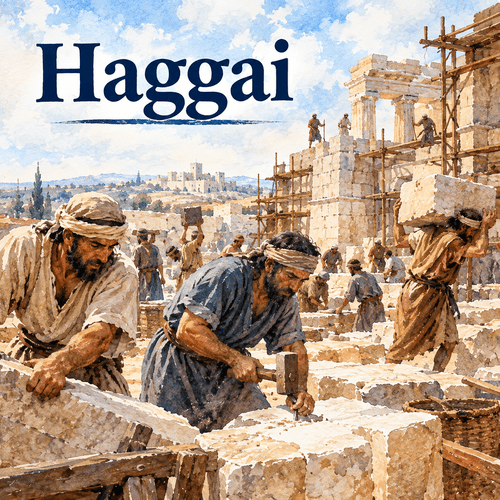
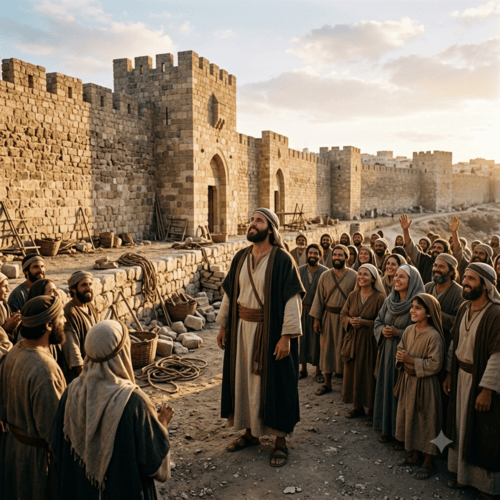
Nehemiah rebuilt Jerusalem’s wall in 52 days. Enemies laughed. Still, the wall went up.
Then he went back to Persia for a time. When he returned, the people had broken almost every promise they’d signed. An enemy of God was living inside the temple. Traders were selling fish on the Sabbath, the weekly day of rest.
So the book doesn’t end with a party. It ends with Nehemiah pulling out men’s hair (13:25) and praying: “Remember me, O my God, for good” (Nehemiah 13:31).
Why would God end a book like that? Because Nehemiah isn’t the hero of Nehemiah. The whole book is quietly saying God’s people need a greater Builder. His name is Jesus.
[READ OUR POST Jesus in the Old Testament: Where He Appears in All 39 Books]
Many people read Nehemiah as a leadership book. There are real lessons there. But if that’s all we see, we miss the main message. Let’s see step by step, how Nehemiah points to Christ.
KEY WORD: “TYPE”
A type is a real person, event or object in the Old Testament that God designed as a picture of something greater to come. The greater thing it points to is called the antitype.
Example: the Passover lamb in Egypt was a real lamb. But it pointed forward to Jesus. Paul writes, “For Christ, our Passover lamb, has been sacrificed” (1 Corinthians 5:7).
Jesus in the Old Testament — Book 16 of 39
This post is the sixteenth instalment in our series tracing Christ through every book of the Old Testament. See the full series index.
How Can Jesus Be in a Book That Never Names Him?
Nehemiah never mentions the Messiah (God’s promised anointed King). So why look for Jesus here?
Because Jesus told us to. After He rose, Luke says, “beginning with Moses and all the Prophets, he interpreted to them in all the Scriptures the things concerning himself” (Luke 24:27). He also said, “You search the Scriptures … and it is they that bear witness about me” (John 5:39). Nehemiah is part of those Scriptures.
John Calvin, commenting on that verse, wrote:
“We ought to read the Scriptures with the express design of finding Christ in them.”
Augustine of Hippo put it this way: the New is in the Old concealed; the Old is in the New revealed.
But we may not make any detail mean anything we want. Geerhardus Vos taught that a type must first mean something real to the people of its own time. Only then can we ask how it points forward. Edmund Clowney warned against two errors: moralism (turning Bible characters into simple examples, like “be brave like Nehemiah”) and allegory (inventing hidden meanings the text does not support).
THREE TESTS FOR A TRUE CHRIST-CONNECTION
The text test: Does the idea come from what the passage actually says?
The story test: Does it follow the line of God’s promises from the Old Testament to the New, with Christ as the greater fulfilment?
The apostle test: Does the New Testament use the same words, idea or pattern?
Every connection below passes at least two tests. Where one is weaker, we say so.
The Story of Nehemiah in Brief
Because Israel kept turning to other gods, God allowed Babylon to carry the people away to a foreign land. This is called the exile. Nehemiah tells the last part of the story of their return.
Timeline: From Ruin to Rebuilding
- 586 BC: Babylon destroys Jerusalem and Solomon’s temple. Many Jews are taken into exile.
- 539–538 BC: Persia conquers Babylon. King Cyrus lets the Jews go home (Ezra 1).
- 458/457 BC: Ezra, a priest and teacher of God’s law, arrives in Jerusalem (Ezra 7).
- 445 BC: Nehemiah, cupbearer to King Artaxerxes, gets permission to rebuild the city walls (Nehemiah 2). (A cupbearer served the king’s wine—a job of high trust.)
- 445 BC: The wall is finished in 52 days (6:15). Ezra reads God’s law to the people (Nehemiah 8).
- About 432 BC: Nehemiah returns from Persia and finds the people falling back into sin (Nehemiah 13).
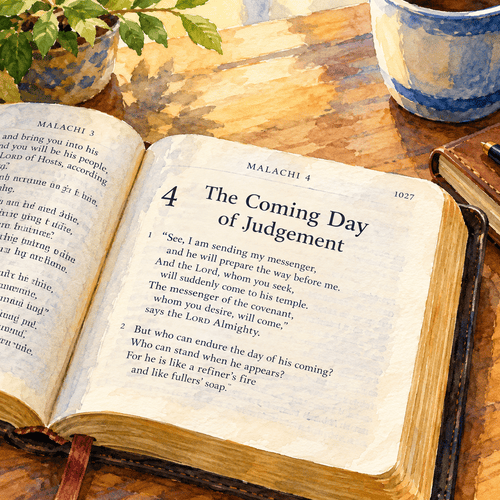
Malachi preached in the same period. His book, which closes our Old Testament, leaves the same question: when will the Lord Himself come?
1. A Restoration That Isn’t Finished
Graeme Goldsworthy described God’s kingdom simply: God’s people, in God’s place, under God’s rule. Nehemiah’s Jerusalem only partly fits. The people are a small remnant (the few who survived). A foreign empire owns the land. No son of David sits on the throne.
The people say it plainly: “Behold, we are slaves this day; in the land that you gave to our fathers … behold, we are slaves” (9:36).
And when Solomon dedicated the first temple, God’s glory filled it (2 Chronicles 7:1–2). Scripture doesn’t record that in the second temple. God had promised, “The latter glory of this house shall be greater than the former” (Haggai 2:9). Malachi added, “the Lord whom you seek will suddenly come to His temple” (Malachi 3:1).
| WHAT GOD PROMISED | WHAT NEHEMIAH’S PEOPLE HAD | HOW JESUS FULFILS IT |
|---|---|---|
| A King from David’s line (2 Samuel 7:12–13) | A Persian king and a governor | God gives Jesus “the throne of his father David” (Luke 1:32) |
| Freedom in their own land | “We are slaves this day” (9:36) | “If the Son sets you free, you will be free indeed” (John 8:36) |
| God’s glory living among His people | A rebuilt temple with no glory cloud | “The Word became flesh and dwelt among us, and we have seen his glory” (John 1:14) |
| Faithful hearts | Promises soon broken (ch. 13) | The new covenant writes God’s law on hearts (Hebrews 8:10) |
The walls were up. The King had not yet come.
2. Daniel’s Clock Is Ticking in Nehemiah’s Day
Nearly a century earlier, Daniel received a message about “70 weeks” (Daniel 9:24–27). Each “week” means 7 years. Look at Daniel 9:25:
“from the going out of the word to restore and build Jerusalem to the coming of an anointed one, a prince, there shall be 7 weeks. Then for 62 weeks it shall be built again with squares and moat, but in a troubled time.” (Daniel 9:25)
“Anointed one” translates the Hebrew word mashiach—Messiah. And “built again … in a troubled time” describes Nehemiah’s world well.
| STARTING POINT | START DATE | HOW THE YEARS ARE COUNTED | WHERE THE COUNT ENDS |
|---|---|---|---|
| Artaxerxes’ decree for Ezra (Ezra 7) | 457 BC | 483 normal years (69 × 7) | About AD 27—Jesus’ baptism |
| Artaxerxes’ decree for Nehemiah (Nehemiah 2) | 445/444 BC | 483 “prophetic” years of 360 days (the view of Harold Hoehner) | AD 33—Jesus’ entry into Jerusalem |
Believers differ on details. But both views agree: the countdown runs through Nehemiah’s world and ends with Jesus.
[READ OUR POST ON Daniel’s 70 Weeks]
3. Nehemiah the Builder: Like Jesus, but Smaller
Nehemiah is like Jesus in some ways and less than Jesus in every way.
| WHAT NEHEMIAH DID | WHAT JESUS DID | WHY JESUS IS GREATER |
|---|---|---|
| Left the palace to help a broken city (2:5) | Left heaven’s glory (Philippians 2:6–7) | Nehemiah kept his rank. Jesus “emptied himself” |
| Wept over Jerusalem’s ruin (1:4) | Wept over Jerusalem (Luke 19:41) | Jesus wept for a city about to kill Him |
| Prayed as an intercessor (one who prays for others), confessing “we have sinned” (1:6) | Always lives to pray for His people (Hebrews 7:25) | Jesus never had to confess sin of His own |
| Refused to “come down” from his work (6:3) | Refused to come down from the cross (Matthew 27:40) | Nehemiah’s staying protected a wall. Jesus’ staying paid for sin |
| Cancelled debts and refused his food allowance (5:10, 18) | Became poor to make us rich (2 Corinthians 8:9) | Nehemiah gave up food. Jesus gave up His life |
| Threw Tobiah’s goods out of the temple (13:8) | Drove the traders out of the temple (John 2:15–16) | Jesus is Himself the true temple (John 2:19–21) |
| Built walls of stone | Builds His church from “living stones” (Matthew 16:18; 1 Peter 2:5) | Stone walls fall. Christ’s church cannot |
“I Cannot Come Down”
Nehemiah’s enemies tried to lure him to a meeting to harm him (6:2). He replied, “I am doing a great work and I cannot come down. Why should the work stop while I leave it and come down to you?” (6:3).
Now listen to the crowd at the cross: “If you are the Son of God, come down from the cross” (Matthew 27:40). James Hamilton, in his exposition of Ezra and Nehemiah, draws exactly this line. Jesus was doing the greatest work of all. He didn’t come down—and because He stayed, we’re saved.
The Burden-Bearer
In Chapter 5, poor families were selling their children to pay debts. Nehemiah made the lenders cancel them. This echoes the Jubilee, when God’s law set debtors and slaves free (Leviticus 25). Jesus began His ministry by announcing “liberty to the captives” and “the year of the Lord’s favour” (Luke 4:18–19). Nehemiah cancelled money debts. Jesus cancels the debt of sin.
4. The Word Opened and Joy Restored
In Nehemiah 8, Ezra reads God’s law and the Levites (temple helpers) explain it: “They read from the book, from the Law of God, clearly, and they gave the sense, so that the people understood the reading” (Nehemiah 8:8). Reading plus explaining—we call this expository preaching.
Jesus did more. On the road to Emmaus, “He opened their minds to understand the Scriptures” (Luke 24:45). The Levites could explain the words. Only Christ can open the heart.
Then the people keep the Feast of Booths, living a week in branch shelters to remember God’s care in the desert (Nehemiah 8:17). At this same feast, centuries later, “Jesus stood up and cried out, ‘If anyone thirsts, let him come to me and drink’” (John 7:37).
Nehemiah told the weeping crowd, “the joy of the LORD is your strength” (Nehemiah 8:10). Jesus said, “These things I have spoken to you, that my joy may be in you, and that your joy may be full” (John 15:11).
5. Nehemiah 9: The Gospel Pattern in Israel’s Story
This long prayer retells Israel’s whole history, from creation to exile. The same pattern repeats: God is kind. The people rebel. God forgives.
The prayer calls God “a God ready to forgive, gracious and merciful, slow to anger and abounding in steadfast love” (Nehemiah 9:17). These words come from Exodus 34:6, where God showed Moses His glory. John picks up this same language when he says Jesus came “full of grace and truth” (John 1:14).
The prayer also admits that Israel “killed your prophets” (Nehemiah 9:26). Jesus used this same history in His parable of the tenants, where the owner finally sends his own son—and they kill him too (Matthew 21:33–39). The prayer ends with no answer, only “we are slaves.” The answer comes with the Son.
6. The Family Lines That Lead to Jesus
Many readers skip the name lists in Chapters 7 and 12. But these genealogies (family records) protect the road to Christ.
WHY THE “BORING” LISTS MATTER
Zerubbabel leads the list of returning priests and Levites (12:1). From David’s royal family, he appears in Jesus’ family line (Matthew 1:12–13).
The priestly group of Abijah is listed in 12:4 and 12:17. Centuries later, “a priest named Zechariah, of the division of Abijah” served in the temple (Luke 1:5). His son was John the Baptist, who prepared the way for Jesus.
God was quietly guarding the path to Bethlehem, name by name.
7. The Book Ends in Failure—on Purpose
In Nehemiah 10 the people sign a solemn covenant (a binding promise before God). Chapter 13 shows them breaking it, point by point.
| WHAT THEY PROMISED IN CHAPTER 10 | WHAT THEY DID IN CHAPTER 13 |
|---|---|
| “We will not give our daughters to the peoples of the land or take their daughters for our sons” (10:30) | Men married women from Ashdod, Ammon and Moab (13:23–24) |
| Keep the Sabbath holy (10:31) | Traders sold goods on the Sabbath (13:15–16) |
| “We will not neglect the house of our God” (10:39) | Levites went unpaid; Tobiah, an enemy, lived in a temple room (13:4–10) |
Why end this way? Because walls can keep enemies out, but they can’t keep sin out.
God had already promised the answer: “I will put my law within them, and I will write it on their hearts” (Jeremiah 31:33). “And I will give you a new heart, and a new spirit I will put within you” (Ezekiel 36:26). Hebrews 8 says this new covenant came through Jesus. Nehemiah could rebuild a wall in 52 days. Only Christ can rebuild a human heart.
8. “Remember Me”: 2 Prayers, 1 Saviour
Nehemiah prays “remember me” 4 times (Nehemiah 5:19; Nehemiah 13:14, 22, 31). He often points to his good work, yet in Nehemiah 13:22 he also asks God to “spare me according to the greatness of your steadfast love.”
A criminal dying beside Jesus prayed the same words: “Jesus, remember me when you come into your kingdom.” Jesus answered, “Truly, I say to you, today you will be with me in paradise” (Luke 23:42–43). The thief had no good works at all. He had only Christ—and that was enough.
Nehemiah’s last words ask: what will God remember about me? For all who trust in Jesus, God remembers Christ’s perfect record—and remembers our sins no more (Hebrews 8:12).
A City With Gates That Never Close
Nehemiah had to keep Jerusalem’s gates shut (Nehemiah 7:3; 13:19). The Bible ends with a different city. Abraham “was looking forward to the city that has foundations, whose designer and builder is God” (Hebrews 11:10). In John’s vision of the new Jerusalem, “its gates will never be shut by day—and there will be no night there” (Revelation 21:25).
Jesus is building it now: “I will build my church, and the gates of hell shall not prevail against it” (Matthew 16:18).
An echo worth noticing: the rebuilding of the wall begins and ends at the Sheep Gate (Nehemiah 3:1, 32). In John’s Gospel, Jesus heals a man “by the Sheep Gate” (John 5:2) and later says, “I am the door of the sheep” (John 10:7). An echo, not a proof—but a beautiful one.
How Not to Find Jesus in Nehemiah
Some popular teaching goes beyond the text.
CLAIMS THAT FAIL THE THREE TESTS
“The 10 gates are 10 stages of the Christian life.” Nothing in the text says this.
“The cupbearer tasted the king’s wine for poison, so Nehemiah was ready to die for the king, like Jesus.” The Bible never says this. It’s guesswork.
“Nehemiah’s return in Chapter 13 pictures the Second Coming.” Nehemiah returned surprised by sin. Christ will return knowing all things.
“Nehemiah is mainly a leadership manual.” Books such as Charles Swindoll’s Hand Me Another Brick draw helpful lessons from Nehemiah. But a book that ends in failure can’t mainly be a guide to success.
Why This Matters for Us Today
- Our walls won’t save us. Good habits, promises and religious effort are like Nehemiah’s walls. Only Christ changes hearts.
- Christ’s work is finished. Nehemiah had to keep guarding his wall. From the cross, Jesus cried, “It is finished” (John 19:30). We can rest in His work.
- God’s Word still brings joy. Read it as Nehemiah’s people heard it: understanding, rejoicing and looking for Christ.
Nehemiah built a wall. Jesus builds a people. Nehemiah asked God to remember him. Jesus asks the Father to remember us—and He is always heard.
Tough Questions, Honest Answers
Who wrote the book of Nehemiah, and when?
Much of the book is written in the first person (“I”), so it clearly includes Nehemiah’s own memoir, or personal record. Jewish tradition links Ezra and Nehemiah closely, and many scholars think a later editor joined Nehemiah’s memoir with other records, such as the family lists. The events take place from about 445 BC to about 432 BC, so the book was likely finished in the late 400s BC or soon after. Whoever held the pen, we receive the book as God-breathed Scripture (2 Timothy 3:16). The human author matters less than the divine Author.
What’s the difference between Ezra and Nehemiah?
In the Hebrew Bible, Ezra and Nehemiah were one book. Ezra was a priest and a teacher of God’s law, while Nehemiah was a governor and a builder. Ezra focuses more on rebuilding the temple and the people’s worship; Nehemiah focuses more on rebuilding the city walls and the community. Yet the two men work together, most clearly in Nehemiah 8, when Ezra reads the law and the people respond. Together they show that God’s people need both the Word and protection, both worship and order.
How did they rebuild the wall in only 52 days?
Nehemiah 3 shows the work was shared. Families, priests, merchants and even goldsmiths each took one section, often the part near their own homes. They probably reused stones from the ruins and followed the lines of older walls in many places. The Jewish historian Josephus later gave a longer figure, but the Bible’s 52 days (6:15) fits a city-wide effort of this kind. Above all, the text gives God the credit: even the enemies “perceived that this work had been accomplished with the help of our God” (6:16).
Has archaeology found Nehemiah’s wall?
In 2007 the archaeologist Eilat Mazar announced she’d found part of Nehemiah’s wall in the City of David in Jerusalem. Other scholars, such as Israel Finkelstein, argued the structure she found was built later. The debate is still open. What archaeology does show is that Persian-era Jerusalem was small and poor, which fits Nehemiah’s picture of a city “in ruins” (2:17). The Bible’s truth doesn’t depend on finding every stone, but it’s good to know the evidence continues to be studied.
Was Nehemiah a eunuch?
A eunuch was a man who had been castrated, often so he could serve safely near a king and his wives. A few ancient Greek manuscripts of Nehemiah 1:11 read “eunuch” instead of “cupbearer”, because the two Greek words look very similar. Most scholars think “cupbearer” is correct, and the Hebrew text says cupbearer. Some point out royal servants were sometimes eunuchs. So it’ possible, but the Bible doesn’t say so. It’s wise not to build any teaching on it.
Why did Nehemiah oppose mixed marriages? Was it racism?
No. The issue was faith, not race. God’s law always welcomed outsiders who turned to Him, such as Rahab from Canaan and Ruth from Moab, who both appear in Jesus’ family line (Matthew 1:5). Nehemiah was concerned these marriages would lead Israel into the worship of other gods, just as happened with Solomon (13:26). He also saw the children could no longer speak the language in which God’s law was read. The New Testament teaches the same principle for believers today: don’t marry someone who doesn’t share your faith in Christ (2 Corinthians 6:14).
Nehemiah beat men and pulled out their hair. Was that right?
The Bible reports what Nehemiah did in 13:25; it doesn’t ask us to copy it. Nehemiah was the civil governor of the land, and in Israel God’s law was also the law of the nation, so he had authority to punish. Even so, Nehemiah was a flawed man, and his anger may have gone too far. Jesus also showed zeal when He cleansed the temple, but His zeal was always holy and never sinful. Today the church doesn’t use physical punishment; it corrects its members through God’s Word, prayer and loving church discipline (Matthew 18:15–17).