
You’ve probably heard the phrase in a sermon, seen it on a church poster, or read it at the top of a prayer letter. It sounds warm and inviting. Even deep. But if someone were to ask us what it means to seek God’s face—or how the seeking ends—most of us would reach for the search engine.
Scripture does give a clear answer. The phrase isn’t vague religious poetry. It comes from the world of kings, courts and covenants—a covenant being a binding relationship God sets up with His people. The words carry precise meaning, and getting it right matters, because much confused teaching has grown up around them: teaching that turns seeking God into a technique, a formula, or a mood we must manufacture in ourselves.
Where the Phrase Comes From
The Hebrew word behind “face” is panim. It’s plural in form but singular in sense, like the English word “news”. Its range is wider than our word “face”:
- Face—the features of a person.
- Presence—being with someone, within reach.
- Favour—the look that says we’re welcome.
Two verbs pair with it. Baqash means to search hard for something we badly want. Darash means to enquire of someone, to go to them for a decision. 1 Chronicles 16:11 uses both: Seek the LORD and His strength; seek His presence continually!
A Word from the Royal Court
In the ancient Near East, “seeking the face” of a king was ordinary political language. It meant getting an audience: being admitted to the throne room and receiving his decision on your case. 1 Kings 10:24 says the whole earth sought the presence of Solomon—literally, his face. It meant access to the man who could act on our behalf.
Three overlapping senses run through the Old Testament:
| SENSE | WHAT IT MEANS | EXAMPLE |
|---|---|---|
| Access | Admission into the presence of the King | 1 Kings 10:24; Psalm 24:3–6 |
| Favour | His goodwill resting on us, not his anger | Numbers 6:25; Psalm 80:3 |
| Guidance | Enquiring of him, asking for his ruling | 2 Samuel 21:1; Psalm 105:4 |
A Word from the Sanctuary
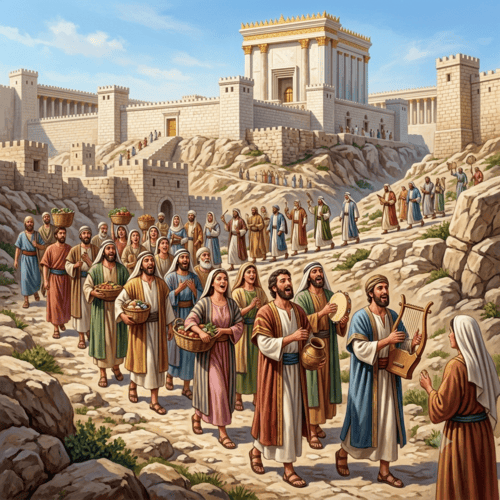
A second background matters just as much. The pilgrimage commands of Exodus 23:17 and Deuteronomy 16:16 read, word for word in Hebrew, “appear before the face of the LORD.” Three times a year Israel travelled to the sanctuary and presented itself before God. So seeking God’s face had an address, a calendar and a mediator: a set place, at a set time, through a priest, with a sacrifice. It was never a private adventure each Israelite invented for himself.
THE CORE IDEA
Seeking God’s face is covenant language about access and favour—it’s not just about being admitted to the King but finding Him well disposed towards you. It’s not a technique for producing experiences. Because God appoints how He is approached, seeking His face means coming on His terms rather than ours.
Commanded to Seek, Forbidden to See
Here many readers stumble. Scripture seems to say three things that don’t fit together.
THREE STATEMENTS IN TENSION
The command: You have said, “Seek my face.” My heart says to you, “Your face, LORD, do I seek.” (Psalm 27:8)
The prohibition: You cannot see my face, for man shall not see me and live. (Exodus 33:20)
The puzzle: Thus the LORD used to speak to Moses face to face, as a man speaks to his friend. (Exodus 33:11)
Two of these sit within two chapters of each other, so this is no mistake. Three truths hold them together.
1. God Speaks to Us in Baby Language
God has no face. He is spirit (John 4:24), and the historic confessions describe Him as without body, parts or passions—He is not made of anything, has no limbs, and is not swept along by moods as we are. At Sinai Israel saw no form (Deuteronomy 4:15), and Moses presses that point so nobody would carve an image.
Why then does God describe Himself with a face? Because otherwise we could not follow Him. John Calvin gave the classic answer: in Scripture God “lisps with us as nurses are wont to do with little children.” A nurse using adult sentences would not be more truthful; she would simply fail to be understood.
2. Access Is Granted, Never Seized
Moses doesn’t stroll into God’s presence casually. He is placed in the cleft of a rock and covered by God’s hand (Exodus 33:22). “Face to face” in verse 11 describes how direct that conversation was, not an unveiled sight of God in Himself. Every approach runs through appointed means: a tent, an altar, a priest, blood.
That’s not God being difficult; it’s God being merciful. The problem isn’t that He is hard to reach, but that we’re sinners and He is holy.
3. Sought Now, Seen Later
The seeking also has a deadline. For now we see in a mirror dimly, but then face to face (1 Corinthians 13:12). What believers pursue now they will receive then. Yet Herman Bavinck warned God is never reduced to a subject we can master. “Mystery is the lifeblood of dogmatics,” he said—meaning that theology, the ordered study of Christian teaching, doesn’t live by removing mystery but by feeding on it. We shall see God truly. We shall never see round Him. Seeking God’s face ends in worship, not in mastery.
The Shining Face and the Hidden Face
The most famous blessing in the Bible is built on this idea. Aaron was told to say over Israel: The LORD bless you and keep you; the LORD make his face to shine upon you and be gracious to you; the LORD lift up his countenance upon you and give you peace (Numbers 6:24–26).
A shining face is a smiling face. Think of a parent whose face lights up when a child walks in. That’s the picture: God pleased, attentive, turned towards His people.
Which is why the opposite image is so painful. Scripture often speaks of God hiding His face—but not always in the same sense, and confusing the two causes real distress.
| GOD TURNING AWAY IN JUDGEMENT | GOD WITHDRAWING HIS FELT COMFORT | |
|---|---|---|
| What causes it | Sin that is being clung to and not repented of | Often no particular sin at all; God has his own purposes |
| Sample texts | Isaiah 59:2; Deuteronomy 31:17–18; Hosea 5:15 | Psalm 13:1; Psalm 44:24; Psalm 88; Isaiah 8:17 |
| The right response | Repent and return; the door is open | Keep praying in the dark; wait; do not conclude you are rejected |
The historic confessions address the second column directly: true believers may have the light of God’s countenance withdrawn for a season and yet never be finally abandoned. The Puritans wrote a whole literature on these “withdrawings”, still among the most useful pastoral writing ever produced.
Keep Psalm 88 in view. It begins in darkness and ends with the word “darkness”. No sunrise. Yet God placed it in the Bible as a model prayer. English pastor Christopher Ash notes it is there so believers in the dark know their experience isn’t abnormal.
Who Starts the Search?
Now a harder question. Paul writes no one understands; no one seeks for God (Romans 3:11). Yet God commands us to seek His face, and the psalms are full of people doing so. Which is it?
Isaiah answers: I was ready to be sought by those who did not ask for me; I was ready to be found by those who did not seek me (Isaiah 65:1). Left to ourselves we want God’s gifts, or we want to be left alone. If anyone genuinely seeks God’s face, it’s because God moved towards them first.
Look closely at Psalm 27:8. The psalmist doesn’t announce a plan; He replies. God has spoken—Seek my face—and the heart answers, Your face, LORD, do I seek. Seeking is an echo, not an initiative.
WHY THIS MATTERS ENORMOUSLY
If seeking comes first and God’s favour second, seeking is a price we pay—and we will always wonder whether we’ve paid enough. Long enough? Tearfully enough?
But if grace comes first and seeking is the response, the very desire to seek Him is evidence He has already turned towards us. Our hunger is not a bill to settle. It’s a gift already received.
What About 2 Chronicles 7:14?
No discussion of this phrase can avoid the verse that appears on more prayer campaigns than any other: If my people who are called by my name humble themselves, and pray and seek my face and turn from their wicked ways, then I will hear from heaven and will forgive their sin and heal their land.
It is regularly applied to modern nations: if enough citizens pray, God will heal the country. But read two verses earlier. God is answering Solomon at the dedication of the temple: I have chosen this place for myself as a house of sacrifice (7:12). The setting isn’t general but intensely specific.
Four details block the direct national application:
- The people. “My people called by my name” was Israel, a nation in covenant with God, uniquely His among all peoples. No modern country holds that position.
- The place. The promise is anchored to a building God had just filled with His glory, towards which prayer was to be directed.
- The land. “Their land” is Canaan, with drought and locusts named as its covenant curses (7:13).
- The arrangement. The verse belongs to an order that has now been fulfilled and set aside—temple, priesthood, sacrifice and all.
So has the promise expired? Not at all. It has been fulfilled and relocated. Jesus identified Himself as the true temple (John 2:19–21); the people who bear God’s name are now gathered from every nation; the inheritance is no longer one strip of territory but the whole renewed creation. Gregory Beale, writing on temple theology, has traced this movement in detail: the sanctuary was always a preview, and it finds its goal in Christ.
The heart of the verse still stands. God is disposed to hear humble, praying, repenting people, and that has not changed by one degree. Christians should pray earnestly for their nations (1 Timothy 2:1–2). We must simply not treat the verse as a transaction guaranteeing revival once enough people have prayed. Nobody may turn God’s free mercy into a mechanism we operate.
The Face of Jesus Christ
Everything so far has been building to one place. God has no face, and no one may see Him and live. Yet we’re commanded to seek His face. So where do we go?
John answers in his opening chapter: No one has ever seen God; the only God, who is at the Father’s side, He has made Him known (John 1:18). Jesus says it Himself: Whoever has seen me has seen the Father (John 14:9). And Paul brings the two threads together in one astonishing sentence: God has shone in our hearts to give the light of the knowledge of the glory of God in the face of Jesus Christ (2 Corinthians 4:6).
Read that again. The face of God is a person. Psalm 27:8 doesn’t end in an atmosphere or a state of mind. It ends in Christ. To seek God’s face is to seek Christ.
This is why English theologian JI Packer laboured to distinguish knowing about God from knowing God Himself. Facts can be gathered at a distance; a face is met.
The Face That Was Turned Away
Numbers 6 promised a shining face to a people who kept breaking covenant, while Isaiah said their sins had hidden God’s face from them. So how does the blessing ever reach them—or us?
Because at Golgotha the Son cried out, My God, my God, why have you forsaken me? (Matthew 27:46). The one person who’d never sinned, who’d lived every day in the light of His Father’s countenance, endured the hidden face—in our place, in the dark, at midday.
THE EXCHANGE
He received the hidden face so we would receive the shining one. The blessing of Numbers 6 doesn’t fall on us because we sought hard enough, but because Christ was forsaken in our place—and the way into God’s presence now stands permanently open (Hebrews 10:19–22).
How to Seek God’s Face This Week
If seeking God’s face means seeking Christ on God’s appointed terms, the practical answer is refreshingly ordinary:
- Read and hear the Word. God’s face is sought where His voice is. Preaching isn’t a lecture about God; it’s God addressing His people.
- Pray, including badly. A prayer that asks “Why are you so far off?” is still a prayer directed at His face.
- Gather on the Lord’s Day. The assembled church is our nearest equivalent to Israel’s pilgrim festivals.
- Come to the table; remember your baptism. God’s visible pledges that His face is turned towards us, are given for days when we cannot feel it.
- Repent and obey. Psalm 24 ties clean hands to seeking his face. The remedy for sin isn’t more intensity but honest confession.
- Keep going. 1 Chronicles 16:11 says continually—not in bursts, not only in crises.
WHAT SEEKING GOD’S FACE IS NOT
- Not atmosphere management. Dim lighting and swelling music move our emotions; they cannot summon God.
- Not a formula. Fasting, vigils and set numbers of days are not leverage on God.
- Not measured by feelings. Strong emotion is not a dial showing how near God is.
- Not a wordless technique. Methods aiming past Scripture at direct, contentless experience bypass the means God appointed.
There is real comfort here. If seeking God required unusual gifts or stamina, the sick and the exhausted would be shut out. As it is, the way to God’s face is open to them on the same terms as everyone else.
Seek Now, See Then
One day the seeking will stop, because it will have arrived. Of the new creation John writes: They will see His face, and His name will be on their foreheads (Revelation 22:4).
Every hour of prayer in the dark, every Lord’s Day, every page of Scripture read when it felt like nothing at all—each was a rehearsal for that morning. So let’s seek His face now. We will see it then.
Tough Questions, Honest Answers
Why do some Bible translations say “presence” where others say “face”?
The Hebrew word panim covers both ideas, so translators must choose which English word carries the sense best in each verse. The ESV renders it “presence” in 1 Chronicles 16:11 and “face” in Psalm 27:8, because the first verse is about being with God and the second is about relating to Him personally. Neither choice is wrong; each gains something and loses something. “Presence” is clearer for modern readers but loses the picture of a face turned towards us; “face” keeps the imagery but can sound strange. If a verse puzzles us, it’s worth checking a second translation to see the other half of the meaning.
Is the popular saying “seek His face, not His hand” actually biblical?
The instinct behind it is sound: God Himself is better than anything He gives, and a faith interested only in benefits isn’t yet faith in God. But the saying isn’t a quotation from Scripture, and pressed too far it becomes unbiblical. Jesus tells us to ask for daily bread and says our Father delights to give good gifts to His children (Matthew 7:11). The Bible never treats asking God for things as spiritually second-rate. The issue is ordering, not prohibition—ask freely for His hand, but do not want the gifts more than the Giver.
Jacob said He saw God face to face at Peniel (Genesis 32:30). How does that fit with Exodus 33:20?
Jacob wrestled with a figure Scripture calls both a man and God, and He came away astonished to be alive. Reformed interpreters have generally understood such episodes as appearances of God in a visible, veiled form—many taking them as pre-incarnation appearances of the Son. What Jacob saw was a true encounter with God, but not an unveiled sight of the divine essence, which no creature could survive. His amazement is actually the point of the verse: he expected to die and did not. These appearances form a pattern pointing forward to the incarnation, when God took a real human face permanently.
Does fasting or an all-night prayer vigil make God more likely to show His face?
Fasting is a genuine biblical practice and Jesus assumed His followers would do it (Matthew 6:16–18). It can help by clearing away distractions and sharpening our sense of dependence. But it doesn’t work on God, and it earns nothing. Isaiah 58 is the sharp corrective: Israel fasted diligently, demanded to know why God hadn’t noticed, and God pointed to their oppression of the poor. If a practice is being used to obligate God, it has already gone wrong, no matter how sincere it feels.
Can someone who is not yet a Christian seek God’s face?
Yes, and they should. Paul told the Athenians God had arranged history so people would seek Him and perhaps find Him, since He is not far from any of us (Acts 17:27). There’s a difference between seeking as a way of coming to Christ and seeking as fellowship within Christ; the first is how people find their way in. But we should also remember anyone genuinely searching is already being drawn, because by nature nobody looks for God unaided. If that describes you, the search doesn’t end at a feeling—it ends in Christ. So read a Gospel and find a church that preaches Him.
Should ministers still pronounce the Aaronic blessing over a congregation today?
Many Reformed churches do, and with good reason. Numbers 6 gave the words to Aaron as a declaration, not a request—God says He will thereby put His name on His people and bless them. When a minister says these words He isn’t asking God to do something; He’s announcing on God’s authority what God does towards His people in Christ. The warrant for using them now is that the shining face they promise has been secured by Jesus, who bore the hidden face. That’s why a congregation should receive the benediction as a word spoken to them.
Will we literally see God’s face in the new creation, when God is spirit and invisible?
Revelation 22:4 promises we will see His face, so something genuinely new is coming. Reformed theology has usually said this vision is real but creaturely: we shall see God truly, though never exhaustively, since the finite cannot contain the infinite. The vision is also centred on Christ, who has a real human face and remains our mediator for ever. So the answer is neither “only symbolically” nor “we will comprehend God completely”. We shall see Him as he is, and it will be more than enough—and still more than we can hold.
Related Reads
- Exodus 33:23 Explained: Why Moses Saw Only God’s Back
- Near Yet Far: How Can God Be Both Transcendent and Immanent?
- Can We Really Know God? Understanding Divine Incomprehensibility
- The Problem of Divine Absence: How Do Believers Cope?
- The Paradox of Prayer: Why Ask When God Already Knows?
- What Does It Mean to Test God?