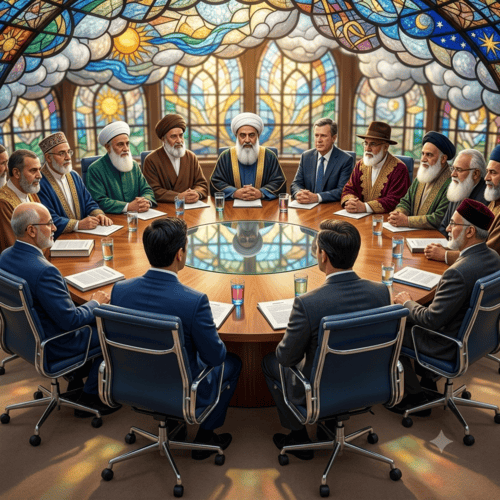

Jesus was a Jew. His mother was a Jew. All 12 of His apostles were Jews. Every page of Scripture He read was a Jewish page. And the first church in Jerusalem didn’t have a single non-Jewish member.
So here’s a question that should stop us in our tracks: if Jesus is the Jewish Messiah, why do most Jewish people today say He isn’t?
This isn’t a rude question. The apostle Paul—a Jew himself—asked it with tears. He wrote of the “great sorrow and unceasing anguish” in his heart for his own people (Romans 9:2).
Jewish teachers cite many reasons for saying no to Jesus. Some are clever. Many come straight from the Hebrew Bible. In this article we shall look at the 10 most common reasons. We shall let each one speak in its strongest form, and then test it against Scripture.
Our answer, in short: these objections are serious, but they don’t stand. And the Hebrew Bible itself shows why.
KEY WORDS TO KNOW BEFORE WE START
- Messiah: a Hebrew word meaning “anointed one”. It means the King God promised to send. “Christ” is the Greek form of the same word.
- Hebrew Bible (Tanakh): what Christians call the Old Testament.
- Torah: the first five books of the Bible, also called the Law of Moses.
- Rabbi: a Jewish teacher.
- Talmud: a huge collection of rabbis’ teachings, written down between about AD 200 and 500.
First, Let’s Be Fair
It would be easy to say Jewish people reject Jesus because they haven’t read their Bibles. That would be untrue and unkind. Many Jewish scholars know the Hebrew Bible better than most Christians do. The great medieval teacher Moses Maimonides (1138–1204) set out careful tests for the Messiah, and he believed Jesus failed them.
So we must answer with care, not cheap shots. The good news is that we don’t need cheap shots. The Hebrew Bible gives us everything we need.
The 10 Objections at a Glance
| # | WHAT MANY JEWISH TEACHERS SAY | VERSE THEY USE | OUR SHORT ANSWER |
|---|---|---|---|
| 1 | Jesus didn’t bring world peace or rebuild the Temple | Isaiah 2:4; Ezekiel 37:26–28 | The prophets show 2 stages: suffering first, ruling later |
| 2 | The Messiah hasn’t come yet | Daily Jewish prayers | Scripture says He had to come before the Temple fell in AD 70 |
| 3 | God can’t become a man | Numbers 23:19; Deuteronomy 6:4 | The Hebrew Bible calls the Messiah “Mighty God” |
| 4 | Isaiah 53 is about Israel, not Jesus | Isaiah 41:8; 49:3 | The servant is sinless and suffers for Israel |
| 5 | Jesus can’t be the son of David | Jeremiah 22:30 | Legal descent through Joseph, and the curse was lifted |
| 6 | “Virgin” is a mistranslation | Isaiah 7:14 | Jewish translators chose “virgin” 200 years before Jesus |
| 7 | No one can die for another’s sin | Ezekiel 18:20 | The Torah itself teaches substitute sacrifice |
| 8 | The Torah is forever; Jesus cancelled it | Deuteronomy 13:1–5 | Jesus fulfilled it, as Jeremiah’s “new covenant” promised |
| 9 | Christians have persecuted Jews | History | True and shameful—but it judges Christians, not Christ |
| 10 | The Jewish people as a whole said no | — | The first church was thousands of Jews |
Objection 1: “He Didn’t Do What the Messiah Must Do“
What They Say
Maimonides taught the true Messiah will rebuild the Temple (Ezekiel 37:26–28), bring the Jewish people home (Isaiah 11:12) and end war, so that “nation shall not lift up sword against nation” (Isaiah 2:4). Look around, they say. The wars go on. So Jesus cannot be the Messiah.
What the Bible Says
The prophets paint 2 pictures of the Messiah:
- The suffering King: He is “despised and rejected” (Isaiah 53:3), comes “humble and mounted on a donkey” (Zechariah 9:9) and is pierced (Psalm 22:16).
- The ruling King: He is “high and lifted up” (Isaiah 52:13), “king over all the earth” (Zechariah 14:9), and all nations worship Him (Psalm 22:27).
Both pictures describe one Person. After His resurrection, Jesus explained this very thing: “Was it not necessary that the Christ should suffer these things and enter into His glory?” (Luke 24:26).
Here’s something surprising. The rabbis felt this tension too. The Talmud speaks of 2 Messiahs: “Messiah son of Joseph”, who is killed, and “Messiah son of David”, who reigns. It even links the slain Messiah to Zechariah 12:10 (Sukkah 52a). Christians reply: you were right there are 2 missions. But they belong to one Person who comes twice. So the honest charge isn’t “Jesus failed”. It is “Jesus isn’t finished yet”.
Objection 2: “The Messiah Hasn’t Come Yet”
What They Say
Religious Jews pray every day for the Messiah to come. He is still in the future.
What the Bible Says
Several prophecies give a deadline. The Messiah had to come while the Second Temple still stood. The Romans destroyed that Temple in AD 70. If no Messiah came before then, these prophecies failed.
Prophecies With a Deadline (each one requires the Messiah before AD 70)
| PASSAGE | WHAT IT SAYS | WHY IT SETS A DEADLINE |
|---|---|---|
| Daniel 9:26 | “An anointed one shall be cut off… and the people of the prince who is to come shall destroy the city and the sanctuary.” | The Messiah dies before the Temple is destroyed |
| Genesis 49:10 | “The sceptre shall not depart from Judah… until tribute comes to him” (older versions: “until Shiloh comes”) | He comes before Judah loses its right to rule |
| Haggai 2:9 | “The latter glory of this house shall be greater than the former.” | God’s greatest glory fills the Second Temple, so it must still stand |
| Malachi 3:1 | “The Lord whom you seek will suddenly come to his temple.” | The Lord visits a Temple that no longer exists after AD 70 |
Who came in that window, was “cut off”, and is now worshipped by the nations? Only one Person fits: Jesus of Nazareth. (For the full maths of Daniel’s prophecy, see our post on Daniel’s 70 Weeks.)
A STRANGE NOTE IN THE TALMUD
The Talmud records something remarkable about the 40 years before the destruction of the Temple in AD 70. According to Yoma 39b, several unusual things happened on the Day of Atonement (Yom Kippur), the holiest day in the Jewish calendar.
One of these involved the 2 lots used by the high priest. Traditionally, the lot marked “for the LORD” was expected to appear in his right hand. But the Talmud says that this stopped happening.
It also records that a red thread, traditionally associated with God’s forgiveness of Israel’s sins, had previously turned white. During these 40 years, however, it reportedly stopped turning white.
40 years before AD 70 brings us to approximately AD 30—the period traditionally associated with Jesus’ death.
The Talmud does not connect these events with Jesus, and we mustn’t claim it does. But the timing is certainly striking. From a Christian perspective, it’s difficult not to see a possible connection between these strange Temple signs and what Christians believe happened when Jesus offered Himself as the final sacrifice for sin.
Timeline: How the Door Closed
- c. AD 30: Jesus is crucified in Jerusalem and rises three days later.
- AD 30–66: thousands of Jews believe, and the good news spreads across the Roman world.
- AD 70: the Roman army destroys Jerusalem and the Temple. The sacrifices stop.
- c. AD 80–90: rabbis at Yavneh rebuild Judaism without a Temple. Many scholars think a new prayer against “heretics” helped push Jewish believers in Jesus out of the synagogue.
- c. AD 200–500: the Talmud is written down.
- 11th century: the teacher Rashi makes “Isaiah 53 is about Israel” the standard Jewish reading.
Objection 3: “God Is Not a Man”
What They Say
Every Jew knows the Shema, Israel’s great confession: “The LORD our God, the LORD is one” (Deuteronomy 6:4). Numbers 23:19 says, “God is not man.” So worshipping a man is idolatry, and the Trinity looks like three gods.
What the Bible Says
Read Numbers 23:19 to the end: “God is not man, that he should lie.” The verse says God does not lie like we do. It says nothing about whether God can take on a human nature. Christians also hold the Shema. The Trinity means one God in three Persons—Father, Son and Holy Spirit—not three gods.
More than that, the Hebrew Bible itself points to a Messiah who is more than a man:
- Isaiah 9:6: the promised child is called “Mighty God”. One chapter later, the same title is used of the LORD Himself (Isaiah 10:21).
- Psalm 45:6–7: the King is called “O God”, yet “God, your God, has anointed you”. Two Persons are both called God.
- Psalm 110:1: “The LORD says to my Lord.” Jesus used this verse to silence His critics (Matthew 22:41–46).
- Daniel 7:13–14: one “like a son of man” rides the clouds—something only God does in the Old Testament—and all peoples serve Him.
- Zechariah 12:10: God says, “They look on me, on him whom they have pierced.” How can God be pierced? Only if God becomes man.
John Calvin noted that some Jewish teachers tried to apply Isaiah 9:6 to King Hezekiah. But no ordinary king could ever carry the name “Mighty God”.
Objection 4: “Isaiah 53 Is About Israel”
What They Say
Isaiah often calls Israel “my servant” (Isaiah 41:8; 49:3). So the suffering servant of Isaiah 53 is the Jewish people, who have suffered so much among the nations.
What the Bible Says
Israel or the Messiah? Testing Isaiah’s Servant Passage Line by Line
| WHAT ISAIAH SAYS ABOUT THE SERVANT | FITS THE NATION OF ISRAEL? | FITS JESUS? |
|---|---|---|
| He brings Israel back to God (49:5–6) | No—Israel cannot restore itself | Yes |
| He is “stricken for the transgression of my people” (53:8)—”my people” is Israel | No—he suffers for Israel | Yes |
| “He had done no violence, and there was no deceit in his mouth” (53:9) | No—Isaiah calls Israel a “sinful nation” (1:4) | Yes |
| He goes to death silently, like a lamb (53:7) | No | Yes (Mark 15:5) |
| His death is “an offering for guilt” (53:10) | No | Yes |
| He dies, is buried, then sees His offspring and lives on (53:9–11) | No | Yes |
Early Jewish readers saw the Messiah here. The ancient Aramaic paraphrase called Targum Jonathan reads Isaiah 52:13 as “Behold, my servant the Messiah shall prosper.” The Talmud calls the Messiah a suffering “leper”, quoting Isaiah 53:4 (Sanhedrin 98b).
To be fair, some Jews did read the passage as Israel quite early. Origen, a Christian writer around AD 248, met a Jewish teacher who argued this. But it became the main Jewish view only with Rashi in the eleventh century.
There is a beautiful twist here. In Isaiah 49:3 the servant is called “Israel”, yet in verse 5 he brings Israel back to God. So he is not the nation—he is the one true Israelite who does what the nation could not. That is exactly who Jesus is (compare Matthew 2:15 with Hosea 11:1).
Objection 5: “Jesus Cannot Be the Son of David”
What They Say
The Messiah must come from King David through his father. If Jesus was born of a virgin, Joseph was not His father. And Joseph’s family line includes King Jeconiah, whom God cursed: “none of his offspring shall succeed in sitting on the throne of David” (Jeremiah 22:30). Either way, Jesus is ruled out.
What the Bible Says
- Adoption gave full legal rights. In Israel, an adopted son was a true heir. Joseph named Jesus (Matthew 1:25), which made Him Joseph’s legal son and heir to David’s throne.
- Mary was also from David. Many believe Luke 3 gives Mary’s family line, through David’s son Nathan, not Jeconiah. So Jesus is David’s son by blood and by law.
- The curse was lifted. God said He would tear Jeconiah off like a signet ring—a king’s seal (Jeremiah 22:24). Later He told Zerubbabel, Jeconiah’s grandson, “I will… make you like a signet ring” (Haggai 2:23). The rabbis taught the same: Jeconiah repented, and God cancelled the decree (Pesikta de-Rav Kahana).
Objection 6: “‘Virgin’ Is a Mistranslation”
What They Say
Isaiah 7:14 uses the Hebrew word almah, which means “young woman”. The word for virgin is betulah. Christians changed the meaning.
What the Bible Says
- Jewish scholars chose “virgin” first. About 200 years before Jesus, Jewish scholars translated the Bible into Greek. This translation is called the Septuagint. They rendered almah as parthenos, which means “virgin”.
- The word is never used of a married woman. Old Testament scholar Edward J. Young stressed that almah always describes an unmarried young woman in the Hebrew Bible.
- The words overlap. Rebekah is called betulah in Genesis 24:16 and almah in Genesis 24:43.
- It is a “sign”. Isaiah says “the Lord himself will give you a sign”. A young woman having a baby is no sign at all.
Even so, this verse is not where our case rests. The Messiah’s divine nature is taught in many places, not in one word.
Objection 7: “No One Can Die for Another’s Sin”
What They Say
“The son shall not suffer for the iniquity of the father” (Ezekiel 18:20). Each person pays for their own sins. God forgives when we repent, and prayer replaces sacrifice: “we will pay with bulls the vows of our lips” (Hosea 14:2).
What the Bible Says
- Ezekiel 18 is about unjust punishment. It forbids punishing children for their parents’ sins against their will. It does not forbid God from providing a willing substitute.
- The Torah is full of substitutes. God gave a ram “instead of his son” (Genesis 22:13). On the Day of Atonement, Israel’s sins were laid on a goat (Leviticus 16). And God said, “the life of the flesh is in the blood, and I have given it for you on the altar to make atonement for your souls” (Leviticus 17:11). Atonement means making peace with God by covering sin.
- Isaiah says it plainly. The servant “was pierced for our transgressions” (Isaiah 53:5), and his death is “an offering for guilt” (53:10).
- Hosea spoke while the Temple still stood. Prayer was never meant to replace the altar.
Here is a hard fact. Since AD 70, Judaism has had no Temple, no altar and no Day of Atonement sacrifice for nearly 2,000 years. Yet Leviticus 17:11 is still in the Torah. The Christian answer is that the sacrifice was not cancelled. It was finished: “Christ had offered for all time a single sacrifice for sins” (Hebrews 10:12).
Objection 8: “The Torah Is Forever”
What They Say
God gave His law forever. Deuteronomy 13 warns against any prophet who leads people away from it. Jesus and Paul set aside the Sabbath rules and food laws, so Jesus must be a false prophet.
What the Bible Says
Jesus said, “I have not come to abolish them but to fulfil them” (Matthew 5:17). The prophets themselves expected change: God promised “a new covenant… not like the covenant that I made with their fathers” (Jeremiah 31:31–32). A covenant is a binding agreement between God and His people. And Deuteronomy 13 is about prophets who lead people to “other gods”. Jesus led people to the God of Abraham.
How Jesus Fulfils the Three Kinds of Law in the Torah
| KIND OF LAW | EXAMPLE | WHAT HAPPENS IN CHRIST |
|---|---|---|
| Moral law | The Ten Commandments | Still binds everyone. Jesus kept it perfectly and writes it on our hearts |
| Ceremonial law | Sacrifices, food laws, feast days | These were “a shadow”—Christ is the reality (Colossians 2:17) |
| Civil law | Laws for running the nation of Israel | Ended with ancient Israel as a nation under God, though its wisdom remains |
This way of reading the law is taught in the Westminster Confession of Faith (chapter 19).
Objection 9: “Look What Christians Have Done to Us”
What They Say
For centuries, Jews were mocked, driven out and killed in the name of Christ. Why trust a faith whose followers did that?
What the Bible Says
We must begin with honest confession. In AD 386–387, John Chrysostom preached bitter sermons against Jews. In 1096, Crusaders murdered whole Jewish communities in Germany. In 1543, Martin Luther wrote a shameful book called On the Jews and Their Lies. Pogroms—violent mob attacks on Jews—followed in many lands.
WE MUST SAY IT PLAINLY
Hatred of Jewish people is a sin against Jesus, who is Himself a Jew. “If anyone says, ‘I love God,’ and hates his brother, he is a liar” (1 John 4:20). Anyone who hates Jews in Jesus’ name is not following Jesus.
But this argument judges Christians, not Christ. Jesus taught His followers to love even their enemies. And many Christians obeyed Him at great cost. Corrie ten Boom’s family hid Jews in their home in Haarlem during the Second World War. In the French village of Le Chambon-sur-Lignon, Pastor André Trocmé and his church sheltered thousands of Jews. The failures of followers do not prove the Leader false.
Objection 10: “Our People Said No”
What They Say
If Jesus were the Messiah, the Jewish people—who knew the Scriptures best—would have recognised Him.
What the Bible Says
- Many did. All the apostles were Jews. About 3,000 believed on the day of Pentecost (Acts 2:41). Later, James told Paul “how many thousands there are among the Jews of those who have believed” (Acts 21:20).
- Israel often rejected God’s rescuers at first. Joseph’s brothers sold him. Israelites asked Moses, “Who made you a prince and a judge over us?” (Exodus 2:14). Stephen traced this same pattern in Acts 7.
- God always keeps a remnant. A remnant is a small group God keeps faithful. Paul wrote, “there is a remnant, chosen by grace” (Romans 11:5).
The Real Reason: A Veil Over the Heart
If the case is this strong, why do more not believe? The Bible’s answer is that the problem is mainly the heart, not the brain. Paul wrote, “whenever Moses is read a veil lies over their hearts. But when one turns to the Lord, the veil is removed” (2 Corinthians 3:15–16).
This is not only a Jewish problem. It is a human problem. Every Gentile is also “dead in the trespasses and sins” until God gives life (Ephesians 2:1). No one comes to Christ unless the Father draws them (John 6:44). So Christians have no room for pride. Paul warned Gentile believers: “do not become proud, but fear” (Romans 11:20).
And there is real hope. Paul wrote that “a partial hardening has come upon Israel, until the fullness of the Gentiles has come in. And in this way all Israel will be saved” (Romans 11:25–26). Faithful Bible teachers read “all Israel” in two ways:
Two Ways Bible Teachers Read “All Israel Will Be Saved” (Romans 11:26)
| VIEW | WHO HELD IT | WHAT IT MEANS |
|---|---|---|
| All of God’s people | John Calvin | “Israel” here means the whole church, Jews and Gentiles together |
| A future turning of Jewish people | Charles Hodge, John Murray | Before Christ returns, Jewish people will turn to Him in great numbers |
WORTH PONDERING
“I extend the word Israel to all the people of God.”—John Calvin, on Romans 11:26
Both views agree on what matters most: Jewish people will keep coming to faith, and they will come only through Jesus. That is why the Westminster Larger Catechism (1648) teaches Christians to pray for “the Jews called” (Question 191). Robert Murray M’Cheyne travelled from Scotland to Palestine in 1839 to learn how to reach them. And Charles Spurgeon preached in 1864 that Christians gave too little thought to the future conversion of the Jews.
How Jewish Scholars Answer
A fair article should give the other side its say:
- “The two-comings idea was invented after Jesus failed.“ But it comes from Isaiah and Zechariah, and the rabbis’ own “Messiah son of Joseph” shows the same pattern.
- “Daniel’s anointed one was the high priest Onias III, killed in 171 BC.“ But Daniel 9:24 says this period would “put an end to sin… and bring in everlasting righteousness”. Nothing like that happened in 171 BC.
- “The Targum calls the servant the Messiah but gives the suffering to Israel.“ True. Yet it still shows that early Jewish readers saw the Messiah in this passage.
For deeper reading, Rabbi Tovia Singer is the best-known Jewish voice against Christian claims. Michael L Brown, a Jewish believer in Jesus, answers these objections in five volumes in Answering Jewish Objections to Jesus.
Conclusion: Moses Wrote About Him
We have tested 10 objections. Each one is serious. But each one breaks at a key point—and almost always on the pages of the Hebrew Bible itself. The deadline in Daniel, the “Mighty God” of Isaiah, the sinless servant, the pierced One of Zechariah: they all point to one Person.
Jesus said to the religious leaders of His day, “If you believed Moses, you would believe me; for he wrote of me” (John 5:46). The question is not whether Jesus is Jewish enough. It is whether we will see the Jewish Messiah where the Jewish Scriptures point.
If you are Jewish and reading this, read Isaiah 53 for yourself tonight. If you are a Christian, love your Jewish neighbours, and pray for them as Paul did.
Tough Questions, Honest Answers
Is Jesus mentioned in the Talmud?
Probably yes, though scholars argue about some passages. The clearest one says a man called Yeshu was hanged on the eve of Passover for “sorcery” and for leading Israel astray (Sanhedrin 43a). These words are hostile, but they tell us something important. Even Jesus’ enemies did not deny that He lived, died near Passover or did unusual works. They simply called His miracles magic, just as some leaders did in His own day (Mark 3:22).
Did the Jews kill Jesus?
The Bible’s answer is wider than many think. Some Jewish leaders handed Jesus over, but a Roman governor sentenced Him and Roman soldiers crucified Him. The early church prayed that “Herod and Pontius Pilate, along with the Gentiles and the peoples of Israel” all played a part—yet only “to do whatever your hand and your plan had predestined to take place” (Acts 4:27–28). In the deepest sense, Jesus died because of all our sins, and He laid down His life freely (John 10:18). The old charge that Jews are “Christ-killers” is a lie that has caused terrible suffering, and Christians must reject it completely.
Can a Jewish person believe in Jesus and still be Jewish?
Yes. Paul believed in Jesus and still said, “I myself am an Israelite” (Romans 11:1). Believing in the Jewish Messiah does not make anyone less Jewish. Many Jewish believers today call themselves Messianic Jews, and some keep Jewish customs to honour their heritage. What saves them is not those customs but faith in Christ alone—the same way every Gentile is saved. In Christ, Jew and Gentile become one family without losing who they are (Ephesians 2:14).
Do Jews and Christians worship the same God?
Jews and Christians both seek the God who made the world and spoke to Abraham, Moses and the prophets. But the New Testament teaches that God has now shown Himself fully in His Son. Jesus said, “Whoever does not honour the Son does not honour the Father who sent him” (John 5:23). So to know the Father truly, a person must come through the Son. Christians should say this gently and humbly, because we only know it by God’s grace.
Why is Isaiah 53 not read in synagogues?
Each Sabbath, synagogues read a set passage from the Prophets, called the haftarah. The readings from this part of Isaiah cover 51:12–52:12 and then 54:1–10, so 52:13–53:12 is not read in the yearly cycle. Jewish teachers point out that many other chapters are skipped too, so they see nothing hidden here. Even so, many Jewish people say they first met Isaiah 53 through a Christian friend. That is a good reason to read it together, slowly and without pressure.
What do Jewish people say happened to Jesus’ body?
The earliest answer is in the Bible itself. The guards were paid to say, “His disciples came by night and stole him away while we were asleep” (Matthew 28:13). A much later Jewish story, the medieval Toledot Yeshu, claims a gardener moved the body. Notice what both stories admit: the tomb really was empty. Neither story explains why the disciples were willing to suffer and die for what they saw.
Was Jesus Jewish, and did He keep the Torah?
Yes, completely. He was “born of woman, born under the law” (Galatians 4:4), circumcised on the eighth day (Luke 2:21), and kept the feasts in Jerusalem. He obeyed God’s law perfectly, without a single sin. This matters for our salvation: Jesus didn’t only die for our sins, He also lived the perfect life we could never live. When we trust Him, His perfect obedience is counted as ours. That’s why a Jewish Messiah who kept the Torah is good news for the whole world.
Related Reads
- Jewish Objections to Christianity: Addressing Messianic Challenges
- Is Jesus the Jewish Messiah? Seven Arguments You Can’t Ignore
- Who Is Isaiah 53’s Suffering Servant: The Messiah or Israel?
- If Jesus is Messiah, Why Aren’t ALL Messianic Prophecies Fulfilled?
- Daniel’s 70 Weeks Prophecy: A Reformed Reading of Daniel 9
- Isaiah 7:14 and the Virgin Birth: How the Prophecy Points to Jesus
- Will All Israel Be Saved? Reformed Views on Romans 11:26
- To the Jew First: Why Must Missions Start With Israel?