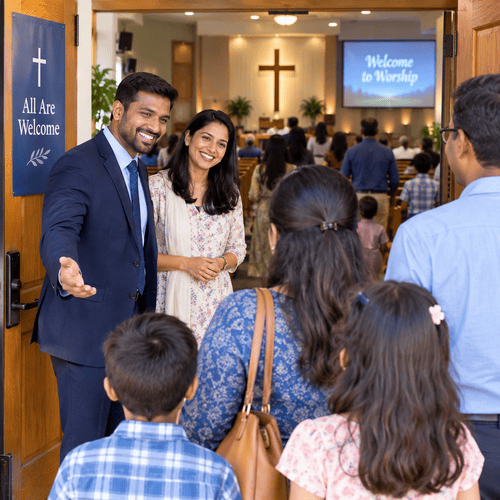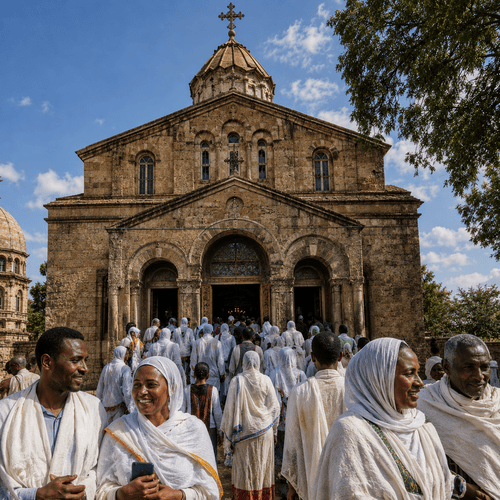
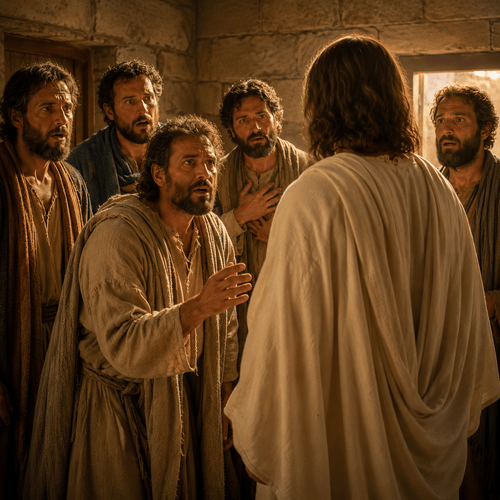
When Jesus ascended to heaven, He didn’t leave behind a monument, a corporate policy manual, or a political party. Instead, He left something intensely alive: a human collective uniquely designated as His physical representation on earth. The New Testament has a striking phrase for this collective. It calls the church the body of Christ.
It’s one of the most vivid pictures in all of Scripture, and also one of the most misunderstood. Some hear “body of Christ” and think only of the bread at communion. Others treat it as a warm metaphor for teamwork—a religious version of “there’s no I in team.” But the apostle Paul meant something far weightier, and far stranger, than either. When he called the church the body of Christ, he was making a claim about who the church is, who Christ is, and how the two are joined together.
This article unpacks that claim: where it comes from, what it means, and why it still reshapes how ordinary Christians live, worship and serve today.
A picture Paul returns to again and again
The image is no throwaway line. The apostle Paul develops it across several of his letters, each time pressing a slightly different point.
| Passage | Written to | Emphasis |
|---|---|---|
| Romans 12:4–5 | Rome | Many members, one body; the gifts differ |
| 1 Corinthians 12 | Corinth | Every part matters; no member is dispensable |
| Ephesians 1:22–23; 4:15–16 | Ephesus | Christ is the head; the body grows up into Him |
| Colossians 1:18; 2:19 | Colossae | Christ is head and the source of all growth |
Read together, these passages build a single, coherent picture. The church isn’t merely an organisation that Christ founded and then left to run itself. It’s an organism—a living body—of which He remains the living head. New Testament scholar Herman Ridderbos observed that, for Paul, this was no borrowed figure of speech but a description of a real, spiritual union between Christ and His people. That distinction—between an organisation and an organism—is where most misunderstandings begin.
More than a metaphor: organic union with Christ
When we call a company a “body of workers” or describe a football team as playing “as one body,” we’re using a figure of speech. Nobody imagines the accounts department is literally an arm. Paul’s language runs deeper than that.
Consider what he actually writes to the Corinthians: For just as the body is one and has many members, and all the members of the body, though many, are one body, so it is with Christ. Notice the final clause. We’d expect him to say “so it is with the church.” Instead he says “so it is with Christ.” The church, for Paul, is so bound up with her Lord that he can name the body by the name of its head.
This is why theologians speak of the church’s union with Christ. Believers aren’t fans cheering a distant hero; they’re, in Paul’s words, the body of Christ and individually members of it. Theologian Anthony Hoekema described this union as the beating heart of the Christian life: everything the believer has—forgiveness, new life, adoption, hope—comes through being joined to Christ as a limb is joined to a body.
Three things follow from taking the image seriously:
- Life flows from the head, not the members. A hand has no life of its own; cut it off and it dies. In the same way, the church has no spiritual life apart from Christ.
- The union is permanent, not contractual. We cannot resign from a body the way we resign from a club. This belonging runs bone-deep.
- The parts belong to one another. To be joined to Christ is, inextricably, to be joined to everyone else who is joined to Him.
Why Jesus is called the head
Paul doesn’t leave the picture as a shapeless mass of limbs. The body has a head, and the head is Christ: And he is the head of the body, the church. In Ephesians he adds that God gave Him as head over all things to the church, which is his body, the fullness of him who fills all in all. The word “head” carries two ideas at once, and both matter.
- Authority. The head governs the body. Christ isn’t the church’s mascot or its honorary president; He is its ruling Lord. Doctrine, direction and decisions answer to Him, not to majority opinion or passing cultural fashion.
- Source. In the ancient world the head was thought to nourish and sustain the whole. Paul leans on this too: the body grows with a growth that comes from God, drawn from the head. Every ounce of the church’s spiritual growth traces back to its living head.
John Calvin pressed the point hard. To honour Christ as head, he argued, is to refuse any earthly rival the place that belongs to Him alone. A church that treats a human leader, an institution or a tradition as its true head has, in effect, been joined to the wrong head. The goal Paul sets is the opposite: to grow up in every way into Him who is the head—into Christ.
One body, many parts: the logic of spiritual gifts
If the head is Christ, the members are His people—and they’re gloriously varied. This is the burden of 1 Corinthians 12, and Paul’s logic is worth following closely, because it cuts against two opposite errors.
The first error is uniformity: the assumption that every Christian should look, serve and function the same way. Paul dismantles it with gentle humour—If the whole body were an eye, where would be the sense of hearing? A body made entirely of eyes would be a monster, not a marvel. Difference isn’t a defect in the church; it’s the design.
The second error is inferiority: the quiet suspicion that some members don’t really count. Paul is emphatic: The eye cannot say to the hand, ‘I have no need of you,’ nor again the head to the feet, ‘I have no need of you.’ The parts that seem weaker or less visible, he insists, are indispensable. The person who prays quietly at home matters as much to the body’s health as the preacher in the pulpit.
This is where spiritual gifts come in. Paul lists them—wisdom, knowledge, faith, healing, teaching, service and more—not as trophies for the gifted individual, but as organs for the good of the whole. Wayne Grudem defines a spiritual gift as any ability empowered by the Holy Spirit and used to serve the church. The emphasis falls on used and serve. A gift hoarded is like a lung that refuses to breathe for the rest of the body.
- Given by the Spirit, not earned. Gifts are distributed as He wills, which leaves no room for either pride or envy.
- Diverse by design. No single Christian has every gift, but every Christian has some gift.
- Aimed outward. The measure of a gift isn’t how it makes us feel but how it strengthens others.
- Coordinated by love. Straight after this chapter Paul writes 1 Corinthians 13, the great passage on love—because gifts without love, he says, build nothing.
The physical body and the mystical body
A fair question arises here. If the church is Christ’s body, what happened to the actual, physical body in which Jesus lived, died and rose? Are we saying the church replaces it? Not at all. Christian teaching has long distinguished between two senses of the phrase, and holding them apart prevents a good deal of confusion.
| Aspect | The physical body of Jesus | The church as His body |
|---|---|---|
| What it refers to | The literal human body Jesus took at the incarnation | The community of all believers united to Him |
| Where it is now | Risen, ascended, seated at the Father’s right hand | On earth (and, for those who have died, with Christ) |
| Nature of the union | Personal—the eternal Son took a human nature | Spiritual—believers joined to Him by the Holy Spirit |
| Its role | Accomplished salvation through death and resurrection | Displays and extends the fruit of that salvation |
Older writers sometimes called the second sense the “mystical” body—not because it’s vague or unreal, but because the union is spiritual and hidden from physical sight. Edmund Clowney cautioned against pushing the metaphor so far that we imagine the church literally continues the incarnation. Christ’s saving work was finished at the cross; the church adds nothing to it. Rather, the church is the community in which the risen Christ, by His Spirit, is savingly present. And at work.
Keeping this straight matters practically. The church isn’t a second Christ, nor a replacement for Him, nor an institution that dispenses Him like a vending machine. It’s the people in whom He dwells and through whom He works.
How the body functions today
So how does a body with a heavenly head operate on earth? Not by Christ’s physical presence, but by His Spirit and through ordinary means. Consider the routine life of a healthy congregation:
- The Word preached feeds the body, the way food nourishes muscle and bone.
- The sacraments of baptism and the Lord’s Supper mark and strengthen belonging.
- Gathered worship is the body acting as one—many voices in a single praise.
- Mutual care is the nervous system and the immune system at once: members bearing one another’s burdens and sensing when one part is in pain.
- Gifts exercised keep every organ contributing to the health of the whole.
None of this is glamorous, and this is the point. A body stays alive not through dramatic feats but through countless unnoticed functions repeated faithfully. Michael Horton observes we live in an age enamoured of the extraordinary, while the New Testament locates the church’s real power in ordinary, Spirit-empowered faithfulness—the weekly, unspectacular rhythms through which Christ builds His people.
When one part hurts, the whole body feels it
There’s one more thread in Paul’s image that modern individualism finds hard to grasp. In a body, the parts aren’t merely near one another; they feel one another. Paul draws the conclusion plainly: If one member suffers, all suffer together; if one member is honored, all rejoice together.
Stub your toe and your whole body knows about it—you wince, you limp, your eyes water. A body that felt nothing when one part was injured would be diseased, not healthy. So it is with the church. A congregation where the comfortable are untroubled by the suffering of the struggling has, by this measure, lost feeling in part of its body.
This cuts against a consumer approach to church, where people attend to receive a service and drift away when it no longer suits them. Paul’s body will not permit it. We can’t be Christians in isolation any more than a severed finger can be a hand. Theologian Charles Hodge put it starkly: to be united to Christ the head is necessarily to be united to all who share that union. Solitary Christianity is, on these terms, almost a contradiction in terms.
So what does this ask of us?
The doctrine isn’t abstract. If the church really is the body of Christ, several very practical things follow:
- Belong, don’t just attend. Membership in a body isn’t optional decoration; it’s the natural shape of the Christian life.
- Find your function. Every believer has a gift and a part to play. The question isn’t whether we have something to contribute, but what.
- Value the unseen members. The parts that receive no applause are, by Paul’s reckoning, indispensable.
- Feel with the body. Rejoice with those who rejoice; weep with those who weep. Indifference isn’t neutrality; it’s numbness.
- Look to the head. The health of the whole depends not on clever strategy but on staying joined to Christ, from whom all life and growth flow.
When Jesus ascended, He left behind neither a building nor a bureaucracy, but a living body animated by His Spirit and answerable to Him as head. To understand the church as the body of Christ is to see it for what it truly is: not a human club with a religious flavour, but the earthly presence of a heavenly Lord, knit together limb by limb, growing up into Him.
Tough Questions, Honest Answers
Is “the body of Christ” the same as the bread in communion?
No. The New Testament uses the phrase in two related but distinct ways. At the Lord’s Supper the bread represents Christ’s body given for us. When Paul calls the church the body of Christ, he means the community of believers united to Him. The two meanings enrich one another but should not be confused.
Does the church replace or continue the incarnation?
No. Jesus’ physical body is risen and ascended, and the church adds nothing to His finished saving work. The church is the community in which the risen Christ dwells by His Spirit—His presence and instrument on earth, not a second incarnation.
Can I be Christian without belonging to a church?
We’re saved by grace through faith in Christ, but the New Testament knows nothing of a healthy solitary Christian. A body part cut off from the body dies. Belonging to a local congregation is the normal, God-designed shape of following Christ, not an optional extra.
If Christ is the head, what about pastors and church leaders?
Leaders serve under Christ’s authority; they never share His place as head. Their task is to point the body to its true head and to equip members for service (Ephesians 4). A church that treats any human leader as its real head has, in effect, replaced Christ.
What if I don’t think I have any spiritual gift?
Paul’s teaching leaves no room for that worry: every believer receives at least one gift from the Spirit. Some gifts are quiet and easily overlooked, but none is worthless. The invitation is to serve, and our gift usually becomes clear as we do.
Does “one body” mean all denominations are the same?
The body of Christ includes every true believer, a real and profound unity that crosses denominational lines. That doesn’t mean every church teaches truly, or that differences never matter. It means Christians who genuinely belong to Christ belong, at a deep level, to one another—and should treat each other accordingly.
How is unity possible when Christians disagree so much?
Unity in the body isn’t uniformity of opinion; it is shared union with the same head. Just as a hand and an eye are radically different yet serve one body, believers with different gifts, cultures and views can be genuinely one because they are joined to the same Christ. That unity is a gift to be guarded, not an achievement to be manufactured.
Related Reads
- What Does It Mean That the Church Is the Bride of Christ?
- What Is the Church? A Biblical Definition of Ekklesia
- The Visible vs Invisible Church: Understanding the Critical Difference
- Church and Kingdom of God: What’s the Difference?
- A Royal Priesthood: Why Does Peter Address Believers Thus?
- Household of God: What It Means to Belong to the Church
- How Can I Serve the Church Today? The Available Options