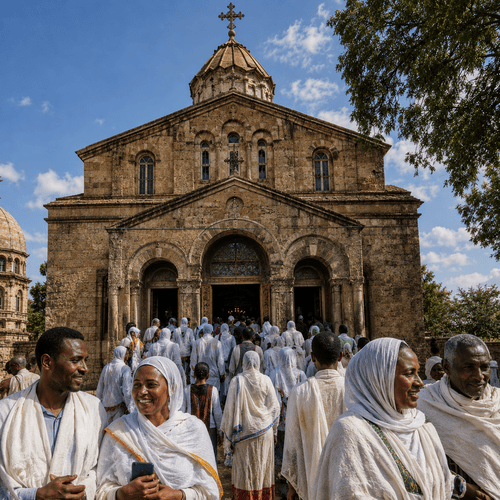
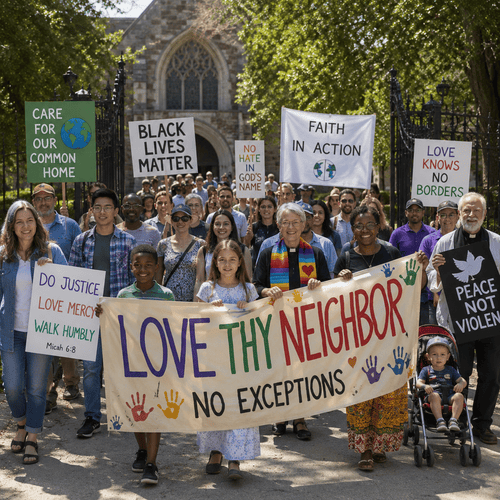
Picture a congregation that has never been busier. Its calendar overflows with rallies, petitions and awareness campaigns for a dozen worthy causes. Yet its pulpit has grown strangely quiet. And only a few of its members can tell how guilty sinners are reconciled to a holy God. Something has quietly slipped out of place. Beneath all the activity lies the one question every church must eventually answer: what, precisely, has Christ sent His church into the world to do?
Few debates divide sincere believers more sharply. Some insist the church betrays the gospel unless it confronts injustice and works to reform society. Others fear the church is trading its birthright—the message of the cross—for a bowl of activist pottage. Both instincts carry something true, and both, left unchecked, lead somewhere dangerous. The Reformed tradition offers a way through, not by splitting the difference, but by getting the categories right.
Why This Question Divides the Church
The disagreement is rarely about whether justice matters. Almost no Christian argues cruelty, oppression and neglect of the poor are acceptable. The real dispute is about priority and definition—what the church as an institution is chiefly commissioned to do, and what we even mean by “social justice” in the first place.
A century ago, Walter Rauschenbusch and the “social gospel” movement recast the kingdom of God as a programme of social reform, and in the process the cross and personal salvation quietly receded. That history casts a long shadow. Today the concern has returned in new clothing, as churches wrestle with poverty, race and structural injustice. The danger runs in two directions at once:
- The activist ditch—the church makes societal transformation its defining purpose, and gospel proclamation becomes optional background music.
- The pietist ditch—the church retreats into a private, spiritualised faith that shrugs at the suffering of its neighbours as though bodies don’t matter.
A faithful answer must refuse both ditches. To do that, we need to define our terms carefully rather than trading slogans.
What “Mission” Actually Means
The word mission comes from the Latin for “sending.” To ask about the mission of the church is to ask what the church is sent to accomplish. And here the risen Christ hasn’t left us guessing. In the Great Commission He defines the assignment with striking precision:
Go therefore and make disciples of all nations, baptising them in the name of the Father and of the Son and of the Holy Spirit, teaching them to observe all that I have commanded you. (Matthew 28:19–20, ESV)
In their careful study of this question, Kevin DeYoung and Greg Gilbert conclude the mission of the church is to go into the world and make disciples by declaring the gospel of Jesus Christ in the power of the Spirit, gathering those disciples into churches where they worship and obey their Lord. The engine of that mission is ordinary and unglamorous: the preaching of the Word, the administration of the sacraments and the exercise of loving discipline. The book of Acts bears this out. When the apostles were scattered, they didn’t go looking for as many social problems to solve as possible; they went everywhere preaching the word and planting churches.
This doesn’t make good works optional. It locates them correctly. The mission is disciple-making through the gospel; good works are the fruit that a disciple-making church inevitably bears.
The Church as Institution and Organism
Here’s the distinction that unlocks the whole debate. Scripture speaks of the church in two ways, and theologian Calvin Van Reken has helpfully drawn out the difference:
- The church as institution—the church gathered, organised under its officers, marked out by pulpit, font and table. This is the church acting corporately, with its own God-given mandate.
- The church as organism—the church scattered, believers living out their faith Monday to Saturday as parents, employers, voters, neighbours and citizens in every sphere of life.
The mission of the church as institution is narrow and specific: the Great Commission. The calling of the church as organism—that is, of individual Christians—is gloriously broad, reaching into art, business, politics, medicine and the pursuit of justice in a thousand vocations.
Confusion enters the moment we collapse the two. When we assume everything a Christian is right to do, the church as an institution must do too, we hand the congregation a mandate Christ never gave it, and we blunt the one mandate He did. As Abraham Kuyper saw, the Christian who fights injustice at the city council isn’t doing something less than kingdom work; he is doing kingdom work in his proper sphere, which isn’t the same as the pulpit ministry of the gathered church.
Biblical Justice Is Not the Same as “Social Justice”
Much of the heat in this debate comes from a single word doing two different jobs. “Justice” in Scripture translates the Hebrew mishpat (right judgement, giving each person their due) and tsedeqah (righteousness, living rightly in relationship and community). Biblical justice is anchored in the unchanging character of God and is impartial by definition:
You shall do no injustice in court. You shall not be partial to the poor or defer to the great, but in righteousness shall you judge your neighbour. (Leviticus 19:15, ESV)
Modern “social justice,” by contrast, is not one fixed thing. In some mouths it simply means mercy to the vulnerable—which Scripture wholeheartedly commands. In others it carries an entire ideological framework: society read primarily through categories of oppressor and oppressed, with equality of outcome as the goal and group identity as the measure. It was concern over this second, ideological sense that led John MacArthur and others to warn, in the 2018 Statement on Social Justice and the Gospel, against importing a foreign framework into the church under a biblical-sounding label.
Timothy Keller, writing from a more expansive posture in Generous Justice, argues genuine care for the poor flows naturally from grace received. The wisest path holds the two together: embrace the biblical substance—God’s real concern for the weak, the widow and the stranger—while refusing to baptise every ideology that happens to travel under the same name. The test is always the same: does this vision of justice come from Scripture, or is Scripture being read through a lens borrowed from the surrounding culture?
What the Bible Says About the Poor and Oppressed
None of this licenses indifference. The Scriptures are saturated with God’s tender concern for those the world overlooks, and any Reformed account that misses this isn’t more biblical but less.
- The Law—built protections for the poor, the sojourner and the labourer into the very fabric of Israel’s common life, from gleaning laws to the year of jubilee.
- The Prophets—thundered against those who kept the outward forms of worship while trampling the needy underfoot.
- Jesus—healed, fed and touched the outcast, and made a hated Samaritan the hero of neighbour-love.
- The apostles—commanded ongoing, tangible generosity, especially within the family of faith.
So then, as we have opportunity, let us do good to everyone, and especially to those who are of the household of faith. (Galatians 6:10, ESV)
Notice the pattern. The New Testament’s consistent emphasis is on Christians and churches showing concrete mercy—above all to fellow believers, and then, as opportunity allows, to all. This is a world away from indifference. But it’s also a world away from making the reform of national or global structures the defining mission of the gathered church.
Mercy Ministry: Real, but Not the Mission
So does the institutional church have any role in caring for physical need? Yes—and Scripture gives it an office for exactly that purpose. In Acts 6 the apostles refused to leave the ministry of the Word to wait on tables, yet they didn’t dismiss the need. They established what became the diaconate, so that mercy could be shown without the ministry of the Word being crowded out.
That episode is a model for the whole question. Mercy ministry is a genuine and God-ordained work of the church. But it’s ministerial, not the mission itself—a fruit and companion of gospel proclamation, not its replacement. The diaconate exists precisely so the church can love bodies without losing its grip on the one message that saves souls. Order the two rightly and both flourish; reverse them and, in time, we lose both.
The Spirituality of the Church
An older strand of Reformed and Presbyterian thought supplies a further guardrail: the doctrine of the spirituality of the church, associated with James Henley Thornwell and debated alongside Charles Hodge in 19th-century America. Its core claim is modest but clarifying: the church is a spiritual institution with a spiritual mission, armed not with the sword or the ballot but with the Word. Its power is ministerial and declarative—it announces what God has said—not legislative.
Rightly held, this doctrine keeps the church from binding consciences where Scripture is silent and from mortgaging its witness to partisan programmes that will look foolish or wicked to the next generation. The pulpit must preach everything God commands, including justice, mercy and honesty; it has no warrant to endorse a party’s tax policy as the will of God. The distinction protects the church’s freedom to speak prophetically precisely by keeping it from becoming just another lobbying group.
Two Kingdoms or Transformation?
Within confessional Reformed circles a genuine in-house debate remains, and honesty requires naming it. David VanDrunen and other advocates of a “two kingdoms” theology stress the institutional church should keep to its spiritual mandate, while Christians serve the common good in the civil kingdom as citizens. On the other side stand the heirs of Abraham Kuyper’s neo-Calvinism, who emphasise Christ’s lordship claims every square inch of creation and press for a more transformational engagement with culture.
The disagreement is real, but it’s easy to overstate. Both camps affirm the church’s central task is Word and sacrament, that individual believers are called to do justice, and that the gospel isn’t merely a private transaction. They differ over emphasis and the degree of the church’s corporate cultural voice, not over whether proclamation is primary. On the headline question—is social justice the mission of the church?—both answer no.
So What Should Churches and Christians Do?
Clarity here is liberating rather than restrictive. It lets each part of Christ’s body do what it’s actually called to do.
The church, gathered, is called to:
- Preach the gospel—declaring Christ crucified and risen as the only hope for sinners.
- Administer the sacraments and discipline—nourishing and guarding the flock.
- Show mercy through the diaconate—loving the bodies of the needy, beginning with its own household.
- Teach the whole counsel of God—including everything Scripture says about justice, honesty and care for the weak.
Christians, scattered, are called to:
- Pursue justice in their vocations—as employers, employees, voters, magistrates and neighbours.
- Love their neighbours tangibly—with time, money and courage, near and far.
- Bring biblical convictions into public life—wisely and winsomely, without claiming the church’s corporate authority for personal political judgements.
Do the church’s work as the church, and the Christian’s work as a Christian, and you will find that a congregation faithful to the Great Commission produces just, merciful, generous people almost as a by-product.
Conclusion: Not Either–Or, but Ordered
Is social justice the mission of the church? No—not if we mean the defining, corporate task Christ handed to His church. That mission is the Great Commission: to make disciples through the gospel. But this isn’t a cold or heartless answer. A church that treasures the gospel will pour out mercy through its deacons, will raise up members who hunger and thirst for righteousness in every sphere, and will refuse to let anyone starve in body while it feeds their soul.
The relationship isn’t either–or but ordered. Proclamation is the root; justice and mercy are the fruit. Sever the fruit from the root and it withers into mere activism. Prize the root, and the fruit grows in abundance. “Seek first the kingdom of God and his righteousness,” Jesus said, and all these things will be added to you (Matthew 6:33). The church that keeps first things first will be, in the end, the church that does the most lasting good.
Tough Questions, Honest Answers
Does saying social justice is not the mission mean the church should ignore the poor?
Not at all. God commands his people to care for the poor, and he gave the church the office of deacon for that very purpose. The point is one of ordering, not neglect: mercy is a fruit and companion of the gospel mission, not a substitute for it. A gospel-preaching church will be a generous church.
Isn’t “social justice” simply a biblical idea?
It depends entirely on the definition. If it means mercy and impartial fairness toward the vulnerable, Scripture strongly commands it. If it means an ideology that reads society only through oppressor-and-oppressed categories and seeks equality of outcome, that framework must be tested by Scripture rather than assumed. Same phrase, two very different meanings.
What is the difference between the church as institution and as organism?
The church as institution is the gathered congregation under its officers, whose mandate is the Great Commission. The church as organism is believers scattered into daily life, called to serve God in every sphere. Individual Christians may and should pursue justice in their vocations, even where the gathered church has no mandate to act corporately.
Didn’t the Old Testament prophets demand social justice?
They demanded righteousness and just dealing within the covenant community of Israel, condemning those who worshipped God outwardly while oppressing the weak. That concern for the vulnerable carries directly into the New Testament ethic. What the prophets did not do was redefine the mission of the New Covenant church, which Christ himself defined as making disciples of all nations.
Is caring for physical needs part of the church’s work at all?
Yes, through the diaconate. Acts 6 shows the apostles refusing to let the ministry of the Word be crowded out, while still ensuring the needy were cared for. Mercy ministry is genuinely the church’s work; it is simply ministerial and supportive, not the church’s defining mission.
What is the “spirituality of the church”?
It is the doctrine that the church’s mission and power are spiritual—exercised through the Word, not through political or civil authority. It frees the church to preach everything God commands, including justice, while keeping it from binding consciences to partisan programmes Scripture does not require.
Should Christians be involved in politics and social reform, then?
Individual Christians certainly should, as part of their calling in the world. Believers are to seek the good of their city and love their neighbours in tangible ways, including through public life. The key is not to confuse the wide calling of the Christian with the narrow, God-given mission of the gathered church.