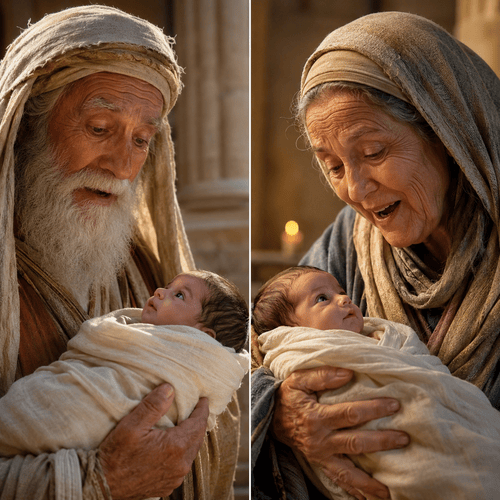

Close your eyes and picture Jesus. For most people, one face appears almost at once: a tall man with soft, flowing brown hair, pale skin, a neat beard, and gentle blue or hazel eyes. He looks calm, kind, and—let’s be honest—more European than Jewish.
Here’s the surprise. That face is almost certainly wrong. It’s not the face of the carpenter from Nazareth. It’s a face built over many centuries by artists who painted Jesus to look like themselves and their neighbours. The real Jesus—the Jewish man who walked the dusty roads of Galilee 2000 years ago—must have looked very different.
So what did He really look like? And does it even matter? These are good and honest questions, and the answers take us somewhere unexpected: not only into history and science, but into worship itself.
The Bible Draws No Picture
Let’s start with the strangest fact of all. The Bible never tells us what Jesus looked like.
Think about it. The Gospels—the four accounts of Jesus’s life written by Matthew, Mark, Luke, and John—record His words, His tears, His anger, His tiredness, even the way He wrote in the dust with His finger. Yet not one of them describes His height, His build, the colour of His skin, or the shape of His face. Not a single sentence.
The silence isn’t carelessness. The same Bible describes King Saul as tall and calls David ruddy and handsome (1 Samuel 16:12). It spends whole chapters describing the tent of worship and the priests’ clothing, down to the thread. When God wants us to see something, He tells us. With the face of His own Son, He chose to tell us nothing.
Two verses are often brought into the discussion. Both are easy to misread:
- Isaiah 53:2. Writing about the coming Saviour, the prophet Isaiah says He had no form or majesty that we should look at Him, and no beauty that we should desire Him. This doesn’t mean Jesus was ugly. It means He was ordinary. Nothing about His appearance made Him stand out in a crowd or drew people to Him. He looked like any other man in His town.
- Psalm 45:2. This royal song says of the King, You are the most handsome of the sons of men. But this is a poem about the King’s grace and glory, not a physical description. Its beauty is the beauty of His goodness, not His face.
Put together, the Bible’s own message is clear: don’t build your faith on His face. There’s a reason for that, and we shall return to it.
What History and Science Can Tell Us
We cannot know Jesus’s exact face. But we can know, quite well, what a Jewish man from Galilee looked like in His day—and Jesus was such a man.
In 2001, a British scientist named Richard Neave, a medical artist from the University of Manchester, set out to answer the question. His method is the same one police use to rebuild a face from a skull. (This is called forensic reconstruction—“forensic” simply means using science to investigate a mystery.)
Here’s what he did, step by step:
- He gathered real skulls. Working with Israeli archaeologists, Neave used three skulls of Semite men from the Galilee region, dating from the first century—the very time and place of Jesus.
- He scanned them. Using CT scanning (a kind of detailed X-ray that builds a 3D image), he mapped the exact shape of the bone.
- He rebuilt the face. Layer by layer, using data on how thick skin and muscle sit on such bones, he added clay until a face appeared.
- He coloured it in. Skin, hair, and eye colour came from ancient art of the region and from what we know of first-century Jews.
Neave was always careful to say this wasn’t Jesus Himself, but “an adult man who lived at the same time and place.” Still, it’s far closer to the truth than any painting hanging in a museum. Here’s what Neave suggests:
| FEATURE | THE FAMILIAR PICTURE | WHAT HISTORY SUGGESTS |
|---|---|---|
| Skin | Pale, European | Dark olive-brown, Middle Eastern |
| Eyes | Blue or light | Dark brown |
| Hair | Long, flowing, straight | Short, dark, curled |
| Beard | Neat, trimmed | Full, in Jewish custom |
| Height | Tall | About 1.5–1.65 m (5’1″–5’5″) |
| Build | Slim, gentle | Strong, weather-beaten from hard outdoor work |
One detail deserves note. The Bible itself hints Jesus is unlikely to have had long hair. Writing to the church at Corinth, the apostle Paul says that if a man wears long hair it is a disgrace for him (1 Corinthians 11:14). Paul would hardly have written this if the Lord he served had worn his hair long. The famous long-haired Jesus is very likely a mistake.
The plain truth is this: Jesus looked like a Middle Eastern Jewish labourer—much like the men from that region today who’re so often viewed with suspicion in the West. That fact alone is worth sitting with.
Where Did the “Usual” Jesus Come From?
If the Bible gives no picture, and the real Jesus looked Middle Eastern, where did the pale, long-haired Jesus come from? The answer is a slow drift across centuries, as each culture reshaped Him to look like itself.
- The first Christians (2nd–3rd century). The oldest known images of Jesus, found in the house church at Dura-Europos and in the underground burial tunnels of Rome, show a young, beardless man dressed as a Roman shepherd. There was no fixed face at all.
- The Byzantine age (around the 6th century). The bearded, long-haired Jesus with hair parted in the middle became the standard image in the Eastern churches. This is the face we half-recognise today.
- The Renaissance and northern Europe. Great European painters made Jesus look like the people around them—lighter skin, softer features, even European dress.
- The modern age. In 1940 an American artist named Warner Sallman painted Head of Christ, a gentle, light-haired Jesus. Copied millions of times, it fixed this face in the modern mind.
Notice the pattern. Each age didn’t discover Jesus’s face; it painted its own. The “usual” Jesus is a mirror, showing us the people who made Him—not the man from Nazareth.
The Shroud of Turin
No discussion of Jesus’s face is complete without mention of the Shroud of Turin—a long linen cloth kept in Turin, Italy, which appears to carry the faint image of a beaten and crucified man. Many believe it’s the burial cloth of Jesus. Is it? Honesty requires us to say the evidence points both ways.
| REASONS FOR DOUBT | REASONS TO RECONSIDER |
|---|---|
|
|
Where does this leave us? The dating is honestly unsettled, and wise Christians can hold different views. But here’s a more important point. Even if the Shroud were genuine, it wouldn’t be something to bow before, pray to, or build our faith upon. Our confidence in Christ rests on His word, not on a piece of cloth. The Shroud is a fascinating puzzle. It’s not an object of worship.
Should We Make Images of Jesus at All?
So far we’ve asked what Jesus looked like. Now we must ask a harder question—one many Christians have never thought about: should we be making pictures of Jesus in the first place?
For much of church history, and especially among the churches renewed by the sixteenth-century Reformation (the great return to biblical Christianity led by teachers such as John Calvin), the answer has been a careful and serious no. The reason lies in the second of the Ten Commandments:
You shall not make for yourself a carved image… you shall not bow down to them or serve them (Exodus 20:4–5).
At first this seems to forbid only idols of false gods. But the Reformers saw something deeper, and their reasoning is worth following closely, because it’s stronger than it first appears. Two great teaching guides of that era make the case:
- The Heidelberg Catechism (1563): the much-loved question-and-answer guide to the faith—teaches we mustn’t make any image of God, and that pictures shouldn’t even be used as “books for the unlearned,” because God wants His people taught by His living word, not by lifeless images.
- The Westminster Larger Catechism (1647)—a fuller teaching guide—lists among the sins forbidden by the second commandment “the making any representation of God, of all or of any of the three persons.”
But someone will object: “Surely Jesus is different. He became a real man with a real body. Why can we not draw the man?” This is the heart of the matter, and here’s the careful answer.
Christians confess that Jesus is one person with two natures—fully God and fully man, joined together and never divided. (Theologians call this union the hypostatic union—a long phrase that simply means the divine and the human are perfectly one in the single person of Christ.) Now follow the logic:
- A picture can only show his humanity. No brush can paint God, who is infinite Spirit.
- But the person in the picture is God. Jesus is not a man standing beside God; he is God the Son made flesh.
- So the image must either lie or divide. It either pretends to show us God (which no image can do), or it quietly splits Jesus into “just the man” we can see and the God we cannot—tearing apart the one person Scripture will not let us tear apart.
Either way, the picture misleads. It offers us a Christ who is less than the true Christ. That is why the historic confessions treat images of Jesus not as harmless aids, but as a danger to true worship.
Is this too strict?
Christians who love the Bible do not all agree on where the line falls. It is fair to admit a range:
- The stricter view avoids all images of Jesus—including children’s Bible pictures, nativity scenes, and films—since the command makes no exception for the Son.
- The gentler view says the true sin is worshipping images, so a simple teaching picture, never prayed to, may be allowed—though still unwise.
What unites the whole tradition is this: no image should ever become a help to worship, and none can ever show us who Jesus truly is. On that, the confessions speak with one voice.
Why the Missing Face Is a Gift
We began with a puzzle: why did God leave us no picture of His Son? We can now see the silence isn’t a loss. It’s a gift, and it teaches us at least four things.
- It frees Jesus from our cultures. The moment we admit we don’t know His face, the pale European Jesus loses His grip—and so does every attempt to remake Christ in our own image. He belongs to no single nation, and to every nation.
- It protects the reality of the incarnation. (“Incarnation” means God the Son truly becoming human.) His face was ordinary, unremarkable, easy to overlook—which is exactly the point. The eternal Word truly became flesh (John 1:14), not a glowing angel but a real man we might have passed in the street.
- It turns us from sight to hearing. God withheld a portrait so our faith would rest on His word, not on a picture. As Jesus told Thomas, Blessed are those who have not seen and yet have believed (John 20:29).
- It points us forward. The face we cannot draw now, we will one day see. The apostle John promises we shall see Him as He is (1 John 3:2)—not the tired carpenter of Galilee, but the risen Lord shining like the sun (Revelation 1:16).
So we return to our second question—glimpses of heaven, or something else? Every painting, every film, every reconstruction is, at best, something else: a guess, a shadow, a mirror of the artist. The true glimpse of heaven isn’t a picture at all. It’s the living Christ, met in His word today—and, one day, seen face to face.
Until then, we walk by faith and not by sight. And we don’t need His photograph to know Him, love Him. And follow Him home.
Tough Questions, Honest Answers
Is the “no images of Jesus” view actually settled among Reformed theologians today?
No. In June 2024 The Gospel Coalition ran two pieces side by side under the same question. Ryan M McGraw, a Reformed seminary professor, argued the historic “no”: every image risks idolatry, and Scripture calls us to walk by faith, not sight, this side of heaven. Kevin Keating argued “yes”: since the Word truly became visible flesh, careful images can serve teaching and outreach without inviting worship. Reformed theologian John Frame has gone further still, questioning whether the confessions themselves demand the strict view. So a believer can hold either position and still stand inside the Reformed tradition—though, as the historic confessions show, the “no” view carries the longer pedigree.
What about “The Chosen” and other films that show an actor playing Jesus?
This is where the debate stops being theoretical. Stricter Reformed Christians avoid such shows entirely, since an actor’s face is still a representation of the divine-human person, however sincerely made. Others draw a line between devotional images (icons meant to be venerated) and illustrative ones (a dramatisation meant to teach), and permit the second on condition it’s never treated as sacred or authoritative. Even on the gentler view, caution is wise: a screen performance shapes the imagination in ways a sermon doesn’t, and a vivid actor’s face can quietly become “the” Jesus in a viewer’s mind. Families and churches differ here in good conscience, but it isn’t a question to leave unexamined.
Did Jesus’s Jewishness show in ways beyond His skin and hair?
Yes—His clothing marked Him out as clearly as His features would have. Observant Jewish men of his day wore tzitzit, knotted fringes on the corners of their garments, commanded in Numbers 15:38. Matthew records a woman touching the fringe of His garment (Matthew 9:20)—almost certainly one of these tassels, not a random hem. He would have been circumcised on the 8th day (Luke 2:21), kept the Sabbath, and observed the feasts. Strip away the fringes and the Sabbath rhythm, and you strip away a large part of what made Him visibly, unmistakably a first-century Jewish man.
Could Jesus’s body have shown the marks of hard manual labour even before the cross?
Quite likely. He worked as a tekton—usually translated “carpenter,” though the word covers general building work in wood and stone—until about the age of 30 (Mark 6:3). Years of that kind of outdoor labour in a hot climate would have left him sun-browned, muscular, and calloused, not soft. This fits Isaiah’s picture of a Servant with no special outward appeal (Isaiah 53:2) far better than any painted saint with smooth, pale hands. The ordinary wear of manual work on His body is, again, a mark of true, full humanity—not a detail to be airbrushed away.
Why don’t we treat this the way other religions treat images of their founders?
The comparison is instructive. Islam strictly forbids depicting Muhammad, out of concern for pure monotheism, while Buddhism has produced images of the Buddha for centuries as aids to meditation and devotion. Christianity’s own debate is different again, because it’s not really about images of a founder. It’s about images of a person who is also God. That’s a category no other major world religion has to wrestle with in quite the same way, since none claims its central figure is God incarnate. The second-commandment debate, then, isn’t Christians being unusually strict or unusually lax; it’s the unavoidable consequence of what the church confesses about who Jesus is.
Does this same reasoning apply to pictures of God the Father, or only to Jesus?
It applies with even less room for debate. Almost no confessional Reformed Christian would defend a picture of God the Father—the classic (and much-criticised) image of an old man with a white beard, seen in some Renaissance art and older stained glass, is widely regarded as a straightforward breach of the second commandment, since the Father has never taken visible, bodily form. Jesus is the harder case precisely because he did take a true, visible body, which is why the debate above exists at all. But the underlying caution is the same one Deuteronomy 4:15 gives for Sinai: you saw no form… beware lest you act corruptly by making a carved image.
Should children’s Bibles and Sunday school materials use pictures of Jesus?
Reformed parents and churches genuinely differ here, and it’s worth naming the trade-off rather than pretending there’s an easy answer. Pictures help a young child follow a story and stay engaged, and many Reformed families use illustrated Bible story-books without a second thought. Others avoid it deliberately from the earliest age, wanting a child’s very first instinct to be that Jesus isn’t to be pictured, precisely so the habit is never formed at all. If a family does use illustrations, most who allow them at all insist they stay strictly educational—a story aid, never a picture held up as a devotional focus of reverence.