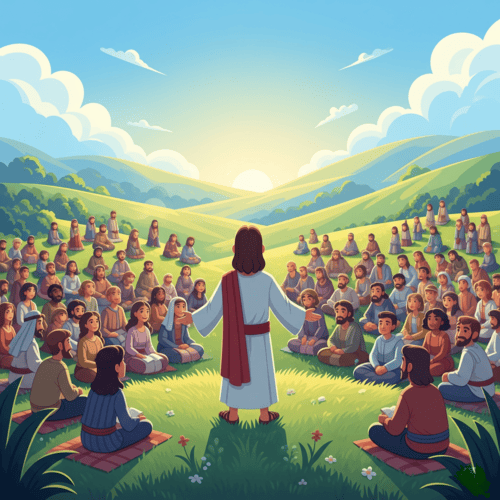
When Jesus climbed that hillside in Galilee and began to speak, He turned the world’s understanding of blessing upside down. “Blessed are the poor in spirit,” He declared to the crowd gathered around Him. Poor? Blessed? In a world that equated divine favour with material prosperity and social status, these words must have sounded revolutionary—even scandalous.
Yet in those statements we call the Beatitudes, Jesus wasn’t merely challenging conventional wisdom. He was painting a portrait of the human heart transformed by grace, revealing the character marks that distinguish citizens of His kingdom from citizens of this world. These aren’t requirements we must fulfil to earn God’s blessing, but descriptions of those who’ve already been blessed by His unmerited grace.
The 9 Beatitudes meaning becomes clearest when we read them not as 9 separate sayings but as one spiritual progression—a journey from initial conversion to mature discipleship that every believer walks. They show us what gospel transformation actually looks like in real life.
The Architecture of Grace
Before we examine each beatitude individually, it’s worth understanding their spiritual architecture. The 9 marks aren’t random qualities thrown together. They follow a deliberate progression that mirrors the Christian’s journey toward Christlikeness, and reading them out of order flattens the whole into a list of detached virtues.
Puritan pastor Thomas Watson, whose 1660 exposition remains one of the finest treatments in English, observed the Beatitudes begin where every sinner must begin—with emptiness—and only then move outward into action. That order isn’t incidental. It’s the logic of grace itself.
The Progression in Three Movements
- Beatitudes 1–3: inward emptying. The recognition of our spiritual poverty and desperate need for God.
- Beatitudes 4–6: upward longing. The active pursuit of righteousness and of God’s own character.
- Beatitudes 7–9: outward expression. Living as kingdom citizens in a world that often opposes everything we represent.
It’s worth noting Matthew isn’t the only Gospel to record these blessings. Luke preserves 4 of them in the Sermon on the Plain (Luke 6:20–23), where they’re followed immediately by 4 corresponding woes, and where the wording is starker—blessed are the poor, rather than the poor in spirit. The 2 accounts aren’t in conflict. Matthew draws out the spiritual disposition that Luke leaves implicit in the social condition, and both stand in the line of Isaiah 61, where God promises good news to the poor and comfort to all who mourn.
The progression reflects a fundamental gospel truth: God’s grace doesn’t merely save us, it transforms us. Through union with Christ and the ongoing work of the Holy Spirit, believers grow in these character marks not through human effort but through divine enabling. We don’t manufacture these qualities; they flow from our identity as God’s beloved children.
The 9 Beatitudes at a Glance
| # | Verse | Beatitude | Promise | Movement |
|---|---|---|---|---|
| 1 | 5:3 | Poor in spirit | Theirs is the kingdom of heaven | Inward emptying |
| 2 | 5:4 | Those who mourn | They shall be comforted | Inward emptying |
| 3 | 5:5 | The meek | They shall inherit the earth | Inward emptying |
| 4 | 5:6 | Hunger and thirst for righteousness | They shall be satisfied | Upward longing |
| 5 | 5:7 | The merciful | They shall receive mercy | Upward longing |
| 6 | 5:8 | The pure in heart | They shall see God | Upward longing |
| 7 | 5:9 | The peacemakers | They shall be called sons of God | Outward expression |
| 8 | 5:10 | Persecuted for righteousness’ sake | Theirs is the kingdom of heaven | Outward expression |
| 9 | 5:11–12 | Reviled on Christ’s account | Your reward is great in heaven | Outward expression |
All quotations from the English Standard Version.
The Journey Begins: Inward Emptying
“Blessed are the poor in spirit, for theirs is the kingdom of heaven.” (Matthew 5:3) Every spiritual journey begins with bankruptcy. To be poor in spirit means recognising our complete spiritual destitution before God—the opposite of the self-righteousness that characterises our natural state. This isn’t about material poverty but spiritual poverty. It’s the recognition we have absolutely nothing to offer God except our desperate need for His mercy.
The Greek word Jesus uses isn’t the ordinary term for a working person of modest means. It describes a beggar—someone crouched, dependent, with no resources whatever. That’s the posture Scripture commends, and it explains why this beatitude comes 1st rather than 4th or 7th. Nothing else in the list is possible until this one is true.
Why does Jesus call such people blessed? Because only those who recognise their spiritual bankruptcy can receive the riches of His grace. The kingdom of heaven belongs to them—not as a future promise, but as a present reality. Pride closes the door to God’s kingdom; spiritual poverty opens it wide.
“Blessed are those who mourn, for they shall be comforted.” (Matthew 5:4) The mourning Jesus speaks of isn’t just any kind of grief, but specifically godly sorrow over sin. When the Holy Spirit opens our eyes to see ourselves as God sees us, the natural response is mourning—not merely regret over consequences, but genuine brokenness over how our sin grieves God’s heart and damages His creation.
This mourning is blessed because it evidences the Spirit’s convicting work in our hearts. The unregenerate don’t truly mourn over sin; they may regret getting caught or facing consequences, but they don’t grieve over sin itself. When God comforts those who mourn, He doesn’t remove their sensitivity to sin. He provides the deep consolation of knowing that their sins are forgiven and their relationship with Him restored.
“Blessed are the meek, for they shall inherit the earth.” (Matthew 5:5) Meekness isn’t weakness—it’s strength under control. The meek person has been emptied of pride and self-assertion, becoming gentle and teachable. Like a powerful horse yielded to its master’s guidance, the meek have learned to submit their strength to God’s direction.
The Greek word carries none of the passivity that ‘meek’ has acquired in modern English. It was used of a horse that had been broken to the bridle: the animal loses none of its power, only its refusal to be directed. Moses is called the meekest man on earth in Numbers 12:3, and he was by no means timid. Meekness is what strength looks like when it has stopped serving itself.
Jesus calls them blessed because meekness reflects His own character. “Learn from me,” He said, “for I am gentle and lowly in heart” (Matthew 11:29). The promise the meek will inherit the earth deliberately echoes Psalm 37:11, where the meek inherit the land and delight themselves in abundant peace. While the proud may dominate now, the deed to the earth is held by those who have learned gentleness.
The Heart Awakened: Upward Longing
“Blessed are those who hunger and thirst for righteousness, for they shall be satisfied.” (Matthew 5:6) Having been emptied of self-righteousness, the believer now develops an intense appetite for true righteousness—both personal holiness and God’s justice in the world. This hunger is itself evidence of new birth; unregenerate hearts don’t truly crave righteousness any more than a dead person craves food.
This spiritual appetite is blessed because God promises to satisfy it. Through progressive sanctification He gradually conforms us to Christ’s image, and through His providential working in history He will ultimately establish perfect justice. Our longing for righteousness isn’t wishful thinking—it’s a divinely implanted desire that God delights to fulfil.
“Blessed are the merciful, for they shall receive mercy.” (Matthew 5:7) Grace received naturally flows outward as grace given. Those who’ve experienced God’s mercy become merciful toward others—forgiving offences, showing compassion to the suffering, and extending practical help to those in need. This isn’t about earning God’s mercy through our mercy, which would contradict the gospel, but about demonstrating we’ve truly received it.
The merciful are blessed because their mercy evidences their justified state. As Jesus taught in the parable of the unforgiving servant, those who’ve been forgiven much naturally forgive much. When Jesus promises the merciful will receive mercy, He’s describing the ongoing experience of those who live in the flow of God’s grace.
“Blessed are the pure in heart, for they shall see God.” (Matthew 5:8) Purity of heart isn’t about moral perfection, for we’re still being sanctified, but about single-minded devotion to God. It’s the opposite of double-mindedness—that divided loyalty which tries to serve both God and lesser things. The pure in heart have learned to want what God wants with undivided affection.
This purity is blessed because it comes from the washing of regeneration and leads to increasingly clear spiritual vision. Even now, the pure in heart see God in His word, His works and His ways in a manner the spiritually blind cannot. That vision will find its perfect fulfilment when we see Him face to face.
Kingdom Living: Outward Expression
“Blessed are the peacemakers, for they shall be called sons of God.” (Matthew 5:9) Peacemaking goes beyond peacekeeping. While peacekeepers may simply avoid conflict, peacemakers actively work to reconcile broken relationships and heal divisions. They’re ambassadors of the God who reconciled us to Himself through Christ, extending that ministry of reconciliation to others.
The distinction matters practically. Avoiding a difficult conversation isn’t peacemaking; it’s conflict avoidance wearing peacemaking’s clothes. Real reconciliation usually requires naming the offence, absorbing some cost, and refusing to withdraw when the work becomes uncomfortable. That’s expensive, which is why Scripture ties it to the character of our God who made peace at the cost of His Son.
Peacemakers are blessed because they bear the family resemblance of their heavenly Father. When Jesus calls them sons of God, He is noting how their character reflects their divine parentage. Just as human children often resemble their parents, spiritual children display their Father’s character through their reconciling work.
“Blessed are those who’re persecuted for righteousness’ sake, for theirs is the kingdom of heaven.” (Matthew 5:10) Living righteously in a fallen world inevitably brings opposition. This persecution isn’t random suffering, but specific opposition because of righteous living. It confirms authentic discipleship—the world recognises something different about genuine Christians and often responds with hostility.
Notice how this beatitude returns to the promise of the first: theirs is the kingdom of heaven. This bookend suggests the journey from spiritual poverty to willing persecution for righteousness represents the full spectrum of kingdom citizenship.
“Blessed are you when others revile you and persecute you and utter all kinds of evil against you falsely on my account.” (Matthew 5:11) The final beatitude moves from general persecution for righteousness to specific persecution for Christ’s name. It also shifts from the 3rd person to direct address: Jesus stops describing a category and starts speaking to the people in front of Him. This is the ultimate test of discipleship—suffering not just for doing good, but for personal identification with Jesus Himself.
This persecution is blessed because it means we’re walking in the footsteps of the prophets and, ultimately, of Christ Himself. The great reward in heaven isn’t earned through suffering, but demonstrates our citizenship truly belongs to heaven rather than earth.
8 or 9? Why the Count Differs
Search for the Beatitudes and you’ll find both 8 and 9, sometimes on the same website. The disagreement is real, but it’s a question of counting rather than of doctrine, and both sides are reading the same text carefully.
The case for 8 rests on literary structure. Matthew 5:3–10 contains 8 parallel declarations, each in the 3rd person, each pairing a description with a promise. They’re bracketed by an inclusio: verses 3 and 10 close with the identical phrase, “theirs is the kingdom of heaven.” On this reading, verses 11 and 12 aren’t a 9th beatitude but an expansion and personal application of the 8th. Most modern commentators, including Donald Carson and Jonathan Pennington, count 8 for this reason.
The case for 9 rests on the word itself. Verse 11 opens with the same pronouncement of blessing, and if the count follows the pronouncements rather than the grammatical pattern, 9 is the natural total. This reading also honours something the 8-fold count can obscure: the deliberate move from description to direct address. Jesus turns from the crowd to His disciples and makes the last blessing personal.
Augustine of Hippo complicated matters further by counting 7, treating the 8th as a summary of the whole and matching the 7 to the gifts of the Spirit in Isaiah 11. Nothing of substance hangs on the arithmetic. What matters is that the passage ends where it does—with a promise of reward to those who suffer for the name of Christ.
In short: 8 is the more common scholarly count and follows the literary structure; 9 follows the pronouncements of blessing and preserves the shift to direct address. Neither count changes a word of what Jesus said.
The Blessed Life Today
The Beatitudes aren’t a spiritual checklist we complete through human effort. They flow from gospel transformation, evidencing what God’s grace produces in redeemed hearts. Martyn Lloyd-Jones pressed this point hard in his classic studies on the Sermon on the Mount: the 9 marks describe every Christian, not an elite class of especially devoted ones. John Stott made the same argument a generation later. If meekness or mercy is entirely absent from a life, that’s not a matter of spiritual temperament but of spiritual diagnosis.
We see them best lived out in covenant community with other believers, where the 9 marks complement and strengthen one another. Mercy without purity of heart curdles into sentimentality. Hunger for righteousness without meekness hardens into censoriousness. The marks were never meant to be practised in isolation.
We also live in the tension between present blessing and future fulfilment. These qualities mark us now as God’s children, but they’ll find their perfect expression only when Christ returns and makes all things new. Jonathan Pennington argues the Greek word behind “blessed” carries the sense of genuine human flourishing rather than a merely religious approval—which is precisely why the promises attached to each mark are so concrete: comfort, satisfaction, mercy, an inheritance, a face-to-face sight of God.
This has a pastoral edge that’s easily missed. Read as a checklist, the Beatitudes crush—who among us is consistently meek, or pure in heart, or genuinely merciful? Read as a description of what grace is doing, they reassure. The mourning over sin that feels like failure is itself the evidence of the Spirit’s work. The hunger that never seems satisfied is the proof of a new appetite, not of a defective one.
Most importantly, we see the beatitudes perfectly embodied in Jesus Himself. He was poor in spirit, mourning over sin, gentle with the broken, hungry for righteousness, merciful to sinners, pure in heart, making peace between God and humanity, and ultimately persecuted for the sake of the kingdom. As we are united to Him by faith, His character increasingly becomes ours.
Explore Each Beatitude in Depth
This overview traces the shape of the whole. Each of the nine marks repays closer study, and the posts below take them one at a time.
| # | Mark | Reference | Focus of the post |
|---|---|---|---|
| 1 | Poor in spirit | Matthew 5:3 | Why spiritual bankruptcy is the door to the kingdom |
| 2 | Those who mourn | Matthew 5:4 | Which grief Jesus blessed, and when the comfort arrives |
| 3 | The meek | Matthew 5:5 | Strength under control, and what inheriting the earth means |
| 4 | Hunger and thirst | Matthew 5:6 | The appetite that proves new birth |
| 5 | The merciful | Matthew 5:7 | Receiving mercy and giving it away |
| 6 | The pure in heart | Matthew 5:8 | Single-mindedness and the promise of seeing God |
| 7 | The peacemakers | Matthew 5:9 | Why reconciliation carries the family resemblance |
| 8 | The persecuted | Matthew 5:10 | Opposition as the mark of authentic discipleship |
| 9 | Reviled for Christ | Matthew 5:11–12 | The final test and the great reward |
9 Beatitudes Meaning: Truly Blessed
True blessedness isn’t found in worldly prosperity, social status, or even personal happiness. It’s found in gospel transformation—in becoming the kind of people God’s grace makes us. The progression from spiritual poverty to willingly enduring persecution for Christ’s name maps the entire journey of Christian discipleship.
Where do we find ourselves in this progression? The beauty of God’s grace is it meets us wherever we are and continues the work of transformation until that day when we see Him face to face. Until then, the 9 marks remind us what it means to live as citizens of heaven while still residing on earth—truly blessed by the One who calls us His own. His very own.
Tough Questions, Honest Answers
Why do some scholars count 8 Beatitudes instead of 9?
Matthew 5:3–10 contains 8 parallel 3rd-person declarations, opened and closed by the same promise about the kingdom of heaven. That literary bracket makes 8 the tidier count, and verses 11–12 then read as an expansion of the eighth. Counting 9 follows the pronouncements of blessing instead of the grammatical pattern, and preserves the significant shift from describing a category to addressing disciples directly. Both counts handle the same text faithfully.
Do the Beatitudes describe believers or non-believers who’re becoming believers?
They describe believers. Each mark is paired with a promise already secured—the kingdom belongs to the poor in spirit in the present tense. The progression is not a set of entry requirements but a portrait of what grace produces once it has taken hold. That said, the first 3 marks describe what conversion feels like from the inside, so a new believer will often recognise the early stages most vividly.
How do the Beatitudes relate to the Old Testament concept of blessing?
They deepen it rather than overturn it. The Old Testament frequently ties blessing to land, offspring and prosperity, but it also anticipates this reversal: Psalm 37 promises the land to the meek, and Isaiah 61 announces good news to the poor and comfort to those who mourn. Jesus isn’t contradicting the older pattern but revealing where it was pointing all along.
Do the Beatitudes apply primarily to Israel or the Church?
They apply to all who belong to Christ. Some dispensational readings treat the Sermon on the Mount as kingdom ethics deferred to a future age, but the marks Jesus describes—humility, mourning over sin, mercy, purity, peacemaking—are the ordinary fruit of the Spirit’s work in any believer of any era. The persecution He describes began within the lifetimes of those listening.
What does ‘inherit the earth’ mean in Matthew 5:5?
It draws directly on Psalm 37:11, where the meek inherit the land. Jesus widens the promise from Canaan to the earth itself, pointing toward the renewed creation that Scripture describes at the end of history. It is not a guarantee of property or influence in this age. It’s the assurance that those who refused to grasp will finally receive everything, and receive it as a gift.
What’s the relationship between the Beatitudes and justification by faith alone?
The Beatitudes describe the fruit of salvation, not its root. Reading them as conditions to be met would invert the gospel and make blessing a wage. Read rightly, they function as evidence: a life increasingly marked by these qualities gives assurance that faith is genuine, in the same way that James speaks of works demonstrating a living faith rather than producing it.
How should churches practically cultivate these characteristics in their members?
Mainly through the ordinary means rather than programmes. Preaching that exposes sin produces mourning; the Lord’s Supper regularly rehearses spiritual poverty; church discipline exercised gently teaches meekness; genuine care for the poor forms mercy. Congregations that handle their own internal conflicts well are quietly training peacemakers, and those that speak honestly about the cost of discipleship prepare members for opposition before it arrives.
Related Reads
- Blessed Are the Poor in Spirit: Meaning of Matthew 5:3
- Matthew 5:4: What ‘Blessed Are Those Who Mourn’ Truly Means
- Blessed Are the Meek: Meaning of Matthew 5:5
- ‘Hunger and Thirst for Righteousness’: What Matthew 5:6 Means
- Matthew 5:7: What Does ‘Blessed Are the Merciful’ Mean?
- ‘Blessed Are the Pure in Heart’: Meaning of Matthew 5:8
- Blessed Are the Peacemakers: Meaning of Matthew 5:9
- Matthew 5:10: What Does ‘Blessed Are Those Who Are Persecuted’ Mean?
- ‘Blessed Are You When People Revile You’: What Does Jesus Mean?
- Fruit of the Spirit: The Nine Marks of True Christian Maturity
- True Worship That God Delights In: Insights from Scripture