Here’s a surprising fact: the name ‘Jesus’ is in the book of Ezra.
It’s right there in Chapter 3, as the name of the high priest who led God’s people home: Yeshua in Hebrew, Iēsous in Greek, ‘Jesus’ in English.
Ezra tells how God’s people came home after 70 years as captives in Babylon. They rebuild the altar and the temple. It looks like a happy ending. But the old men weep, the people call themselves ‘slaves’, and the book ends with a list of sins.
The happy ending isn’t quite happy enough. Ezra is a story waiting for a better Jesus.
| KEY WORD IN THIS ARTICLE | SIMPLE MEANING |
|---|---|
| Exile | Being forced to live far from your homeland |
| Restoration | Making something broken whole again |
| Messiah / Christ | Both mean ‘anointed one’—someone set apart by God for a special task |
| Type | A real Old Testament person, event or thing that God designed to point forward to Christ |
| Remnant | A small group God keeps faithful when most people turn away |
Jesus in the Old Testament — Book 15 of 39
This post is the fifteenth instalment in our series tracing Christ through every book of the Old Testament. See the full series index.
Why Look for Jesus in Ezra?
Ezra never names the Messiah. So are Christians just reading Jesus into the book?
The best answer comes from Jesus Himself. Risen from the dead, ‘beginning with Moses and all the Prophets, He interpreted to them in all the Scriptures the things concerning Himself’ (Luke 24:27). He then said ‘everything written about me in the Law of Moses and the Prophets and the Psalms must be fulfilled’ (Luke 24:44). Many scholars think ‘the Psalms’ here stands for the third part of the Jewish Bible, the Writings—where Ezra belongs.
John Calvin drew a simple lesson from John 5:39: ‘we ought to read the Scriptures with the express design of finding Christ in them.’ Charles Spurgeon, the famous London preacher, said ‘from every text in Scripture there is a road to the metropolis of the Scriptures, that is Christ.’
Ezra also gives us its own clue. Twice it names prophets Haggai and Zechariah, who preached while the temple was being rebuilt (Ezra 5:1; Ezra 6:14). Their books are full of promises about a coming King and Priest, so Ezra invites us to read its story alongside theirs.
WHAT’S TYPOLOGY?
A type is real history first. God then uses it as a picture of something greater. The temple was a real building, but it also pointed to Jesus, the place where God truly lives among people (John 2:19–21).
Typology isn’t guessing: the Bible’s own words and patterns make the link.
An Unfinished Restoration
Ezra opens by saying God acted so ‘that the word of the LORD by the mouth of Jeremiah might be fulfilled’ (Ezra 1:1). The people really do come home. But much that the prophets promised is still missing:
| WHAT THE PROPHETS PROMISED | WHAT EZRA ACTUALLY RECORDS | HOW JESUS FULFILS IT |
|---|---|---|
| A king from David’s family (Jeremiah 23:5) | Zerubbabel is only a governor under Persia | Jesus, the Son of David, reigns at God’s right hand (Acts 2:30–36) |
| A temple with greater glory (Haggai 2:9) | Old men weep at the small foundation (Ezra 3:12) | Jesus is the true temple (John 2:21) |
| Freedom from slavery | ‘For we are slaves’ (Ezra 9:9) | Jesus came ‘to proclaim liberty to the captives’ (Luke 4:18) |
| New hearts that obey God (Ezekiel 36:26) | The people fall back into sin (Ezra 9–10) | Christ pours out the Spirit who makes hearts new (Titus 3:5–6) |
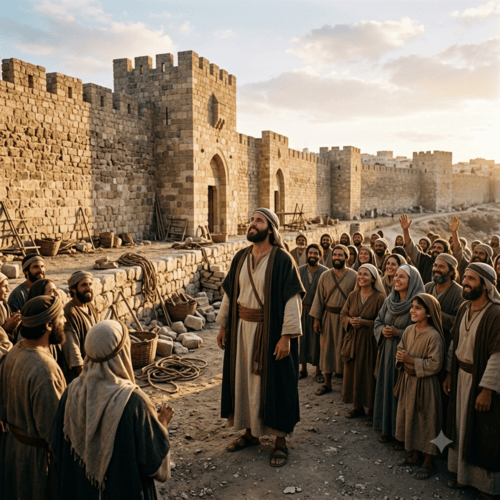
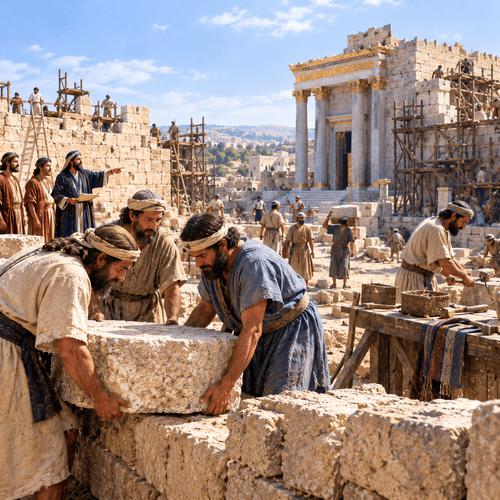
Derek Kidner, in his commentary on Ezra and Nehemiah, stresses how small and fragile the returning community was. It was a ‘day of small things’ (Zechariah 4:10)—a building with the foundation laid and the scaffolding still up.
HOW THE OLD TESTAMENT ENDS
The last book of the Hebrew Bible is Chronicles. Its final words are Cyrus’ command to the Jews: ‘Let him go up’ (2 Chronicles 36:23). Then Matthew opens the New Testament with Jesus’ family tree, marked by ‘the deportation to Babylon’ (Matthew 1:17). For Matthew, the exile isn’t truly over until Jesus comes.
Cyrus: A Foreign King Called ‘Anointed’
God ‘stirred up the spirit of Cyrus king of Persia’ (Ezra 1:1), and Cyrus sends the Jews home.
About 150 years earlier, Isaiah had named this king. God calls him ‘my shepherd’ (Isaiah 44:28) and says: ‘Thus says the LORD to his anointed, to Cyrus’ (Isaiah 45:1). The Hebrew word for ‘anointed’ is mashiach—‘Messiah’. Cyrus didn’t even know the LORD (Isaiah 45:4). Yet God used him in 3 ways that point to Jesus:
- He sets captives free. Jesus frees people from sin, not just from a foreign land (John 8:36).
- He orders God’s house to be built. Jesus says, ‘I will build my church’ (Matthew 16:18).
- He sends the people home with gifts. The exiles leave with silver and gold (Ezra 1:4–6), as Israel once left Egypt (Exodus 12:35–36).
But Cyrus freed the Jews because it helped his empire. Jesus frees his people because he loves them, at the cost of his own life (Mark 10:45).
Jeshua and Zerubbabel: A Priest and a Prince
Two men lead the first return: Jeshua the high priest and Zerubbabel the governor (Ezra 3:2; 5:2).
DID YOU KNOW? JESHUA HAS JESUS’ NAME
Jeshua (also written Joshua) comes from the Hebrew Yeshua, meaning ‘the LORD saves’. The Greek Old Testament writes it as Iēsous—the name given to Mary’s son, ‘for he will save his people from their sins’ (Matthew 1:21).
Zerubbabel, the Son of David
Zerubbabel came from King David’s royal family (1 Chronicles 3:17–19). But his grandfather Jeconiah, also called Coniah, had been cursed: ‘though Coniah… were the signet ring on my right hand, yet I would tear you off’ (Jeremiah 22:24). A signet ring was a king’s seal of authority.
Then Haggai spoke to Zerubbabel: ‘I will take you, O Zerubbabel my servant… and make you like a signet ring, for I have chosen you’ (Haggai 2:23). The curse is reversed. David’s line isn’t dead. Zerubbabel appears in both family trees of Jesus (Matthew 1:12–13; Luke 3:27).
The Branch Who Is Priest and King
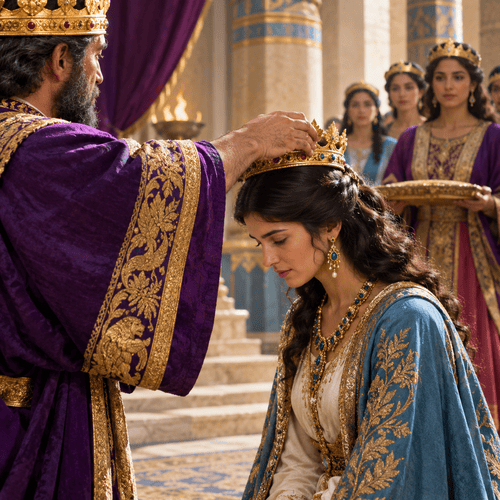
Zechariah was told to place a crown on Jeshua the high priest (Zechariah 6:11). God said: ‘Behold, the man whose name is the Branch… It is He who shall build the temple of the LORD… And there shall be a priest on His throne’ (Zechariah 6:12–13).
In Israel, kings came from the tribe of Judah and priests from Levi. No one could be both. Yet Zechariah sees one person holding both jobs. Jeshua and Zerubbabel are signs pointing to him. Hebrews names him: Jesus, a priest ‘after the order of Melchizedek’ who is also the King seated at God’s right hand (Hebrews 7:17; 8:1).
Altar First, Then the Temple
The first thing the exiles built wasn’t a house or a wall. It was an altar (Ezra 3:1–6). Before God’s people can live with Him, their sin must be dealt with. On the altar an animal died in the sinner’s place, pointing to the final sacrifice: ‘Christ had offered for all time a single sacrifice for sins’ (Hebrews 10:12).
| WHAT EZRA RECORDS | WHAT IT MEANT THEN | HOW IT POINTS TO JESUS |
|---|---|---|
| Daily burnt offerings (Ezra 3:3–5) | A life given up because of sin | Jesus gave his life once for all (Hebrews 10:10) |
| Feast of Booths (Ezra 3:4) | Remembering God’s care in the wilderness | At this feast Jesus offered ‘living water’ (John 7:37–38) |
| Passover (Ezra 6:19–22) | Remembering rescue from Egypt | ‘Christ, our Passover lamb, has been sacrificed’ (1 Corinthians 5:7) |
| Temple dedication (Ezra 6:16–18) | God’s house set apart for worship | Jesus’ body is the true temple (John 2:21) |
The Latter Glory
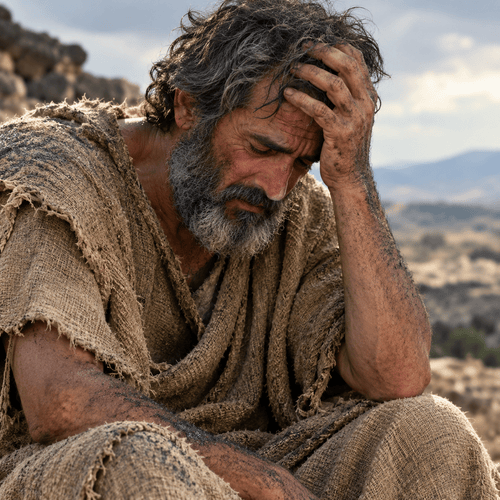
When the foundation was laid, ‘old men who had seen the first house, wept with a loud voice’ (Ezra 3:12). This temple looked like nothing next to Solomon’s. But Haggai promised: ‘The latter glory of this house shall be greater than the former’ (Haggai 2:9).
How? Matthew Henry, the English Bible commentator, answered the Lord himself would walk into it. ‘The Lord whom you seek will suddenly come to His temple’ (Malachi 3:1). And He did. Herod later enlarged this second temple, and it was here that baby Jesus was carried (Luke 2:22–32) and the grown Jesus taught. God in human flesh stood in the building the old men wept over.
Ezra the Priest-Scribe
Ezra himself only appears in Chapter 7, almost 60 years after the temple was finished. He is from the family of Aaron, Israel’s first high priest (Ezra 7:1–5), and ‘a scribe skilled in the Law of Moses’ (Ezra 7:6)—an expert who copied, studied and explained God’s law. He shows in a small way what Jesus is in full:
- Teacher. Ezra ‘set his heart to study the Law of the LORD, and to do it and to teach’ it (Ezra 7:10). But Jesus taught ‘as one who had authority, and not as their scribes’ (Matthew 7:29). Ezra explained God’s word. Jesus is God’s Word (John 1:1).
- Intercessor. An intercessor prays to God for others. Ezra prays, ‘our iniquities have risen higher than our heads’ (Ezra 9:6), saying ‘our’ though he did not commit those sins. Jesus had no sin at all, yet ‘He always lives to make intercession’ for his people (Hebrews 7:25).
- A second Moses. Jewish tradition said the Law could have been given through Ezra if Moses hadn’t come first (Babylonian Talmud, Sanhedrin 21b). But Jesus is the prophet Moses promised (Deuteronomy 18:15), ‘counted worthy of more glory than Moses’ (Hebrews 3:3).
TWO HIDDEN CLUES IN EZRA
The missing priest (Ezra 2:61–63). Some priests couldn’t prove their family line. They had to wait ‘until there should be a priest to consult Urim and Thummim’—sacred objects used to receive God’s answers. Ezra never says that priest came. The question stays open until Jesus, the High Priest through whom God speaks His final word (Hebrews 1:1–2).
The tent peg (Ezra 9:8). Ezra thanks God for ‘a secure hold within his holy place’. The Hebrew word means a tent peg. Zechariah uses the same word for the coming ruler: ‘From him shall come the cornerstone, from him the tent peg’ (Zechariah 10:4). Christ is the peg that holds God’s people fast.
A New Exodus and a Holy Seed
An exodus is a great escape from slavery to the land God promised. The prophets foretold a second, greater exodus (Isaiah 43:16–19), and Ezra tells the return in a way that echoes the first:
| THEME | FIRST EXODUS (EGYPT) | RETURN IN EZRA | FINAL EXODUS IN CHRIST |
|---|---|---|---|
| Freedom | Moses leads Israel out of Pharaoh’s slavery | Cyrus releases the exiles from Babylon | ‘If the Son sets you free, you will be free indeed’ (John 8:36) |
| Gifts | Egyptians give silver and gold (Exodus 12:35–36) | Neighbours give silver and gold (Ezra 1:4–6) | The nations bring their glory into God’s city (Revelation 21:24) |
| Timing | First month, at Passover (Exodus 12:2) | Ezra sets out in the first month (Ezra 7:9) | Jesus dies at Passover (John 19:14) |
| God’s dwelling | The tabernacle | The second temple | The church, built on Christ (Ephesians 2:20–22) |
Luke even calls Jesus’ coming death his ‘departure’—in Greek, exodos (Luke 9:31). His death and resurrection are the true exodus.
The Holy Seed
In Chapter 9, Ezra is shocked ‘the holy race has mixed itself with the peoples of the lands’ (Ezra 9:2). The Hebrew literally says ‘the holy seed’. The issue was faith, not race—Rahab and Ruth were foreigners welcomed by faith.
‘Holy seed’ is a loaded phrase. Isaiah used it of a tiny remnant: ‘The holy seed is its stump’ (Isaiah 6:13). From that stump ‘a shoot from the stump of Jesse’ would grow (Isaiah 11:1). Paul says the promised offspring is one person, ‘who is Christ’ (Galatians 3:16). Ezra’s remnant was guarding the line through which the true Seed would come.
The Decree and Daniel’s Timeline
Ezra 7 records a letter from King Artaxerxes sending Ezra to Judah ‘in the seventh year of the king’ (Ezra 7:7)—458 or 457 BC. Daniel 9:25 counts ‘from the going out of the word to restore and build Jerusalem to the coming of an anointed one, a prince’ as 7 plus 62 ‘weeks’. Each week means 7 years, so 69 weeks equals 483 years.
Timeline: From Exile to Christ
- 586 BC: Babylon destroys Jerusalem and Solomon’s temple.
- 538 BC: Cyrus’ decree; Jeshua and Zerubbabel lead the first return (Ezra 1–2).
- 536 BC: The temple foundation is laid, but enemies stop the work (Ezra 3–4).
- 520 BC: Haggai and Zechariah stir the people to build again (Ezra 5:1–2).
- 515 BC: The second temple is completed (Ezra 6:15).
- 458/457 BC: Artaxerxes’ decree; Ezra arrives in Jerusalem (Ezra 7).
- AD 26/27: 483 years later, Jesus is baptised and anointed by the Spirit (Luke 3:21–23).
Some count from Cyrus or from Nehemiah in 444 BC instead. But counting from Ezra’s decree reaches the very season when Jesus was anointed at the Jordan. Either way, Daniel’s ‘anointed one’ comes after the rebuilding—and Ezra is the rebuilding. (See our article on Daniel’s 70 Weeks.)
Reading Ezra Without Over-Reading
Seeing Christ in Ezra doesn’t mean finding him in every detail. Some say the 12 goats in Ezra 6:17 stand for the 12 apostles. But the text says plainly they were for the 12 tribes of Israel. That’s guessing, not reading.
Geerhardus Vos gave a useful rule: a thing must first mean something to people in its own time before it can point to Christ. Edmund Clowney, a former president of Westminster Theological Seminary, warned of the opposite mistake: turning Old Testament stories into mere moral lessons like ‘be brave like Ezra’. Ezra isn’t mainly a hero to copy. He’s a signpost to a Saviour.
Honest roads from Ezra to Christ
Sidney Greidanus, a Canadian professor of preaching, lists 7 honest ways to move from the Old Testament to Christ. This post has used 6:
God’s unfolding plan: exile, return, then Christ.
Promise and fulfilment: Haggai 2:9; Zechariah 6:12–13; Daniel 9:25.
Types: Jeshua, Zerubbabel, the altar, the temple.
Big Bible themes: exodus, remnant, holy seed.
New Testament references: Zerubbabel in Matthew 1 and Luke 3.
Contrast: Cyrus freed people for gain; Jesus frees them in love.
The 7th is analogy: seeing how God’s dealings with Israel match his dealings with the church in Christ. For example, just as God kept a small remnant faithful in Ezra’s day, Jesus keeps his people faithful today.
Conclusion: The Builder Ezra Was Waiting For
A foreign king set God’s people free. A priest named Jesus restored the altar. A son of David laid the foundation. A scribe taught God’s word and prayed for sinners. Yet the book ends with the people still under foreign rule, still sinning, still waiting.
That’s why Ezra matters. It teaches us to long for more. Not just a rebuilt temple, but a Saviour who is the temple. Not a priest who offers sacrifices again and again, but one who offered himself once for all. Not a governor from David’s line, but the King who reigns for ever.
‘For all the promises of God find their Yes in him’ (2 Corinthians 1:20). Ezra’s unfinished story ends in Jesus. The real question is whether we have come home to him.
Tough Questions, Honest Answers
Who wrote the book of Ezra?
Jewish tradition in the Talmud says Ezra wrote the book himself. Chapters 7–9 are written with ‘I’ and ‘me’, like Ezra’s personal diary, which supports that view. Other parts quote official letters and lists, so the writer used real records. Some scholars think a later editor put the pieces together. Either way, the book rests on eyewitness accounts and official documents. Most importantly, the Holy Spirit guided the whole book, so it’s God’s true word (2 Timothy 3:16).
Are Ezra and Nehemiah one book?
In the Hebrew Bible, Ezra and Nehemiah were one book. Early Christian writers such as Origen and Jerome began treating them as two. Reading them together shows the full story: first the altar, then the temple, then God’s people, then the city walls. Nehemiah also ends with the people falling into sin again (Nehemiah 13). The whole story shows God’s people needed more than rebuilt walls. They needed a Saviour.
Why did Ezra make men send away their foreign wives? Does God approve of divorce?
Ezra 10 records what happened. It doesn’t command every believer to do the same. God’s law had forbidden marriage to idol-worshipping nations, because it led hearts away from God (Deuteronomy 7:3–4). This is exactly what ruined King Solomon (1 Kings 11:4). It was a painful emergency step to save true worship at a key moment in history. The New Testament tells a believer married to an unbeliever to stay if the partner is willing (1 Corinthians 7:12–14). Today, Christians are told to marry ‘only in the Lord’ (1 Corinthians 7:39).
Does the Cyrus Cylinder prove the Bible is true?
The Cyrus Cylinder is a clay object found in Babylon in 1879 and now kept in the British Museum. On it, Cyrus boasts about sending peoples back to their homes and restoring their places of worship. It doesn’t mention the Jews or Jerusalem. So it doesn’t prove Ezra 1 word for word. But it shows the policy Ezra describes is exactly what Cyrus did. Our faith rests on God’s word, yet it’s good to see the Bible fit so well with real history.
What does Ezra 7:10 mean for Christians today?
Ezra 7:10 says Ezra set his heart to study God’s law, to do it and to teach it. The order matters. First we study, then we obey, and only then do we teach others. Knowing the Bible without living it makes us hearers only (James 1:22). This is a pattern for pastors, parents and every believer. And as Jesus said, the deepest purpose of studying Scripture is to meet him (John 5:39).
Why are parts of Ezra written in Aramaic?
Aramaic was the international language of the Persian Empire, a bit like English in world business today. Ezra 4:8–6:18 and 7:12–26 are mostly official letters, so they’re kept in the official language. Scholars have compared them with other Aramaic documents from that time, such as the Elephantine papyri from Egypt, and the style fits well. This shows the writer used real documents, not later legends. It’s also a quiet hint that God’s word would one day reach all nations in their own languages.
Did Ezra put together the Old Testament?
The canon is the list of books accepted as Scripture. Jewish tradition gives Ezra an important role in gathering and teaching the Scriptures, and Nehemiah 8 shows him reading the Law to the people. A later book outside the Bible, 2 Esdras, even claims he rewrote all Scripture from memory, but that is legend. Christians believe God, not any one man, made the canon. People only recognised the books God had already inspired. Jesus himself confirmed the Old Testament of his day as God’s word (Luke 24:44).