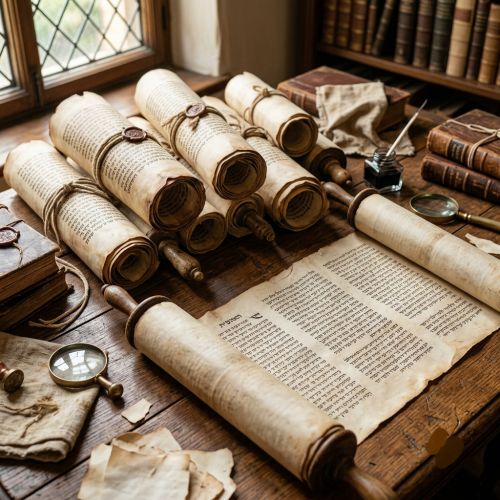
Jesus once went to a festival that your Bible never explains.
John mentions it in one line: ‘At that time the Feast of Dedication took place at Jerusalem. It was winter, and Jesus was walking in the temple, in the colonnade of Solomon’ (John 10:22–23). We call this feast Hanukkah. Yet its story is not told anywhere in the Protestant Bible. It is told in two ancient books: 1 and 2 Maccabees.
So here is an uncomfortable question. If Jesus kept a feast that comes from Maccabees, why are these books missing from most Bibles? Catholic and Orthodox Bibles include them. Did Protestants cut out part of God’s Word?
No. The case against Maccabees being Scripture is very strong—and the most surprising witness against it is Maccabees itself.
3 WORDS YOU NEED TO KNOW
- Canon: the list of books that are God’s Word. The word comes from a Greek word for a measuring rod.
- Apocrypha: Jewish books written mostly between the Old and New Testaments. The word means ‘hidden’. Protestants read them as useful, but not as God’s Word.
- Deuterocanonical: the Catholic name for these books. It means ‘second canon’. Catholics treat them as fully God’s Word.
Here is how each tradition treats these books today:
Table 1: Which Bibles Include Maccabees?
| BOOK | JEWISH BIBLE | PROTESTANT BIBLE | CATHOLIC BIBLE | ORTHODOX BIBLE |
|---|---|---|---|---|
| Old Testament books | 24 (same content as our 39) | 39 | 46 | About 50 (lists vary) |
| 1 and 2 Maccabees | Not included | Not Scripture, but may be read | Included as Scripture | Included as Scripture |
| 3 Maccabees | Not included | Not included | Not included | Included as Scripture |
| 4 Maccabees | Not included | Not included | Not included | Appendix in Greek Bibles |
What Are 1 and 2 Maccabees?
About 170 years before Jesus was born, a Greek king called Antiochus IV ruled Israel. He called himself ‘Epiphanes’—‘God made visible’—and tried to force the Jews to give up God’s law. In 167 BC his men set up a pagan altar in the temple at Jerusalem.
A priest named Mattathias and his five sons fought back. His son Judas, nicknamed ‘Maccabeus’ (probably ‘the Hammer’), won back the temple in 164 BC and dedicated it to God again. That was the first Hanukkah, a word that simply means ‘dedication’.
Table 2: 1 and 2 Maccabees Side by Side
| Feature | 1 MACCABEES | 2 MACCABEES |
|---|---|---|
| First written in | Hebrew (now survives only in Greek) | Greek |
| Written around | 100 BC | Late second century BC |
| Years covered | 175–134 BC | 180–161 BC |
| Style | Calm, careful history | Dramatic, with speeches, visions and miracles |
1 Maccabees is a valuable history. But useful is not the same as inspired. Paul says, ‘All Scripture is breathed out by God’ (2 Timothy 3:16). So the real question is: did God breathe out these books? Here are seven reasons the answer is no.
Reason 1: The Books Say There Was No Prophet
In the Old Testament, God spoke ‘by the prophets’ (Hebrews 1:1). They ‘spoke from God as they were carried along by the Holy Spirit’ (2 Peter 1:21). Yet 1 Maccabees tells us three times that no prophet was speaking in its day:
- The altar stones (4:46): Judas did not know what to do with the old, defiled altar stones. So he stored them ‘until there should come a prophet to tell what to do with them’.
- The great sorrow (9:27): ‘There was great distress in Israel, such as had not been since the time that prophets ceased to appear among them.’
- The new leader (14:41): The people made Simon their leader ‘until a trustworthy prophet should arise’.
The writer is an honest historian, not a prophet. God’s prophets had fallen silent.
2 Maccabees admits that it is a summary of a five-volume work by a man called Jason of Cyrene (2:23). Then, on the last page, the writer says this:
If it is well told and to the point, that is what I myself desired; if it is poorly done and mediocre, that was the best I could do.
2 Maccabees 15:38
John Calvin saw how much this matters. In his Institutes (3.5.8), he argued that a writer who asks pardon for his work openly admits that it does not come from the Holy Spirit. Moses never said, ‘I tried my best.’ The Spirit of God does not do ‘mediocre’.
Reason 2: Jesus’ Bible Did Not Include Them
Jesus’ Bible was the Jewish Bible. Paul tells us that ‘the Jews were entrusted with the oracles of God’ (Romans 3:2). ‘Oracles’ simply means God’s spoken words. And the Jews never accepted Maccabees as Scripture—not then, and not now.
WHO WAS JOSEPHUS?
Flavius Josephus was a Jewish priest and historian, born around AD 37. In his book Against Apion (around AD 95), he said the Jews had 22 holy books—the same as our 39, just counted differently. Then he wrote:
From Artaxerxes to our own time the complete history has been written, but has not been deemed worthy of equal credit with the earlier records, because of the failure of the exact succession of the prophets. (Against Apion 1.41)
Artaxerxes was the Persian king in the days of Ezra and Nehemiah. Maccabees was written about 300 years later.
Jesus named the same three-part Jewish Bible when he said that ‘everything written about me in the Law of Moses and the Prophets and the Psalms must be fulfilled’ (Luke 24:44). The Psalms opened the third section, known as the Writings.
In 1588 the Cambridge scholar William Whitaker wrote a long reply to the Catholic Cardinal Robert Bellarmine. One of his points was simple. Jesus criticised the Jewish leaders for many things—their traditions, their pride, their blindness. But he never once accused them of having the wrong Bible.
Reason 3: The New Testament Never Calls Them Scripture
The New Testament quotes the Old Testament hundreds of times, often saying, ‘It is written.’ It never does this with Maccabees. Two passages come close:
- The Feast of Dedication (John 10:22–23): Jesus was in the temple at Hanukkah. This shows the Maccabean story really happened. But it says nothing about the book that tells the story.
- The tortured believers (Hebrews 11:35): ‘Some were tortured, refusing to accept release, so that they might rise again to a better life.’ Many commentators, John Calvin among them, link this to the martyrs of 2 Maccabees 7. But Hebrews honours real people from history. It does not quote the book or call it Scripture.
QUOTING ISN’T THE SAME AS CALLING IT SCRIPTURE
Paul quoted pagan Greek poets (Acts 17:28; Titus 1:12). Jude quoted the Book of Enoch (Jude 14–15). Nobody thinks those poets or Enoch belong in the Bible. Truth is truth wherever it is found—but only God’s Word is Scripture.
Reason 4: The Early Church Was Divided—and Its Best Scholars Said No
Many early Christians read these books and loved them. But many of the church’s leading teachers refused to call them Scripture.
Timeline: What Early Christians Said About Maccabees
- c. AD 170—Melito of Sardis: This bishop travelled east to find out exactly which books the Jews held as Scripture. His list has no Maccabees.
- c. AD 230—Origen: He lists 22 Old Testament books, then places the books of Maccabees ‘outside these’ (recorded by Eusebius of Caesarea, Church History 6.25).
- AD 367—Athanasius: His famous Easter letter lists the canon, plus some extra books for new believers to read. Maccabees is on neither list.
- AD 393 and 397—Hippo and Carthage: Two local councils in North Africa, backed by Augustine of Hippo, include Maccabees.
- c. AD 400—Jerome: The great scholar who translated the Bible into Latin refuses to count Maccabees as canonical.
- c. AD 590—Gregory the Great: This bishop of Rome—a pope—quotes 1 Maccabees while saying plainly that it is not a canonical book.
As then the Church reads Judith, Tobit and the books of Maccabees, but does not admit them among the canonical Scriptures, so let it read these two volumes for the edification of the people, not to give authority to doctrines of the Church.
Jerome, Preface to the Books of Solomon
Even Augustine admitted, in The City of God (18.36), that the Jews did not count these books as canonical. The church accepted them, he said, because of their remarkable stories of martyrs. That is a reason to read a book, not a reason to obey it.
Reason 5: Rome Only Settled Its List in 1546
When Martin Luther challenged the teaching of purgatory, his opponents pointed to 2 Maccabees 12. Luther replied that the book is not Scripture. Yet he did not delete it. His 1534 German Bible placed it in a separate section, as books not equal to Scripture but useful and good to read—exactly Jerome’s view.
Rome answered at the Council of Trent, a great meeting of church leaders. On 8 April 1546 it declared these books fully Scripture and pronounced an ‘anathema’—a solemn curse—on anyone who disagreed. Notice the timing: Rome closed the question only after these books became useful in an argument about purgatory.
Just fourteen years before Trent, Cardinal Thomas Cajetan—who had personally questioned Luther in 1518—wrote that, following Jerome, Judith, Tobit and Maccabees stand outside the canon. And in 1566 a Catholic scholar, Sixtus of Siena, coined the word ‘deuterocanonical’. The name itself admits that these books joined the list at a second stage.
Reason 6: The Septuagint Argument Does Not Work
The Septuagint is a Greek translation of the Old Testament, begun by Jews in Egypt around 250 BC. Catholic writers argue that it included Maccabees, the apostles used it, and so the apostles accepted Maccabees. But this argument has serious problems:
- The copies are Christian and late: Our complete Septuagint manuscripts were made by Christians more than 300 years after Jesus. There is no evidence of a fixed Jewish ‘Greek Bible list’ in the apostles’ day.
- Philo is silent: Philo of Alexandria, a Jewish writer living in Egypt in Jesus’ day, quotes the Old Testament constantly but never quotes these extra books.
- Qumran is silent: The Dead Sea Scrolls contain almost every Old Testament book, but not one copy of 1 or 2 Maccabees.
- The manuscripts disagree: The three great Greek Bibles give three different answers.
Table 3: Three Ancient Greek Bibles, Three Different Answers
| MANUSCRIPT | APPROXIMATE DATE | BOOKS OF MACCABEES IT CONTAINS |
|---|---|---|
| Codex Vaticanus | AD 325–350 | None at all |
| Codex Sinaiticus | AD 330–360 | 1 and 4 Maccabees (some pages are lost) |
| Codex Alexandrinus | AD 400–440 | 1, 2, 3 and 4 Maccabees |
Rome accepts only 1 and 2 Maccabees. Yet the oldest of these Bibles has none, and the fullest has four. If the Septuagint proves anything, it proves too much.
Reason 7: What the Books Teach Does Not Fit Scripture
God’s Word never contradicts itself, yet 2 Maccabees teaches things that clash with the rest of the Bible.
DOES 2 MACCABEES 12 PROVE PURGATORY?
Purgatory is the Catholic teaching that many believers must be cleansed by suffering after death, and that the prayers and offerings of the living can help them. Its favourite proof text is 2 Maccabees 12. There Judas finds ‘sacred tokens of the idols of Jamnia’ on his dead soldiers (12:40) and sends money to Jerusalem ‘to provide for a sin offering’ (12:43). But look closely:
- Wrong sin: These men died carrying idols. In Catholic teaching, idolatry is a mortal sin, and purgatory is not for those who die in mortal sin. The story does not fit the doctrine it is used to prove.
- Wrong remedy: Judas paid for a temple sacrifice. Nothing here describes souls being cleansed by suffering.
- Wrong message: Scripture says ‘it is appointed for man to die once, and after that comes judgment’ (Hebrews 9:27).
2 Maccabees also praises an elder named Razis for killing himself rather than be captured (14:37–46). It calls his death noble. Scripture never praises self-murder.
Who Decides What Belongs in the Bible?
Catholic friends sometimes say, ‘You only have a Bible because the Catholic Church gave it to you.’ But the church does not create the canon. It recognises it, the way you recognise a real coin by the king’s stamp. Jesus said, ‘My sheep hear my voice’ (John 10:27). The church hears the Shepherd’s voice. It does not give his words their authority.
R. C. Sproul put it sharply. Rome sees the Bible as an infallible collection of infallible books. Protestants see it as ‘a fallible collection of infallible books’. The Dutch theologian Herman Bavinck taught that Scripture is self-authenticating, and Michael J. Kruger argues that the church did not invent the canon but came to recognise the books God gave. The Westminster Confession of Faith (1647) states the conclusion plainly:
The books commonly called Apocrypha, not being of divine inspiration, are no part of the canon of the Scripture; and therefore are of no authority in the Church of God, nor to be any otherwise approved, or made use of, than other human writings.
Westminster Confession 1.3
Yet the Belgic Confession (1561) says the church may read these books and learn from them ‘so far as they agree with the canonical books’, but may never use them to confirm ‘any point of faith’ (Article 6).
3 WEAK ARGUMENTS WE SHOULD STOP USING
- ‘The Council of Jamnia closed the canon.’ Most scholars now doubt that Jewish rabbis meeting at Jamnia around AD 90 ever fixed the canon.
- ‘Luther tore books out of the Bible.’ He did not. He moved them to a separate section, as Jerome had advised.
- ‘The early church rejected them completely.’ It did not. Many Christians read them, and Augustine accepted them. Our case does not need this claim.
Honesty makes our case stronger, not weaker.
Why You Should Still Read Maccabees
‘Not Scripture’ does not mean ‘not worth reading’. Here are three good reasons to open these books:
- They show Daniel came true: Centuries earlier, Daniel foretold that a king’s forces would ‘profane the temple’ and ‘set up the abomination that makes desolate’ (Daniel 11:31). 1 Maccabees 1:54 records that in 167 BC the king’s men ‘erected a desolating sacrilege upon the altar of burnt offering’.
- They fill the gap between the Testaments: They explain the 400 years between Malachi and Matthew, and why many Jews in Jesus’ day hoped for a Messiah who would fight like Judas.
- They show costly faith: 2 Maccabees 7 tells of a mother and her seven sons who died rather than break God’s law.
So read Maccabees—with gratitude, and with your Bible open beside it.
A True Story, but Not God’s Word
Come back to that winter day in the temple. Jesus walked in Solomon’s colonnade during the Feast of Dedication. He stood in the middle of a true story of God’s faithfulness to his people.
But Jesus never called that story Scripture. Nor did the Jews, to whom God entrusted his oracles. Nor did the apostles. Nor did many of the church’s finest scholars, including a pope. And most tellingly, nor did the books themselves. Their writers lived in a time without prophets, and they knew it.
The Maccabean martyrs died rather than betray God’s Word. The least we can do is know exactly which words are God’s.
Tough Questions, Honest Answers
Is Hanukkah in the Bible, and where does the miracle of the oil come from?
Hanukkah appears in the Bible only once, in John 10:22, where it is called the Feast of Dedication. Its beginning is described in 1 Maccabees 4:52–59, where Judas and his brothers decide to celebrate the temple’s rededication for eight days every year. Interestingly, Maccabees says nothing about a small jar of oil that lasted eight days. That famous story first appears centuries later in the Talmud, a large collection of Jewish teaching (Shabbat 21b). 2 Maccabees 10:6–8 gives a different reason for the eight days: the people celebrated like the Feast of Booths, which they had missed while hiding in the mountains. Christians can enjoy Hanukkah as history, while remembering that Jesus himself is the true temple (John 2:19–21).
Who wrote 1 and 2 Maccabees, and when?
We do not know the names of either writer. 1 Maccabees was written in Hebrew around 100 BC by a Jew who deeply admired Judas’s family, but only its Greek translation survives. 2 Maccabees was written in Greek, probably in the late second century BC. Its writer tells us he shortened a five-volume history by Jason of Cyrene, a book that is now lost. Neither writer claims to be a prophet or to speak for God. That matters, because the Old Testament books were received as the words of God’s chosen spokesmen.
Do Jewish people today read the books of Maccabees?
Jews have never included Maccabees in their Bible, which they call the Tanakh. In fact, these books were preserved mainly by Christians, not by Jews. Jewish tradition remembers the Maccabean victory through Hanukkah prayers and the Talmud rather than through these books. Some Jewish readers study them today as history, but they are not read as Scripture in the synagogue. This is strong evidence: the people God entrusted with his oracles did not treat these books as his Word.
What are 3 and 4 Maccabees?
Despite their names, these are quite different books. 3 Maccabees is not about the Maccabees at all. It tells how Jews in Egypt were threatened by King Ptolemy IV, who planned to have them crushed by drunken elephants. 4 Maccabees is a kind of sermon in the style of Greek philosophy, teaching that godly reason can master our feelings, and it uses the martyrs of 2 Maccabees 7 as examples. The Orthodox churches accept 3 Maccabees, and Greek Bibles print 4 Maccabees as an appendix. Rome rejects both, which shows that even Catholics do not accept every book found in old Greek Bibles.
Why did the first King James Bible include Maccabees?
The 1611 King James Version printed the Apocrypha, including 1 and 2 Maccabees, in a separate section between the Old and New Testaments. This followed Article 6 of the Church of England’s Thirty-Nine Articles. It says, following Jerome, that the church reads these books ‘for example of life and instruction of manners’ but does not use them ‘to establish any doctrine’. So the translators did not treat them as Scripture. In 1826 the British and Foreign Bible Society decided to stop funding Bibles that included the Apocrypha, and most English Bibles have left them out since.
Could the Bible’s canon ever be reopened to add a book?
No. God spoke through the prophets in many ways, but ‘in these last days he has spoken to us by his Son’ (Hebrews 1:2). The church is built on ‘the foundation of the apostles and prophets’ (Ephesians 2:20), and a foundation is laid only once. Jude speaks of ‘the faith that was once for all delivered to the saints’ (Jude 3). Even if an ancient letter of Paul were discovered tomorrow, we can trust that God has already preserved everything he meant his church to have. The Westminster Confession says that to Scripture ‘nothing at any time is to be added’ (1.6).
Do any Protestant churches still read the Apocrypha in services?
Some do. Anglican and Lutheran churches sometimes include short readings from the Apocrypha, following the old tradition of reading them for instruction. Presbyterian churches, and others shaped by the Westminster Confession, do not, because they want only God’s Word read with authority in worship. Both groups agree on the main point: these books cannot decide what Christians must believe. If you hear Maccabees read in church, treat it like a good sermon illustration, not a word from God.
Related Reads
- Book of Sirach: Should It Be in Our Bibles?
- Additions to Daniel: Why Are Chapters 13 and 14 Not in the Bible?
- Why Isn’t the Book of Tobit in the Bible? 5 Clear Reasons
- The Truth About Apocryphal Books: Why They’re Not in the Bible
- Does the Bible Teach Purgatory? Scripture’s Clear Answer
- How Josephus Validates Scripture: Without Intending To
- Daniel’s 70 Weeks Prophecy: A Reformed Reading of Daniel 9