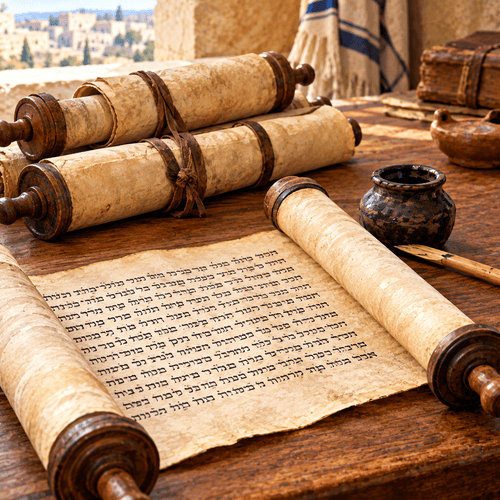
Here’s a book that says giving money to the poor can wipe away your sins. It says a wicked man is better than a woman who does good. It tells you not to give bread to a sinner.
More than a billion Christians call this book the Word of God. Priests read from it in church every week. Yet if you open the Protestant Bible, you’ll not find it.
The book is called Sirach. So is your Bible missing a book? Or does theirs have one book too many?
This is really a question about who decides what God has said. By the end, you’ll see why Sirach is a wise old book—but not Scripture.
KEY WORDS TO KNOW
- Canon: the list of books God has given as Scripture (from a Greek word for “measuring rod”).
- Inspired: “breathed out by God” (2 Timothy 3:16).
- Apocrypha: Jewish books written mostly between the Old and New Testaments. Protestant Bibles do not count them as Scripture.
- Deuterocanonical: the Catholic name for these books. It means “second canon”.
- Septuagint: an old Greek translation of the Old Testament, made in Egypt.
What’s the Book of Sirach?
Sirach is a book of wise sayings, rather like Proverbs. It gives advice on friends, money, work, family and worship. Some of it, as we shall see, is badly wrong.
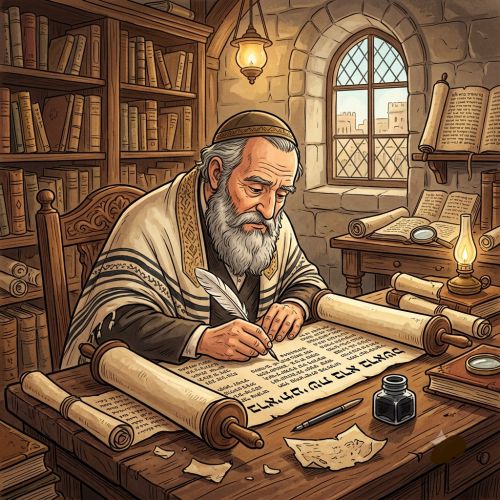
The writer signs his name: Jesus son of Eleazar, son of Sira (Sirach 50:27). People often call him Ben Sira, meaning “son of Sira”. His grandson later translated the book into Greek and added a short introduction, called the Prologue. Remember the Prologue; it matters.
Sirach at a glance
| QUESTION | ANSWER |
|---|---|
| Other names | Ecclesiasticus (“the church book”); the Wisdom of Ben Sira |
| Writer | Jesus son of Eleazar, a teacher in Jerusalem |
| When written | About 190–175 BC, in Hebrew |
| Greek translation | About 132–117 BC, in Egypt, by the writer’s grandson |
| Length | 51 chapters |
| Found in | Catholic and Orthodox Bibles, but not Jewish or Protestant Bibles |
Reason 1: The Book’s Own Introduction Says No
The best witness against Sirach is Sirach itself. In the Prologue, the grandson says his grandfather spent years reading the Law and the Prophets and the other books of our fathers. Only then did he write something of his own.
- The Bible already existed. The grandson describes a fixed, 3-part collection of holy books: the Law, the Prophets and the other writings. Jews still use that same 3-part Old Testament today.
- Ben Sira was a student, not a prophet. He studied the holy books, then wrote about them. He stood outside the Bible, looking in.
- The translator says sorry. The grandson asks forgiveness for any poor translation. No prophet ever apologised for possible mistakes in God’s message.
- His heroes follow our Bible. In Chapters 44 to 49, Ben Sira praises Israel’s great men in Bible order, even naming “the 12 prophets” as one group (49:10). The prophetic books were already complete. His book came after them.
THINK ABOUT IT
Ben Sira’s own grandson treated the book as a study of Scripture, not as Scripture. If the family who knew him best did not call it God’s Word, why should we?
Reason 2: Jesus Accepted the Jewish Bible—and Sirach Was Not in It
Paul writes, “To begin with, the Jews were entrusted with the oracles of God” (Romans 3:2). “Oracles” means God’s spoken words. God gave the Old Testament to the Jewish people to keep. They never kept Sirach as Scripture.
Jesus used their Bible. After rising from the dead, he said “everything written about me in the Law of Moses and the Prophets and the Psalms must be fulfilled” (Luke 24:44). It is the same three-part shape the grandson described.
Jesus also spoke of blood shed “from the blood of righteous Abel to the blood of Zechariah the son of Barachiah” (Matthew 23:35). Abel dies in Genesis, the first book of the Hebrew Bible. Zechariah dies in 2 Chronicles, its last book. Many scholars believe Jesus meant, in effect, “from the first page of your Bible to the last.”
Jewish writers agree:
- Flavius Josephus (AD 90s): The Jewish historian counted 22 holy books (our 39, counted differently). Later books were not trusted in the same way, “because there hath not been an exact succession of prophets since that time.”
- 1 Maccabees (about 100 BC): It admits 3 times there was no prophet in Israel then (4:46; 9:27; 14:41)—very close to Ben Sira’s day.
- The Tosefta (third century AD): This collection of Jewish teaching says, “The books of Ben Sira and all the books written from then on do not defile the hands.” That strange phrase meant, “This isn’t holy Scripture.”
Jewish teachers valued Sirach and even quoted it. But they never called it Scripture. Neither do we.
Reason 3: The New Testament Never Quotes Sirach as Scripture
The New Testament quotes the Old Testament hundreds of times, often with “it is written” or “the Scripture says”. It never uses words like these for Sirach.
Some point to echoes. James writes, “let every person be quick to hear, slow to speak” (James 1:19), and Sirach 5:11 says something similar. But sharing an idea is not quoting Scripture.
Using a good line doesn’t make a whole book God’s Word
| WHAT IS QUOTED OR ECHOED | WHERE IN THE NEW TESTAMENT | TREATED AS SCRIPTURE? |
|---|---|---|
| 1 Enoch, an ancient Jewish book | Jude 14–15 | No |
| Aratus, a Greek poet | Acts 17:28 | No |
| Epimenides, a poet from Crete | Titus 1:12 | No |
| Menander, a Greek playwright | 1 Corinthians 15:33 | No |
| Sirach (an echo, not a quotation) | James 1:19 | No |
Others say Jesus copied Sirach 51, where Ben Sira invites people to take up the “yoke” of wisdom. But Ben Sira points away from himself. Jesus says, “Come to me, all who labour and are heavy laden, and I will give you rest” (Matthew 11:28). Jesus doesn’t point to wisdom. He is “the wisdom of God” (1 Corinthians 1:24).
Reason 4: Many Early Church Leaders Said No
Some think Protestants invented the idea that Sirach is not Scripture. History says otherwise.
Timeline: Sirach in Church History
- About AD 170: Melito of Sardis travelled to Israel to learn exactly which books belonged in the Old Testament. Sirach is not on his list.
- About AD 230: Origen of Alexandria listed 22 Old Testament books, following the Jewish count. Sirach is missing.
- AD 367: Athanasius of Alexandria placed Sirach among books “not indeed included in the Canon, but appointed by the Fathers to be read by those who newly join us.”
- AD 393–397: Local councils at Hippo and Carthage in North Africa listed a longer Old Testament. The debate continued.
- About AD 398: Jerome, translator of the Latin Bible, said the church reads Sirach “for the edification of the people, not to give authority to doctrines of the Church.” (Edification means building up.)
- AD 1532: Cardinal Thomas Cajetan, a leading opponent of Martin Luther, still followed Jerome.
- AD 1546: The Council of Trent became the first council to declare Sirach Scripture with an anathema—a formal curse on anyone who disagreed.
Trent didn’t confirm an ancient agreement. It ended an ancient debate by decree.
Reason 5: Sirach Teaches Things the Bible Rejects
This is the most serious problem. A book from God will never contradict God. Sirach does, more than once. Below, Sirach is summarised in simple English; the Bible is quoted from the ESV.
Sirach compared with the Bible on five key topics (Sirach’s verse numbers vary slightly between editions)
| TOPIC | WHAT SIRACH TEACHES | WHAT THE BIBLE TEACHES |
|---|---|---|
| How sins are forgiven | Giving to the poor wipes away sins, as water puts out fire (3:30). Honouring your father makes up for sins (3:3). | “Without the shedding of blood there is no forgiveness of sins” (Hebrews 9:22). |
| How to treat sinners | Help godly people, but hold back your bread from sinners (12:4–5). | “Love your enemies, and do good” (Luke 6:35). “If your enemy is hungry, feed him” (Romans 12:20). |
| Where death came from | Sin began with a woman, and because of her we all die (25:24). | “Sin came into the world through one man” (Romans 5:12). “In Adam all die” (1 Corinthians 15:22). |
| The worth of women | A man’s wickedness is better than a woman who does good (42:14). A daughter’s birth is a loss (22:3). | “God created man in his own image … male and female he created them” (Genesis 1:27). |
| Treating servants | Use racks and tortures on a bad servant (33:26). | “Masters, do the same to them, and stop your threatening” (Ephesians 6:9). |
The first row strikes at the gospel itself. If gifts to the poor remove sin, Christ’s death isn’t the only way. But we “are justified by his grace as a gift, through the redemption that is in Christ Jesus, whom God put forward as a propitiation by his blood” (Romans 3:24–25). A propitiation is a sacrifice that turns away God’s anger. Only Christ’s blood does that.
Reason 6: Which Sirach? There Is No Single Text
For any book of Scripture, we ask: what did the writer actually write? For Sirach, the answer is messy.
- The Hebrew was lost for centuries. In 1896, Solomon Schechter found Hebrew pages in an old synagogue storeroom in Cairo. In 1964, Yigael Yadin found part of a scroll at Masada. We still have only about two-thirds of the Hebrew.
- The Greek comes in 2 forms. One is short; the other adds extra lines.
- The Latin adds even more. The Latin Bible (the Vulgate) that Trent approved contains verses not found in the Hebrew. Jerome never revised this part.
- Some chapters are out of order. Part of chapters 30 to 36 is jumbled in the Greek, so verse numbers differ between Bibles.
A FAIR QUESTION FOR OUR CATHOLIC FRIENDS
If Sirach is God’s Word, which Sirach is it? The Hebrew, the short Greek, the long Greek, or the Latin that Trent approved?
Bible books have small copying differences, but scholars recover their original words with confidence. Sirach differs by whole lines and sections.
Reason 7: God’s Word Shows Itself
Now the deepest question: who decides which books are Scripture? Rome says the church decides. But the church does not give a book authority. It only recognises the authority God has already given. Jesus said, “My sheep hear my voice, and I know them, and they follow me” (John 10:27). John Calvin warned:
“A most pernicious error widely prevails that Scripture has only so much weight as is conceded to it by the consent of the church.” —John Calvin, Institutes 1.7.1
Calvin added Scripture shows its truth as plainly “as white and black do of their colour, sweet and bitter of their taste.” Herman Bavinck, the great Dutch theologian, taught the same: the church is a witness pointing to Scripture, not a judge standing above it.
RC Sproul, called the canon “a fallible collection of infallible books.” The church can make mistakes, but God’s books cannot. We trust God, not a council, to guard His Word. Calvin also saw why Trent raised these books so high:
“I am not one of those, however, who would entirely disapprove the reading of those books; but in giving them an authority which they never before possessed, what end was intended but just to have the use of spurious paint in colouring their errors?” —John Calvin, Antidote to the Council of Trent
In other words, the new authority helped false teaching, like salvation by good works, look biblical.
WHAT THE HISTORIC PROTESTANT CONFESSIONS SAY
- Westminster Confession (1646), 1.3: “The books commonly called Apocrypha, not being of divine inspiration, are no part of the canon of the Scripture; and therefore are of no authority in the Church of God, nor to be any otherwise approved, or made use of, than other human writings.”
- Belgic Confession (1561), Article 6: “The church may certainly read these books and learn from them as far as they agree with the canonical books. But they do not have such power and virtue that one could confirm from their testimony any point of faith or of the Christian religion.”
- Thirty-Nine Articles (1571), Article 6: “And the other Books (as Hierome saith) the Church doth read for example of life and instruction of manners; but yet doth it not apply them to establish any doctrine.”
Answering the Strongest Objections
Five strong objections and how we answer them
| WHAT SOME PEOPLE SAY | HOW WE ANSWER |
|---|---|
| “The apostles used the Greek Septuagint, which included Sirach.” | Our oldest full Septuagint copies were made by Christians in the AD 300s and 400s, and they disagree about which extra books to include. Philo of Alexandria, a Jewish writer of Jesus’ day, never quoted these books as Scripture. |
| “The councils of Hippo and Carthage settled it.” | They were local meetings. As the timeline shows, Jerome and many others still disagreed for centuries. |
| “Sirach 24:33 says its teaching is like prophecy.” | “Like” prophecy is not prophecy. Ben Sira never says, “Thus says the LORD.” |
| “Proverbs 16:6 also says iniquity is atoned for by love.” | “Steadfast love and faithfulness” describe God himself in Exodus 34:6. Proverbs points to God’s mercy; Sirach says our own gifts do the atoning. |
| “Without the church, you cannot know which books are inspired.” | Jews in Jesus’ day had no pope, yet Jesus expected them to know their Scriptures: “Have you not read …?” (Matthew 12:3). |
WEAK ARGUMENTS TO LEAVE BEHIND
Good arguments don’t need bad ones. Avoid these four claims:
- “A Jewish council at Jamnia closed the canon in AD 90.” Most scholars now doubt this ever happened.
- “Sirach was only ever written in Greek.” False. The Hebrew copies prove otherwise.
- “Catholics added these books at Trent.” Christians already read them. Trent made them binding.
- “Martin Luther threw them out.” Luther kept them in his 1534 Bible, in a separate section, as good to read but not equal to Scripture.
So What Is Sirach Good For?
Sirach isn’t worthless. It opens a window onto Jewish life before Christ, and it confirms the Jews already had a 3-part Bible. Where it repeats Proverbs, its advice is sound. But we read it as we read any good human book: carefully, testing everything by Scripture.
Conclusion: Outside the Bible, Looking In
So, should Sirach be in our Bibles?
The book’s own grandson says no. The Bible Jesus used says no. The Jewish people, entrusted with God’s oracles, said no. Many great leaders of the early church said no. And at key points, Sirach’s own teaching says no, because it clashes with the gospel of grace.
Sirach can help us understand history. Only Scripture can show us Christ. Ben Sira spent his life studying God’s Word. The best way to honour him is to do the same—and to leave his book where his grandson placed it: outside the Bible, looking in.
Tough Questions, Honest Answers
What’s the difference between Ecclesiasticus and Ecclesiastes?
The 2 names look alike, but they’re 2 different books. Ecclesiastes is part of the Old Testament, written by “the Preacher” and traditionally linked with King Solomon. It’s in every Bible: Jewish, Protestant, Catholic and Orthodox. Ecclesiasticus is simply another name for Sirach, written about 200 years before Christ. The name means “the church book”, because early Christians used it to teach good behaviour. So Ecclesiastes is Scripture, but Ecclesiasticus is not.
Did the 1611 King James Bible include Sirach?
Yes. The first King James Version printed the Apocrypha, including Sirach, in a separate section between the Old and New Testaments. But the translators did not treat these books as Scripture. The Church of England had already said they were for “example of life” and not for doctrine. Over time, many printers left them out to save cost and avoid confusion. In 1826, the British and Foreign Bible Society stopped supporting Bibles that included them. Today most English Bibles leave them out, though some special editions still print them.
Can I use Sirach in a sermon or Bible study?
You may quote Sirach the way you’d quote any wise old writer. But you should never use it to prove a doctrine or introduce it with “God says”. If a line in Sirach is wise, it usually echoes Proverbs or the Law, so it’s better to teach from those books directly. In a study group, Sirach can help show what Jews believed before Jesus came. Always make clear to your listeners that it is not Scripture. As Paul says, “test everything; hold fast what is good” (1 Thessalonians 5:21).
Why do Catholic Bibles have 73 books?
A Catholic Bible has 46 Old Testament books and 27 New Testament books. A Protestant Old Testament has 39 books. The seven extra books are Tobit, Judith, Wisdom, Sirach, Baruch, and 1 and 2 Maccabees. Catholic Bibles also have longer versions of Esther and Daniel. The Jewish Bible has the same content as the Protestant Old Testament, but counts it as 24 books because some books are joined together. The extra books were all written after the last prophets and were never part of the Bible Jesus used.
Do the Orthodox and Ethiopian churches accept Sirach?
Yes. The Eastern Orthodox churches include Sirach, along with some books that even Catholics do not accept, such as 3 Maccabees and 1 Esdras. Some Orthodox teachers have treated these books as less important than the rest of the Old Testament. The Ethiopian Orthodox Church also includes Sirach, and its Bible is even larger, with books such as 1 Enoch and Jubilees. This shows something important. Once you go beyond the Hebrew Bible, Christians cannot agree where to stop. The books that Jesus and the apostles received give us the only firm line.
What are the best-known sayings from Sirach?
Several lines from Sirach became famous in English through the old King James Version. “Let us now praise famous men” (Sirach 44:1) is often read at memorial services. “He that toucheth pitch shall be defiled therewith” (Sirach 13:1) warns that bad company spoils us. Sirach 38 tells people to honour doctors, because God gave them their skill. These are wise words, and many of them agree with the Bible. But a wise saying is not the same as a word from God. Scripture already gives us all the wisdom we need, and Christ is the wisdom of God himself.
Is Sirach the same as the Wisdom of Solomon?
No. They are two different “wisdom” books in the Apocrypha. Sirach was written in Hebrew in Jerusalem, around 180 BC, by a man who tells us his own name. The Wisdom of Solomon was written in Greek, probably in Alexandria in Egypt, in the century before Christ. It uses Solomon’s name, but Solomon could not have written it, because he lived about 900 years earlier. Jerome rejected both books as Scripture, and we follow the same path.
Related Reads
- Wisdom of Solomon: Wise Words but Not Scripture
- Why Is Maccabees Not in the Bible? The Case Explained
- Why Isn’t the Book of Judith in the Protestant Bible?
- The Truth About Apocryphal Books: Why They’re Not in the Bible
- How Did Jews Know the Old Testament Canon Before Rome Did?
- The Biblical Canon: The Journey from Scrolls to Scripture
- Solo, Prima and Sola Scriptura: Which Do We Affirm and Why?
- Jesus in Proverbs: Christ, the Wisdom of God