Here’s a hard truth. Many Christians who say, ‘I’m waiting for God to show me my next step,’ aren’t really waiting for God. They’re waiting for a sign that God never promised to give.
Maybe that’s you. Should you take the new job or stay? Study further or start working? Marry this person or wait? You’ve prayed and waited. Still nothing. No voice. No dream. No writing in the sky.
You’re not the first believer to feel like this. Long ago, King Jehoshaphat of Judah saw a huge enemy army marching towards him. He had no plan. So he prayed one of the most honest prayers in the whole Bible: ‘We don’t know what to do, but our eyes are on you’ (2 Chronicles 20:12).
That prayer is where we begin. In this post, we will see that God has not hidden His will from you like treasure you must hunt for. He has already told you what matters most. He has given you His Word, the gift of wisdom and the promise of His care. And He calls you to take the next step by faith—even when you cannot see the whole road.
In the first post of this series, we asked what we do when God seems distant and silent. Today we ask a closely related question: what do we do when we simply don’t know which way to go?
This post is part of our series What Do We Do When…?, which takes the hard moments of the Christian life to Scripture and asks how God would have us respond. Other posts in the series ask what we do when God seems distant and silent, when God closes a door we prayed would open, when we fall into the same sin again and when life doesn’t go according to plan…
Two Meanings of ‘God’s Will’
Much of our worry comes from one simple confusion. When the Bible talks about ‘God’s will’, it can mean two different things. Bible teachers have used two terms for them for centuries.
God’s will of decree (also called His secret will) is God’s plan for everything that happens. A ‘decree’ is an official decision made by a king. God is the King over all things, and He ‘works all things according to the counsel of his will’ (Ephesians 1:11). Nothing happens outside this plan—not a job offer, not a delay, not a disappointment.
God’s will of command (also called His revealed will) is what God tells us to do and not to do. We find it in the Bible. For example, Paul writes, ‘For this is the will of God, your sanctification’ (1 Thessalonians 4:3). ‘Sanctification’ simply means growing to be more like Jesus.
Moses put these two side by side in one verse: ‘The secret things belong to the LORD our God, but the things that are revealed belong to us and to our children forever, that we may do all the words of this law’ (Deuteronomy 29:29).
Do you see the point? The secret things belong to God. The revealed things belong to us. Our job is not to uncover God’s secret plan before it happens. Our job is to obey what He has already shown us.
Table 1: The two meanings of ‘God’s will’ at a glance
| QUESTION | GOD’S WILL OF DECREE (SECRET) | GOD’S WILL OF COMMAND (REVEALED) |
|---|---|---|
| What is it? | God’s plan for everything that will happen | What God tells us to do and not to do |
| Where is it found? | Hidden with God until it happens | Written clearly in the Bible |
| Key verse | Ephesians 1:11 | 1 Thessalonians 4:3 |
| Can we know it ahead of time? | No—we only see it as life unfolds | Yes—we can read it today |
| What do we do with it? | Trust God with it | Obey it with His help |
R. C. Sproul, in his short book Can I Know God’s Will?, uses this same distinction. He warns that we get stuck when we try to look behind the curtain of God’s secret plan instead of living by what God has plainly said. Kevin DeYoung makes the same point in Just Do Something. God has not asked us to read His secret plan in advance, so we can stop trying.
God Gives Us a Lamp, Not a Map
Psalm 119:105 says, ‘Your word is a lamp to my feet and a light to my path.’ Think about an old oil lamp on a dark road at night. It does not light up the whole journey. It shows you where to put your next foot. That is how God usually guides His people.
Abraham is a good example. When God called him, ‘he went out, not knowing where he was going’ (Hebrews 11:8). He had no map. He had a promise. So he took one step at a time. That is what Proverbs 3:5–6 asks of us too: ‘Trust in the LORD with all your heart, and do not lean on your own understanding. In all your ways acknowledge him, and he will make straight your paths.’
This leads to a very freeing truth: you may not know your next step, but you always know your present duty. A ‘duty’ is the thing you ought to do right now. Jesus said, ‘But seek first the kingdom of God and his righteousness, and all these things will be added to you. Therefore do not be anxious about tomorrow, for tomorrow will be anxious for itself’ (Matthew 6:33–34).
WHAT GOD WANTS FROM YOU TODAY—WITH NO GUESSING NEEDED
Even when you cannot see tomorrow, the Bible makes these things plain:
- Grow in holiness—‘this is the will of God, your sanctification’ (1 Thessalonians 4:3).
- Rejoice, pray and give thanks—‘for this is the will of God in Christ Jesus for you’ (1 Thessalonians 5:16–18).
- Live justly and humbly—‘do justice, and … love kindness, and … walk humbly with your God’ (Micah 6:8).
- Put God first—‘seek first the kingdom of God’ (Matthew 6:33).
If you are doing these things, you are already in the centre of God’s will, wherever the road leads next.
Why God Guides Us Through Wisdom, Not Secret Signs
Some Christians believe God has hidden one ‘perfect’ choice for every decision—like a small dot in the centre of a target. Miss the dot, they fear, and you will live a ‘second-best’ life. So they search for signs, strong feelings and strange coincidences. But the Bible points us a better way. Here is why we can be confident.
- The Bible is enough. Scripture makes us ‘complete, equipped for every good work’ (2 Timothy 3:16–17)—not some good works, but every good work. God once spoke ‘at many times and in many ways’, but now ‘he has spoken to us by his Son’ (Hebrews 1:1–2). The Westminster Confession of Faith (1646) says nothing is to be added to Scripture ‘by new revelations of the Spirit’. Where the Bible gives no detailed rule, we use ‘the light of nature, and Christian prudence’. ‘Prudence’ means careful, practical good sense.
- God wants us to understand, not to be dragged. God promises, ‘I will instruct you and teach you in the way you should go’ (Psalm 32:8). But look at the very next verse: ‘Be not like a horse or a mule, without understanding, which must be curbed with bit and bridle’ (Psalm 32:9). God does not want to pull us along with a rope. He wants to grow children who understand His ways.
- Knowing God’s will comes through wisdom. Paul prayed that believers would ‘be filled with the knowledge of his will in all spiritual wisdom and understanding’ (Colossians 1:9). He also said we ‘discern what is the will of God’ through ‘the renewal of your mind’ (Romans 12:2). Notice the word ‘mind’. God’s will is learnt through a renewed mind, not through mystery.
- The apostles made decisions by careful thinking. When the early church faced a big question, its leaders wrote, ‘it has seemed good to the Holy Spirit and to us’ (Acts 15:28). Even after Paul saw a vision, Luke says they went to Macedonia, ‘concluding that God had called us’ (Acts 16:10). ‘Concluding’ means they thought it through.
- God gives freedom inside His boundaries. Paul told a widow that she ‘is free to be married to whom she wishes, only in the Lord’ (1 Corinthians 7:39). There is one rule: marry a believer. Inside that rule, she is free to choose. Most of our decisions work the same way.
Bruce Waltke, a respected Old Testament scholar, even called one of his books Finding the Will of God: A Pagan Notion? His point: using signs to uncover secret plans is ‘divination’, which is what pagan religions did. God calls His people to something better: to know Him and walk in His ways.
J. I. Packer, in his classic book Knowing God, compares wisdom to driving a car. A good driver does not need to know why the road bends. He needs to respond well to what is in front of him. Wisdom does not explain God’s plans; it helps us live well in the situation we are in.
Answering Some Common Objections
Table 2: What these verses really teach about guidance
| WHAT PEOPLE OFTEN SAY | WHAT THE PASSAGE ACTUALLY SAYS | WHAT IT MEANS FOR US |
|---|---|---|
| ‘Isaiah 30:21 promises I will hear a voice saying, “This is the way, walk in it.”’ | The verse before speaks of God’s people seeing their ‘Teacher’ (v. 20). The verse after tells them to throw away their idols (v. 22). The ‘word behind you’ is God’s teaching calling them back from sin. | God’s voice still comes to us through His Word, taught and applied. It calls us to holiness, not to a secret route. |
| ‘In Acts, the Holy Spirit told Philip and Paul exactly where to go.’ | These were special events at a special time, when God was founding His church through the apostles. Luke describes them; he does not command us to expect the same. | We thank God for them. But His normal way of guiding us is through Scripture, prayer and wisdom. |
| ‘If a door opens, surely God wants me to walk through it.’ | Paul once had ‘a door … opened for me in the Lord’ at Troas, yet he left, because his spirit was not at rest (2 Corinthians 2:12–13). | An open door is an opportunity, not a command. We must still weigh it wisely. (A future post will look at closed doors.) |
| ‘If God has already decided everything, my choices don’t really matter.’ | James does not tell planners to stop planning. He tells them to plan humbly, saying, “If the Lord wills, we will live and do this or that” (James 4:15). | God’s control does not cancel our choices. Our decisions are real, and they matter. |
A Simple Way to Take Your Next Step
So how do we actually decide? Here is a simple pattern drawn from Scripture.
- Step 1—Check the Word. Ask first: does the Bible forbid any of my options? If it does, cross that option off. You never need to pray about whether to do what God has already forbidden.
- Step 2—Pray for wisdom. ‘If any of you lacks wisdom, let him ask God, who gives generously to all without reproach, and it will be given him’ (James 1:5). Notice what God promises here. Not a secret answer, but wisdom.
- Step 3—Seek wise counsel. ‘Without counsel plans fail, but with many advisers they succeed’ (Proverbs 15:22). Talk to your pastor, to mature believers and to people who know you well.
- Step 4—Think it through. Weigh your gifts, your responsibilities, your motives and the facts in front of you. The questions in Table 3 below will help.
- Step 5—Decide, and trust God with the result. ‘Commit your work to the LORD, and your plans will be established’ (Proverbs 16:3). Then move forward without fear.
Table 3: Step 4 in practice—questions to help you think it through
| QUESTION TO ASK | WHY IT MATTERS | BIBLE GUIDE |
|---|---|---|
| Will this help me grow more like Christ? | That is God’s main goal for my life | 1 Thessalonians 4:3 |
| What are my real motives? | Pride, fear or greed can twist our choices | Proverbs 16:2 |
| Does this use the gifts God has given me? | God gives gifts so we can serve others | 1 Peter 4:10 |
| How will this affect the people I am responsible for? | Caring for family is part of faithfulness | 1 Timothy 5:8 |
| Can I do this with a clear conscience? | Acting against conscience is sin | Romans 14:23 |
When Family Expectations Make the Step Harder
In many cultures, families have strong views about your studies, work and marriage. This can make the next step even more confusing.
The Bible takes family seriously. ‘Honour your father and your mother’ is one of the Ten Commandments (Exodus 20:12). A parent’s advice is often God’s gift of wisdom to us: ‘Hear, my son, your father’s instruction, and forsake not your mother’s teaching’ (Proverbs 1:8). So we should listen carefully and respectfully.
But the Bible also shows that adults carry responsibility for their own lives before God. A man ‘shall leave his father and his mother and hold fast to his wife’ (Genesis 2:24). And if anyone—even family—asks us to disobey God, we must say with the apostles, ‘We must obey God rather than men’ (Acts 5:29).
Here is a simple balance: listen with honour, decide with wisdom, obey God above all.
When Fear Freezes Us
Sometimes the problem is not that we know too little. It is that we are afraid. What if I choose wrongly? What if I ruin my life? Fear like this can freeze us. People call this ‘decision paralysis’.
This is where the doctrine of providence brings deep comfort. ‘Providence’ means God’s constant care and control over everything He has made. ‘The heart of man plans his way, but the LORD establishes his steps’ (Proverbs 16:9). You make the plan, but God holds every step.
John Calvin, the great sixteenth-century Bible teacher, wrote that ‘ignorance of providence is the ultimate of all miseries; the highest blessedness lies in the knowledge of it’. Why? Because if God is not in control, every decision is a terrifying gamble. But if He is, even our weak and uncertain steps are safe in His hands.
The Puritan pastor John Flavel put it beautifully: ‘Some providences, like Hebrew letters, must be read backwards.’ Hebrew is read from right to left. In the same way, many of God’s ways only make sense when we look back on them later. You may not understand today’s step. One day you will.
COMFORT FOR AN ANXIOUS HEART
The Heidelberg Catechism (1563) asks how it helps us to know that God rules over all things. Its answer, in simple words:
- When things go wrong, we can be patient.
- When things go well, we can be thankful.
- When we face the future, we can be confident, because nothing can separate us from our faithful Father’s love.
So bring your worries to Him: ‘casting all your anxieties on him, because he cares for you’ (1 Peter 5:7).
Following the Shepherd Who Knows the Way
In the end, our hope is not in a method. It is in a Person. Jesus said, ‘My sheep hear my voice, and I know them, and they follow me’ (John 10:27). Sheep do not know the road ahead. They know the Shepherd. And today the Shepherd’s voice comes to us through His Word. ‘He leads me in paths of righteousness for his name’s sake’ (Psalm 23:3).
Jesus Himself faced the hardest ‘next step’ anyone has ever faced. In the garden of Gethsemane, with the cross ahead of Him, He prayed, ‘Father, if you are willing, remove this cup from me. Nevertheless, not my will, but yours, be done’ (Luke 22:42). He took that step for us. Because He walked the road to the cross and rose again, no step we take is outside His care.
So, What Do We Do?
Let’s go back to King Jehoshaphat. He prayed, ‘We do not know what to do, but our eyes are on you.’ God answered him through a prophet. The next morning, the Bible says, ‘they rose early in the morning and went out’ (2 Chronicles 20:20). They could not see how the battle would end. They simply took the next step in faith.
That is our calling too. Fix your eyes on God. Open His Word. Ask for wisdom. Listen to wise counsel. Then make your decision and step forward—not because you can see the whole road, but because you know the One who walks it with you.
Tough Questions, Honest Answers
Is it wrong to ‘put out a fleece’ like Gideon?
Gideon asked God for signs using a wool fleece (Judges 6:36–40). But God had already told him clearly what to do (Judges 6:14). The fleece was not a way to find God’s will—it showed Gideon’s weak faith, which is why he said, ‘Let not your anger burn against me’ (Judges 6:39). God was patient with him, but the Bible never tells us to copy him. Today we have the whole Bible, so we do not need to test God with signs. Asking for a fleece is often a way to avoid the hard work of wisdom, or to get God to approve what we already want.
Does God still speak through dreams, impressions or a ‘still small voice’?
God is free to work as He pleases, and He can bring a Bible truth or a wise thought to our minds. But the Bible teaches that God’s full and final word has come to us in Christ and in Scripture (Hebrews 1:1–2). The famous ‘still small voice’ of 1 Kings 19:12—‘a low whisper’ in the ESV—was God speaking to the prophet Elijah, not a pattern for every believer. Dreams and inner feelings can come from our own hopes and fears, or even from a heavy dinner. So we should never treat them as commands that bind us. Test every impression by Scripture, and decide by wisdom.
What if I’ve made the wrong decision? Have I missed God’s will?
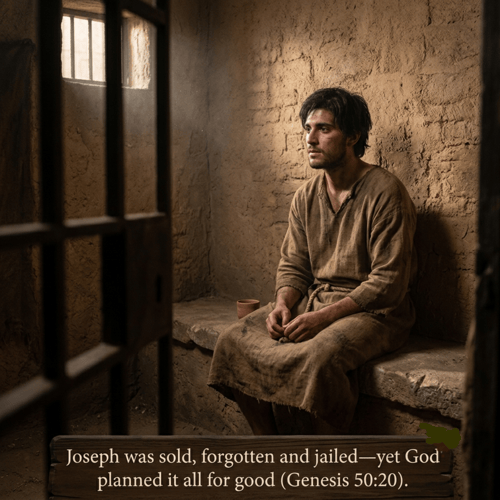
You cannot step outside God’s will of decree; even your mistakes are woven into His plan. God promises that ‘for those who love God all things work together for good’ (Romans 8:28). If your decision was sinful, confess it, turn from it and receive His forgiveness (1 John 1:9). If it was simply unwise, learn from it and keep walking with Him. There is no ‘second-best life’ for a child of God. Joseph’s brothers made an evil choice, yet God used it to save many lives (Genesis 50:20).
Does Jeremiah 29:11 mean God has a specific plan for my life?
Jeremiah 29:11 says, ‘For I know the plans I have for you, declares the LORD, plans for welfare and not for evil, to give you a future and a hope.’ God first spoke these words to the people of Judah while they were exiles in Babylon. His plan included seventy years of waiting before He brought them home (Jeremiah 29:10). So the verse does not promise a quick, easy path to each person. It does show that God’s plans for His people are good, even in hard places. Yes, God has a plan for your life—but it is His secret plan, and He unfolds it step by step as you live by His Word.
How do I know if a feeling of peace is from God?
Many people say, ‘I’ll do whatever I have peace about.’ But feelings change with sleep, health and mood, and a hard heart can feel peaceful about sin. The verse often quoted, ‘let the peace of Christ rule in your hearts’ (Colossians 3:15), is about Christians living in unity ‘in one body’, not about inner feelings when making choices. True peace comes from trusting God and bringing everything to Him in prayer (Philippians 4:6–7). So enjoy peace when it comes, but don’t make it your compass. Scripture and wisdom lead; feelings follow.
Is it okay to flip a coin or cast lots to decide?
In the Old Testament, God sometimes guided Israel through lots, and Proverbs 16:33 says ‘its every decision is from the LORD’. The last time the Bible records God’s people casting lots is Acts 1:26, before the Holy Spirit was poured out at Pentecost. After that, the church made decisions through prayer, Scripture and wise discussion (Acts 15). Flipping a coin is fine for small, equal choices, like which café to visit. But it is not a way to discover God’s will for big life decisions. God has given you a mind and His Word, and He wants you to use both.
How long should I wait on God before making a decision?
In the Bible, ‘waiting for the LORD’ means trusting Him with hope, not sitting still until a sign appears (Psalm 27:14). Sometimes wisdom says ‘not yet’, because you lack information, your motives need checking or the timing is wrong. But endless waiting can become disobedience dressed up as spirituality. If you have prayed, searched Scripture, sought counsel and weighed your options, it is usually time to decide. Many choices come with deadlines, and God expects us to act responsibly within them. Waiting is good when it comes from faith; it is unhealthy when it comes from fear.
Related Reads
- What Do We Do When God Seems Distant and Silent?
- What Do We Do When God Closes a Door We Prayed Would Open?
- What Do We Do When We Fall Into the Same Sin Again?
- What Do We Do When Life Doesn’t Go According to Plan?
- How May a Believer Discern God’s Will in Decision-Making?
- Kinds of God’s Will: Secret, Revealed, and How to Discern Them
- Didn’t The Early Christians Cast Lots? Why Don’t We?
- Providence Is Peace: How God’s Will Prevails Through Our Mistakes
- The Paradox of Prayer: Why Ask When God Already Knows?
- The Doctrine of Providence: Does God Really Govern All Things?