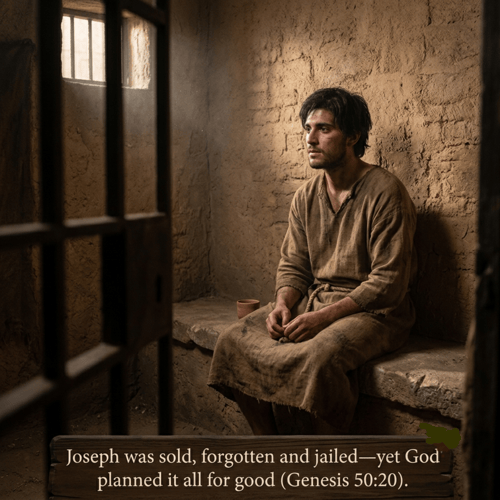
We pray, and the ceiling seems to swallow our words. We open our Bibles, and the pages feel like dry paper. We sing on Sunday, but our hearts feel as cold as stone. And a quiet, frightening thought begins to grow: Has God left me? Was He ever really there?
Well, here’s something that may surprise us. One of the songs in the Bible ends in complete darkness. There’s no happy ending and no “but then God answered”. The last line simply says, ‘my companions have become darkness’ (Psalm 88:18). And God Himself chose to put that song in His Word.
Why? Because He knew His people would walk through nights like this. If God feels distant and silent to us right now, we aren’t alone. In this post in our What Do We Do When…? series, we shall see what the Bible says when God feels distant: whether He has really gone away, why He seems quiet, and what to do next.
This post is part of our series What Do We Do When…?, which takes the hard moments of the Christian life to Scripture and asks how God would have us respond. Other posts in the series ask what we do when God closes a door we prayed would open, when we don’t know what step to take next, when we fall into the same sin again and when life doesn’t go according to plan…
Why It Feels Like God Has Gone Quiet
Many Christians go through seasons of spiritual dryness, when prayer feels hard and the joy we once had seems to be gone. The Puritans, English preachers of the 1500s and 1600s, called this spiritual desertion. They meant a time when God seems to leave a believer, even though He has not truly left. So when God feels far away, we must ask two different questions:
- What do I feel? Perhaps you feel alone, empty, forgotten or even rejected.
- What is true? This is what God has said about Himself and His people in the Bible.
Your feelings are real, and God cares about them. But feelings are like the weather. A cloudy sky doesn’t mean the sun has disappeared. It only means we cannot see it right now.
Is God Really Absent?
The Bible’s answer is a clear no. King David asked, ‘Where shall I go from your Spirit? Or where shall I flee from your presence?’ (Psalm 139:7). There’s no such place. This is called omnipresence: God is fully present everywhere at once.
But God goes further. He makes a special promise to be with His people: ‘I will never leave you nor forsake you’ (Hebrews 13:5). Jesus promised that the Holy Spirit would ‘be with you forever’ (John 14:16). So the Bible speaks of God’s presence in three different ways.
3 Ways the Bible Speaks of God’s Presence
| KIND OF PRESENCE | WHAT IT MEANS | CAN A CHRISTIAN LOSE IT? |
|---|---|---|
| Everywhere-presence | God fills all of creation. No place is empty of Him (Psalm 139:7–12). | No. Never. |
| Covenant presence | God’s binding promise to be the God of His people and to live in them by His Spirit (Hebrews 13:5). | No. Never, for a true believer. |
| Felt presence | Our inner sense of God’s nearness, joy and comfort (Psalm 16:11). | Yes, for a season. |
A covenant is a solemn, binding promise. God ties Himself to His people by His own word, so a believer can never lose the first two kinds of presence. Only the third comes and goes.
The Bible shows this in real stories. Jacob slept alone in the wilderness. When he woke, he said, ‘Surely the LORD is in this place, and I did not know it’ (Genesis 28:16). After the resurrection, Jesus walked beside two sad disciples on the road to Emmaus, ‘But their eyes were kept from recognising him’ (Luke 24:16). He was right there. They just could not see Him. That is a picture of many dark seasons.
Has God Stopped Speaking?
Sometimes God feels not so much far away as quiet. But Scripture says, ‘Long ago, at many times and in many ways, God spoke to our fathers by the prophets, but in these last days he has spoken to us by his Son’ (Hebrews 1:1–2). God has spoken, fully and finally, in Jesus Christ. And that message is written down for us in the Bible.
This is what Christians mean by the sufficiency of Scripture. Sufficient simply means “enough”. The Bible makes us ‘complete, equipped for every good work’ (2 Timothy 3:16–17). The Westminster Confession of Faith (1646), a careful summary of Bible teaching, speaks of ‘those former ways of God’s revealing his will unto his people being now ceased’. God is not adding new messages. So when we say “God is silent”, we usually mean one of two things:
- He hasn’t given the answer I asked for. I prayed for healing or a job, and nothing has changed yet.
- I want something more than the Bible. I am waiting for a voice, a feeling or a sign.
In the first case, “not yet” and “no” are still answers from a loving Father. In the second case, God is not silent at all. He speaks every time we open His Word.
WHERE TO LISTEN
God’s voice is not hidden in a feeling you must chase. It is written in a book you can open. When God feels silent, do not listen harder to your own heart. Listen more closely to His Word.
You’re in Good Company
Feeling far from God has happened to His people again and again. The French Bible teacher John Calvin (1509–1564) called the Psalms ‘an anatomy of all the parts of the soul’. An anatomy is a map of the body: the Psalms show every feeling a believer can have, including the dark ones. About a third of the Psalms are laments: honest prayers of sorrow or confusion brought straight to God.
Believers in the Bible Who Felt Far from God
| WHO | WHAT THEY SAID OR FELT | WHERE TO READ IT |
|---|---|---|
| David, the king | ‘How long will you hide your face from me?’ | Psalm 13:1 |
| Asaph, a worship leader | ‘Has his steadfast love forever ceased?’ | Psalm 77:8 |
| Heman, a temple singer | Felt cut off from God, with darkness as his only companion | Psalm 88 |
| Job, a righteous man | ‘I go forward, but he is not there’ | Job 23:8 |
| Elijah, a prophet | So worn out that he asked God to take his life | 1 Kings 19:4 |
These were some of the most faithful people in the Bible. Even Heman begins his dark psalm with the words ‘O LORD, God of my salvation’ (Psalm 88:1). He still calls God his God. Sometimes faith is not a song of joy. Sometimes it is simply refusing to stop talking to God.
One verse speaks to this better than any other: ‘Who among you fears the LORD and obeys the voice of his servant? Let him who walks in darkness and has no light trust in the name of the LORD and rely on his God’ (Isaiah 50:10). Look at who is in the dark. It is not the wicked. It is the one who ‘fears the LORD’. The Puritan pastor Thomas Goodwin (1600–1680) wrote a whole book on this verse, A Child of Light Walking in Darkness. A true child of God can walk through real darkness.
The Westminster Confession agrees. It teaches that God may allow even those who fear Him ‘to walk in darkness and to have no light’. Yet they are ‘never utterly destitute of that seed of God’. The light may dim, but it never goes out.
Why God May Seem Distant: 5 Possible Causes
Sometimes we cannot know why. ‘The secret things belong to the LORD our God’ (Deuteronomy 29:29). But the Bible does show us several common causes.
Five Reasons God May Feel Far Away—and What to Do
| POSSIBLE CAUSE | WHAT IT LOOKS LIKE | WHAT THE BIBLE SAYS | WHAT TO DO |
|---|---|---|---|
| 1. Drifting | Bible reading, prayer and church slowly get pushed aside by busyness. | ‘You have abandoned the love you had at first’ (Revelation 2:4). | Return to the simple daily habits of faith. |
| 2. Hidden sin | Holding on to a sin you know is wrong. | ‘If I had cherished iniquity in my heart, the Lord would not have listened’ (Psalm 66:18). | Confess it to God and turn from it (1 John 1:9). |
| 3. Spiritual attack | Accusing thoughts like “God is finished with you”. | Satan is ‘the accuser of our brothers’ (Revelation 12:10). | Answer the lie with the gospel (Romans 8:1). |
| 4. God’s testing | You are walking faithfully, yet darkness comes. | ‘God left him to himself, in order to test him’ (2 Chronicles 32:31). | Trust God and wait (Job 23:10). |
| 5. A tired body and mind | Exhaustion, grief, illness or long stress. | God fed Elijah and let him sleep before He spoke to him (1 Kings 19:5–8). | Rest, eat, sleep and ask for help. |
Hidden sin. Sin does not cancel God’s love for His children, but it clouds our sense of it. While David hid his sin, ‘my bones wasted away’ (Psalm 32:3). When he confessed, joy returned. So do not run from God. Run to Him. As Richard Sibbes (1577–1635), known as “the heavenly doctor”, wrote, ‘There is more mercy in Christ than sin in us.’
God’s testing. King Hezekiah was a good king. Yet ‘God left him to himself, in order to test him and to know all that was in his heart’ (2 Chronicles 32:31). The test was for Hezekiah to see his own heart. God sometimes removes the feeling of His nearness so that we learn to trust Him, not our feelings. The hymn writer William Cowper (1731–1800), who knew deep darkness himself, put it well. (Providence means God’s wise care and control over everything that happens.)
Judge not the Lord by feeble sense,
But trust Him for His grace;
Behind a frowning providence
He hides a smiling face.William Cowper, “God Moves in a Mysterious Way”
CAREFUL: DON’T BECOME ONE OF JOB’S FRIENDS
Do not assume that God’s distance must be caused by sin, in your life or in anyone else’s. Job’s friends told him his suffering proved he had sinned. God said they were wrong: ‘you have not spoken of me what is right’ (Job 42:7). Sin is one possible cause, not the only one.
The Cry That Means You Will Never Be Forsaken
There was one Person who was truly forsaken by God. On the cross, Jesus cried out, ‘My God, my God, why have you forsaken me?’ (Mark 15:34), quoting the first line of Psalm 22.
Jesus never sinned. He was forsaken because He stood in our place as our substitute, someone who takes another person’s place. He took the punishment our sins deserved: ‘Christ redeemed us from the curse of the law by becoming a curse for us’ (Galatians 3:13). John Calvin noticed something wonderful in that cry. Even in the deepest darkness, Jesus still said, “My God”. He kept holding on to His Father in faith, and so He shows us how to pray in the dark.
Here is the great comfort. Because Jesus was truly forsaken, those who belong to Him never will be. Our forsakenness can only ever feel real. His was real. That is why Paul could say that nothing ‘in all creation, will be able to separate us from the love of God in Christ Jesus our Lord’ (Romans 8:39).
OUR ONLY COMFORT
The Heidelberg Catechism (1563), a much-loved teaching guide, begins by asking: “What is your only comfort in life and in death?” Its answer: ‘That I am not my own, but belong—body and soul, in life and in death—to my faithful Saviour Jesus Christ.’
Your comfort does not depend on how close God feels. It depends on whose you are.
Our pain may even be a sign of grace. When God stopped answering King Saul, Saul wanted information, not God (1 Samuel 28:6). But the believer cries, ‘My soul thirsts for God’ (Psalm 42:2). That longing shows His Spirit is still at work. And Jesus promised, ‘Blessed are those who mourn, for they shall be comforted’ (Matthew 5:4).
What to Do When God Feels Distant and Silent
So what do we actually do? Here are 7 practical steps from Scripture.
- Tell God the truth. Bring your sorrow and questions to Him, as the psalmists did. Honest prayer in the dark is still prayer.
- Talk to yourself. The psalmist speaks to his own heart: ‘Why are you cast down, O my soul… Hope in God’ (Psalm 42:5). The Welsh preacher Martyn Lloyd-Jones (1899–1981) asked, ‘Have you realised that most of your unhappiness in life is due to the fact that you are listening to yourself instead of talking to yourself?’
- Check your heart, but do not dig forever. Pray, ‘Search me, O God, and know my heart!’ (Psalm 139:23). If God shows you a sin, confess it. If He does not, stop searching for one.
- Keep using the means of grace. These are the ordinary tools God uses to strengthen faith: the Bible, prayer, the Lord’s Supper and worship with His people. Keep using them, even when you feel nothing. Seeds grow in the dark.
- Remember what God has done. Asaph turned the corner when he said, ‘I will remember the deeds of the LORD’ (Psalm 77:11). Write down how God has been faithful to you.
- Lean on God’s people. Do not walk through this alone. Talk to a pastor or a trusted Christian friend (Galatians 6:2).
- Wait. ‘It is good that one should wait quietly for the salvation of the LORD’ (Lamentations 3:26). Night does not last forever.
Charles Spurgeon (1834–1892), the great London preacher, knew long seasons of darkness. He said, ‘when we cannot trace His hand, we must trust His heart.’ That is what it means to walk ‘by faith, not by sight’ (2 Corinthians 5:7).
Scriptures for Dark Seasons
Keep this list close. When your feelings are loud, let God’s Word speak louder.
Bible Passages for When God Feels Far Away
| WHEN WE FEEL… | READ | HOW IT HELPS |
|---|---|---|
| Forgotten by God | Psalm 13 | David moves from “How long?” to ‘I have trusted in your steadfast love’. |
| Too low to pray | Romans 8:26–27 | The Holy Spirit prays for you when you have no words. |
| Lost in darkness | Isaiah 50:10 | God tells believers in the dark to trust His name. |
| Tested and tried | Job 23:8–10 | God knows your path and will bring you out like gold. |
| Hopeless | Lamentations 3:21–26 | God’s mercies are new every morning. |
The Lord Who Walks Beside Us
Let’s go back to the road to Emmaus. How did those 2 disciples finally see Jesus? He took them through the Scriptures, and then He broke bread with them (Luke 24:27, 30–31). Afterwards they said, ‘Did not our hearts burn within us while he talked to us on the road, while he opened to us the Scriptures?’ (Luke 24:32). That is still how the Lord shows Himself to His people: through His Word, at His table and among His people.
So if you’re walking in darkness today, hear God’s word to you: ‘Let him who walks in darkness and has no light trust in the name of the LORD and rely on his God’ (Isaiah 50:10). You may not see Him. But He sees you, He holds you, and morning is coming.
Tough Questions, Honest Answers
Is it wrong to be angry with God or to question Him?
It is not wrong to bring hard questions to God. The psalmists did it often, asking ‘Why, O LORD, do you stand far away?’ (Psalm 10:1). The difference is between questioning God in faith and accusing God in unbelief. Job poured out his complaints, but when he went too far, God answered him and Job humbly repented (Job 42:1–6). So bring your questions to God, not away from Him, and let Him have the last word.
What is the “dark night of the soul”, and is it biblical?
The phrase comes from a poem by John of the Cross, a sixteenth-century Spanish Catholic mystic. A mystic is someone who seeks a direct inner experience of union with God. For him, the “dark night” was one stage on a step-by-step path towards that union. The Bible certainly speaks of believers walking in darkness (Isaiah 50:10), but it never gives us a ladder of inner experiences to climb. Our closeness to God comes through Christ alone, received by faith in His promises. So the experience is real, but the answer is not a technique. It is trust in the God who has spoken.
Does God still speak to us today outside the Bible?
God still works in our lives every day through His providence, His wise care over all things. But He no longer gives new revelation, meaning new messages from heaven with the same authority as Scripture (Hebrews 1:1–2). The Bible is complete and gives us all we need (2 Timothy 3:16–17). Inner impressions, dreams or “nudges” may come, but they are not God’s voice in the way the Bible is, and they must always be tested by Scripture. If you want to hear God speak with certainty, open His Word. There He speaks clearly, every time.
Can depression or anxiety make God feel far away?
Yes. We are not only souls. We are bodies too, and our bodies affect how we feel spiritually. Elijah’s despair came partly from exhaustion, and God’s first answer was food and sleep (1 Kings 19:5–8). Charles Spurgeon struggled with depression for much of his life and spoke openly about it to the students he trained for ministry. Feeling far from God during depression does not mean your faith is fake. It is wise to seek help from a doctor or a trained counsellor, as well as from your pastor and church. Using medicine or counselling is not a lack of faith. It is receiving God’s care through ordinary means.
Why would God hide Himself if He wants people to believe in Him?
Some thinkers, such as the philosopher J. L. Schellenberg, argue that if a loving God existed, He would make Himself obvious to everyone. But the Bible says God is not hidden. His ‘eternal power and divine nature’ are ‘clearly perceived’ in creation (Romans 1:20). The problem is not a lack of light but that people ‘suppress the truth’ (Romans 1:18). God has also shown Himself fully in Jesus, who said, ‘Whoever has seen me has seen the Father’ (John 14:9). As Blaise Pascal observed, God gives enough light for those who want to see, and enough darkness for those who do not.
What were the 400 “silent years” between the Old and New Testaments?
This is the period between the prophet Malachi (around 430 BC) and the coming of John the Baptist. During this time God sent no new prophets and gave no new books of Scripture. But God was not idle. He was shaping world history, including the rise of Greece and Rome, a shared language and good roads, to prepare for the coming of His Son. ‘When the fullness of time had come, God sent forth his Son’ (Galatians 4:4). God’s silence was not His absence. It was the quiet before His greatest Word: Jesus Christ.
Can a Christian lose the Holy Spirit?
Many people worry about David’s prayer, ‘take not your Holy Spirit from me’ (Psalm 51:11). In the Old Testament, the Spirit sometimes came upon leaders such as kings for a special task, and David had seen the Spirit leave King Saul (1 Samuel 16:14). But Jesus promised that the Spirit would be with His people ‘forever’ (John 14:16). Believers are ‘sealed with the promised Holy Spirit’, who is the guarantee of our future inheritance (Ephesians 1:13–14). A seal marks something as owned and protected. A true Christian may grieve the Spirit (Ephesians 4:30), but He will never leave them.
Related Reads
- What Do We Do When God Closes a Door We Prayed Would Open?
- What Do We Do When We Don’t Know What Step to Take Next?
- What Do We Do When We Fall Into the Same Sin Again?
- What Do We Do When Life Doesn’t Go According to Plan?
- Prayerlessness and Spiritual Dryness: Does the Bible Offer a Remedy?
- 400 Years of Silence: What Was God Doing Between the Testaments?
- Is Taking Antidepressants a Failure of Faith?
- The Holy Spirit’s Indwelling: How Can I Be Sure I Have It?
- Jesus in Esther: Finding Christ Where God Is Hidden
- Perseverance of the Saints: Why True Believers Cannot Finally Fall Away
- Does Grief Cancel Christian Joy? Or Can the Two Coexist?