Here’s a fact that surprises many: scientists and the Bible agree the world is going to end.
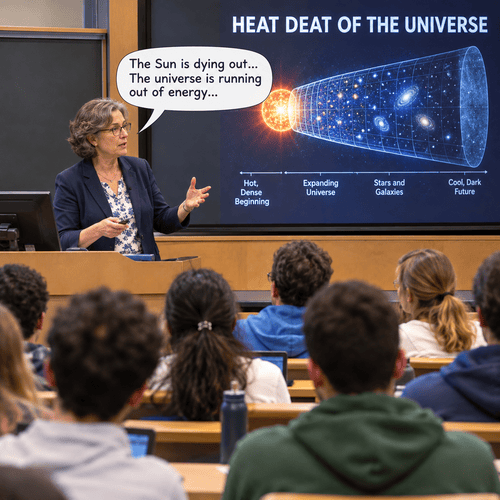
Not might end. Will end. The sun will not burn for ever. Even the universe itself, scientists say, is slowly running out of energy.
So the real question isn’t whether the world will end. The real question is how, why and what comes after. Here science and the Bible give very different answers. One leads to a cold, dark, empty universe. The other leads to a world made new.
Why So Many People Are Asking “How Will the World End?”
- The Doomsday Clock: In January 2026, a group of scientists set their “Doomsday Clock” to 85 seconds to midnight. Midnight stands for global disaster. It’s the closest the clock has been to midnight since 1947.
- Online predictions: In September 2025, TikTok videos claimed the “rapture” would happen on 23–24 September. For a while, Google searches for “rapture” beat those for Taylor Swift.
- Belief in the “end times”: A 2022 survey by the Pew Research Center found 39% of American adults believe we’re living in the end times.
What Science Predicts About the End of the World
Scientists have several ideas about how everything will end. But first, one key idea.
KEY TERM: THE SECOND LAW OF THERMODYNAMICS
This basic law of science says that usable energy always runs down. Things move from order to disorder. Hot tea goes cold. A wound-up clock stops.
Scientists call this running-down entropy (say: EN-truh-pee). The whole universe is like a giant clock that is slowly unwinding.
The English scientist Arthur Eddington said this law holds “the supreme position among the laws of Nature.” Almost every scientific forecast about the end rests on it.
Table 1: How Scientists Think the World Could End
| PREDICTION | WHAT HAPPENS | SCIENTISTS’ ESTIMATE (IF NOTHING INTERRUPTS) |
|---|---|---|
| The sun dies | The sun swells into a huge “red giant” star and burns the earth. | About 5 billion years |
| Big Freeze (or “heat death”) | The universe keeps spreading out. Stars burn out. Everything turns cold and dark. | Trillions upon trillions of years |
| Big Crunch | The universe stops spreading out, turns back and collapses in on itself. | Perhaps 20 billion years or more |
| Big Rip | Space stretches so fast that it tears apart galaxies, stars and even atoms. | Perhaps 22 billion years or more |
| Human-made disaster | Nuclear war, a pandemic or a climate disaster ruins life on earth. | Unknown—the Doomsday Clock is a warning, not a date |
Notice: every one of these endings is impersonal. No one plans it. It simply happens.
Where Science and the Bible Agree
Long before scientists discovered entropy, the Bible said the universe was wearing out:
“Of old you laid the foundation of the earth, and the heavens are the work of your hands. They will perish, but you will remain; they will all wear out like a garment.”
Psalm 102:25–26
Clothes fade, grow thin and tear. Isaiah used the same picture: “the earth will wear out like a garment” (Isaiah 51:6).
If the universe is running down, it cannot have been running for ever. A clock that is unwinding must once have been wound up. So the end of the universe points back to its beginning—and a beginning points to a Beginner. (See our posts on the Kalam argument and the BGV theorem.)
Science Keeps Changing Its Mind
Science is a good gift from God. But forecasts about the far future are guesses, and they change.
For years, most scientists expected a Big Freeze. Then, in 2024 and 2025, a telescope project called DESI found signs that “dark energy”—the mysterious force thought to push the universe apart—may be getting weaker. If so, the universe may end in a Big Crunch instead.
Freeze, crunch or rip? Scientists honestly do not know. But the Bible’s answer has not changed in 2,000 years: Jesus Christ will return, and God will make all things new.
The Big Assumption Behind Every Scientific Forecast
Every scientific forecast about the end rests on one hidden assumption: that nature will carry on exactly as it does now, and nothing will step in from outside.
This idea is called uniformitarianism (say: you-nee-for-mi-TAIR-ee-un-izm). It means “things have always worked the way they do now.” Amazingly, Peter predicted this way of thinking almost 2,000 years ago:
“Scoffers will come in the last days with scoffing… They will say, ‘Where is the promise of his coming? For ever since the fathers fell asleep, all things are continuing as they were from the beginning of creation.’”
2 Peter 3:3–4
Peter answers that they forget one fact: God has stepped in before. In Noah’s day, “the world that then existed was deluged with water and perished” (2 Peter 3:6). By the same word of God, the present heavens and earth “are stored up for fire” (3:7).
So a forecast that says “nothing will ever interrupt nature” is not pure science. It is a belief. And the Flood shows that belief is mistaken.
Can We End the World?
The Doomsday Clock is a serious warning. Human sin really can cause terrible harm. But humans cannot end the world before God’s appointed day. After the Flood, God promised:
“While the earth remains, seedtime and harvest, cold and heat, summer and winter, day and night, shall not cease.”
Genesis 8:22
Jesus also warned that wars would come, but added: “See that you are not alarmed, for this must take place, but the end is not yet” (Matthew 24:6). This gives Christians two things at once:
- Comfort: No dictator, virus or bomb can bring the end before God’s time.
- Responsibility: God’s promise is no excuse to be careless. We must still care for the earth and love our neighbours.
What the Bible Predicts: Five Great Events
Science describes the end as an accident. The Bible describes it as an appointment. Here is the order of events the Bible gives.
Timeline: The Bible’s Order of Events at the End
- 1. Christ returns: The angels told the disciples: “This Jesus, who was taken up from you into heaven, will come in the same way as you saw him go into heaven” (Acts 1:11).
- 2. The dead are raised: Everyone who has ever lived will rise—both those who did good and those who did evil (John 5:28–29).
- 3. The final judgement: Every person will stand before God, and justice will be done (Revelation 20:11–15).
- 4. Creation is cleansed: God will purify the universe by fire (2 Peter 3:10).
- 5. All things are made new: God will bring “new heavens and a new earth in which righteousness dwells” (2 Peter 3:13).
Notice what is missing: a secret “rapture” years before Jesus returns. Paul describes his coming as loud and public: “the Lord himself will descend from heaven with a cry of command, with the voice of an archangel, and with the sound of the trumpet of God” (1 Thessalonians 4:16).
Kim Riddlebarger (A Case for Amillennialism) argues that the Bible presents these as one great climax of history: one return, one resurrection, one judgement.
WHY DOESN’T GOD TELL US THE DATE?
The Westminster Confession of Faith (1646) says God keeps the day hidden so that people “may shake off all carnal security, and be always watchful, because they know not at what hour the Lord will come.”
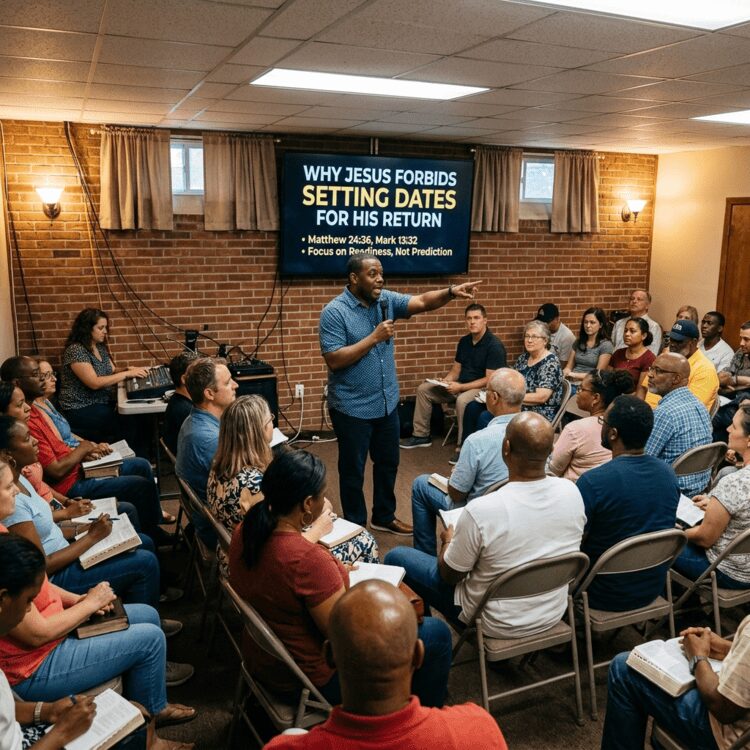
In simple words: if we knew the date, we would grow lazy. Because we do not, we must be ready every day.
Burned Up or Made New?
Many people think God will destroy the earth and start again from nothing. But look closely.
- The Flood is the pattern: Peter says the old world “perished” in the Flood (2 Peter 3:6). Yet the earth did not disappear. It was cleansed. The coming fire will cleanse too.
- The earth will be “exposed”: The ESV translates 2 Peter 3:10 like this: “the earth and the works that are done on it will be exposed.” The fire lays everything bare before God, like gold tested in a furnace.
- “New” means renewed: In 2 Peter 3:13, the Greek word for “new” is kainos. It usually means new in quality, not new in time—like an old house fully restored, not knocked down.
- Creation is waiting to be freed: Paul says “the creation itself will be set free from its bondage to corruption” (Romans 8:21). “Corruption” means decay—the very thing entropy describes. God’s answer to decay is rescue.
John Calvin saw this clearly. Explaining 2 Peter 3:10, he wrote that the elements “are to be consumed, only that they may be renovated, their substance still remaining the same.”
Anthony Hoekema, in The Bible and the Future, made a striking point: “If God would have to annihilate the present cosmos, Satan would have won a great victory.” If God simply threw the world away, sin would have won. But God wins his creation back.
The Dutch theologian Herman Bavinck often summed up the gospel this way: grace does not destroy nature; it restores it. The God who made the world will repair it.
Science vs the Bible: Side by Side
Table 2: What Science and the Bible Each Say About the End
| QUESTION | WHAT SCIENCE PREDICTS | WHAT THE BIBLE PREDICTS |
|---|---|---|
| How will it end? | Freeze, crunch, rip or human disaster | Christ’s return, judgement and renewal |
| Who is in charge? | No one—only blind forces | God, through Jesus Christ |
| When? | Billions of years away, if nothing interrupts | On a day God has already fixed—it could be any day |
| Why? | No reason—it just happens | To end evil and restore creation |
| What comes after? | Nothing—cold, dark emptiness | New heavens and a new earth, with no more death |
| How certain is it? | Changes as new data arrives | Guaranteed by Jesus’ resurrection |
Science can tell us how things work, but not why the world exists. The atheist philosopher Bertrand Russell admitted that, without God, we must build our lives on “the firm foundation of unyielding despair.” The physicist Steven Weinberg wrote: “The more the universe seems comprehensible, the more it also seems pointless.”
Answering Three Common Objections
Objection 1: “Jesus Got the Date Wrong”
In Matthew 24:34, Jesus said: “Truly, I say to you, this generation will not pass away until all these things take place.” Bertrand Russell claimed this proved Jesus was mistaken. Even C.S. Lewis called it “the most embarrassing verse in the Bible.”
But the disciples had asked two questions: when would the temple fall, and when would the age end (Matthew 24:1–3)? “All these things” in verse 34 points to the temple’s fall in AD 70—within that generation, exactly as Jesus said. In verse 36, he turns to the final day: “But concerning that day and hour no one knows, not even the angels of heaven, nor the Son, but the Father only.”
R.C. Sproul (The Last Days According to Jesus) and R.T. France both point to this change of subject. Jesus was not wrong. He was precise.
Objection 2: “If the End Is Near, Why Is It Taking So Long?”
“With the Lord one day is as a thousand years, and a thousand years as one day. The Lord is not slow to fulfil his promise as some count slowness, but is patient toward you, not wishing that any should perish, but that all should reach repentance.”
2 Peter 3:8–9
The delay is not failure. It is mercy—another day for people to turn to Christ.
Objection 3: “Christians Keep Predicting the End and Getting It Wrong”
That is true of some people. But they were disobeying the Bible, not following it.
Timeline: A Short History of Failed Predictions
- 1844: Followers of William Miller expected Christ on 22 October. The day became known as the “Great Disappointment.”
- 2011: Radio preacher Harold Camping named 21 May, then 21 October. Both days passed quietly.
- 2025: The TikTok “rapture” of 23–24 September came and went.
Each one ignored Jesus’ clear words in Matthew 24:36. Their failure does not disprove the Bible. It confirms it.
Endless Cycles or a Real Goal?
In India and many other places, people believe time moves in endless circles. In Hindu thought, the world passes through great ages called yugas, then dissolves (pralaya) and begins again—over and over, with no final goal.
The Bible teaches a straight line. History has a beginning (creation), a middle (the fall and Christ’s rescue) and a goal (the new creation). It is going somewhere.
The Princeton scholar Geerhardus Vos argued that God had a goal for creation even before sin entered the world. The end is even older than the story of salvation.
The historian of science Stanley Jaki argued that this straight-line view of time helped modern science to grow.
The Proof That the End Is Coming
How can we be sure the Bible is right? Not because of clever calculations, but because of something that has already happened in history.
KEY VERSE: ACTS 17:31
“He has fixed a day on which he will judge the world in righteousness by a man whom he has appointed; and of this he has given assurance to all by raising him from the dead.”
In simple words: God has set a date for judgement. The proof that he will keep that date is that he raised Jesus from the dead.
Paul calls the risen Jesus “the firstfruits” (1 Corinthians 15:20). Firstfruits were the first part of a harvest. When farmers saw them, they knew the rest was coming. Richard Gaffin explains that, for Paul, Christ’s resurrection and ours are two parts of one great harvest. In a real sense, the end has already begun—in Jesus.
So the evidence for the resurrection—the empty tomb, the eyewitnesses, the changed disciples—is also the evidence that the end is coming.
How Should We Live While We Wait?
Peter teaches about the end not to scare us, but to change how we live: “What sort of people ought you to be in lives of holiness and godliness” (2 Peter 3:11).
- Be ready: Trust Christ today. No one is promised tomorrow.
- Live rightly: The new earth is a home “in which righteousness dwells” (2 Peter 3:13).
- Do not fear: The world is not spinning out of control. It is moving towards Christ.
- Share the hope: God is patient so that people may repent. Others need to hear this news.
Conclusion: Two Endings, One Hope
Science and the Bible agree on the big fact: this world will not last for ever. But science alone offers an ending without meaning—a universe that freezes, collapses or rips apart, with nothing after it.
The Bible offers far more. The end is not an accident but an appointment, set by a just and loving God. When Jesus Christ returns, it will not be the end of everything. It will be the beginning of everything made new.
“He will wipe away every tear from their eyes, and death shall be no more, neither shall there be mourning, nor crying, nor pain anymore, for the former things have passed away.”
Revelation 21:4
So the question that really matters is this: when that day comes, will you be ready?
Tough Questions, Honest Answers
Are we living in the last days?
Yes—but perhaps not in the way you think. The Bible says the “last days” began when Jesus came and the Holy Spirit was poured out at Pentecost (Acts 2:17; Hebrews 1:2). So every Christian since the first century has lived in the last days. This period is the time between Christ’s first coming and his second. We do not know how long it will last, but we know it will end with his return. That is why every generation should live ready.
Is the rapture biblical?
The word “rapture” comes from the Latin word for “caught up” in 1 Thessalonians 4:17, where believers who are alive “will be caught up together with them in the clouds to meet the Lord in the air.” So the Bible does teach that believers will be caught up. But it does not teach a secret rapture years before Christ returns. The Greek word for “meet” was used when citizens went out of a city to welcome a visiting king and walk back in with him. In the same way, believers will rise to meet Jesus and then come with him as he returns to earth. The rapture is part of the second coming, not a separate event.
What happens to believers who die before Christ returns?
Their bodies rest in the grave, but their souls go straight to be with Christ. Paul said he would rather be “away from the body and at home with the Lord” (2 Corinthians 5:8), and that to depart and be with Christ “is far better” (Philippians 1:23). This is a happy state, but it is not the final one. When Christ returns, their souls will be joined to raised, glorified bodies. God saves the whole person—body and soul.
Will we recognise our loved ones in the new earth?
The Bible suggests we will. At the transfiguration, the disciples recognised Moses and Elijah, even though they had never met them (Matthew 17:3–4). Jesus spoke of people sitting at table with Abraham, Isaac and Jacob in the kingdom (Matthew 8:11), so people will still be known as themselves. The risen Jesus was recognised by his friends, and our resurrection bodies will be like his. Our relationships will be purified, not erased. But our greatest joy will be seeing Christ himself.
Will there be animals in the new creation?
The Bible does not give us full details, but there are good reasons to think so. Isaiah pictures a renewed world where “the wolf shall dwell with the lamb” (Isaiah 11:6). Paul says the whole creation—not just humans—is waiting to be set free from decay (Romans 8:19–21). If God renews the earth instead of throwing it away, it makes sense that its creatures will share in that renewal. We should be humble about the details, but confident that the new creation will be full of life.
If the world is going to end, should Christians care about the environment?
Yes. God gave humans the task to “work” and “keep” the earth (Genesis 2:15), and that task has never been cancelled. The fact that God will renew the earth shows how much he values it. He is not throwing it away, so neither should we. At the same time, Christians do not need to live in panic, because God has promised that the seasons will continue while the earth remains (Genesis 8:22). We care for creation out of love and duty, not fear.
Will the sun burn out before Jesus returns?
Scientists estimate that the sun will shine for billions of years, if nothing interrupts it. But the Bible is clear that this world will end through Christ’s return on a day God has already fixed (Acts 17:31), not through the slow death of a star. The sun is not the final light of our story. In the new creation, “the city has no need of sun or moon to shine on it, for the glory of God gives it light, and its lamp is the Lamb” (Revelation 21:23). Our future does not depend on the life of a star, but on the faithfulness of God.
Related Reads
- The God Particle: What Does the Higgs Boson Really Say About God?
- Wormwood in Revelation 8: Asteroid, Chernobyl or Something Else?
- The Second Coming of Jesus: Why Hasn’t He Returned Yet?
- The Rapture Debate: A Primer on End-Time Bible Prophecy
- Signs of Christ’s Return: Are We in the Last Days?
- What Is Amillennialism? A Biblical Assessment
- What Will Heaven Really Be Like? Insights from Revelation 21
- Will There Be Animals in Heaven? What the Bible Says
- Did the Universe Create Itself? The Laws of Thermodynamics Cry No
- Judgement Day is Almost Here: Are We Ready?