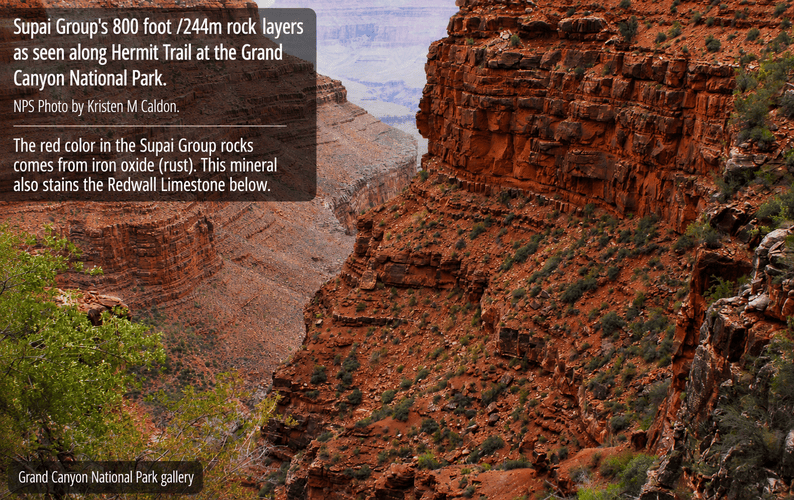
Two people stand on the edge of the Grand Canyon. They’re looking at exactly the same thing: a gash in the earth about 1.6 kilometres deep and 446 kilometres long, with layer upon layer of coloured rock stacked up like the pages of a closed book.
The first visitor sees a clock. Each layer, he says, settled slowly under a quiet sea. The small river at the bottom then spent millions of years sawing its way down through them. To him, the Canyon is the clearest proof anywhere that our planet is unimaginably old.
The second visitor sees a graveyard. Geologist Steve Austin, who has spent decades studying these rocks, has described the Canyon as “the graveyard of the world”—the wreckage left behind by one enormous catastrophe, not the calm diary of a billion quiet years.
Same rocks. Same river. Two completely different interpretations.
This post is about why the second view keeps growing stronger, and why some of the most interesting evidence has arrived only in the last few years.
First, let’s be honest about the claim
Most arguments about the Grand Canyon collapse because nobody defines what’s being argued. So here is our claim, stated plainly.
What We Aren’t Saying
The Grand Canyon doesn’t, by itself, disprove natural selection—the idea that living things change across generations. No one digs up a fossil with a label attached.
What We Are Saying
The Canyon attacks the one thing evolution can’t live without: deep time. “Deep time” simply means the belief that the earth is roughly 4.5 billion years old, and that this vast span is available for slow, gradual change.
Molecules-to-man evolution is a story about accidents adding up. Accidents only add up if you have almost endless time in which to add them. Take away deep time and the story has nowhere left to stand.
There’s also one place where the Canyon speaks to evolution directly—its fossils. We’ll get there. But the main battle is over time, and that battle is fought in the rock.
1. The 2026 discovery: mainstream geology now needs a flood too
Start with the newest evidence, because it’s surprising.
In April 2026, a team led by John He of UCLA published a study in Science about the Grand Canyon. They studied tiny crystals called zircons in the Bidahochi Formation of north-eastern Arizona. These crystals can reveal where sediments came from.
Their findings suggest this sequence:
- Water and sediment arrived. Sediment from the Colorado River suddenly entered the lake basin, while sediment began building up much faster. Large fish suited to fast-moving water also appeared.
- A huge lake formed. Water collected behind a natural ridge called the Kaibab Arch, forming what’s often called Hopi Lake.
- The natural dam broke. The lake overflowed the ridge. The researchers argue this sudden breach helped establish the Colorado River and began the cutting of the Grand Canyon.
Notice what has changed. The explanation is no longer simply a small river slowly cutting the Canyon over enormous periods of time. The new model involves a huge lake, a natural dam and a sudden breach.
This idea isn’t new. Edmond Blackwelder suggested a lake-breach explanation in 1934. Creationist geologists such as Steve Austin later developed a detailed breached-dam model. Such ideas were once widely rejected. Now, a similar mechanism is being discussed in Science.
Let’s Be Careful Here
The UCLA study doesn’t prove a young earth. Its authors still place these events millions of years ago, using the conventional geological timescale that creationists question.
But the mechanism is important. The study points to a large amount of water, rapid sediment deposition and a sudden breach—not simply slow erosion by a small river.
Tim Clarey of the Institute for Creation Research interprets these deposits differently, seeing them as evidence of water pooling during the retreat of the biblical Flood. You may or may not accept that interpretation.
But the larger point remains: the evidence increasingly points to catastrophic processes in the formation of the Grand Canyon, not merely slow erosion over immense periods of time.
2. The Coconino Sandstone: water, not wind
About 300 metres below the rim is a pale rock layer called the Coconino Sandstone. For much of the last century, it was one of the strongest arguments against a global Flood.
Why? The Coconino contains many cross-beds—sloping layers made when sand moves down the side of a dune. Geologists have usually understood these as ancient desert sand dunes. But if the Flood covered the whole earth, how could a desert exist in the middle of it?
Geologist Arthur Strahler even argued the Coconino alone was enough to disprove the biblical Flood.
It was a serious challenge. But creationist researchers now challenge that interpretation.
John Whitmore of Cedarville University has studied the Coconino since 1998, working with Paul Garner of Biblical Creation Trust in Britain. They’ve examined its sand grains under microscopes and compared them with sand from modern deserts.
The question is simple: Does the Coconino really look like a desert dune—or does the evidence point to water?
Here’s what a desert dune should look like, and what the Coconino actually looks like.
| FEATURE | WHAT’S EXPECTED IN A DESERT DUNE | WHAT’S FOUND IN THE COCONINO |
|---|---|---|
| Slope of cross-beds | Around 34 degrees, the angle at which dry sand collapses | Around 20 degrees, matching underwater sand waves |
| Shape of grains | Well rounded and highly polished by wind | Sub-angular, with sharp edges surviving |
| Sorting of grains | Very even in size; wind is a fussy sorter | Poorly to moderately sorted, mixed sizes |
| Soft minerals | Micas destroyed quickly by wind abrasion | Micas present, including muscovite and biotite |
| Neighbouring rocks | Should sit among dry land deposits | Interfingers with clearly marine layers |
| Chemistry | Little or no dolomite or marine cement | Dolomite and marine chemistry present |
Two further findings deserve a mention.
- It’s far too big to be a dune field. Whitmore has traced the Coconino and its matching layers from southern California to North Dakota and from Texas to Idaho—roughly 2.4 million square kilometres of sand behaving as one connected sheet.
- The sand came from the other side of the continent. Zircons inside it point back to the Appalachian mountains, more than 1,900 kilometres to the east. Something moved an ocean of sand right across North America in one direction.
- The folds are wrong for dry sand. Guy Forsythe identified parabolic recumbent folds near Sedona, Arizona—curled, laid-over folds that form when soft, water-saturated sediment is dragged by a current.
Whitmore’s verdict: the underwater interpretation is now supported by evidence from several independent directions at once. The layer that was supposed to disprove the Flood turns out to have been laid down under moving water.
3. Rock that bent instead of breaking
Walk into Carbon Canyon, a side branch of the main Canyon, and you’ll see something that ought to stop you in your tracks. A thick sandstone layer called the Tapeats has been bent through almost 90 degrees—folded like a carpet—and it didn’t crack.
Think about what that means. Take a dry biscuit and bend it: it snaps. Take soft dough and bend it: it curves smoothly. Hard, brittle rock behaves like the biscuit.
In the conventional account, the Tapeats hardened into solid stone and then sat there for around 450 million years before the mountain-building forces arrived to fold it. Rock that old and that brittle should be shattered. Instead it flowed.
Andrew Snelling, a geologist with a doctorate from the University of Sydney, spent years seeking permits to sample these folds and eventually collected 53 samples from the Cambrian layers, publishing detailed petrology—the microscopic study of what rock is made of—between 2021 and 2023. His conclusion: these beds were laid down quickly, folded while still soft and wet, and only then turned to stone.
If that’s right, the 450-million-year gap isn’t merely uncertain. It never existed.
4. The gaps with nothing missing
This is the argument we find hardest for the long-age view to answer, and it’s worth slowing down over.
The Great Unconformity
Roughly halfway down the Canyon is a famous boundary called the Great Unconformity. Below it, there’s tilted and twisted ancient rock. And above it, flat horizontal layers. The conventional reading: more than a billion years of history are missing at this single line.
Here’s the difficulty. When land sits exposed to weather for long ages, it develops recognisable features:
- Soil, with roots, worm burrows and chemical staining
- A layer of loose broken rubble, which geologists call regolith
- Valleys, gullies and stream channels cut into the surface
- Uneven, weathered, crumbling texture
The Great Unconformity has almost none of this. It’s flat, clean and sharp—in many places you could lay a straight edge along it. That’s not what a billion years of rain and frost leaves behind. It’s exactly what fast-moving water leaves behind when it planes a surface smooth and immediately dumps sand on top.
The flat gaps higher up
The same problem repeats further up the Canyon wall. Between the Muav Limestone and the Redwall Limestone, the standard timescale requires something like 100 million years to be missing—the whole Ordovician and Silurian periods. Yet the contact between the two is flat and undisturbed. Geologists call such a featureless gap a paraconformity—a technical way of saying “we know time should be missing, but the rock shows no sign of it”.
There are several of these in the Canyon. Add them together and the long-age account requires hundreds of millions of years to pass, repeatedly, leaving no mark whatsoever. The flood model doesn’t need to explain them, because in that model they’re simply the next surge of sediment arriving on top of the last.
5. A graveyard of squid, standing on their heads
Inside the Redwall Limestone lies a bed that Steve Austin studied in detail. It contains vast numbers of nautiloids—ancient sea creatures with long, straight, cone-shaped shells, rather like a squid living inside an ice-cream cone.
Three details matter:
- The numbers. Austin estimated billions of these creatures across an area of several thousand square kilometres.
- The alignment. The shells aren’t scattered randomly. A large proportion point the same way, as objects do when a strong current sorts them.
- The setting. They’re entombed in limestone—a rock textbooks describe as forming slowly in calm, clear, quiet water.
Limestone is meant to be the very picture of geological patience. Yet, here it holds a mass killing. Something buried an entire regional population of sea creatures alive, all at once, in flowing lime mud. Slow and gentle doesn’t produce that.
6. When the dating gives the wrong answer
Radiometric dating measures how much of a radioactive element in a rock has changed into another element. Scientists then use the known decay rate to calculate how long the process would have taken. It sounds very precise, and is often presented as if the resulting age is beyond question.
But every radiometric date depends on several assumptions:
- The starting amounts. We have to know, or correctly estimate, how much of each element was present when the rock formed.
- A closed system. We have to assume nothing was added to or removed from the rock afterwards.
- A constant decay rate. We have to assume the rate of radioactive decay remained constant.
The Grand Canyon provides an interesting test because it contains lava at two very different levels. The Cardenas Basalt lies near the bottom, among the older rocks. The Uinkaret lava flows lie near the top. They flowed over the rim after the Canyon had already been carved. Whatever their actual ages, the lava at the top must be younger than the rocks beneath it.
Yet when Austin’s team dated some of these samples, the results included ages for the young lava that were as old as—or even older than—the rocks deep below the Canyon.
How did that happen?
Conventional geologists explain such results by suggesting the young lava was contaminated by older material as it rose. That’s a possible explanation, and it should be considered.
But there’s an important point here. We know the lava is young because of where it is in the sequence. So when the radiometric date gives an older result, we don’t conclude the lava really is older than the rocks beneath it. Instead, we conclude something went wrong with the dating.
In other words, the physical evidence is being used to test the clock.
That doesn’t automatically prove every radiometric date is wrong. But it does show radiometric dating isn’t simply a matter of reading an age directly from a rock. The result depends on assumptions about the rock’s history and chemistry. So when the same methods are applied to rocks whose history we didn’t witness, how much confidence should we place in the number they produce?
7. Canyons can form in days—we’ve seen it happen
The objection most people raise is instinctive: a canyon this enormous simply must have taken ages.
Must it? Consider what’s been observed within living memory.
| EVENT | TIME TAKEN | WHAT FORMED |
|---|---|---|
| Burlingame Canyon, Washington, 1926 | About six days | A canyon roughly 460 metres long and 36 metres deep, cut accidentally by diverted irrigation water |
| Mount St Helens, Washington, 1980–82 | Nine hours on 19 March 1982 | A canyon system about one 40th the scale of the Grand Canyon, complete with layered walls and a small river now running through it |
| Providence Canyon, Georgia | Under 150 years | Gorges up to 45 metres deep, triggered by poor farming practice |
The Mount St Helens canyon is the one worth dwelling on. A visitor arriving today, knowing nothing of 1980, would see a stream at the bottom of a layered canyon and reach the obvious conclusion: this little stream cut this canyon over an immense period. That conclusion would be entirely wrong. The layers were laid in hours by volcanic flows and the canyon was cut in a single afternoon. The stream arrived afterwards and simply moved in.
The lesson geology already learned once
There’s a precedent for all of this:
In the 1920s, geologist J Harlen Bretz argued the strange landscape of eastern Washington—the Channeled Scablands, with its enormous dry waterfalls and giant gravel ripples—had been carved by a catastrophic flood. He was mocked for decades. Colleagues accused him of smuggling Noah back into science. Only in 1965, after evidence from ancient Lake Missoula became undeniable, was he vindicated. In 1979, at the age of 96, he received geology’s highest honour.
Bretz was right and the consensus was wrong, for 40 years, because the consensus had ruled out catastrophe in advance. That’s the exact objection we raise today.
8. Where did all the rock go?
Excavating the Grand Canyon removed an immense volume of material—commonly estimated at around 1,000 cubic kilometres.
If a river carried it away gradually over 5 or 6 million years, that debris should be piled up somewhere downstream in a great fan or delta. Locating a deposit of the right size, in the right place, of the right age, has proved persistently awkward. Sediments in the Gulf of California are usually offered as the answer, and the match is debated among conventional geologists themselves.
In the flood model there’s no puzzle. Retreating water carried the material out to sea and spread it thinly across the continental shelf. There’s no neat pile because nothing gentle ever stacked one.
9. The fossils: where the Canyon touches evolution directly
Now to the fossils, and to evolution proper.
Just above the Great Unconformity sits the Tonto Group, and in it appear trilobites—complex marine animals with jointed legs, hard segmented shells and, remarkably, compound eyes built from precisely arranged calcite lenses. They’re not simple. They’re highly engineered.
And they appear with no ancestors beneath them.
Charles Darwin himself recognised the problem this posed and admitted it was a serious difficulty for his theory. More than 160 years later, the Canyon still shows the same picture:
- Sudden arrival. Complex creatures appear abruptly, fully formed, at the base of the fossil-bearing layers.
- No in-between forms. Through more than a kilometre of rock, there’s no series of gradual transitions connecting one basic body plan to another.
- Stasis. Creatures that persist through the layers appear essentially unchanged from bottom to top.
- Sea creatures on a mountain. Marine fossils sit at over 2,400 metres above sea level, on top of a continent.
That last point is worth pausing on. Whatever else happened here, the ocean was once on top of the land.
10. The questions we’ve not yet answered
A case is only watertight if it’s honest about its leaks. Ours has some, and we would rather tell you than have a critic tell you.
Open Problems in Flood Geology
The heat problem. If radioactive decay ran far faster during the flood year, that released enormous heat. How the earth survived it hasn’t yet been resolved.
The Coconino trackways. Fossil footprints in the Coconino remain debated. Critics argue some patterns fit damp sand better than deep water.
The Bidahochi timing. Fitting the lake, its fish and its sediment into a single post-flood window is genuine ongoing work, not a settled result.
Peer disagreement. Snelling’s folding research has drawn a detailed published rebuttal arguing solid rock can deform slowly under heat and pressure. That conversation is ongoing.
11. Why two people can see the same rock differently
Return to our two visitors on the rim. Neither of them saw the Canyon form. Both are looking at evidence that exists only in the present and reasoning backwards into a past nobody recorded.
What decides the outcome isn’t the rock. It’s what each person already believes about whether a global catastrophe is possible. If there indeed was a global flood, it would leave behind exactly the kind of evidence the Canyon contains: thousands of metres of water-laid sediment spread across continents, packed with the bodies of creatures buried too fast to rot, folded before it hardened, and then cut through by escaping water.
Standing at the rim
The Grand Canyon does not shout its answer. It waits.
But the direction of travel is unmistakable. The desert dunes turned out to be underwater sand waves. The slow river turned out to need a burst dam. The brittle ancient rock turned out to have folded like dough. The quiet limestone turned out to be a mass grave. The billion-year gaps turned out to have no weathering in them at all.
Every one of those corrections has moved in one direction: away from slow, and towards sudden.
Take away the deep time, and evolution loses the one resource it cannot do without. What remains is a mile-deep record of a world that was overwhelmed—and a God who both judged that world and, in the same account, provided a way through the water for those who trusted Him.
Tough Questions, Honest Answers
Does the Bible mention the Grand Canyon anywhere?
No, and we should not claim otherwise. Scripture never names the Canyon, the Colorado River or North America. What Scripture provides is the framework—a real creation, a real global flood and a real timescale—within which we then interpret what we find in the field. Genesis tells us a worldwide flood happened; it doesn’t hand us a geological map of Arizona.
Why are there no dinosaur fossils in the Grand Canyon?
Because the rock layers containing dinosaur fossils were once above the Canyon and have since eroded away. The Canyon’s exposed layers are lower in the sequence, and in flood terms they represent an earlier stage of the flood year when mainly marine creatures were being buried. Land animals were still fleeing to higher ground at that point. Dinosaur-bearing layers are found nearby in Utah and elsewhere on the Colorado Plateau, sitting above the level of the Canyon rim. So their absence tells us about burial order during the flood, not about which creatures existed.
How old do creationists say the Grand Canyon actually is?
Most creation geologists place the layers within the flood year itself, roughly 4,300 to 4,500 years ago, and the carving of the Canyon shortly afterwards. The usual model is that the sediments were deposited as floodwaters covered the continents, the region was pushed upwards as the waters began to retreat, and water trapped in inland lakes then broke through, cutting the gorge rapidly. Some place the carving during the retreat itself; others favour a later dam breach a few centuries after the flood. That internal debate is normal scientific work and does not affect the main conclusion: thousands of years, not millions.
Can a Christian accept an old earth and still hold to biblical authority?
Many sincere believers do, and we should not question their salvation or their love for Christ. Our concern is not their motives but the consequences. Accepting the conventional timescale means accepting that death, disease, predation and extinction filled the world for hundreds of millions of years before Adam sinned. That places suffering before the Fall rather than after it, which strains Paul’s argument in Romans 5 that death entered through one man. It also makes Genesis 1 to 11 read differently from every other historical narrative in Scripture, even though the New Testament treats Adam, Noah and the flood as real history.
Why do so few professional geologists accept flood geology?
Numbers aren’t an argument, and the history of science is full of majorities that were wrong. J Harlen Bretz spent 40 years being ridiculed for proposing a catastrophic flood in Washington State before he was proved right. Beyond that, there’s a structural reason: modern science operates under methodological naturalism, the working rule that only natural causes may be considered. A worldwide flood sent as divine judgement is excluded before the evidence is examined, not because of the evidence. Add the real career pressures around funding, publication and tenure, and the small number of openly creationist geologists becomes much easier to explain.
Have human fossils or artefacts ever been found in the Canyon’s layers?
No verified human remains have been found in the Canyon’s sedimentary layers, and we would caution readers against the sensational claims that circulate online. This is not a problem for our model. Human populations at the time of the flood were concentrated in one region, humans are mobile and would have fled to the highest ground last, and bodies floating on the surface tend to decompose rather than fossilise. Fossilisation requires rapid burial, which favours creatures already living on or in the sea floor. The absence of human fossils in early flood layers is exactly what we would predict.
Does radiocarbon dating tell us anything about the Canyon’s age?
Radiocarbon dating cannot be used on the Canyon’s rock layers at all, because it only works on material that was once alive and only reaches back a few tens of thousands of years even by conventional reckoning. What is striking, though, is that measurable radiocarbon keeps turning up where it should be entirely absent—in coal, in diamonds and in fossils supposedly hundreds of millions of years old. On the conventional timescale, every trace should have decayed away long ago. Contamination is the standard explanation, but the results are persistent and widespread enough that creation researchers regard them as a genuine signal of youth.
Related Reads
- Mt St Helens: How One Volcano Challenges Geological Timescales
- Geologic Dating: Is It a Showstopper for Young Earth Science?
- Rocks Don’t Lie: 10 Global Evidences Supporting Noah’s Flood
- Buried Testimony: Do Fossils Support Creation Or Evolution?
- The Cambrian Explosion: A Challenge for Evolution
- How Does Niagara Falls Confirm Noah’s Flood?
- Can Pluto Be Billions of Years Old? Surprising Clues Scientists Discovered
- Common Descent or Common Design: Which Explains Life's Unity?
- The Cambrian Explosion: Why the Fossil Record Runs Top-Down
- How Did the Mountains Form After Noah's Flood?