Ask most Christians to defend the deity of the Father, and they’ll point to Genesis 1. Ask them to defend the deity of the Son, and they’ll reach for John 1 or Colossians 1 without hesitation. Ask about the Holy Spirit, and the conversation often gets vaguer—a wind, a power, a presence, something less definite than “God Himself.” That vagueness has a long history, and it isn’t harmless. From the ancient Pneumatomachi (“Spirit-fighters”) condemned at the Council of Constantinople in 381 AD, to the modern Jehovah’s Witness and Oneness Pentecostal movements, entire theological systems have been built on demoting the Spirit to something less than fully God. So the question deserves the same rigour we’d give any other article of the faith: is the Holy Spirit God?
Short answer: Yes. Scripture ascribes to the Holy Spirit the attributes only God possesses (omnipresence, omniscience, eternality), the works only God can do (creation, giving life, inspiring Scripture), and in several places calls Him God outright. The Spirit isn’t a force, an “it,” or a lesser being—He is the third person of the Trinity, co-equal with the Father and the Son.
Why This Question Actually Matters
This isn’t an abstract theology-nerd debate. Jehovah’s Witnesses translate the Spirit as an impersonal “active force” rather than a person, which reshapes their entire doctrine of salvation and the Trinity. Oneness Pentecostalism collapses Father, Son, and Spirit into a single person appearing in different modes, denying the Spirit any distinct personal existence at all. Both positions were rejected by the historic church precisely because Scripture won’t allow them. Getting this doctrine right protects something central: worship of the true, triune God, not a modified version of Him.
The Holy Spirit Possesses Divine Attributes
One of the clearest lines of evidence for the Spirit’s divinity is that Scripture ascribes to Him attributes that belong to God alone.
| ATTRIBUTE | SCRIPTURE | WHY IT PROVES DEITY |
|---|---|---|
| Omnipresence | Psalm 139:7-10 | David declares there is no place he can flee from God’s Spirit — present everywhere at once, as only God can be. |
| Omniscience | 1 Corinthians 2:10-11 | The Spirit “searches all things, even the depths of God” — total knowledge of the infinite requires infinite knowledge. |
| Eternality | Hebrews 9:14 | Called the “eternal Spirit” — no beginning, no end, an attribute reserved for God alone. |
| Omnipotence | Luke 1:35, Romans 15:19 | The Spirit’s power overshadows Mary at the incarnation and works miracles through the apostles — divine power, not a created force. |
The Holy Spirit Performs Divine Works
Attributes alone may be argued away by a determined sceptic. But Scripture also assigns the Spirit works that only God can perform. And this is where the case becomes very difficult to escape.
- Creation: Genesis 1:2 describes the Spirit “hovering over the waters” at the very beginning, participating in the universe’s creation (see also Job 26:13, Psalm 104:30).
- Giving life: “It is the Spirit who gives life” (John 6:63). The ability to create and sustain physical and spiritual life belongs to God alone.
- Inspiring Scripture: “No prophecy was ever produced by the will of man, but men spoke from God as they were carried along by the Holy Spirit” (2 Peter 1:21). The Spirit is the divine source behind the very words of the Bible.
- Regeneration and conviction: The Spirit convicts the world of sin, draws people to Christ, and causes spiritual rebirth (John 16:8-11, John 3:5-8) — a work of new creation only God can perform in a human soul.
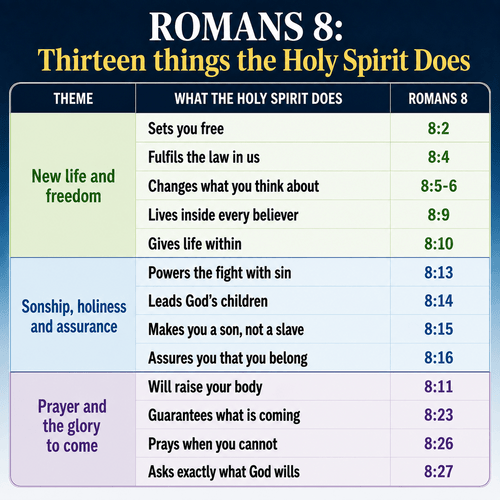
- Sanctification: He permanently indwells believers, guiding them into truth, empowering godly living, interceding in prayer, and cultivating Christlike character (John 14:26, Galatians 5:16, Romans 8:26-27).
When you consider the Spirit’s activity across creation, salvation, sanctification, and the very writing of Scripture, the pattern is unmistakable: this is not the résumé of a created being or an impersonal force. This is the activity of God Himself.
The Holy Spirit Is Identified as God Outright
Beyond attributes and works, Scripture in several places simply calls the Spirit God directly, with no ambiguity left for debate.
- Acts 5:3-4: Peter tells Ananias he has “lied to the Holy Spirit” — and in the very next breath says, “You have not lied to man but to God.” Peter equates lying to the Spirit with lying to God, in the same sentence.
- 1 Corinthians 3:16: Believers’ bodies are called the “temple of God” specifically because “the Spirit of God dwells in you” — the Spirit’s indwelling is what makes a person God’s temple.
- 2 Corinthians 3:17-18: “Now the Lord is the Spirit, and where the Spirit of the Lord is, there is freedom” — Paul directly equates “the Lord” with “the Spirit.”
The Holy Spirit Is a Person, Not a Force
This is precisely the point Jehovah’s Witnesses and similar groups deny, so it’s worth addressing directly rather than assuming it. Scripture consistently describes the Spirit with the marks of personhood, not the characteristics of an impersonal energy:
- He speaks. “The Spirit expressly says…” (1 Timothy 4:1). Forces don’t speak; persons do.
- He teaches and reminds. “The Helper, the Holy Spirit… will teach you all things” (John 14:26) — teaching requires a mind and will, not mere energy.
- He intercedes. “The Spirit himself intercedes for us with groanings too deep for words” (Romans 8:26) — intercession is a personal, relational act.
- He can be grieved, lied to, and blasphemed. “Do not grieve the Holy Spirit of God” (Ephesians 4:30). You cannot grieve electricity. Grief is an emotional, personal response.
- He uses personal pronouns. Jesus refers to the Spirit as “he,” not “it”: “When the Spirit of truth comes, he will guide you into all truth… he will not speak on his own authority” (John 16:13) — striking grammatically, since the Greek word for “spirit” (pneuma) is neuter, yet John repeatedly uses the masculine pronoun for Him anyway.
Deity and personhood are two distinct questions this article addresses together, but they aren’t identical. For a deeper treatment of the personhood question specifically, see our companion piece on whether the Holy Spirit is a person or just a power.
The Holy Spirit in the Trinity: Distinct Person, Same Essence
None of this means Christians worship three gods. The historic doctrine of the Trinity holds that God is one in essence and three in person — Father, Son, and Holy Spirit are each fully God, distinct from one another, yet one God, not three separate beings or three modes of one person. The baptismal formula itself assumes this: “baptising them in the name of the Father and of the Son and of the Holy Spirit” (Matthew 28:19) — one name, three persons named within it. The Spirit’s deity isn’t an isolated doctrine; it’s a load-bearing wall in the doctrine of the Trinity as a whole.
Why Denying the Spirit’s Deity Has Real Consequences
| VIEW | WHAT IT CLAIMS | WHERE IT FALLS SHORT |
|---|---|---|
| Jehovah’s Witness (“active force”) | The Spirit is God’s impersonal power, not a person or fully God | Cannot account for the Spirit speaking, teaching, interceding, being grieved, or being called God directly (Acts 5:3-4) |
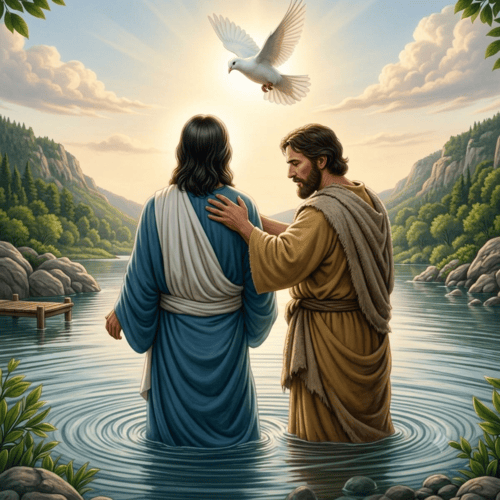
| Oneness Pentecostalism (modalism) | Father, Son, and Spirit are one person appearing in three modes | Cannot account for passages where Father, Son, and Spirit are simultaneously present and distinct (e.g. Jesus’ baptism, Matthew 3:16-17) |
| Historic Christian orthodoxy | The Spirit is a distinct person, fully God, co-equal with Father and Son | Accounts for the full range of biblical data without needing to explain away any of it |
How Should We Relate to the Holy Spirit?
While the Father and Son rightly receive worship and adoration, the Holy Spirit often gets far less attention from believers. He deserves co-equal honour as the third person of the Triune Godhead — not treated as an impersonal add-on to the “real” persons of the Trinity.
- Don’t grieve Him through unconfessed sin or resistance to His conviction (Ephesians 4:30).
- Walk by Him rather than merely believing facts about Him (Galatians 5:16, 25).
- Thank and glorify Him for His ongoing work in your life and in the world — ask yourself honestly when you last did.
- Depend on His illumination when reading Scripture, since He is its divine author (1 Corinthians 2:10-16).
Conclusion
The biblical evidence is not scattered or ambiguous — it converges from multiple independent directions on the same conclusion. The Spirit possesses attributes only God has. He performs works only God can do. Scripture calls Him God outright, more than once. And He exhibits every mark of personhood the Bible uses to describe the Father and the Son. From eternity past to the creation of the universe to the inspiration of Scripture itself, the Holy Spirit has acted as God, in concert with the Father and the Son. The inescapable conclusion: the Holy Spirit is fully God, worthy of our worship, our obedience, and — too often neglected — our gratitude.
Tough Questions, Honest Answers
Isn’t the Holy Spirit just God’s power or force, not a distinct person?
This is the Jehovah’s Witness position, and Scripture directly contradicts it. Forces don’t speak (1 Timothy 4:1), teach (John 14:26), intercede (Romans 8:26), or get grieved (Ephesians 4:30) — all of which the Bible explicitly says the Spirit does. Personal actions require a personal agent, not an impersonal energy.
Doesn’t the Bible sometimes call the Holy Spirit “it,” suggesting He’s a force rather than a “he”?
Some older or looser translations render “spirit” with “it” because the underlying Greek word (pneuma) is grammatically neuter — but grammatical gender isn’t the same as personal identity. Tellingly, John’s Gospel repeatedly breaks this grammatical pattern on purpose, using the masculine pronoun “he” for the Spirit even though Greek grammar would default to “it” (John 16:13-14). The original text itself resists the impersonal reading.
What’s the difference between the Spirit’s deity and His personhood — aren’t they the same question?
They’re related but distinct. Deity asks: is the Spirit fully God, not a created or lesser being? Personhood asks: is the Spirit a “who,” with mind, will, and emotions, not merely an impersonal attribute or force of God? Scripture answers yes to both, but they’re established by different lines of evidence — attributes and explicit “God” statements for deity; speech, intercession, and grief for personhood.
Why does the Holy Spirit get discussed less than the Father or the Son?
Partly because the Spirit’s characteristic ministry is to point away from Himself and toward Christ (John 16:14 — “He will glorify me”). That’s a feature of His role, not evidence of lesser status. It does mean believers must be intentional about giving Him the honour Scripture assigns Him, rather than assuming His self-effacing ministry means He’s less important.
Can I pray directly to the Holy Spirit, or should prayer only go to the Father?
The New Testament’s normal pattern is prayer to the Father, through the Son, by the Spirit’s help (Romans 8:26-27, Ephesians 2:18) — the Spirit is typically the one enabling prayer rather than its primary addressee. That said, since the Spirit is fully God, direct address to Him isn’t improper; it’s simply not the New Testament’s most common pattern, and following Scripture’s own pattern is usually wisest.
What is blasphemy against the Holy Spirit, and does it prove He’s God?
Jesus warns that blasphemy against the Holy Spirit is uniquely unforgivable (Matthew 12:31-32) — a gravity assigned to no other sin in Scripture. Assigning that singular weight to sinning against the Spirit specifically only makes sense if the Spirit is fully God; blaspheming a mere force or a created being wouldn’t carry that unique, unpardonable seriousness.
Related Reads:
- Is the Holy Spirit a Person or Just a Power? What the Bible Actually Says
- The Mystery of the Trinity: A Cornerstone of Christian Belief
- Trinity: Impact of the Doctrine on Christian Life
- The Nature of God in Christian Doctrine: Attributes of Perfection
- Is Jesus God? What the Bible Says About the Deity of Christ