Three persons. One God. Say it slowly and it still sounds like a contradiction—the kind of claim that collapses the moment we examine it. Sceptics have said as much for 2000 years. Plenty of sincere believers privately admit they’ve never quite understood what they’re confessing when they recite it. Yet the doctrine of the Trinity isn’t a mathematical error the church has somehow failed to notice. It’s the church’s best attempt to say, without flattening it, exactly what Scripture reveals about who God is.
This isn’t a peripheral curiosity for theologians to argue over while everyone else gets on with life. Prayer, worship, salvation, and the very meaning of love within God’s own being all rest on getting this right. So let’s set out precisely what the doctrine claims, where it comes from in Scripture, how the church arrived at its classic formulation, and where the popular illustrations—useful as they are—eventually break down.
The short answer
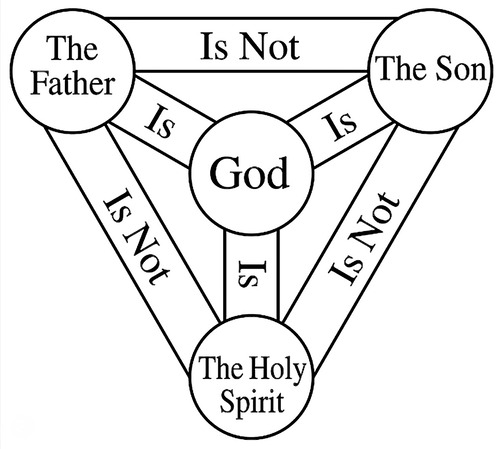
The Trinity is the Christian doctrine that God is one in essence (one Being) and three in person (Father, Son, and Holy Spirit)—not three gods, not one person wearing three masks, but one God eternally existing as three distinct, co-equal, co-eternal Persons.
The Precise Formulation: One Essence, Three Persons
Confusion about the Trinity almost always starts with a blurred distinction between two different words: essence and person. Get this distinction clear and most objections lose their force before they start.
- One essence (Greek: ousia). God is one in His fundamental being, nature, and substance. This isn’t a divine committee of three separate beings; We have one indivisible God.
- Three persons (Greek: hypostases). Within that one essence, there are three distinct centres of consciousness, will, and relationship: the Father, the Son, and the Holy Spirit.
The Father is not the Son; the Son is not the Spirit; the Spirit is not the Father. Yet each is fully, completely, and equally God—not a third each, not a diminished portion, but the whole divine essence possessed by each Person in relation to the others. This formulation deliberately steers between two ancient ditches, both of which the church has always rejected as heresy:
| ERROR | WHAT IT CLAIMS | WHY IT FAILS |
|---|---|---|
| Tritheism | Three separate gods loosely co-operating | Denies the biblical insistence that God is one (Deuteronomy 6:4) |
| Modalism (Sabellianism) | One Person wearing three different “masks” or modes at different times | Cannot explain passages where Father, Son, and Spirit are simultaneously present and distinct (e.g. Jesus’ baptism) |
The Trinity is neither of these. It’s the claim that unity and plurality are both true of God at the same time, but in different respects—one what, three whos.
Is the Trinity Actually in the Bible?
The word “Trinity” never appears in Scripture—critics are right about that much. But the word “Bible” doesn’t appear in the Bible either, and nobody thinks that’s a problem. What matters is whether the concept is there, and on that score the evidence is substantial.
The Shema and composite unity
Israel’s great confession is Shema Yisrael, Adonai Eloheinu, Adonai echad—”Hear, O Israel: the Lord our God, the Lord is one” (Deuteronomy 6:4). Sceptics sometimes treat this as flatly incompatible with the Trinity, but the Hebrew word for “one” here, echad, is significant: it’s the same word used in Genesis 2:24 for a husband and wife becoming “one flesh”—a composite, relational unity, not the word yachid, which denotes an absolute, indivisible singularity and is conspicuously absent from the Shema. The Trinity doesn’t violate Jewish monotheism. It’s a claim about what kind of “one” God’s oneness actually is.
The plural hints of Genesis
“Let us make man in our image, after our likeness” (Genesis 1:26). Historic Christian interpretation has long heard in this plural an early, veiled glimpse of plurality within the Godhead—a conversation among Father, Son, and Spirit at the dawn of creation, not a hint of many gods.
The New Testament makes it explicit
- The baptismal formula (Matthew 28:19). Jesus commands baptism “in the name”—singular—”of the Father and of the Son and of the Holy Spirit.” One name, three Persons named alongside it as equals.
- The apostolic benediction (2 Corinthians 13:14). Paul closes with “the grace of the Lord Jesus Christ, and the love of God, and the fellowship of the Holy Spirit be with you all”—a three-fold blessing that only makes sense if all three are fully God.
- John’s prologue (John 1:1–2). “The Word was with God, and the Word was God”—the Son is simultaneously distinct from the Father (“with God”) and identical in essence (“was God”).
- Peter and Ananias (Acts 5:3–4). Peter tells Ananias he has lied “to the Holy Spirit” in one breath and “to God” in the next—used interchangeably, because they’re the same.
- The baptism of Jesus (Matthew 3:16–17). All three Persons appear together and distinctly in a single scene: the Son is baptised, the Spirit descends like a dove, and the Father speaks from heaven. Modalism cannot survive this passage—three Persons cannot be three sequential masks if all three show up in the same moment.
How the Church Arrived at the Doctrine: A Brief History
The church didn’t invent the Trinity in the 4th century. It was only forced to define the doctrine with precision, in response to a serious challenge to what believers had confessed from the beginning.
In the early 300s, an Alexandrian presbyter named Arius began teaching the Son was a created being—the highest of creatures, but not eternally, fully God. His slogan was blunt: “There was a time when he was not.” The claim spread fast enough to threaten to split the church, and in AD 325 the Emperor Constantine convened bishops from across the Christian world at the Council of Nicaea to settle it.
The Council rejected Arius decisively. Drawing on the biblical texts above, it affirmed the Son is homoousios—”of the same essence”—as the Father, not a lesser, created being. Young deacon Athanasius became the doctrine’s most tireless defender, at one point standing so nearly alone against the political tide that history remembers the moment as Athanasius contra mundum—”Athanasius against the world.” The Council of Constantinople in AD 381 completed the picture, affirming the full deity of the Holy Spirit alongside the Father and the Son. Together these councils produced the Nicene Creed, still recited in churches today, as the church’s settled, careful answer to a question it could no longer leave imprecise.
Classical Analogies—and Where They Break Down
Teachers have reached for illustrations for as long as the doctrine has been taught, and it’s worth knowing the best of them, along with their limits, so you’re not caught off guard when they fail.
| ANALOGY | THE POINT IT MAKES | WHERE IT BREAKS DOWN |
|---|---|---|
| Augustine’s memory, understanding, and will | Three distinct faculties within one unified mind | These are functions of one person, not three distinct persons—edges toward modalism |
| The spring, the brook, and the river | One substance (water) in three forms or stages | Suggests sequence rather than simultaneous, eternal co-existence—also edges toward modalism |
| Three-leaf clover (or an egg: shell, white, yolk) | Three parts making up one whole | Each leaf is only a third of the clover; each Person, by contrast, is fully and completely God—edges toward tritheism |
No creaturely analogy survives contact with the doctrine for long, and that’s not a failure of the doctrine—it’s exactly what we should expect. God is not a kind of thing we already have a category for. Gregory of Nazianzus, one of the great fourth-century defenders of the doctrine, captured the honest posture: he could not think of the One without at once being surrounded by the splendour of the Three, nor discern the Three without being carried back to the One. Analogies can gesture towards the mystery. They cannot resolve it, and shouldn’t be pressed further than a passing illustration in a sermon.
Common Heresies Still Circulating Today
The ancient errors never really disappeared—they just changed names and found new audiences. Recognising them helps you see what’s actually at stake in the doctrine.
- Jehovah’s Witnesses (a form of Arianism). They teach Jesus is a created being, “a god” but not fully God, echoing the very position Nicaea rejected in 325.
- Oneness Pentecostalism (a form of modalism). These groups teach Father, Son, and Spirit are one Person appearing in three different modes at different times, denying they are simultaneously distinct.
- “Jesus-only” movements. Often overlapping with Oneness theology, these collapse the Father and Spirit into the Son entirely, losing the relational distinctness Scripture insists on—not least at Jesus’ own baptism.
What all three share is a discomfort with holding unity and distinction together without collapsing one into the other. The historic doctrine’s whole achievement is refusing that collapse in either direction.
Why the Trinity Isn’t Just an Abstract Puzzle
It would be easy to treat all this as a technical dispute for theologians and leave it there. But the doctrine reaches directly into ordinary Christian practice.
- Prayer is Trinitarian. Scripture’s pattern is prayer to the Father, through the Son, in the power of the Spirit (Ephesians 2:18)—not three separate deities to petition, but one God approached in the fullness of how He has revealed Himself.
- Salvation is Trinitarian. The Father elects, the Son redeems by His death and resurrection, and the Spirit applies that redemption by regenerating and indwelling the believer. Strip out any one Person and the gospel itself unravels.
- Worship is Trinitarian. The apostolic benediction, the baptismal formula, and the church’s ancient creeds and hymns all address, and are addressed by, all three Persons—because anything less than full worship of all three would fall short of worshipping God as He actually is.
- Love is eternally who God is, not just what He does. Because God has always existed in loving relationship between Father, Son, and Spirit, Scripture’s claim that “God is love” (1 John 4:8) isn’t a description of something God started doing at creation. It describes what God has eternally been within Himself.
That last point is where the doctrine turns from a puzzle into good news. A solitary, non-relational God could not have been loving before He made anything to love. The triune God has never been alone, and never needed creation to have someone to love. When Scripture says God so loved the world that He gave His Son, it’s describing an overflow of a love that was already, eternally, complete.
Living with Mystery
The Trinity will never be fully comprehended by a finite mind—and that’s appropriate, not embarrassing. A God small enough for us to grasp entirely wouldn’t be worth worshipping. The doctrine isn’t a contradiction the church has failed to iron out; it’s the most careful, Scripture-saturated answer the church has ever given to the question of who God actually is. Three Persons. One God. Not a problem to be solved, but a mystery worth adoring.
Tough Questions, Honest Answers
Is the word “Trinity” in the Bible?
No, the word itself doesn’t appear—it was coined later as a theological shorthand. But the concept is woven throughout Scripture: one God, three Persons distinctly named and active, most explicitly at Jesus’ baptism and in the baptismal formula of Matthew 28:19. The absence of a word doesn’t mean the absence of the idea it describes.
Doesn’t the Trinity mean Christians believe in three gods?
No—this is precisely what the doctrine denies. Trinitarian Christianity is monotheism: one God, one essence, one Being. The three Persons are not three separate gods but three distinct, co-equal, co-eternal ways the one God eternally exists. Tritheism is a heresy the church has rejected since its earliest centuries.
How can God be three in one without being a contradiction?
It would be a contradiction if the Trinity claimed God is three in the same sense He is one. It doesn’t. God is one in essence (what He is) and three in person (who exists within that essence). Different senses, not the same sense—which is the difference between a contradiction and a mystery.
Did the Council of Nicaea invent the Trinity?
No. Nicaea (325) didn’t invent the doctrine; it defended what the church had already confessed against Arius’s claim that the Son was a created being. The Council gave the existing belief precise, careful vocabulary in response to a direct challenge—it didn’t create the belief from nothing.
Is the Holy Spirit really God, or just a force?
Scripture treats the Spirit as a Person, not a force—He can be lied to (Acts 5:3), grieved (Ephesians 4:30), and He intercedes and wills (Romans 8:26–27)—and as fully God, sharing the Father and Son’s name in the baptismal formula. We explore this fully in Is the Holy Spirit God?
Are Jehovah’s Witnesses right that Jesus is a lesser, created god?
No. This view, technically a form of Arianism, was directly examined and rejected at the Council of Nicaea in 325 on the basis of texts like John 1:1 and Colossians 1:15–17, which describe the Son as eternally sharing the Father’s essence and as the active Creator of all things, not a created being Himself.
Why does it matter practically whether the Trinity is true?
Because prayer, worship, and salvation are all structured around the three Persons. If the Son isn’t fully God, His death can’t accomplish an infinite atonement. If the Spirit isn’t fully God, He can’t indwell and transform believers as Scripture claims. The doctrine isn’t abstract—it’s the framework the rest of Christian faith and practice depends on.
Related Reads
- Is the Holy Spirit God?
- Trinity: Impact of the Doctrine on Christian Life
- Trinity in the Old Testament: Hidden, Yet Always in Plain Sight
- 7 Analogies to Explain the Trinity: Which Ones Work Best?
- Defending the Trinity: Biblical Answers to Common Objections
- Can You Be Christian But Reject the Trinity?
- Is Jesus Yahweh? Answering Unitarian Objections
- Social vs Classical Trinitarianism: Does God Have One Will or Three?
- The Filioque Clause: Why Reformed Circles Support the Addition