Ask most Christians when the church began and the answer comes back without a pause: At Pentecost. It’s an easy answer to love. Acts 2 gives us rushing wind, tongues of fire, 3000 converts in a single afternoon, and the sudden, public arrival of the Holy Spirit. Many congregations even mark the day as the church’s birthday. The scene is so vivid it feels settled.
Yet the moment we look closely, the question grows teeth. Stephen, standing before the Sanhedrin, calls Israel gathered at Sinai the congregation in the wilderness (Acts 7:38)—and the word he uses is ekklesia, the very word the New Testament translates as “church.” So which is it? Did the church come into being in an upper room around AD 30, or has God always had one gathered people, stretching back through Abraham to the gates of Eden?
This is no trivia question. How we answer it quietly shapes how we read our Bibles, how we understand Israel, and how we locate ourselves in the long story of what God has been doing. Let’s lay out both readings fairly, and weigh them against Scripture, before we explain why one of them holds together more convincingly than the other.
The short answer
The answer depends on what you mean by “church.” Dispensational theology insists the church began at Pentecost (Acts 2) as a new, Spirit-baptised body distinct from Israel. Covenant theology holds the church is the one people of God assembled in every age—present in seed form from the Old Testament and brought to maturity at Pentecost.
The Pentecost View: A New Body Born in Acts 2
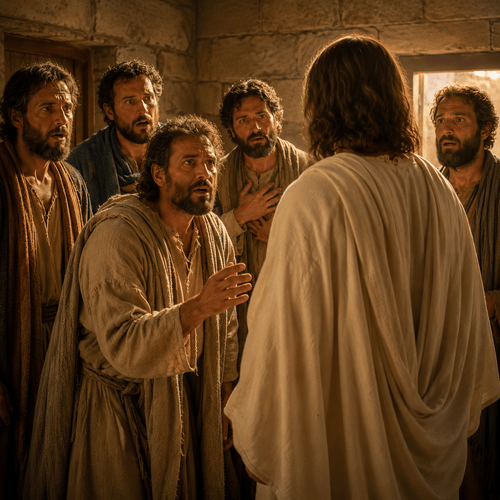
The first view takes Pentecost as a genuine beginning—not a milestone in an older story, but the opening page of something that didn’t exist before. On this reading, the church is a distinct entity with a distinct calling, and Acts 2 is its first breath.
The descent of the Spirit
The heart of this view is what happens to the Spirit in Acts 2. Before Pentecost, the Spirit came upon particular people for particular tasks—Bezalel to craft the tabernacle, Samson for strength, the prophets for speech. After Pentecost, the Spirit indwells every believer permanently. Paul ties this directly to the church’s existence: For in one Spirit we were all baptised into one body (1 Corinthians 12:13). If the body of Christ is formed by Spirit-baptism, and Spirit-baptism begins at Pentecost, the church begins at Pentecost.
“I will build my church”
A second pillar is the tense of a single verb. In Matthew 16:18 Jesus says, I will build my church. Future tense, the argument runs: at the moment Jesus spoke, the church was still ahead of Him, not behind or around Him. Something was coming that hadn’t yet arrived.
The dispensational framework
These threads are woven together most tightly in dispensational theology, systematised in the 20th century by writers such as Lewis Sperry Chafer and Charles Ryrie. Its defining instinct is to keep Israel and the church clearly apart—two peoples with two distinct programmes in God’s plan. Paul’s language of mystery supplies the key text: the union of Jew and Gentile in one body was hidden for ages and only now revealed (Ephesians 3:3–6). A mystery newly disclosed, on this reading, describes something new, not something old brought to light. Contemporary defenders such as Michael Vlach argue the case with care, insisting the distinction between Israel and the church isn’t incidental but structural to the whole biblical storyline.
The Pentecost view in one breath
The church is the Spirit-baptised body of Christ. That baptism began at Pentecost. Israel and the church are distinct. Therefore the church has a birthday—and it’s Acts 2.
The Continuity View: God’s Assembly Across the Ages
The second view starts further back. It argues God has always been gathering a people to Himself, and that this single assembly—not a brand-new institution—is what the New Testament calls the church. Pentecost is enormous, but it’s a transformation of something already alive, not the creation of something from scratch.
Qahal and ekklēsia: one word, two Testaments
The linguistic bridge is striking. The Old Testament repeatedly describes Israel as the qahal—the assembly or congregation of the Lord. When Jewish scholars translated the Hebrew Scriptures into Greek (the Septuagint) a couple of centuries before Christ, they rendered qahal again and again as ekklēsia. So when the New Testament writers reach for ekklēsia to name the people of God, they’re not coining a term. They’re picking up a word that already carried centuries of covenant weight.
This is more than a curiosity of translation. When a first-century Jewish believer heard the word ekklēsia, it didn’t fall on empty ears. It rang with the memory of Israel gathered before the Lord at the mountain, at the tabernacle, at the temple. The word arrived already furnished with a history—and the New Testament writers chose it deliberately.
The congregation in the wilderness
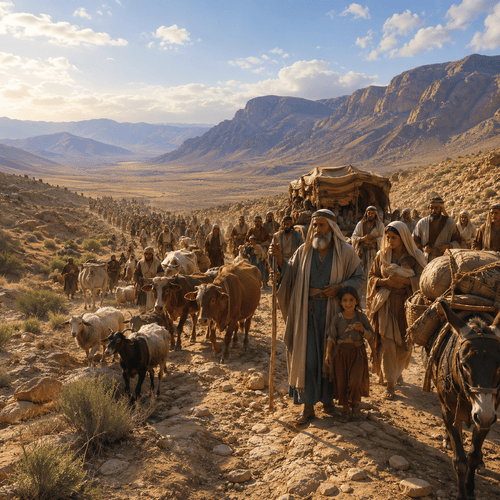
This is where Stephen’s speech becomes decisive. Describing Moses among the people of God at Sinai, he calls them the congregation in the wilderness (Acts 7:38)—tē ekklēsia in Greek. A Spirit-filled preacher, in the very book that records Pentecost, applies the word “church” to Israel in the desert. For the continuity view, that’s no accident of vocabulary; it’s a theological signpost.
One covenant people
Behind the word study lies a larger claim, developed by theologians such as Geerhardus Vos, Louis Berkhof, and Edmund Clowney: God relates to His people through a single, unfolding covenant of grace. The membership expands and the administration changes, but the people are one. Paul makes the point with a botanical picture in Romans 11—Gentile believers are wild branches grafted in among the natural branches of one olive tree. Not a second tree planted alongside the first, but new branches drawing life from an old root.
Paul presses it further in Galatians: if you are Christ’s, then you are Abraham’s offspring, heirs according to promise (Galatians 3:29). And in Ephesians the two groups become one new man in place of the two, built on the foundation of the apostles and prophets (Ephesians 2:15, 20)—the prophets standing squarely inside the household.
The continuity view in one breath
The church is the covenant people of God, assembled in every age. Israel was the church in its infancy; the New Testament church is that same people come of age—now international, indwelt, and full-grown.
The Two Views Side by Side
The disagreement is easiest to see when the two readings are set against each other on the points that matter most.
| DIMENSION | THE PENTECOST VIEW | THE CONTINUITY VIEW |
|---|---|---|
| Guiding system | Dispensational / new-covenant theology | Covenant theology |
| Where it begins | Acts 2, the descent of the Spirit | The Old Testament assembly of God’s people |
| What the church is | A Spirit-baptised body distinct from Israel | The one redeemed people of God across the ages |
| Anchor text | Acts 2; Matthew 16:18 (“I will build”) | Acts 7:38 (“the congregation in the wilderness”) |
| Israel and the church | Two peoples, two programmes | One people, one olive tree (Romans 11) |
| Role of Pentecost | The birthday of a brand-new entity | The coming-of-age of an existing people |
Weighing the Two Readings
A fair hearing means granting the Pentecost view its real strengths before asking whether it accounts for all the evidence.
Its strengths are genuine. Something did change decisively at Pentecost. The permanent, universal indwelling of the Spirit was new. The public ingathering of the nations was new. The future tense of I will build is really there in Matthew 16. Any honest account has to reckon with a Bible that treats Acts 2 as a hinge of history, not a footnote.
The pressure comes when we ask what the New Testament writers themselves do with the word “church” and the people of God. Three observations weigh heavily:
- Stephen’s vocabulary. Under the Spirit’s inspiration, in the book of Pentecost itself, he names Israel at Sinai the ekklēsia. It’s hard to say the word “church” could not apply before Acts 2 when Acts 7 applies it.
- Paul’s olive tree. Romans 11 gives us one tree with old and new branches, not two trees. The imagery assumes a single continuous people into which Gentiles are added.
- The one foundation. Ephesians 2 builds the church on the apostles and the prophets together and calls Jew and Gentile one new man—this is language of fusion and fulfilment, rather than of replacement.
Read together, these press towards a conclusion that actually honours both instincts. The people of God are one across the Testaments—that’s continuity. And Pentecost is a real epochal turn within that story—that’s the newness the first view rightly guards. The most satisfying reading doesn’t force a choice between them. As O Palmer Robertson and Herman Bavinck argue in different ways, the church is the age-old assembly of God’s people entering a new and better administration: the same people, now Spirit-filled, unshackled from the old boundary markers, and sent to the ends of the earth.
Where this lands
Pentecost is best understood not as the birth of the people of God but as their coming of age. The infant of the Old Testament grows up in Acts 2—receiving the Spirit in fullness and stepping out into the whole world. One people; a decisively new season.
Why the Answer Matters
This can feel like a specialist’s quarrel. It’s not. The view we hold reaches straight into ordinary Christian life.
- How we read the Old Testament. If Israel and the church are one people, the Psalms, the promises, and the prophets are our family story—not a filing cabinet of material meant for someone else. We read them as belonging to us in Christ.
- How we understand Israel. Continuity guards against the ancient error of imagining the church simply cancelled and replaced Israel. The picture is grafting and fulfilment, which keeps both gratitude and humility in view (Romans 11:18).
- How we locate ourselves. We’re not latecomers to a recent movement. We stand in a line of faith that runs through Abraham, Moses, and David—members of the same household of God, saved by the same grace, awaiting the same city.
- How we treasure Pentecost. Seeing the continuity doesn’t shrink Acts 2; it magnifies it. The day the ancient people of God received the Spirit in fullness and turned to face the nations is worth every bit of wonder the church gives it.
One People, Many Seasons
So, when did the church begin? If “church” means the Spirit-baptised, worldwide, Spirit-indwelt community sent to every nation, Pentecost is its true dawn. If “church” means the assembled people God has been gathering to Himself since the beginning, its roots clearly run back through Sinai and Abraham to the first promise spoken in a ruined garden.
The weight of the New Testament’s own language points to a single people of God, carried through every age of redemption and brought to fullness when the Spirit fell. Israel in its infancy; the church come of age. Different seasons of one unbroken story—and the same God faithfully keeping the same promise, from the garden to the ends of the earth.
Tough Questions, Honest Answers
Did the church exist before Pentecost?
In one sense, yes. The New Testament applies the word ekklēsia (“church”) to Israel gathered at Sinai (Acts 7:38), and traces the people of God back to Abraham (Galatians 3:29). What did not exist before Pentecost was the Spirit-indwelt, international body in its full New Testament form. Both things are true: an ancient people, and a genuinely new season for them in Acts 2.
What is the difference between Israel and the church?
This is the fault line between the two views. Dispensational theology keeps them distinct—two peoples with two programmes. Covenant theology sees one people of God across both Testaments, with believing Israel and grafted-in Gentiles sharing a single root (Romans 11:17–24). How you answer this question largely determines how you answer the question of when the church began.
Doesn’t Matthew 16:18 prove the church started after Jesus spoke?
Jesus’ words I will build my church are future tense, and that genuinely supports the newness of what was coming. But “build” does not have to mean “create from nothing.” A builder can extend, enlarge, and complete a structure already begun. Read alongside Acts 7:38 and Romans 11, the verse fits comfortably with an existing people being brought to a new stage rather than an entirely new entity appearing for the first time.
What does ekklēsia actually mean, and why does it matter?
Ekklēsia simply means “assembly” or “gathering.” It matters because the Greek Old Testament (the Septuagint) uses it to translate the Hebrew qahal, the congregation of Israel. So the New Testament’s word for “church” already carried an Old Testament history. The vocabulary itself hints at continuity between Israel’s assembly and the church.
Is the church the “new Israel”?
“Replacement” language can mislead, and Paul warns against it directly: the grafted branches must not be arrogant toward the branches (Romans 11:18). The healthier picture is expansion and fulfilment—one olive tree with new branches added, not a second tree replacing the first. The church does not cancel Israel; it is the flourishing, international form of the one people of God.
If the church already existed, what actually happened at Pentecost?
A great deal. The Spirit came to indwell every believer permanently rather than resting on select individuals for specific tasks. The gospel broke past the boundaries of one nation and turned towards the whole world. The people of God stepped into adulthood, empowered and commissioned. Seeing continuity does not shrink Pentecost; it shows what Pentecost was the fulfilment of.
Why does this debate matter for how I read my Bible?
Because it sets the default lens for the whole Old Testament. If Israel and the church are one people, then the covenants, promises, Psalms, and prophets are addressed to the family you belong to in Christ, and you read them as yours. If they are two peoples, you read much of the Old Testament as primarily someone else’s mail. Few interpretive decisions shape day-to-day Bible reading more than this one.