
Matthew 16:19 and the authority of binding and loosing
In the closing years of the 8th century BC, a palace official named Eliakim was handed a key to wear on his shoulder. It wasn’t a house key. It was the token of an entire administration—the right to open and shut on the king’s behalf. Seven centuries later, on a road near Caesarea Philippi, Jesus reached for that same image and pressed it into the hands of a fisherman.
“I will give you the keys of the kingdom of heaven, and whatever you bind on earth shall be bound in heaven, and whatever you loose on earth shall be loosed in heaven.” (Matthew 16:19)
Few verses have been more badly read. Some picture Peter posted at heaven’s gate, deciding who is admitted after death. Others hear a licence to bind demons and loose blessings in prayer. Still others build the whole papacy on these words. Strip the caricatures away and something far weightier remains—a description of the ordinary authority Christ entrusted to His church, an authority our own congregation exercises every Lord’s Day. This is what the keys of the kingdom actually are.
The Moment Jesus Handed Over the Keys
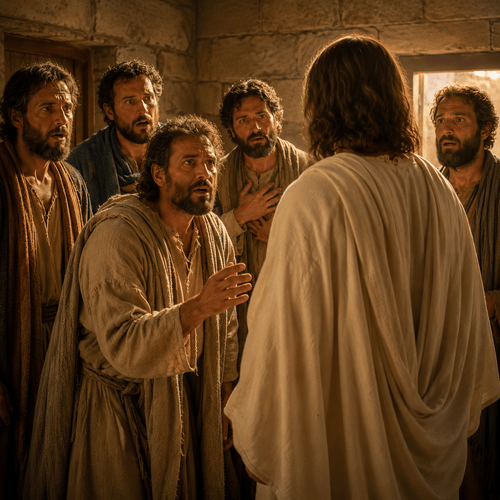
The keys aren’t a stray saying. They’re the third movement of a single scene. Jesus asks who people say He is, and Peter answers for them all:
“You are the Christ, the Son of the living God.” (Matthew 16:16)
Jesus blesses that confession, promises to build His church on the rock, and only then grants the keys. The order is everything. Peter receives them as the man who has just named Jesus rightly; he is given no authority that floats free of the gospel he has confessed. The moment he strays from that confession—as he later did, when Paul rebuked him to his face at Antioch for stepping out of line with the truth of the gospel (Galatians 2:11–14)—his authority strays with it. Whatever the keys are, they’re welded to the truth about Christ. Take away the confession and there’s no key left to turn.
A Key on the Steward’s Shoulder: Isaiah 22 Behind Matthew 16
To hear Matthew 16 the way its first readers did, go back to Isaiah 22. There the faithless steward Shebna is stripped of office and replaced by Eliakim, who receives a striking token of authority (Isaiah 22:22).
Note what the image says and what it doesn’t. A key belongs to a steward, not to the king. Eliakim opens and shuts, but always on behalf of the throne he serves. His authority is genuine, yet wholly derived; he administers a house he doesn’t own. That’s the picture Jesus deliberately summons. And lest anyone imagine the steward has become the sovereign, Revelation keeps the master-key firmly in Christ’s own hand (Revelation 3:7).
The King holds the key of David. The church merely carries the keys of the kingdom as His stewards. That single distinction will quietly settle most of the controversies that follow.
What “Binding and Loosing” Actually Meant
Modern ears hear “binding and loosing” and reach for chains, spirits, and warfare. First-century ears heard a courtroom. In the language of the rabbis, to bind and to loose were ordinary legal terms: to declare a thing forbidden or to declare it permitted, to place a person under the synagogue ban or to lift it. Jewish historian Flavius Josephus describes the Pharisees wielding exactly this power—banning and releasing, imposing and cancelling.
So the vocabulary is judicial and declarative, not magical. It’s the language of a court announcing a verdict, not of a soldier issuing commands. Binding forbids; loosing permits. Applied to the kingdom, the keys give the church authority to declare, on the ground of Christ’s word, who is bound and who is loosed—who stands outside and who is welcomed in. Three rival readings compete for the verse, and only one fits the evidence:
| READING | THE CLAIM | THE PROBLEM |
|---|---|---|
| Spiritual-warfare | The believer binds demons and looses blessings through prayer | The terms are legal (forbid/permit); loosing Satan makes no sense |
| Sacerdotal (Roman) | The church’s absolution itself creates the forgiveness it pronounces | It turns the steward into the King; heaven acts first, not the church |
| Declarative | The church declares, on the ground of the gospel, who is bound and loosed | None—it fits the idiom, the grammar, and the parallel in Matthew 18 |
Why the Grammar Changes Everything
Here’s the detail that overturns the popular readings, and it hides in a verb tense. The Greek behind “shall be bound…shall be loosed” is a future perfect—more precisely, “whatever you bind on earth shall have been bound in heaven.”
The sequence matters enormously. Jesus isn’t saying that earth binds and heaven then scrambles to comply. He’s saying that when the church binds or looses faithfully, heaven has already ruled. The church doesn’t instruct heaven; it announces heaven’s verdict. As New Testament scholar DA Carson observes, the disciple has no private pipeline forcing heaven’s hand—he binds and looses truly only so long as he holds to the gospel already revealed. The hinge of the whole passage is this:
- Heaven acts first. The verdict is God’s, settled in accordance with the gospel.
- The church acts second. It declares on earth what heaven has already determined.
- Faithfulness is the condition. The declaration carries authority only when it echoes the Word.
Get the order right and both errors fall away at once. The church cannot coerce heaven, and it cannot be ignored as though heaven had said nothing.
The Two Keys: Preaching and Discipline
If the keys are the church’s authority to open and shut the kingdom, how does it actually turn them? The historic answer names two keys, and the Heidelberg Catechism states it as plainly as anywhere:
“The preaching of the holy gospel and Christian discipline toward repentance. Both of them open the kingdom of heaven to believers and close it to unbelievers.” — Heidelberg Catechism, Q&A 83
| KEY | WHAT IT IS | HOW IT OPENS | HOW IT SHUTS |
|---|---|---|---|
| First key | The preaching of the gospel | Announces forgiveness to all who believe | Declares condemnation on all who persist in unbelief |
| Second key | Christian discipline | Restores the repentant to the Table and fellowship | Bars the impenitent until they turn back |
The first key is the preached gospel. Every time the good news is proclaimed, the door of the kingdom swings open to all who believe and closes against all who persist in unbelief. The preacher doesn’t decide who is saved; he announces the terms on which heaven has already decided. The second key is discipline. When a professing believer falls into serious, unrepentant sin, the church admonishes patiently; if there’s no repentance, the matter comes to the elders, and the impenitent are barred from the Lord’s Table until they return (Matthew 18:15–17; 1 Corinthians 5). The Westminster Confession gathers both into a single sentence:
“To these officers the keys of the kingdom of heaven are committed, by virtue whereof they have power respectively to retain and remit sins, to shut that kingdom against the impenitent, both by the Word and censures; and to open it unto penitent sinners, by the ministry of the gospel, and by absolution from censures, as occasion shall require.” — Westminster Confession of Faith, 30.2
Two keys, one aim: to make the visible church correspond, as closely as human discernment allows, to the company Christ is actually saving.
Ministerial, Not Magisterial
Everything now turns on a single distinction. The church’s authority is ministerial, not magisterial. A ministerial authority serves and announces a verdict that belongs to another. A magisterial authority creates or overrules the verdict itself. The church has the first and not the second.
The minister stands as Christ’s mouthpiece. When he declares forgiveness to the penitent and warning to the impenitent, the words carry real weight—yet he forgives nothing in himself, as though the power lay in his own person. This threads the needle between two ditches:
- The first ditch. The church’s word effects what it declares, so that absolution itself creates forgiveness. This makes the steward into the King.
- The second ditch. The church has no real authority at all, and the believer may disregard its faithful judgements. This throws the keys away entirely.
RC Sproul framed the balance well: one error says the church is always right no matter what it says; the other says the church has no authority over the believer. Scripture grants genuine authority—but only insofar as leaders faithfully apply the Word. Their word binds because, and only because, it is not their own.
Did Jesus Give the Keys Only to Peter?
At Caesarea Philippi Jesus speaks to Peter in the singular: “I will give you the keys.” The Roman Catholic tradition builds a great deal on that—Peter as the rock, the keys as his personal possession, and an unbroken line of successors carrying that authority to the bishops of Rome. The answer is that the text itself distributes the keys far more widely than the papal claim allows:
- Matthew 18:18 repeats the identical binding-and-loosing authority—but now to the whole gathered church, with a plural “you.” The keys are not Peter’s alone.
- John 20:23 extends the retaining and remitting of sins to all the disciples together.
- Silence on succession. Nothing in the passage speaks of transmitting the authority to any successor, in Rome or anywhere else.
Peter is genuinely first to turn the key—the representative and spokesman of the apostles, the foundation stones on whom Christ builds (Ephesians 2:20). But first among the apostles isn’t monarch over the church. Even where a reader grants Peter himself is the “rock,” that concedes nothing to papal supremacy, because the role is foundational and past, not perpetual and personal. The keys pass to the church, not to a throne.
| MATTHEW 16:19 | MATTHEW 18:18 | |
|---|---|---|
| Spoken to | Peter (singular “you”) | The gathered church (plural “you”) |
| Context | Peter’s confession of Christ | The steps of church discipline |
| Authority | Keys of the kingdom; binding and loosing | Binding and loosing |
| The point | Peter as representative, first to act | The whole church shares the authority |
Watch Peter Use the Keys
The book of Acts shows Peter turning the keys precisely as this reading predicts—always with the preached gospel, and always at heaven’s initiative rather than his own.
| OCCASION | REFERENCE | DOOR OPENED TO | HEAVEN’S INITIATIVE |
|---|---|---|---|
| Pentecost | Acts 2 | Jews and Jewish converts | The Spirit is poured out; Peter preaches Christ |
| Samaria | Acts 8 | The Samaritans | Peter and John confirm the Spirit’s coming |
| Cornelius | Acts 10 | The Gentiles | A vision from God directs Peter to go |
In each case the key is the gospel, and in each case Peter acts on a verdict already reached in heaven. At Pentecost he opens the door to the Jews; in Samaria he confirms its opening to the Samaritans; in the house of Cornelius, under direct instruction from God, he opens it to the Gentiles. He never originates the decision. He announces it.
What the Keys Are Not
A great deal of confusion gathers around these words, so it’s worth saying plainly what they don’t mean. The keys are not a technique for binding Satan and loosing blessings in prayer. That reading collides with the text at every point:
- The vocabulary is legal, not military. Binding and loosing meant forbidding and permitting, not tying up demons.
- Loosing would make no sense. On the warfare reading, loosing Satan is the last thing anyone would want.
- The contexts are ecclesial. Both occurrences sit in scenes of confession and church discipline, not exorcism.
- The clear interprets the disputed. Matthew 18:18, plainly about discipline, must govern how we read Matthew 16:19—not the reverse.
Scripture calls us to resist the devil, not to command him with a formula: “Submit yourselves therefore to God. Resist the devil, and he will flee from you” (James 4:7). The keys were never given to control the unseen realm. They were given to open and shut the kingdom through the Word.
The Weight of Ordinary Ministry
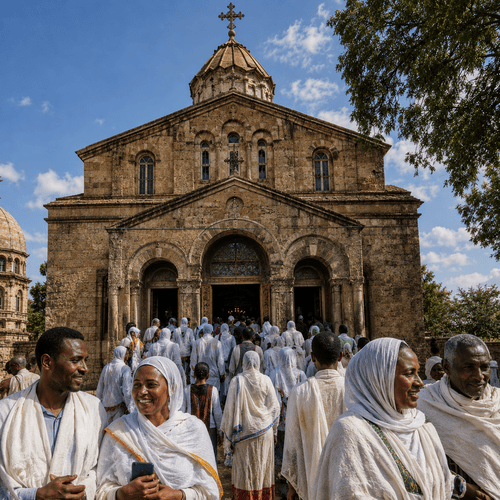
Return, at the end, to something very ordinary—a Lord’s Day morning in a faithful church. A sermon is preached, and the kingdom opens to everyone who believes. A member makes a vow and is received. The Table is fenced, and a wanderer, gently disciplined, comes home in tears. None of it looks like much. Heaven says otherwise.
This is the astonishment at the centre of the keys of the kingdom: the plain ministry of a local congregation, when it’s faithful to Christ’s word, carries the authority of heaven itself. That should make preaching feel weighty, membership meaningful, and discipline an act of love rather than cruelty. And it dignifies every believer, because the same gospel word you speak when you tell a friend about Jesus is a key turning in a lock. The steward doesn’t own the house. But the key on his shoulder is real, and the door truly opens.
Tough Questions, Honest Answers
Do the keys of the kingdom mean Peter was the first pope?
No. Two chapters later Jesus gives the same binding-and-loosing authority to the whole church in the plural (Matthew 18:18), and John 20:23 extends it to all the disciples. The passage says nothing about successors. Peter is first to use the keys as the apostles’ spokesman, but the authority passes to the church, not to a single office in Rome.
What is the difference between the keys in Matthew 16 and Matthew 18?
Very little in substance. Matthew 16:19 gives the keys to Peter as representative; Matthew 18:18 gives the identical authority to the gathered church in the context of discipline. Matthew 18, being the clearer passage, shows us how to read Matthew 16—the keys concern opening and shutting the kingdom, not private spiritual power.
Does “binding and loosing” mean I can bind Satan in prayer?
No. The terms were standard Jewish legal language for forbidding and permitting, not for tying up demons. Both occurrences sit in contexts of confession and church discipline, and loosing Satan would make no sense. Scripture calls us to resist the devil (James 4:7), not to command him with a formula.
Can the church actually forgive sins?
In a ministerial sense, yes; in a magisterial sense, no. The church announces the forgiveness God grants to all who believe and declares his warning to the impenitent. It has no power to forgive in itself, as though the pardon originated with the minister. It holds up heaven’s verdict; it does not manufacture it.
What are the two keys of the kingdom?
The preaching of the gospel and church discipline (Heidelberg Catechism, Q&A 83). The first opens the kingdom to all who believe and shuts it against unbelief; the second guards the Table and the fellowship, barring the unrepentant until they turn back. Both open the kingdom to believers and close it to unbelievers.
Does the church have authority over individual believers?
Yes, but a bounded authority. When the church faithfully applies Scripture, its judgements carry Christ’s own authority, and to ignore them is to ignore him. But that authority reaches only as far as its faithfulness to the Word. A church that departs from Scripture forfeits the very authority the keys confer.
If heaven decides first, does the church’s decision matter at all?
Yes. The grammar of Matthew 16:19—“shall have been bound in heaven”—means the church ratifies heaven’s verdict rather than creating it, but ratifying is real work. When the church binds and looses faithfully, it makes heaven’s decision visible and effective on earth. The steward doesn’t own the verdict, yet the door genuinely opens and shuts at his hand.