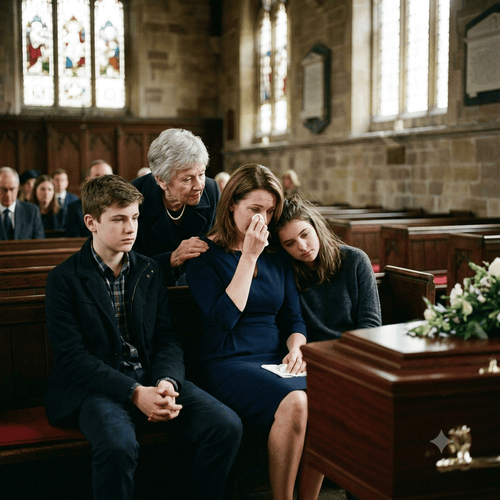
A young father dies in a road accident on his way home from work. At the funeral, a kind neighbour leans over to his wife and whispers, “Everything happens for a reason.”
Some people think she said something beautiful. Others think she said something cruel. But here’s the surprise: the Bible says something much bigger than she did. It doesn’t just say things happen for “a reason”. It says every single thing—every sparrow, every raindrop, every hospital report, every death—happens because a wise and loving God has a purpose for it.
That’s either the most comforting truth in the world or the most frightening one. In this article we shall see why it’s the first. And why that neighbour, though she was right, chose the wrong moment to say it.
Where Does the Saying Come From?
People say “everything happens for a reason” after a break-up, a lost job, a missed flight or a death. Usually they mean something like this: there’s a hidden plan, and one day the pain will make sense. But who made the plan? Here people give very different answers.
Who is behind “the reason”? Four common answers
| BELIEF | WHO OR WHAT IS IN CHARGE? | DOES IT KNOW YOU? | WHAT DOES IT OFFER YOU? |
|---|---|---|---|
| Karma | An impersonal law of cause and effect | No | You get what you deserve, now or in a future life |
| Fate | A fixed, blind destiny | No | Acceptance, because nothing can change |
| “The universe” | A vague force or energy | No | A feeling that things will work out |
| The God of the Bible | A personal, wise, all-powerful Father | Yes—by name | A purpose that ends in his glory and his people’s good |
Notice the difference. Karma, fate and “the universe” can give you a reason, but they cannot give you a Person. Only the Bible gives you both.
KEY TERM: PROVIDENCE
Providence comes from a Latin word meaning “to see ahead” or “to provide”. Christians use it for God’s constant care and control over everything he has made.
God did not wind up the world like a clock and walk away. He “upholds the universe by the word of his power” (Hebrews 1:3), and he steers it towards the end he has chosen.
What the Bible Says: God Rules over All Things
The Bible is not shy about this. It does not say God controls the big things and leaves the small things to chance. It says he rules over all things. Look at how wide this reaches:
- The whole universe. “Our God is in the heavens; he does all that he pleases” (Psalm 115:3).
- All of history. God says, “My counsel shall stand, and I will accomplish all my purpose” (Isaiah 46:10).
- Things that look random. “The lot is cast into the lap, but its every decision is from the LORD” (Proverbs 16:33). Casting lots was like rolling dice.
- The smallest creatures. Not one sparrow “will fall to the ground apart from your Father” (Matthew 10:29).
- Human plans. “The heart of man plans his way, but the LORD establishes his steps” (Proverbs 16:9).
- Hard times as well as good. “Is it not from the mouth of the Most High that good and bad come?” (Lamentations 3:38).
- Everything, with no exceptions. God “works all things according to the counsel of his will” (Ephesians 1:11).
The word “all” in Ephesians 1:11 is small but strong. Paul does not say “most things” or “the important things”. He says all things. The Heidelberg Catechism, written in 1563, put it in words that Christians have loved for over 450 years:
“…herbs and grass, rain and drought, fruitful and barren years, meat and drink, health and sickness, riches and poverty, yea, and all things come, not by chance, but by his fatherly hand.”
Heidelberg Catechism, Q. 27
Why does this matter so much? R. C. Sproul gave a famous answer. He said that if there is one single molecule in the universe running loose, outside God’s control, then we have no guarantee that God will keep even one of his promises. A God who controls almost everything cannot promise you anything for certain.
KEY TERM: SOVEREIGNTY
To say God is sovereign means he is the King who rules over everything. Nothing is outside his power, nothing takes him by surprise, and nothing can stop his plan.
Joseph’s Story: Evil Intended, Good Ordained
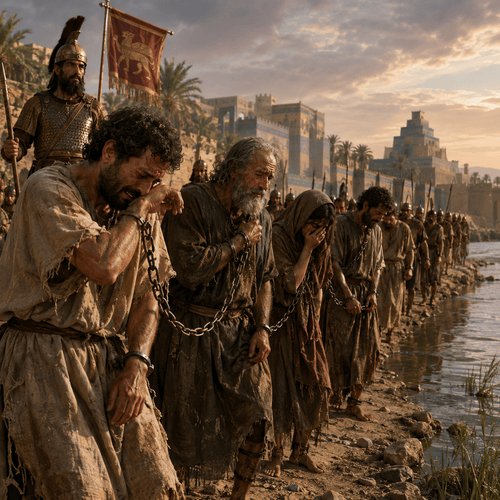
The clearest picture in the Bible of “everything happens for a reason” is the life of Joseph (Genesis 37–50). It is best read as a timeline, because for years nothing seemed to make sense.
Timeline: 13 Years of Pain
- Age 17 (Genesis 37): Joseph’s jealous brothers throw him into a pit and then sell him as a slave.
- A slave in Egypt (Genesis 39): He serves his master Potiphar faithfully, but Potiphar’s wife tells a lie about him. He is thrown into prison.
- In prison (Genesis 40–41): He helps the king’s cupbearer, who promises to remember him—then forgets him for two whole years.
- Age 30 (Genesis 41): Pharaoh suddenly makes Joseph ruler over Egypt. For seven years he stores up grain.
- The famine (Genesis 42–45): His hungry brothers come to Egypt to buy food. Joseph tells them, “God sent me before you to preserve life” (Genesis 45:5).
- After his father dies (Genesis 50): Joseph speaks the words that explain the whole story.
“As for you, you meant evil against me, but God meant it for good, to bring it about that many people should be kept alive, as they are today.”
Genesis 50:20
There is one event—Joseph being sold—but two purposes behind it.
One event, two purposes: Genesis 50:20
| QUESTION | THE BROTHERS | GOD |
|---|---|---|
| What did they intend? | Evil: to get rid of Joseph | Good: to save many lives |
| Why? | Jealousy and hatred | Love, and faithfulness to his promise to Abraham |
| Who is guilty of the sin? | The brothers | Not God |
| What was the result? | Guilt and fear | A whole family saved from starving |
The Puritan John Flavel wrote a whole book on God’s providence. In it he said that some providences, like Hebrew letters, must be read backwards. Hebrew is read from right to left. In the same way, Joseph could only understand his life by looking back from the end.
Does God Cause Evil?
This is the hardest question. If God rules everything, did he make the brothers sin? Did he cause the accident? The best place to look for an answer is the cross.
“…this Jesus, delivered up according to the definite plan and foreknowledge of God, you crucified and killed by the hands of lawless men.”
Acts 2:23
The worst sin in history—killing the Son of God—was part of God’s “definite plan”. Yet Peter still calls the killers “lawless men”. God planned it; they are guilty. The Bible holds both truths together (see also Acts 4:27–28). D. A. Carson calls this view compatibilism: God’s complete rule and our real responsibility do not cancel each other out.
KEY IDEA: PRIMARY AND SECONDARY CAUSES
Primary cause: God, who stands behind everything that happens.
Secondary causes: people, animals, weather, viruses and the laws of nature—the things that act directly in the world.
How they fit: God usually works through secondary causes, not around them. Think of an author and his novel. The author decides every line, yet inside the story it is the villain, not the author, who is guilty of the crime.
So the Bible never makes God a sinner. “God cannot be tempted with evil, and he himself tempts no one” (James 1:13). The Westminster Confession (1646) says that God “neither is nor can be the author or approver of sin.” As Joni Eareckson Tada, who has lived in a wheelchair for decades, puts it, God permits what he hates to accomplish what he loves.
Other answers Christians give, and why we disagree
| VIEW | WHAT IT SAYS | KEY TEACHERS | THE PROBLEM |
|---|---|---|---|
| Open theism | God does not know our future choices, so he takes risks and can be surprised | Gregory Boyd, Clark Pinnock | God declares “the end from the beginning” (Isaiah 46:10). A God who can be surprised cannot promise a good ending. |
| General providence | God guides the big picture but leaves many details to chance | Many Arminian teachers | Scripture places the smallest details—sparrows, dice, even hairs—in God’s hands (Matthew 10:29–30). |
| Molinism | God knows what every person would freely choose, then picks a world that fits his goals | William Lane Craig | It makes God depend on what people would choose, but Scripture says his own will is the final reason (Ephesians 1:11). |
| The Bible’s view | God ordains all things, yet people are truly responsible, and God is never the author of sin | Augustine, John Calvin | It keeps both truths the Bible teaches side by side (Genesis 50:20; Acts 4:27–28). |
Romans 8:28: Who It Is For and What “Good” Means
“And we know that for those who love God all things work together for good, for those who are called according to his purpose.”
Romans 8:28
This may be the most quoted—and most misquoted—verse in the Bible. It is a glorious promise, but we must read it carefully.
Reading Romans 8:28 carefully
| WHAT IT DOES SAY | WHAT IT DOES NOT SAY |
|---|---|
| All things work together for good | Every single thing is good in itself |
| The promise is for “those who love God” | Everyone will get a happy ending, whatever they believe |
| God’s “good” is to make us like Jesus (Romans 8:29) | God’s “good” means comfort, health or money now |
| God works through pain, not only around it | We will always understand how he is doing it |
The very next verse explains the “good”: God’s people are “predestined to be conformed to the image of his Son” (Romans 8:29). In other words, God’s great goal is not to make us comfortable but to make us like Christ.
Jerry Bridges summed it up well in Trusting God: God in his love always wants what is best for us, in his wisdom always knows what is best, and in his sovereignty always has the power to bring it about. And John Piper reminds us that God is always doing thousands of things in our lives, while we may be aware of only a few of them.
When We Cannot See the Reason
Knowing that God has a reason is not the same as knowing what the reason is. Job is the great example. In one day he lost his children, his servants and his wealth. Yet he said, “The LORD gave, and the LORD has taken away; blessed be the name of the LORD” (Job 1:21).
Job was never told about the scene in heaven in chapters 1–2. When God finally spoke, he gave Job questions, not explanations: “Where were you when I laid the foundation of the earth?” (Job 38:4). Job did not get answers. He got God—and that was enough.
“The secret things belong to the LORD our God, but the things that are revealed belong to us…”
Deuteronomy 29:29
WARNING: A REASON ISN’T ALWAYS A PUNISHMENT
When Jesus’ disciples saw a man born blind, they asked whose sin had caused it. Jesus said it was “not that this man sinned, or his parents” (John 9:3).
When a tower fell and killed 18 people, Jesus said they weren’t worse sinners than anyone else (Luke 13:4–5).
So: never tell a suffering person, “God must be punishing you.” That was the mistake of Job’s friends, and God was angry with them for it (Job 42:7).
What about Ecclesiastes 9:11, which says “time and chance happen to them all”? The writer is describing life “under the sun”—how things look to us from below. From down here, life often looks random. From God’s throne, it never is.
John Calvin, who buried his only son and later his wife, knew this from experience. He wrote that ignorance of providence is the worst of all miseries, and the knowledge of it the highest blessing.
How to Comfort Grieving People Without the Slogan
So back to the funeral. Was the neighbour wrong? Her words were true, but her timing was poor. A true sentence said at the wrong moment can feel like a slap.
The Bible tells us to “weep with those who weep” (Romans 12:15). Jesus himself stood at the grave of his friend Lazarus and “wept” (John 11:35)—even though he knew he would raise him a few minutes later. Knowing God’s purpose did not stop Jesus from crying. It should not stop us either.
Better words for hard moments
| INSTEAD OF SAYING… | TRY SAYING… | WHY IT HELPS |
|---|---|---|
| “Everything happens for a reason.” | “I am so sorry. I am here with you.” | People need your presence before your explanations. |
| “God must be teaching you something.” | “God has not left you” (Hebrews 13:5). | It points to God’s presence, not their performance. |
| “At least you still have…” | “This is really hard.” | It does not shrink their pain. |
| “Don’t cry, they are in a better place.” | “It is right to cry. Jesus cried too.” | Tears are not a lack of faith. |
So, Does Everything Happen for a Reason?
Yes. But not a blind reason, a karma reason or a “universe” reason. Everything happens because a holy, wise and loving God rules over all things for his glory and his people’s good.
5 TRUTHS TO HOLD ON TO
1. God rules all things, from galaxies to sparrows (Ephesians 1:11).
2. God is never the author of sin, yet he can turn evil to good (Genesis 50:20).
3. The promise of good is for those who love God, and the “good” is likeness to Christ (Romans 8:28–29).
4. We will not always know the reason, but we can always know the God behind it (Deuteronomy 29:29).
5. Comfort with tears first, and with truth when the time is right (Romans 12:15).
Look one last time at the cross. It was the worst thing that ever happened, and God used it to do the best thing that ever happened. If God could turn the death of his Son into salvation for the world, he can be trusted with your story too—even the chapters you cannot yet read.
Tough Questions, Honest Answers
If God has already planned everything, why should I pray?
Because God has planned the means as well as the ends, and prayer is one of his chosen means. Jesus says our Father knows what we need before we ask (Matthew 6:8), yet in the same breath he teaches us to ask. James even says, “You do not have, because you do not ask” (James 4:2). Prayer does not change God’s plan; it is part of it. And it changes us, teaching us to depend on him. In fact, only a God who truly rules is worth praying to at all.
Isn’t this just fatalism?
No. Fatalism says an outcome will happen whatever you do, driven by a blind force that does not care about you. The Bible says God works through your choices and actions, not around them. Fatalism ends in a shrug; faith ends in trust and obedience. Paul believed God controlled the outcome of his journeys, yet he still planned, worked hard and asked for help. A fatalist gives up; a Christian gets up.
If God controls everything, do I still have free will?
Yes, in the sense that matters most: you really choose, and you choose what you want. God does not force you like a puppet. The Westminster Confession says that God’s plan does no “violence” to our wills but rather establishes them. “The king’s heart is a stream of water in the hand of the LORD; he turns it wherever he will” (Proverbs 21:1)—yet the king still freely decides. What we lack, because of sin, is the freedom to love God on our own. That is why we need grace, which sets the will truly free.
If God has planned the day I will die, why bother going to the doctor or wearing a seatbelt?
Because God’s plan includes the ordinary means he uses to keep us alive. In Acts 27, God promised Paul that everyone on the ship would survive the storm. Yet when the sailors tried to escape, Paul warned, “Unless these men stay in the ship, you cannot be saved” (Acts 27:31). God’s promise and their wise actions went together. Using medicine, food and safety measures is not a lack of faith. It is how faith behaves in a real world.
Should I look for signs to find God’s plan for my life?
It is better to look to God’s Word than to search for hidden signs. Theologians speak of God’s secret will (what he has planned) and his revealed will (what he has told us to do). We are not asked to discover the secret one in advance (Deuteronomy 29:29). We are asked to obey the revealed one, use wisdom and seek godly counsel. You can make your plans in prayer and trust that “the LORD establishes [your] steps” (Proverbs 16:9).
What if I made a wrong choice—have I missed God’s plan for my life?
No. God does not have a “Plan B” that he must switch to when you get things wrong. Your past choices, even your mistakes, were already part of the story he is writing. If your choice was sinful, the answer is to confess it and receive his forgiveness (1 John 1:9). If it was simply unwise, learn from it and move forward. Either way, you cannot step outside the hand of the God who rules all things.
Is it wrong to ask God why?
No—as long as you ask in faith rather than turning away from faith. The Psalms are full of honest questions: “How long, O LORD? Will you forget me forever?” (Psalm 13:1). Even Jesus cried from the cross, “My God, my God, why have you forsaken me?” (Matthew 27:46). Job asked “why” again and again, and God said Job had spoken rightly, not his friends (Job 42:7). God is big enough for your questions. Bring them to him, not away from him.
Related Reads
- The Doctrine of Providence: Does God Really Govern All Things?
- Purpose in Pain: Why Trust Providence When His Plan Is Hidden?
- Fate vs Chance vs God’s Providence: Which Really Rules Our Lives?
- Can a Sovereign God and ‘Lady Luck’ Co-Exist?
- Doesn’t God Cause People to Do Evil?
- If God Ordained Evil, Why Am I Accountable? Find Bible Answers
- Calvinism vs Molinism: A Deep Dive into the Debate
- Does Grief Cancel Christian Joy? Or Can the Two Coexist?
- Who Incited David’s Census: God or Satan?