Some of the best evidence that Jesus rose from the dead was written by people who hated Christians.
A Roman senator called the Christian faith a ‘mischievous superstition’. A Greek comedian mocked Christians for worshipping a crucified man. Jewish leaders said the disciples stole Jesus’ body. None of these men wanted to help the church. Yet each one, without meaning to, left us a piece of the puzzle.
Sceptics—people who doubt a claim and ask for proof—often say, ‘Show me evidence outside the Bible.’ Let’s meet 12 ancient witnesses from outside the New Testament and see what they tell us.
What Can Sources Outside the Bible Prove?
A non-biblical source is any ancient writing that isn’t part of the Bible. We must start with an honest point. No non-Christian writer of that time says, ‘Jesus truly rose from the dead.’ Think about why. Any historian who became convinced of it would have become a Christian—and then sceptics would say, ‘He’s a Christian, so we cannot trust him.’ The demand is a trap. It can never be met, whatever really happened.
So what can these sources do? They can confirm the hard facts around the resurrection: Jesus was real, He died on a Roman cross, His followers believed they saw Him alive, and the movement kept growing under threat of death. If outside writers agree on these, the Bible’s account stands on solid ground.
The 12 Witnesses at a Glance
Here’s a quick map of the witnesses. ‘Attitude’ shows how each writer felt about Christians. Dates are approximate.
| # | WITNESS | DATE | ATTITUDE | WHAT HE CONFIRMS |
|---|---|---|---|---|
| 1 | Flavius Josephus | AD 93 | Jewish, neutral | Jesus’ crucifixion; the death of his brother James |
| 2 | Babylonian Talmud | Older tradition, written c. AD 500 | Jewish, hostile | Jesus’ execution at Passover |
| 3 | Tacitus | AD 116 | Roman, hostile | Execution under Pilate; the faith ‘broke out’ again |
| 4 | Pliny the Younger | AD 112 | Roman, hostile | Worship of Christ ‘as to a god’ |
| 5 | Suetonius | AD 121 | Roman, hostile | Christians in Rome by AD 49 |
| 6 | Lucian of Samosata | AD 165 | Greek, mocking | Worship of a crucified man |
| 7 | Mara bar Serapion | After AD 73 | Pagan, respectful | Execution of a Jewish ‘wise King’ |
| 8 | ‘Stolen body’ teachers | AD 30s onward | Jewish, hostile | An empty tomb |
| 9 | Celsus | AD 177 | Greek, hostile | Claimed appearances, first to women |
| 10 | Clement of Rome | AD 95 | Christian | Apostles ‘fully assured’ by the resurrection |
| 11 | Ignatius of Antioch | AD 110 | Christian | A bodily resurrection |
| 12 | Polycarp of Smyrna | AD 110–140 | Christian | God raised Jesus from the dead |
The Jewish Witnesses
1. Flavius Josephus: The Jewish Historian
Flavius Josephus (AD 37–about 100) was a Jewish priest and commander who later wrote a huge history of his people, Antiquities of the Jews (about AD 93). He mentions Jesus twice.
- The reference to James (Antiquities 20.200). Josephus writes that in AD 62, the high priest had “the brother of Jesus, who was called Christ, whose name was James” stoned to death. Almost all scholars accept this as genuine.
- The Jesus passage (Antiquities 18.63–64). Josephus calls Jesus a wise man who did amazing deeds and was condemned to the cross by Pilate. Greek copies add that He ‘appeared to them alive again the third day’. Sceptics say Christian copiers probably added such lines. Most scholars, including John P Meier and Louis Feldman, agree that Josephus wrote a shorter original.
Here’s a twist. In 1971, Shlomo Pines published an Arabic version of this passage, kept by a 10th-century bishop named Agapius. It says the disciples ‘reported that he had appeared to them three days after his crucifixion’. Josephus doesn’t say Jesus rose. He says the disciples reported it—exactly how a neutral historian would write.
And James? ‘For not even his brothers believed in him’ (John 7:5). Yet the risen Jesus appeared to James (1 Corinthians 15:7), who went on to lead the Jerusalem church and, as Josephus confirms, died for his faith. What turns a doubting brother into a martyr? Seeing his brother alive.
2. The Babylonian Talmud
The Talmud is a large collection of Jewish teaching, written down around AD 500 but keeping older traditions. It says: ‘On the eve of the Passover Yeshu was hanged’ (Sanhedrin 43a). ‘Yeshu’ is a Hebrew form of Jesus, and ‘hanged’ often meant crucified (Galatians 3:13). The rabbis accused Jesus of sorcery, yet they agree with the Gospels: He did unusual deeds and was executed at Passover (John 19:14).
Roman and Pagan Witnesses
3. Tacitus: The Senator Who Despised Christians
Cornelius Tacitus (about AD 56–120) was a Roman senator and one of Rome’s finest historians. Describing Nero’s attack on Christians after the great fire of AD 64, he explains who they were:
Christus, from whom the name had its origin, suffered the extreme penalty during the reign of Tiberius at the hands of one of our procurators, Pontius Pilatus, and a most mischievous superstition, thus checked for the moment, again broke out not only in Judaea, the first source of the evil, but even in Rome.
Tacitus, Annals 15.44
Tacitus confirms the name, the time, the place and the judge. Then comes a telling phrase. The ‘superstition’ was ‘checked for the moment’—stopped by Jesus’ death—but then ‘again broke out’. Why would a movement whose leader died the most shameful death burst back to life? Tacitus didn’t know. The disciples did: they’d seen Jesus alive.
4. Pliny the Younger: The Governor With Questions
Pliny the Younger governed a province in what’s now northern Turkey. Around AD 112, he wrote to Emperor Trajan about Christians he’d questioned, some under torture. They met ‘on a certain fixed day before it was light’ and ‘sang in alternate verses a hymn to Christ, as to a god’ (Letters 10.96). That day was almost certainly Sunday, the day of the resurrection. Many chose death rather than curse Christ. People don’t die for a teacher they think is dead. They die for a Lord they believe is alive.
5. Suetonius: Trouble in Rome
Suetonius (about AD 69–after 122) wrote Emperor Claudius expelled Jews from Rome for causing trouble ‘at the instigation of Chrestus’—a common misspelling of Christ (Claudius 25.4). Acts 18:2 records the same event, around AD 49. Within about 20 years of the cross, faith in Jesus had reached the capital of the empire.
6. Lucian of Samosata: The Comedian
Lucian (about AD 125–after 180) was a Greek writer who loved mocking religion. In The Passing of Peregrinus, he laughs at Christians who ‘worship the crucified sage’, believe they will live forever, and so despise death. But he shows Christians across the empire worshipping a crucified man without fear.
7. Mara bar Serapion: The Prisoner’s Letter
Mara bar Serapion, a Syrian writing to his son from prison after AD 73, asked: ‘What advantage did the Jews gain from executing their wise King?’ He says nothing of a resurrection, and scholars debate whom he meant. But he adds one more early voice to the record of an execution.
Enemy Testimony: The Case of the Missing Body
This is where the evidence becomes powerful, because these witnesses argue against the resurrection.
8. The Jewish ‘Stolen Body’ Teachers
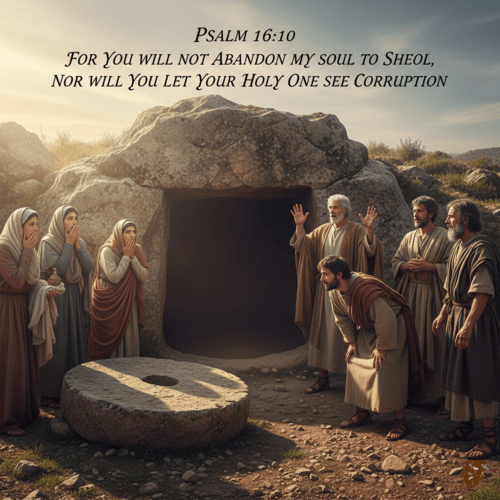
Matthew records the chief priests paid the guards to say, ‘His disciples came by night and stole him away while we were asleep’ (Matthew 28:13). ‘But that is in the Bible,’ you might say. True—so look at what came later:
- Justin Martyr (about AD 160) says Jewish leaders sent men far and wide to claim the disciples stole the body (Dialogue with Trypho 108).
- Tertullian (about AD 200) reports a Jewish rumour that a gardener moved the body to protect his lettuces (De Spectaculis 30).
Jesus’ enemies never said, ‘The body is still in the tomb. Go and look.’ That would have ended Christianity in a day. Instead, they explained why the tomb was empty—thus admitting that it indeed was.
9. Celsus: The Philosopher Who Attacked the Resurrection
Celsus, a Greek philosopher, wrote the first full attack on Christianity around AD 177. It survives in quotations by Origen, who answered it. Who saw the risen Jesus, Celsus asked? Only ‘a half-frantic woman’ and a few others (Against Celsus 2.55). He never claims the body was found. Instead, he confirms that Christians claimed from the start that Jesus appeared after death—first to women, just as the Gospels say.
WHY ENEMY TESTIMONY MATTERS
If the other side’s own lawyer admits a fact in court, the judge treats it as settled. Historians think the same way. Christianity’s enemies admitted:
- Jesus was crucified.
- His tomb was empty—they only argued about why.
- His followers claimed to see him alive and worshipped him as God.
The Next Generation: Early Christian Witnesses
These 3 Christian writers aren’t part of the Bible, but they show the message didn’t grow into a legend after the apostles died.
- 10. Clement of Rome (about AD 95), a leader in Rome, wrote that the apostles preached ‘having been fully assured through the resurrection of our Lord Jesus Christ’ (1 Clement 42).
- 11. Ignatius of Antioch (about AD 110), on his way to execution, wrote: ‘I know and believe that He was in the flesh even after the resurrection’ (To the Smyrnaeans 3).
- 12. Polycarp of Smyrna (about AD 110–140), said to be a student of the apostle John, urged believers to trust God, who raised Jesus from the dead (To the Philippians 2). He was burned alive around AD 155 for refusing to deny Christ.
Silent Witnesses: Stones That Speak
Archaeology cannot prove a resurrection, but it shows the Gospels fit the real world of first-century Judea.
- The Pilate Stone (found 1961): carries Pilate’s name and title, ‘Prefect of Judea’.
- The Caiaphas ossuary (found 1990): a bone box (ossuary) probably of the high priest who handed Jesus over.
- Yehohanan’s heel bone (found 1968): a crucified man’s heel, still pierced by a nail, found in a family tomb. Crucified men could receive a proper burial, as Jesus did.
- The Alexamenos graffito (about AD 200): a wall drawing in Rome mocking a Christian who worships a crucified figure with a donkey’s head.
Timeline: From the Cross to Celsus
- AD 30 or 33: Jesus is crucified under Pontius Pilate.
- Within about 5 years: the creed Paul quotes in 1 Corinthians 15 takes shape.
- AD 49: Claudius expels Jews from Rome over ‘Chrestus’.
- AD 62: James, the brother of Jesus, is stoned to death.
- AD 64: Nero blames Christians for the fire of Rome.
- AD 93–116: Josephus, Clement, Pliny and Tacitus write.
- AD 160–177: Justin, Lucian and Celsus write.
Putting It Together: The Facts Even Sceptics Accept
Many historians, including non-Christians, accept a small set of facts that Gary Habermas and Michael Licona call the minimal facts.
| THE FACT | WITNESSES OUTSIDE THE BIBLE | DO MOST SCHOLARS ACCEPT IT? |
|---|---|---|
| Jesus died by crucifixion | Josephus, the Talmud, Tacitus, Lucian, Mara bar Serapion | Yes—almost all |
| His followers believed he appeared to them alive | Josephus (Arabic version), Tacitus, Pliny, Celsus, Clement | Yes—almost all |
| His tomb was empty | The ‘stolen body’ teachers (reported by Matthew, Justin, Tertullian) | Yes—about 75% (Habermas’s survey) |
| James, a doubter, became a leader and martyr | Josephus | Yes—most |
| Jesus was worshipped as God very early | Pliny, Lucian, the Alexamenos graffito | Yes—most |
| The faith spread fast despite persecution | Suetonius, Tacitus, Pliny | Yes—almost all |
Even sceptical scholars grant much of this. E. P. Sanders called the disciples’ resurrection experiences a fact, and the agnostic Bart Ehrman agrees they sincerely believed they saw Jesus alive.
Historians also treat the New Testament books as first-century sources. In 1 Corinthians 15, Paul quotes an early creed—a short summary of belief:
For I delivered to you as of first importance what I also received: that Christ died for our sins in accordance with the Scriptures, that he was buried, that he was raised on the third day in accordance with the Scriptures, and that he appeared to Cephas, then to the twelve.
1 Corinthians 15:3–5 (ESV)
James DG Dunn dated this creed to within months of the cross—far too early for legend. After a massive study of ancient beliefs, NT Wright concluded only an empty tomb plus real meetings with the risen Jesus explain how Christianity began.
Answering the Objections
- ‘There should be more Roman sources.’ Romans wrote about emperors and wars, not provincial teachers, and most ancient writing is lost.
- ‘The Josephus passage is fake.’ Parts were added, but most scholars accept an original core, and the James passage is hardly disputed.
- ‘These sources are too late.’ Josephus wrote about 60 years after Jesus. Our earliest full accounts of Alexander the Great come over 400 years after him.
- ‘Tacitus repeated Christian claims.’ He despised Christians, and he got the names, places and officials right.
CAREFUL: EVIDENCE WE SHOULD NOT USE
Truth needs no weak arguments. Avoid these:
- The Greek Josephus passage treated as entirely original.
- Thallus and Phlegon on the darkness: later quotations, no clear mention of Jesus.
- The Nazareth Inscription: a 2020 study traced its marble to the Greek island of Kos.
- The ‘Acts of Pilate’ and ‘Letter of Lentulus’: later forgeries.
- The Shroud of Turin: still debated (see below).
Evidence and Faith: Where This Leaves Us
Can history alone make someone a Christian? No. Our certainty comes from the inner witness of the Holy Spirit. Trying to prove Scripture to unbelievers by argument alone, said John Calvin, is ‘acting foolishly, for only by faith can this be known’ (Institutes 1.8.13). Yet the same chapter lists many evidences—support, not foundation. The Westminster Confession of Faith agrees: our ‘full persuasion and assurance’ comes ‘from the inward work of the Holy Spirit’ (1.5).
Cornelius Van Til reminded us there are ‘no brute facts’—no facts without interpretation. A sceptic who starts with ‘dead men do not rise’ will explain away anything. As Jesus said, ‘neither will they be convinced if someone should rise from the dead’ (Luke 16:31). The problem is not the evidence. It is the heart.
Yet God never asks for blind faith. Jesus ‘presented Himself alive to them after His suffering by many proofs’ (Acts 1:3), and ‘this has not been done in a corner’ (Acts 26:26). Richard Gaffin notes the resurrection was God’s public verdict: Jesus ‘was declared to be the Son of God in power … by His resurrection from the dead’ (Romans 1:4).
The great weapon with which the disciples of Jesus set out to conquer the world was not a mere comprehension of eternal principles; it was an historical message, an account of something that had recently happened, it was the message, ‘He is risen.’
J Gresham Machen, Christianity and Liberalism (1923)
Tim Keller put it simply: ‘If Jesus rose from the dead, then you have to accept all he said.’ 12 ancient witnesses, friendly and hostile, leave us facing that same choice. The first Christians answered it with their lives: He is risen.
Tough Questions, Honest Answers
Did Pontius Pilate send a report about Jesus to Rome?
Early Christian writers such as Justin Martyr and Tertullian believed Pilate sent a report to Emperor Tiberius, and they told readers to check the Roman records. If such a report existed, it’s now lost. The ‘Acts of Pilate’ you may find online today was written centuries later and isn’t a genuine report, so we shouldn’t use it. We don’t need to. God chose to give us the witness of His apostles in Scripture, and John tells us that witness is written ‘so that you may believe’ (John 20:31).
Is the Shroud of Turin evidence for the resurrection?
The Shroud of Turin is a long linen cloth showing the faint image of a crucified man. Some believe it was Jesus’ burial cloth. In 1988, three laboratories used carbon dating and placed it between AD 1260 and 1390, though some researchers still dispute the result. Because it is so debated, we should not build our case on it. The Reformers were wary of relics—objects people treat as holy—because they easily pull our eyes away from Christ himself. Our faith rests on God’s Word and the witnesses he chose, not on a cloth.
Where is Jesus’ tomb today?
There are two main candidates in Jerusalem. The Church of the Holy Sepulchre stands on a site Christians honoured very early, and Emperor Constantine built a church there in the AD 320s. The Garden Tomb was proposed in the 1800s and is a peaceful place to visit, but many archaeologists date that tomb to centuries before Jesus. Most scholars favour the Holy Sepulchre. Either way, the most important thing about Jesus’ tomb is what the angel said: ‘He is not here, for he has risen, as he said’ (Matthew 28:6). We do not worship a place; we worship a living Lord.
Could Jesus have survived the cross?
This idea is called the ‘swoon theory’—the claim that Jesus only fainted and later woke up in the tomb. Roman soldiers were experts at killing, and John tells us a soldier pierced Jesus’ side, and ‘at once there came out blood and water’ (John 19:34). A 1986 study in the Journal of the American Medical Association concluded that Jesus was dead before that wound was made. Even the 19th-century sceptic David Strauss rejected the swoon theory. He pointed out that a half-dead, bleeding man could never have convinced his followers that he had conquered death. Scripture is clear: Christ truly died for our sins and truly rose (1 Corinthians 15:3–4).
Was the resurrection copied from pagan ‘dying and rising’ gods?
Some people claim that myths about gods like Osiris or Mithras inspired the resurrection story. But when you read the old myths, the parallels fall apart. Osiris was put back together to rule the world of the dead; he did not walk out of a tomb in a new body. There is no ancient story of Mithras dying and rising at all. The scholar Jonathan Z. Smith, who was not a Christian, argued that ‘dying and rising gods’ is a category modern writers invented. The first Christians were Jews who rejected pagan idols, and they found the resurrection in their own Scriptures (Psalm 16:10; Isaiah 53:10–12), not in foreign myths.
Why do Muslims deny that Jesus was crucified?
The Qur’an says that Jesus was not killed or crucified, but that it only appeared so (Surah 4:157). Most Muslims believe God took Jesus up to heaven alive. But the Qur’an was written between about AD 610 and 632, nearly 600 years after the cross. Every first-century source we have—Christian, Jewish and Roman, friendly and hostile—agrees that Jesus died by crucifixion. On a question of history, we should trust the witnesses closest to the event. We can share this with Muslim friends gently and respectfully, pointing them to the One who died and rose for sinners.
How many people saw Jesus after he rose?
The New Testament records around ten appearances over 40 days. Jesus appeared to Mary Magdalene, to other women, to Peter, to two disciples on the road to Emmaus, to the apostles more than once, to seven disciples by the Sea of Galilee, and to his brother James. Paul says he once appeared ‘to more than five hundred brothers at one time, most of whom are still alive’ (1 Corinthians 15:6)—in other words, ‘Go and ask them.’ Later, Jesus appeared to Paul himself on the road to Damascus. Hallucinations happen inside one person’s mind; groups of people, in different places and at different times, do not share the same one.
Related Reads
- The Resurrection Of Jesus: Historical Evidence That Even Sceptics Accept
- Did Jesus Rise from the Dead? The Historical Case for the Resurrection
- The Empty Tomb: Did the Disciples Steal Jesus’ Body?
- How Josephus Validates Scripture: Without Intending To
- Did Jesus Really Die on the Cross? Medical and Historical Evidence Against the Swoon Theory
- Is Jesus’ Resurrection Copied from Pagan Myths? Truth vs. Lies
- Mass Hallucination: Does This Explain Resurrection Appearances?
- Was Jesus Really Crucified? Evidence from History and Scripture
- First Church Fathers: Early Support for Jesus’ Historicity