The question of whether Jesus rose from the dead is the hinge on which Christianity turns. The Apostle Paul put it plainly: “If Christ has not been raised, your faith is futile” (1 Corinthians 15:17). He was not being theatrical—he was being precise. The resurrection isn’t an optional embellishment to Christian belief. It’s the claim that determines whether the whole thing stands or collapses.
Sceptics have been trying to collapse it for 2000 years. They haven’t succeeded—not because believers refuse to look at the evidence, but because the evidence keeps pointing the same direction. This post examines that evidence head-on: the positive historical case, the philosophical test, the non-Christian witnesses, and a full response to every major objection.
The Positive Case: Seven Lines of Historical Evidence
Evidence 1: The Empty Tomb No One Could Refute
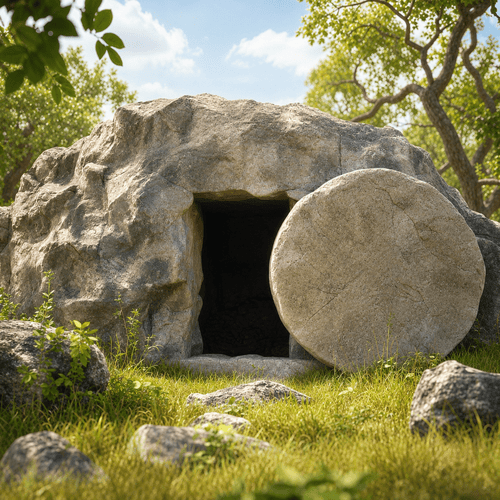
Every account of the resurrection—whether written by followers or by sceptics—begins with the same undisputed fact: the tomb was empty. This isn’t a minor detail. If Jesus’s body had remained in the tomb, His enemies had the simplest possible way to end the movement in its cradle: produce the corpse. They never did, because they could not. Even the earliest Jewish counter-argument—that the disciples had stolen the body (Matthew 28:11–15)—concedes the tomb was empty. You don’t need to explain a theft if the body is still there.
All four Gospels record the same core fact: on the first day of the week, the women who went to anoint the body found the stone rolled away and the tomb vacant (Matthew 28:1–6; Mark 16:1–6; Luke 24:1–3; John 20:1–2). The empty tomb is as well-attested as any event in ancient history.
Evidence 2: Post-Resurrection Appearances to Hundreds of Witnesses
The empty tomb tells us where the body was not. The appearances tell us where it was. Paul’s first letter to the Corinthians, written around AD 55, contains a creed that scholars date to within three to five years of the crucifixion—well within the lifetime of eyewitnesses. That creed records that the risen Jesus appeared to Peter, then to the Twelve, then to more than five hundred people at once, most of whom “are still alive” at the time of writing (1 Corinthians 15:3–8). Paul was effectively inviting his readers to go and check.
These weren’t brief, ethereal visions. The Gospel accounts describe conversations, shared meals, recognisable wounds, and physical contact (Luke 24:36–43; John 20:24–29). Multiple independent sources—Paul, the Synoptic Gospels, John, and Acts—record these encounters, and they don’t read like co-ordinated fabrication.
Evidence 3: Embarrassingly Early Written Sources
One of the standard objections to religious claims is that legends take centuries to develop. The resurrection accounts allow no such luxury. Paul’s 1 Corinthians creed, dated conservatively to within five years of the crucifixion, predates any plausible legendary development. The New Testament Gospels were written whilst eyewitnesses were still alive and could contradict false accounts. For comparison, our most reliable biographies of Alexander the Great were written four centuries after his death. The resurrection is, by the standards of ancient history, extraordinarily well-documented.
Evidence 4: The Transformation of Frightened Deserters
The night Jesus was arrested, His disciples scattered. Peter denied Him three times before a servant girl. They hid behind locked doors after the crucifixion, “for fear of the Jewish leaders” (John 20:19). These weren’t men poised to launch a world religion.
Yet within weeks, the same men were standing in the Jerusalem temple publicly proclaiming the resurrection—in the very city where it had happened, before the very authorities who’d crucified Jesus. They were arrested, flogged, imprisoned, and eventually executed. Not one of them recanted. What turned cowering deserters into fearless witnesses willing to die for their testimony? They gave the same answer consistently: they’d seen the risen Christ.
Evidence 5: The Birth of the Church in the City of the Crucifixion
The Christian church didn’t begin in a remote location where claims could not be checked. It began in Jerusalem—the city where Jesus had been executed days earlier, where the tomb was located, where the chief priests and Roman governor still held power. If the resurrection were a fabrication, Jerusalem was the worst possible place to start preaching it.
Yet 3000 people believed on the day of Pentecost (Acts 2:41), and the movement spread rapidly in the most hostile conceivable environment. That growth is only explicable if something had genuinely happened that the authorities—who had every incentive to refute it—could not.
Evidence 6: The Shift to Sunday Worship
Jesus’s earliest followers were Jewish. The Jewish Sabbath—Saturday—had been the sacred day of rest and worship for centuries. Yet within the first generation of Christianity, believers were consistently gathering on Sunday, “the first day of the week,” to commemorate the resurrection (Acts 20:7; 1 Corinthians 16:2; Revelation 1:10). Jewish believers do not abandon the Sabbath lightly. Something seismic had to have occurred on a Sunday to justify it—and nothing else in the historical record fits.
Evidence 7: When Sceptics Investigate, They Often Convert
History is populated with committed sceptics who set out to disprove the resurrection and ended up believing it. Frank Morison, a journalist who intended to write a definitive debunking of the resurrection myth, spent years examining the evidence and reached the opposite conclusion—publishing his findings in Who Moved the Stone? (1930). Lee Strobel, a legal journalist and self-described atheist, conducted a two-year investigation of the evidence and stated plainly: “I was being intellectually dishonest with myself by rejecting the resurrection. The evidence was too strong.” CS Lewis, one of the twentieth century’s finest minds, arrived at Christianity through the same rational route—not feeling, but argument.
These aren’t naïve converts. They’re trained investigators who applied scrutiny and followed the evidence wherever it led.
Does the Resurrection Hold Up to Philosophical Scrutiny?
Any serious truth claim can be tested against three philosophical criteria. The resurrection passes all three.
Internal coherence asks whether the accounts are logically consistent within themselves. Despite superficial variations in secondary details—which women arrived first, how many angels were present—all four Gospel accounts converge on the same core events: the tomb was empty, Jesus appeared alive, and the disciples were transformed. These complementary variations are exactly what we’d expect from genuine independent eyewitness accounts. Consider four reporters covering the same match: their articles will not be word-for-word identical, but the final score will be. Perfect uniformity across four independent sources would actually be more suspicious than variation—it would suggest collusion.
The resurrection also coheres theologically. It fulfils Old Testament prophecy (Psalm 16:10; Isaiah 53:10–11; Hosea 6:2), validates Jesus’s own predictions of His death and rising (Matthew 16:21; John 2:19–22), and provides the cornerstone for foundational Christian doctrines: the atonement (Romans 4:25), victory over death (1 Corinthians 15:54–57), and the promised resurrection of believers (1 Thessalonians 4:13–18).
External correspondence asks how the accounts align with verifiable evidence outside the texts. The empty tomb is conceded even by hostile sources. Secular historians corroborate the historical reality of Jesus, his execution under Pilate, and his followers’ proclamation of a resurrection (see below). One detail is particularly telling: in first-century Jewish culture, a woman’s testimony was inadmissible in court and generally considered unreliable. No one manufacturing a resurrection story would choose women as the principal witnesses. That detail is an unintended mark of authentic, unembellished history.
Functional adequacy asks what the claim explains and produces. The resurrection accounts for the empty tomb, the appearances, the disciples’ transformation, the birth of the church in Jerusalem, and the shift to Sunday worship—simultaneously. No alternative theory explains all these facts together. It also accounts for the extraordinary civilisational impact of Christianity: the elevation of human dignity, the founding of hospitals and universities, the abolition movements, the development of Western law. These institutions weren’t produced by a movement knowingly built on a lie.
What Non-Christian Historians Recorded
Sceptics sometimes demand external, non-biblical corroboration. It exists.
Flavius Josephus, the first-century Jewish historian, wrote in his Antiquities of the Jews (c. AD 93) of “Jesus, who was called Christ,” His execution under Pilate, and the fact that His disciples reported He’d appeared to them three days after His crucifixion.
Tacitus, Rome’s most respected historian, recorded in his Annals (c. AD 116) that Christ had “suffered the extreme penalty during the reign of Tiberius at the hands of one of our procurators, Pontius Pilatus,” and that the movement continued to spread despite the execution.
Pliny the Younger, writing to Emperor Trajan around AD 112, described Christians gathering before dawn to sing hymns “to Christ as to a god”—confirming early resurrection worship within living memory of the events.
Celsus, a second-century pagan philosopher and fierce critic of Christianity, attempted to debunk the resurrection but never denied the tomb was empty. His chosen explanation—that the disciples had stolen the body—confirms the empty tomb as an established historical datum even among opponents.
These are hostile or neutral witnesses with no reason to favour the Christian account. Their evidence independently corroborates the core historical framework.
Answering the Sceptics: Every Major Objection Examined
The Swoon Theory — Jesus didn’t die; He merely fainted.
This collapses under medical scrutiny. Roman flogging alone—40 lashes with a lead-tipped whip—could be fatal. Crucifixion added asphyxiation and hypovolemic shock. The soldiers broke the legs of the two criminals crucified alongside Jesus to accelerate death; they didn’t break Jesus’s legs because He was already dead (John 19:33). A soldier then drove a spear into His side, producing a flow of blood and water consistent with post-mortem separation—a recognised sign of death. The idea that Jesus survived all of this, then rolled away a heavy sealed stone, overpowered a Roman guard unit, and subsequently convinced hundreds of followers that He’d gloriously conquered death—while barely able to walk—isn’t a serious historical proposal.
The Stolen Body Theory — the disciples stole the body and fabricated the story.
This is the oldest counter-argument, already being circulated in Matthew’s day (28:11–15). It fails on multiple counts. The tomb was sealed and guarded; Roman soldiers didn’t fall asleep on duty lightly. The disciples were hiding in fear. Most fatally: people will endure much for what they sincerely believe—but no one willingly undergoes torture and execution for what they know to be a deliberate lie. If any disciple had stolen the body, a single deathbed confession across the following decades would have ended Christianity. None came.
The Mass Hallucination Theory — the appearances were psychological.
Hallucinations are private, subjective experiences. They do not occur simultaneously across five hundred people in different settings, producing identical detailed content across independent accounts. The resurrection appearances involved conversations, shared meals, physical contact, and recognition by multiple witnesses in multiple locations over forty days. No psychological theory accounts for this. Nor does the hallucination hypothesis explain the empty tomb: if the body was still there, the authorities would simply have produced it.
The Legend Theory — the resurrection story grew over centuries.
Legends require time to develop, far removed from eyewitnesses. The resurrection creed in 1 Corinthians 15 is dated within five years of the crucifixion—no time for legend. Furthermore, authentic myth-making would not include embarrassing details: the disciples’ cowardice, Thomas’s stubborn doubt, and above all, women as the primary witnesses (whose testimony was inadmissible in that culture). These are the marks of unadorned history, not crafted legend.
The Divergent Gospels Objection — the accounts contradict each other.
The variations concern peripheral details—the number of angels, the precise order of arrival—not the core events. All four Gospels agree: the tomb was empty, Jesus appeared alive, and the disciples were transformed. Minor differences across independent eyewitness accounts are a sign of authenticity, not fabrication. If four witnesses gave word-for-word identical accounts, we would rightly suspect they had compared notes beforehand.
The Disciples’ Deception Theory — they knowingly lied.
People lie for gain—money, power, status. The disciples gained none of these. They gained poverty, persecution, imprisonment, and execution. History offers no precedent for a group of people voluntarily enduring martyrdom for something they privately know to be fabricated—with not a single recantation across decades of torture and death. The transformation of men like Peter and Paul, both of whom had reason to doubt (Peter had denied Jesus; Paul had persecuted the church), defies the deception hypothesis.
The Circular Reasoning Objection — you need to believe the Bible before you can believe the resurrection.
No. The resurrection can be assessed as a historical claim using the same tools historians apply to any ancient event: source criticism, eyewitness testimony, internal consistency, external corroboration, and explanatory adequacy. The evidence stands independently of any prior commitment to biblical inspiration. Historians who do not believe in the resurrection routinely treat the Gospels and Paul’s letters as primary historical sources.
The “Insufficient External Evidence” Objection — secular sources are silent.
They’re not silent, as the evidence from Josephus, Tacitus, Pliny, and Celsus makes clear. But the standard of proof being demanded here is inconsistently applied. Most events from the ancient world are accepted on far less attestation than the resurrection. Julius Caesar’s Gallic Wars survives in fewer than ten manuscripts, the earliest copied a thousand years after his death. The New Testament is supported by over 5000 manuscripts, the earliest fragments dating to within decades of the events. If the standard applied to the resurrection were applied uniformly, ancient history would largely cease to exist.
Why the Resurrection Changes Everything
The resurrection isn’t simply one doctrine among many. It’s the load-bearing wall of the entire Christian faith. It confirms that Jesus is who He claimed to be—the Son of God, not merely an inspiring teacher. It validates the atonement: His death actually accomplished something. It secures the believer’s hope—if He rose, we shall rise. It transforms ethics: if death isn’t the end, we’re accountable beyond the grave.
For the individual, the resurrection provides something no philosophy can: a reason to face death without dread. Countless believers across two millennia have done exactly that, not because they were naïve, but because they were convinced. The evidence that convinced them is the same evidence examined here. The conclusion to which the evidence points is not comfortable—it demands a response. But it’s the most thoroughly examined, most consistently corroborated claim in the ancient world.
Tough Questions, Honest Answers
Isn’t the resurrection just a myth copied from pagan dying-and-rising gods?
No. This claim, popularised in early twentieth-century comparative religion, has been largely abandoned by modern scholarship. The supposed parallels—Osiris, Mithras, Dionysus—involve seasonal nature myths, not bodily resurrection within dateable history. None of these figures was said to have risen bodily from a known tomb in a specific historical moment, as vindication of specific truth claims. The resurrection account is without genuine pagan parallel. See our full analysis of the pagan myth objection.
Why don’t the four Gospels agree on every detail?
They agree on every essential: the tomb was empty, Jesus appeared bodily to his followers, and his followers were transformed. Minor variations in secondary detail—the number of women, the exact wording of the angel’s message—are precisely what historians expect from independent eyewitness accounts. Perfect verbal uniformity across four independent sources would suggest co-ordination and collusion, not authenticity.
Couldn’t the disciples have simply made it all up?
People fabricate stories for gain—money, influence, safety. The disciples gained none of these. They gained poverty, persecution, and martyrdom. There is no historical precedent for a group of people willingly undergoing torture and execution for something they privately knew to be false—with no deathbed recantation across decades. The “deliberate lie” hypothesis fails basic human psychology.
What if Jesus simply didn’t die on the cross?
The swoon theory fails medically and historically. Roman executioners were professionals whose careers—and lives—depended on accuracy. Jesus was flogged to near-death, crucified, stabbed through the side, and certified dead before burial. For the swoon theory to hold, all of this was survivable, and Jesus then single-handedly moved a sealed stone, overpowered guards, and convinced hundreds of witnesses he had gloriously conquered death. No serious medical or historical scholar holds this view.
Is it circular reasoning to use the Bible as evidence?
No. The New Testament documents can be assessed as historical sources—using textual criticism, source analysis, and external corroboration—without first assuming their divine inspiration. Historians who reject the resurrection routinely use the Gospels and Paul’s letters as primary historical documents. The historical case for the resurrection does not require circular reasoning.
Haven’t modern historians rejected the resurrection?
Most historians bracket supernatural claims as outside their methodology—they neither affirm nor deny miracles as such. But a wide consensus of critical historians, including many non-Christians, accepts the following as established facts: Jesus existed, was crucified under Pilate, his tomb was found empty, and his followers genuinely believed they had seen him risen. The dispute is over the explanation for these facts, not the facts themselves.
What does the resurrection have to do with my life today?
If Jesus rose from the dead, then everything he taught is reliable, the forgiveness he offers is real, and death is not the final word. The resurrection is not a theological technicality—it is the claim that the deepest human fears (meaninglessness, guilt, mortality) have been answered from outside history itself. That claim is either the most important fact in the universe, or the greatest deception ever perpetrated. The evidence examined here points strongly to the former.
Related Reads
- The Resurrection of Jesus: Historical Evidence That Even Sceptics Accept
- Did the Disciples Die for a Lie?
- Ten Evidences for the Resurrection in Luke 24
- Did Jesus Really Die on the Cross?
- Is Jesus’ Resurrection Copied from Pagan Myths? Truth vs. Lies
- The Empty Tomb: Did the Disciples Steal Jesus’ Body?
- Mass Hallucination: Does This Explain Resurrection Appearances?
- Hidden in Plain Sight: Jesus’ Resurrection in OT Prophecy
- Is the Shroud of Turin Real or Fake? The Evidence Weighed