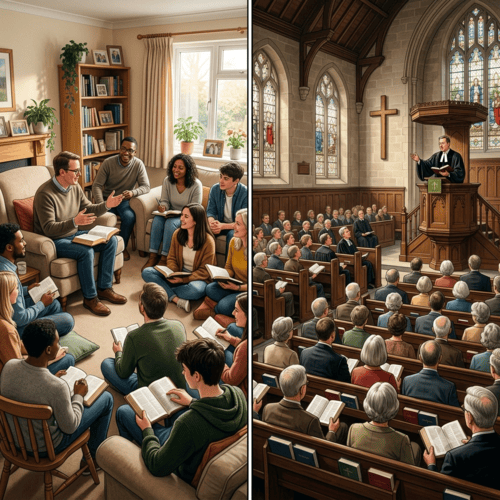
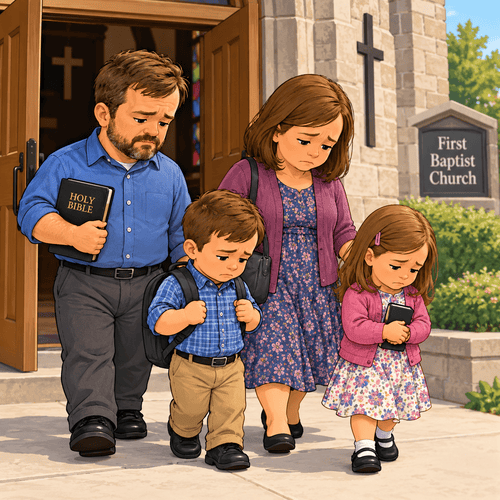
Here’s a hard truth: many Christians leave their church more easily than they cancel a phone contract.
No meeting. No goodbye. One Sunday they’re in their usual seat; the next, the seat is empty.
Most people think this is a private choice. The Bible does not. In the Bible, our church isn’t a shop we visit. It’s a family we belong to.
So is it ever okay to leave? Yes. Sometimes it’s not only okay—it’s our duty. But many of the reasons people give for leaving would fail the Bible’s test. In this post we shall look at the biblical reasons to leave a church, the wrong reasons, and how to leave well if we must indeed go.
THE SHORT ANSWER
- We may leave a church—and sometimes we must.
- We must leave if a church has given up the true gospel.
- We may leave for some serious reasons, such as moving home.
- We should not leave over small things, like music or personality clashes.
- If we leave, leave well—and join another faithful church soon.
Why Leaving a Church Is a Big Deal
Many people treat church like a restaurant: if the food gets worse, they try somewhere new. The New Testament uses very different pictures. The church is a body (1 Corinthians 12:27). It’s a household or family (Ephesians 2:19). It’s a flock with shepherds (Acts 20:28). We don’t “try out” a family. We belong to it.
This is why church membership matters. Membership means we formally join a local church. We promise to serve, to love the other members and to accept the care and correction of the leaders. Many churches call this a covenant—a serious, binding promise made before God.
“Obey your leaders and submit to them, for they are keeping watch over your souls, as those who will have to give an account.”
Hebrews 13:17
Our elders—the men God has given to lead our church—will one day answer to God for how they cared for us. Walking away without a word ignores that.
Cyprian of Carthage (3rd century) put it strongly: “He can no longer have God for his Father, who has not the Church for his mother.” John Calvin went further. In his Institutes of the Christian Religion (4.1.10), he said God counts anyone who proudly walks away from a true church as “a traitor and apostate”.
KEY WORDS IN THIS POST
- Church membership: formally joining a local church and promising to be part of its life.
- Elders: the leaders (pastors and other overseers) who teach and care for a church.
- Gospel: the good news that sinners are saved by God’s grace alone, through faith alone, in Christ alone.
- Sacraments: the two signs Jesus gave His church—baptism and the Lord’s Supper.
- Church discipline: the loving way a church corrects members who keep living in serious sin without repenting.
- Schism: splitting a church without good reason.
A Sinful Church Isn’t a False Church
This is the most important idea in this post.
Every church on earth is sinful. Pastors make mistakes. Members gossip. If sin were a reason to leave, nobody would stay anywhere.
The Westminster Confession of Faith (1646)—a great statement of belief from after the Reformation—says:
“The purest churches under heaven are subject both to mixture and error; and some have so degenerated, as to become no churches of Christ, but synagogues of Satan.”
Westminster Confession 25.5
Even the best churches are a mix of good and bad. But some go so wrong they stop being churches at all. So the real question isn’t “Is my church perfect?” It is “Is my church still a true church?”
How can we tell? The Belgic Confession (1561), written by Guido de Brès, gives 3 “marks”—3 signs that show a true church (Article 29). The table below explains each mark in simple words and shows where the Bible teaches it.
| MARK OF A TRUE CHURCH | WHAT IT MEANS IN SIMPLE WORDS | BIBLE BASIS |
|---|---|---|
| 1. The gospel is preached purely | The Bible is taught faithfully, and salvation by grace through faith in Christ is clearly announced. | Galatians 1:6–9; 2 Timothy 4:2 |
| 2. The sacraments are rightly given | Baptism and the Lord’s Supper are practised the way Jesus commanded. | Matthew 28:19; 1 Corinthians 11:23–26 |
| 3. Church discipline is practised | Members who keep sinning without repentance are lovingly warned and corrected. | Matthew 18:15–17; 1 Corinthians 5:1–13 |
Calvin taught the same thing: “Wherever we see the Word of God purely preached and heard, and the sacraments administered according to Christ’s institution, there, it is not to be doubted, a church of God exists” (Institutes 4.1.9). He warned against leaving such a church over its moral failures or small doctrinal differences (4.1.12–16).
Now look at how Jesus spoke to the 7 churches in Revelation 2–3. Ephesus had lost its first love. Pergamum and Thyatira allowed false teachers. Sardis was nearly dead. Yet Jesus never told His faithful people to pack up and go. He told the churches to repent. He even praised the faithful few who stayed in Sardis:
“Yet you have still a few names in Sardis, people who have not soiled their garments, and they will walk with me in white, for they are worthy.”
Revelation 3:4
But there’s a limit. Jesus warned Ephesus: “If not, I will come to you and remove your lampstand from its place, unless you repent” (Revelation 2:5). The lampstand is the church’s place as a true church. When Christ removes it, leaving is required.
REMEMBER THIS
A sinful church needs our patience, prayer and help. A false church needs us to leave. We mustn’t mix up the 2.
Is Leaving a Church the Sin of Schism?
Some say leaving any church breaks Christian unity. Paul does care deeply about unity:
“I appeal to you, brothers, by the name of our Lord Jesus Christ, that all of you agree, and that there be no divisions among you.”
1 Corinthians 1:10
The Greek word for “divisions” here is schismata, which gives us the English word “schism”. But look at the setting. The Corinthians were splitting into fan clubs: “I follow Paul,” “I follow Apollos” (1 Corinthians 1:12).
Puritan John Owen made this point in his book Of Schism (1657). He argued that in the Bible, schism means causeless division inside a church. Leaving a body that has given up the gospel isn’t schism—that church left Christ first.
This was the Reformers’ answer when Rome accused them of tearing the church apart. In his Reply to Sadoleto (1539), Calvin argued Rome, not the Reformers, had left the gospel that makes a church a church.
So the sin of schism is real. But it’s the sin of dividing over the wrong things—not the duty of separating over the right things.
When Must We Leave, When May We Leave, and When Should We Stay?
Now we can sort the reasons into 3 groups. The table below shows each group, the kinds of reasons that belong in it, and the Bible passages behind them.
| YOUR SITUATION | REASONS THAT BELONG HERE | KEY BIBLE PASSAGES |
|---|---|---|
| You MUST leave | The church preaches a false gospel; denies that Jesus is truly God and truly man; rejects the authority of Scripture; or calls clear sin good. | Galatians 1:8–9; 2 John 9–11; 1 John 4:2–3; Isaiah 5:20 |
| You MAY leave | You move away; God calls you to serve elsewhere; conscience on a secondary doctrine; leaders refuse to deal with serious sin or hide abuse; your family is not fed from God’s Word. | Acts 8:1–4; Acts 13:1–3; Romans 14:5; 1 Corinthians 5; 1 Peter 5:2–3; 2 Timothy 4:2 |
| You should NOT leave | You dislike the music or style; you clash with someone; you were hurt but never tried to make peace; you are under discipline; you want something new. | Matthew 18:15; Ephesians 4:3; Hebrews 12:11; 2 Timothy 4:3–4 |
When You Must Leave
Paul’s words on false teaching are some of the strongest in the Bible:
“But even if we or an angel from heaven should preach to you a gospel contrary to the one we preached to you, let him be accursed.”
Galatians 1:8
A church that teaches salvation by works, denies that Jesus is God, or rejects the Bible as God’s Word has lost the first mark. John even tells believers not to welcome such teachers into their homes (2 John 10).
But be careful. A “false gospel” means a change to the heart of the faith—not one sermon you dislike. Speak to the elders first. Only if they refuse to correct the error should you go.
When You May Leave
Some of these reasons have nothing to do with the church sinning.
- Moving home. Believers scattered from Jerusalem carried the gospel wherever they went (Acts 8:1–4). If you move, find a faithful church nearby.
- A call to serve. The church in Antioch sent out Barnabas and Saul (Acts 13:1–3). A healthy church celebrates such sending.
- Conscience on secondary matters. Secondary doctrines are true teachings that matter but do not decide whether someone is saved—such as whether babies should be baptised, or how a church should be governed. If you cannot serve with a clear conscience, you may move. “Each one should be fully convinced in his own mind” (Romans 14:5).
- Refusal to deal with serious sin. Paul rebuked Corinth for tolerating open immorality (1 Corinthians 5). Years of refusing discipline means the third mark is fading.
- Abuse and cover-up. Elders must lead “not domineering over those in your charge, but being examples to the flock” (1 Peter 5:3). If leaders abuse people or hide abuse, you may leave—and crimes should be reported to the police. Protecting the weak isn’t disunity.
- Starving teaching. If the Bible is hardly opened and your family isn’t fed, you may look elsewhere (2 Timothy 4:2).
These are “may” reasons, not “must” reasons. Pray, seek counsel and talk to your elders before you act.
When You Should Stay
Most reasons people give for leaving fall here. Paul warned:
“For the time is coming when people will not endure sound teaching, but having itching ears they will accumulate for themselves teachers to suit their own passions.”
2 Timothy 4:3
“Itching ears” means wanting to hear what pleases us instead of what is true. Some say “I am not being fed” when they mean “I am not being entertained”. Others leave hurt, without ever obeying Jesus’ simple command: “If your brother sins against you, go and tell him his fault, between you and him alone” (Matthew 18:15).
Leaving to escape church discipline is a serious mistake. Discipline is painful, but “later it yields the peaceful fruit of righteousness to those who have been trained by it” (Hebrews 12:11).
CHURCH HOPPING: A MODERN PROBLEM
“Church hopping” means moving from church to church every year or two, always looking for something better. You never put down roots, nobody knows you well enough to help or correct you, and you never stay long enough to serve.
Paul tells us to be “eager to maintain the unity of the Spirit in the bond of peace” (Ephesians 4:3). Unity grows slowly—like an oak tree, not a mushroom.
Before You Go: Check Your Heart
Our hearts are good at dressing up wrong reasons as right ones. Use this checklist before deciding.
7 HONEST QUESTIONS TO ASK
- Have I prayed about this for weeks, not just days?
- Have I spoken honestly to my elders and given them time to respond?
- Is the problem about the gospel, or about my preferences?
- Have I tried to make peace with anyone I am upset with?
- Am I running away from correction?
- Have I asked a wise, mature Christian for advice?
- Do I know which faithful church I will join next?
How to Leave Well
A good reason to leave can be spoiled by a bad exit.
- Talk to your elders first. Don’t just disappear. Tell them face to face and explain your reasons calmly.
- Make peace where you can. “If possible, so far as it depends on you, live peaceably with all” (Romans 12:18). Ask forgiveness for your own failures, too.
- Do not gather a following. God hates “one who sows discord among brothers” (Proverbs 6:19). Do not pull others out with you or post angry comments online.
- Ask for a letter of transfer. This letter tells your new church you are a member in good standing. The early church did this: when Apollos moved to Achaia, “the brothers encouraged him and wrote to the disciples to welcome him” (Acts 18:27).
- Join a new church quickly. Leaving a church must never mean leaving the church. The Bible warns against “neglecting to meet together, as is the habit of some” (Hebrews 10:25). The Belgic Confession agrees: no believer should withdraw and try to live as a Christian alone (Article 28).
When Christians Left: A Short History
Here are key moments when faithful Christians believed they had to go—and one when they disagreed.
Timeline of Famous Departures
- 1521—Martin Luther: Excommunicated (formally put out) by Rome for teaching salvation by faith alone.
- 1843—Thomas Chalmers and the Disruption: Over 450 ministers left the Church of Scotland because the state was controlling who could be their ministers. Many gave up homes and salaries to form the Free Church of Scotland.
- 1887—Charles Haddon Spurgeon: The London preacher left the Baptist Union during the “Downgrade Controversy” over ministers drifting from Scripture. He wrote: “Fellowship with known and vital error is participation in sin.”
- 1936—John Gresham Machen: Suspended from ministry for opposing liberal teaching, Machen helped form what became the Orthodox Presbyterian Church.
- 1966—A painful disagreement: Martyn Lloyd-Jones urged evangelicals to leave mixed denominations. John Stott, chairing, publicly urged them to stay and work for reform. Both loved the gospel; they differed on where the line lay.
Notice the pattern: every departure was about the gospel or the Bible’s authority—never music or carpet colours.
What to Look For in Your Next Church
Do not choose your next church by its coffee or car park. Use the 3 marks: faithful preaching of Christ, biblical sacraments, and leaders who care enough to correct. Then ask: “Can I belong, be known and serve here for years?” If so, put down roots.
Conclusion: Stay Patiently, Leave Carefully
So, is it ever okay to leave a church? Yes. When a church abandons the gospel, you must go. When serious problems arise, you may go. But most of the time, God’s call is to stay—to love imperfect people, forgive, serve and grow deep roots.
Remember, Jesus loves His church with all its flaws. He “loved the church and gave himself up for her” (Ephesians 5:25). If He hasn’t given up on your church, think very carefully before you do.
If you must leave, leave honestly, humbly, and already facing another faithful church.
Tough Questions, Honest Answers
Is it okay to leave a church over politics?
Usually not. A church exists to preach Christ, not a political party, and members of one church may vote differently on many issues where the Bible gives no single clear answer. Romans 14 teaches us to bear with one another in matters of conscience. However, if a church starts preaching politics in place of the gospel—from any side—that is a serious problem with the first mark of a true church. Speak with your elders before deciding. Ask yourself honestly: am I upset about the gospel, or about a policy?
What if there is no faithful church near me?
This is a real struggle in many places, especially in rural areas and countries where Christians are few. First, look harder—small faithful churches sometimes meet in homes and are hard to find online. If there is truly none, consider whether you can travel further, even if it costs you time. You may also find a weak church that still preaches the gospel and serve it patiently. In some cases, with help and oversight from a faithful church elsewhere, believers can begin a new congregation. Online sermons can help for a season, but they cannot replace real fellowship.
Should I leave my church if my spouse wants to stay?
Marriage changes this decision. God made husband and wife “one flesh” (Genesis 2:24), so as far as possible you should worship together. Pray together, talk openly and seek counsel from a trusted pastor. Husbands are called to lead their homes with Christlike love, not force, and wives to support that leadership. Unless the church has truly abandoned the gospel, it is usually better to stay together than for one spouse to leave alone.
Can online church replace a local church after I leave?
No. Online sermons can be a real blessing, especially for the sick or housebound. But the New Testament is full of “one another” commands—love one another, bear one another’s burdens, forgive one another—that need real people in a real place. You cannot be baptised, share the Lord’s Supper or receive the personal care of elders through a screen in the same way. Hebrews 10:25 calls us to “meet together”. Use online teaching as a bridge, not a home.
Should I leave a church because it is small or dying?
Size isn’t one of the marks of a true church. Some of the most faithful churches in history were small and struggling. The Bible warns us not to despise “the day of small things” (Zechariah 4:10). A small church may need your gifts far more than a large one does. Ask whether it still preaches the gospel and cares for souls. If it does, your faithfulness could be part of how God renews it.
Should I leave if my pastor falls into serious sin?
Not necessarily. Pastors are sinners too, and a church is much more than its pastor. The key question is how the church responds. If the other elders deal with the sin honestly and biblically, following passages like 1 Timothy 5:19–20, the church is showing health, not weakness. If they hide the sin, excuse it or punish those who raise it, that points to a deeper problem, and leaving may become wise.
Is it wrong to attend two churches at once?
It isn’t wrong to visit another church now and then, or to join a midweek Bible study elsewhere. But you can only truly be a member of one local church. Membership means placing yourself under the care and oversight of one set of elders, and you cannot do that fully with two. People who attend two churches often end up deeply known by neither. Choose one church as your home and give yourself to it.
Related Reads
- Do I Really Need Church? What Do I Lose If I Stay Away?
- What Are the Marks of a True Church?
- Household of God: What It Means to Belong to the Church
- What Is the Church? A Biblical Definition of Ekklesia
- Are Denominations Good Or Bad for the Church?
- Reformed Church Eldership: The Role and its Qualifications
- Letter to the Church in Sardis: Alive, Yet Dead