
A young widow puts on her finest clothes and jewellery. She walks out of her thirsty, starving town and straight into the camp of a huge enemy army. On her fourth day there, the enemy general throws a party and gets drunk. She takes his sword, cuts off his head and carries it home in a food bag.
It sounds like an action film. But Catholic and Orthodox Christians call this story Scripture. It’s the Book of Judith.
So here’s a hard question. If Judith is good enough for them, why is it missing from our Bible? Did Protestants cut it out because they didn’t like it?
Judith was never in the Bible that Jesus read. Rome made it an official, must-believe part of Scripture only in 1546—more than 1,500 years after Jesus.
The case against Judith isn’t just a “Protestant opinion”. It comes from Jesus, the apostles, the Jewish people, early church leaders—and the Book of Judith itself.
What’s the Book of Judith?
The Book of Judith is a short Jewish story. King Nebuchadnezzar sends his general, Holofernes, to punish the nations of the west. His army surrounds Bethulia, a small Jewish town, and cuts off its water. Its leaders promise to surrender in 5 days.
Then Judith, a rich, beautiful and very religious widow, steps in. She scolds the leaders, prays, dresses up and goes to the enemy camp. She tells Holofernes she will help him win. At his banquet he gets drunk, and she kills him. The army runs away, and Israel is saved.
Judith at a Glance: The Basic Facts
| QUESTION | ANSWER |
|---|---|
| How long is it? | 16 chapters |
| Who are the main characters? | Judith (a Jewish widow), Holofernes (the enemy general), Achior (a leader from the nation of Ammon) and Uzziah (a leader of Bethulia) |
| When was it probably written? | About 150–100 BC, roughly 300 years after Malachi, the last Old Testament prophet |
| What language was it written in? | Probably Hebrew, but only Greek and later translations survive today |
| Who accepts it as Scripture? | The Roman Catholic and Eastern Orthodox churches |
| Who does not? | Jews and Protestants |
WORDS YOU NEED TO KNOW
- Canon: The list of books that are God’s Word. It comes from a Greek word for a measuring rod.
- Inspired: “Breathed out by God” (2 Timothy 3:16). An inspired book is God’s own Word.
- Apocrypha: The Protestant name for a group of Jewish books written mostly between the Old and New Testaments, including Judith. The word means “hidden”.
- Deuterocanonical: The Catholic name for the same books. It means “second canon”.
- Septuagint: An ancient Greek translation of the Old Testament, made by Jews before Jesus was born.
Reason 1: Judith Wasn’t in the Bible Jesus Used
This is the most important reason. Before we ask what any church council decided, we should ask: which Old Testament did Jesus have?
God Gave the Old Testament to Israel
Paul says God trusted the Jewish people with his written Word:
Much in every way. To begin with, the Jews were entrusted with the oracles of God.
Romans 3:2
“Oracles” means God’s spoken words. If God trusted Israel with the Old Testament, Israel should have received every Old Testament book. But no Jewish group ever accepted Judith as Scripture. It’s not in the Hebrew Bible.
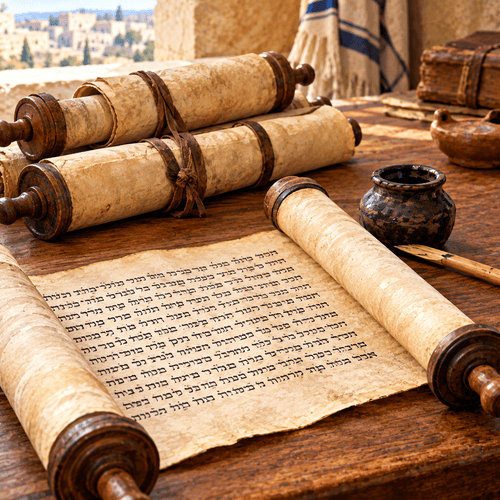
It was also not found among the Dead Sea Scrolls—the huge collection of ancient Jewish scrolls discovered in caves near the Dead Sea from 1947. Tobit and Sirach, 2 other apocryphal books, were found there. Judith wasn’t.
Jesus Showed the Edges of His Bible
…from the blood of Abel to the blood of Zechariah, who perished between the altar and the sanctuary.
Luke 11:51
Abel’s murder is in Genesis, the Hebrew Bible’s first book. Zechariah’s is in 2 Chronicles 24, its last book. So Jesus is saying “from A to Z”. His Bible began with Genesis and ended with Chronicles. Judith was not in it.
After his resurrection, Jesus named the three parts of that same Bible:
…everything written about me in the Law of Moses and the Prophets and the Psalms must be fulfilled.
Luke 24:44
This matches the Hebrew Bible’s three sections, with Psalms opening the Writings.
Other Witnesses Agree
- The apostles never quote it: The New Testament quotes the Old Testament hundreds of times, but never Judith.
- Josephus counts 22 books: The Jewish historian Josephus (about AD 37–100) wrote that the Jews had only 22 sacred books—the same books as our 39, just counted differently. Later books lacked the same trust, he said, because the prophets had stopped.
- Judith comes from a time without prophets: Even 1 Maccabees, another book of the Apocrypha, admits that prophets no longer appeared in Israel in that era (1 Maccabees 9:27). Judith was written in that same period.
THINK ABOUT IT
Israel never accepted Judith. Jesus never quoted it, and his Bible ended without it. If we follow Jesus, we should read the Old Testament He read—no more and no less.
Reason 2: The Early Church Read Judith but Did Not Call It Scripture
Many early Christians loved Judith as a story of courage. But loving a book is not the same as calling it God’s Word.
Timeline: Judith in Church History
- About AD 96—Clement of Rome: Praises Judith’s courage, alongside Esther’s, as an example—not as Scripture.
- About AD 170—Melito of Sardis: Travels east to find out exactly which books belong in the Old Testament. Judith isn’t on his list.
- About AD 240—Origen: Notes the Jews do not use Tobit or Judith.
- About AD 350—Cyril of Jerusalem: Tells new believers to read only the 22 Hebrew books.
- AD 367—Athanasius of Alexandria: Puts Judith among books “not indeed included in the Canon” that new believers may read.
- AD 390s—Jerome: Keeps Judith outside the canon and says its authority is too weak to settle arguments about doctrine.
- AD 393–397—Councils of Hippo and Carthage: Two local North African councils, under Augustine’s influence, include Judith in their list.
- AD 1546—Council of Trent: Rome officially declares Judith to be Scripture for all Catholics.
But What About…? 3 Objections Answered
Common Catholic Objections and Protestant Answers
| THE OBJECTION | THE ANSWER |
|---|---|
| “Augustine and the councils of Hippo and Carthage accepted Judith.” | True. But these were local councils, not the whole church. Jerome, Athanasius and others disagreed, and the debate went on for over 1,000 years. Even Cardinal Thomas Cajetan, a leading Catholic scholar, followed Jerome in 1532. A question still open in 1532 wasn’t settled in 397. |
| “Judith is in the Septuagint, the Greek Bible the apostles used.” | There was no fixed Septuagint list before Jesus. Our complete Greek Bibles are Christian copies from the AD 300s and 400s, and they disagree about the extra books. The apostles quoted the Greek Old Testament—but never Judith. |
| “Jerome said the Council of Nicaea accepted Judith.” | Jerome only repeated a report. No list of Bible books from the Council of Nicaea (AD 325) has ever been found. Jerome himself still kept Judith outside the canon. |
Did Protestants Remove Judith?
No. This is one of the biggest Bible myths.
- Luther kept Judith in print: Martin Luther’s German Bible of 1534 included Judith in a separate section. His heading called these books “not held equal to Holy Scripture, and yet useful and good to read”. He wondered if Judith was a sacred play rather than history.
- The King James Bible kept it too: The King James Bible of 1611 printed the Apocrypha between the Testaments, clearly marked as separate.
- Printing changed, not the canon: From 1826, the British and Foreign Bible Society stopped printing the Apocrypha, and most printers followed. The list of inspired books never changed.
SO WHO CHANGED THE BIBLE?
Protestants kept the same Old Testament as Jesus and the Jewish people. It was Rome, at the Council of Trent in 1546, that first made Judith binding Scripture for everyone. Trent even added an “anathema”—a formal curse that cuts a person off from the church—for anyone who refused to accept these books.
Reason 3: Judith Gets Basic History Wrong
Archaeology keeps confirming the Bible’s people and places, from Nineveh to Esther’s Persian palace. Judith is different. Its mistakes are so obvious that many scholars, including Carey Moore, author of a major commentary on Judith, say it is not history at all.
What Judith Says Compared with What History Shows
| WHAT JUDITH SAYS | WHAT HISTORY SHOWS |
|---|---|
| Nebuchadnezzar “ruled over the Assyrians in the great city of Nineveh” (Judith 1:1). | Nebuchadnezzar was king of Babylon, not Assyria. Nineveh was destroyed in 612 BC, before he became king in 605 BC. It is like saying Winston Churchill ruled Germany from Berlin. |
| The Jews had recently returned from captivity and cleansed the temple (Judith 4:3). | Nebuchadnezzar is the king who destroyed the temple and took the Jews into captivity. They returned only after Babylon fell in 539 BC, years after his death. |
| Holofernes and Bagoas serve the king. | These are Persian names from about 200 years later, linked to the Persian king Artaxerxes III. |
| The army marched about 300 miles (480 km) in three days (Judith 2:21). | Ancient armies usually marched about 15–20 miles (25–30 km) a day. This march would take two to three weeks. |
| Bethulia is the key town, and Arphaxad is a great king of the Medes (Judith 1:1). | No ancient record or excavation has found Bethulia. No king named Arphaxad ever ruled the Medes. |
Some Catholic scholars reply that these “errors” are deliberate clues the book is a parable. Perhaps. But then Judith is an invented story—which supports the Protestant view. A story can teach good lessons and still not be God’s Word.
WHY THIS MATTERS
God doesn’t make mistakes. “The words of the LORD are pure words, like silver refined in a furnace on the ground, purified seven times” (Psalm 12:6). A book that gets its king, his empire and his capital wrong in its first verse can’t be God’s pure Word.
Reason 4: Judith Teaches Things Scripture Doesn’t
Judith also clashes with what the rest of the Bible teaches.
- It praises violence God condemned: In her prayer, Judith praises her ancestor Simeon for taking his sword against the men of Shechem (Judith 9:2–4; see Genesis 34). But Jacob cursed that very act: “Simeon and Levi are brothers; weapons of violence are their swords… Cursed be their anger, for it is fierce” (Genesis 49:5, 7). Judith calls good what God’s Word calls cursed.
- It asks God to bless lies: Judith prays, “By the deceit of my lips strike down the slave with the prince” (Judith 9:10). Then she promises Holofernes she will tell him nothing false—and tells him a false story. The Bible records Rahab’s lie, but it praises her faith, not her lie (Hebrews 11:31). Judith makes lying the plan and asks God to bless it.
- It breaks the Law of Moses: Achior, an Ammonite, is circumcised and joins the people of Israel (Judith 14:10). But God’s Law says, “No Ammonite or Moabite may enter the assembly of the LORD” (Deuteronomy 23:3).
- It shows religious rules from a later time: Judith fasts every day except Sabbaths and feast days (Judith 8:6). She bathes in a spring every night to stay ritually clean (Judith 12:7). These habits match strict Jewish practice from around 150–100 BC, long after the story’s setting.
A VOICE FROM HISTORY
Francis Turretin (1623–1687), a leading Protestant teacher in Geneva, tested books like Judith with 4 questions. Were they written by prophets? Were they given to the Jewish church? Did Christ and the apostles quote them? Are they free from error? Judith fails every test.
Why Is Esther In but Judith Out?
Both books tell of a brave Jewish woman who saves her people. Yet Esther never names God, while Judith names him often. So why is Esther in and Judith out?
Esther and Judith Side by Side
| QUESTION | ESTHER | JUDITH |
|---|---|---|
| Was it in the Hebrew Bible Jesus used? | Yes | No |
| Did the Jewish people accept it? | Yes—they read it every year at the Feast of Purim | No |
| Does it fit real history? | Yes—it matches the Persian king Xerxes and his palace at Susa | No—wrong kings, places and dates |
| Does it mention God by name? | No | Yes, many times |
A book isn’t Scripture because it sounds religious. Esther never names God, yet his hidden hand guides every page. What makes a book Scripture is not its style but its source.
Judith also borrows from older heroines. Like Jael (Judges 4:21), she kills an enemy commander in a tent. Like Deborah (Judges 5), she sings a victory song. The copy is not the original.
Why Does This Question Matter?
“It’s just one book,” some say. But the canon tells us where God speaks. Add a book God did not breathe out, and human words gain God’s authority. God warns, “Do not add to his words, lest he rebuke you and you be found a liar” (Proverbs 30:6).
Who decides what Scripture is? Rome says the church does. But the church does not create God’s Word; it receives it. John Calvin, the 16th-century Bible teacher in Geneva, called it “a most pernicious error”—a very harmful mistake—to think “that Scripture has only so much weight as is conceded to it by the consent of the church” (Institutes 1.7.2). James Packer, the 20th-century theologian, gave a memorable picture:
The Church no more gave us the New Testament canon than Sir Isaac Newton gave us the force of gravity.
James Packer, God Speaks to Man
The same is true of the Old Testament. God inspired it, Israel recognised it, Jesus confirmed it, and the church received it.
WHAT HISTORIC PROTESTANT CHURCHES CONFESS
“The books commonly called Apocrypha, not being of divine inspiration, are no part of the canon of the Scripture; and therefore are of no authority in the Church of God, nor to be any otherwise approved, or made use of, than other human writings.” (Westminster Confession of Faith, 1.3)
Conclusion: The Real Hero Who Crushed the Enemy’s Head
Judith’s story is exciting. But it wasn’t in Jesus’ Bible, Israel never received it, and many early church leaders kept it outside the canon. The book itself gets history wrong and calls good what God calls evil.
Here’s the good news. The true Bible tells a far greater story. On its very first pages, God promised a Saviour who would crush the head of the great enemy: “He shall bruise your head, and you shall bruise His heel” (Genesis 3:15). Judith cut off one general’s head. Jesus, by His death and resurrection, crushed the head of Satan, sin and death for ever.
We don’t need extra books to find hope. We need the Book God has already given—every word of it, and nothing more.
Tough Questions, Honest Answers
Can Christians still read the Book of Judith?
Yes, as long as we read it as a human book and not as God’s Word. The Belgic Confession (1561) says the church may read these books and learn from them, as far as they agree with Scripture. But it says we can never use them to prove any teaching. When the Council of Trent made the Apocrypha Scripture, John Calvin did not forbid people to read them. His complaint was that Rome gave them an authority they had never had before. Judith can help us understand Jewish life and hopes in the years before Jesus. So read it like an old history book or sermon: test it by the Bible, keep what is true and reject what is not.
Is the Judith in Genesis the same person as the Judith of the Apocrypha?
No. Genesis 26:34 mentions a different Judith, a Hittite woman who married Esau. She lived more than 1,000 years before the time the Book of Judith describes. The Bible says Esau’s foreign wives “made life bitter for Isaac and Rebekah” (Genesis 26:35). The heroine of the Book of Judith is a Jewish widow from the tribe of Simeon. Her name simply means “Jewish woman”, which fits a story about the Jewish people as a whole.
Why do some Jewish people link Judith with Hanukkah?
Hanukkah is the Jewish festival that remembers the cleansing of the temple in 164 BC, after the Maccabees defeated a Greek king. Jesus himself was in Jerusalem at this feast, which John calls “the Feast of Dedication” (John 10:22). In the Middle Ages, Jewish writers retold Judith’s story and set it in the time of the Maccabees. Some versions said Judith fed the enemy salty cheese to make him thirsty for wine, so some Jewish families still eat dairy foods at Hanukkah. This shows how a popular story can grow over time. But even the Jewish people who loved this story never placed it in their Bible.
Does Judith point to the Virgin Mary?
Medieval Catholic writers saw Judith as a picture of Mary, and Catholic worship still uses words of praise from Judith for Mary. The idea is that Judith crushed the enemy’s head, just as Mary is said to crush the serpent. Part of this came from the old Latin Bible, which wrongly read Genesis 3:15 as “she shall crush your head”. But the New Testament never links Judith with Mary. Genesis 3:15 promises that the woman’s offspring—Christ—will crush the serpent. Mary herself said, “my spirit rejoices in God my Saviour” (Luke 1:47). She points us away from herself to her Son, and so should we.
How many books are in the Catholic Old Testament compared with the Protestant one?
The Protestant Old Testament has 39 books. The Catholic Old Testament has 46: the same 39, plus Tobit, Judith, Wisdom, Sirach, Baruch, and 1 and 2 Maccabees. It also has longer versions of Esther and Daniel. The Hebrew Bible used by Jews has exactly the same content as the Protestant Old Testament, but it counts the books as 24 by joining some of them together. For example, it counts the 12 Minor Prophets as one book. Orthodox churches accept a few more books again, such as 1 Esdras and 3 Maccabees.
Why did so many famous artists paint Judith?
Judith’s story has everything an artist wants: danger, beauty, courage and a dramatic ending. In Italy, Donatello made a bronze statue of Judith, and the city of Florence used it as a symbol of standing up to tyrants. Later painters such as Caravaggio and Artemisia Gentileschi painted the shocking moment when Judith kills Holofernes. Judith was especially popular in Catholic art after the Reformation, when these books were being debated. But fame in art doesn’t make a book Scripture. Great artists painted Greek myths too.
Is Judith in the Orthodox Bible, and is it equal to the other books?
Yes, Judith is in the Bibles of the Eastern Orthodox churches, and it is read in their worship. The Orthodox often call these books by a Greek name, anagignoskomena, which means “books that are read”. This name echoes Athanasius’s old idea that such books were for reading, not for proving teaching. A church meeting in Jerusalem in 1672 called them true Scripture. But many Orthodox teachers still say they rank below the rest of the Old Testament. So even in the Orthodox world, Judith does not stand as firmly as Genesis or Isaiah.
Related Reads
- Why Isn’t the Book of Tobit in the Bible? 5 Clear Reasons
- The Truth About Apocryphal Books: Why They’re Not in the Bible
- How Did Jews Know the Old Testament Canon Before Rome Did?
- The Biblical Canon: The Journey from Scrolls to Scripture
- Is the Biblical Canon Self-Authenticating?
- Who Compiled the Bible? How 66 Books Became One
- Belgic Confession: The Story Behind the 1561 Draft
- 400 Years of Silence: What Was God Doing Between the Testaments?
- Book of Sirach: Should It Be in Our Bibles?
- The Additions to Esther: Inspired Text or Later Edit?