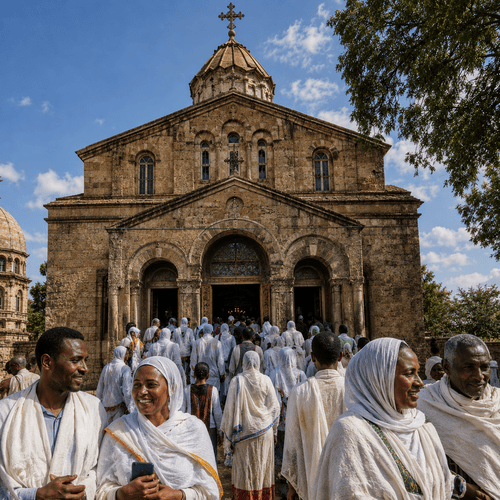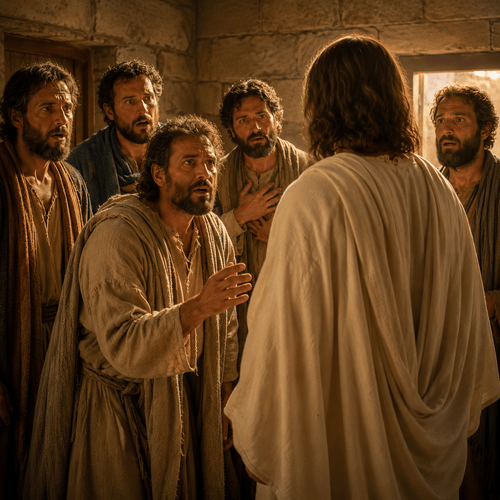
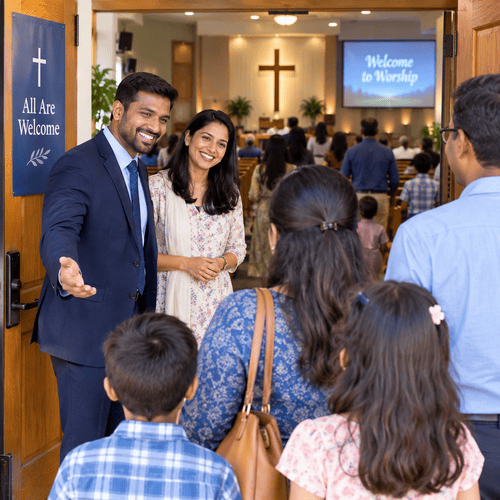
Can you be a faithful Christian and never go to church?
Many people today would say yes. ‘The church is people, not a building,’ they tell us. ‘I am the church wherever I go.’ Since 2020, millions of believers have learnt to ‘do church’ from the sofa, with a phone in one hand and a cup of tea in the other. Many never went back.
Other Christians make the opposite mistake. They go to church every Sunday. They sing, they listen and they go home. Then from Monday to Saturday they live as if Jesus has nothing to say about their office, their classroom or their kitchen.
Both groups hold half of the truth. The Bible shows us a church that gathers and a church that scatters. God’s people meet together, and then God sends them out. But the 2 halves aren’t equal partners. One comes first, and it gives life to the other. Let’s see why.
KEY WORDS EXPLAINED
- Church: God’s people, saved by Jesus Christ. The Bible’s Greek word is ekklēsia (ek-klay-SEE-ah), which means ‘assembly’ or ‘gathering’.
- Gathered church: God’s people when they meet together to worship, usually on Sunday.
- Scattered church: the same people during the week, living for Christ at home, at work and in society.
- Distributed church: a newer idea that a church can exist spread out—online or in separate small units—without meeting together.
- Sacraments: the two signs Jesus gave His church: baptism and the Lord’s Supper.
What Does ‘Church’ Really Mean?
Many people think ‘church’ means a building. But the word itself tells us something very important.
The New Testament word for church, ekklēsia, simply means ‘assembly’—people called together to meet. Before Jesus was born, Jewish scholars translated the Old Testament into Greek. They used this same word for Israel at Mount Sinai. Moses calls that moment ‘the day of the assembly’ (Deuteronomy 9:10).
Listen to what God told Moses that day: ‘Gather the people to me, that I may let them hear my words’ (Deuteronomy 4:10). So the first ‘church’ was a gathering. God called His people together so He could speak to them.
Paul uses the word the same way. He writes to the believers in Corinth about ‘when you come together as a church’ (1 Corinthians 11:18). For Paul, coming together is part of what makes a church a church.
Edmund Clowney, a former president of Westminster Theological Seminary, built his teaching on the church around this idea. He showed the Bible’s story moves from the assembly at Mount Sinai to the great assembly in heaven. Every Sunday gathering, he taught, is a small picture of that heavenly meeting.
So yes, the church is people, not a building. But it’s people who’re called to meet.
The Gathered Church: Where God Shapes His People
When believers gather, some things happen that cannot happen anywhere else. The first Christians knew this: ‘And they devoted themselves to the apostles’ teaching and the fellowship, to the breaking of bread and the prayers’ (Acts 2:42).
The great Protestant confessions (written statements of what churches believe) speak of the ‘marks’ of a true church. These are signs that show a group is really a church, not just a club. John Calvin, the French pastor who led the church in Geneva, wrote: ‘Wherever we see the Word of God purely preached and heard, and the sacraments administered according to Christ’s institution, there, it is not to be doubted, a church of God exists.’ The Belgic Confession of 1561 adds a third mark: church discipline.
Here’s the key point. All 3 marks need God’s people to gather.
Table 1: The 3 marks of a true church—and why each one needs a gathering
| THE MARK | WHAT IT MEANS | WHY IT NEEDS A GATHERING | KEY VERSES |
|---|---|---|---|
| Preaching of God’s Word | A called pastor explains the Bible to God’s people | God speaks to His people as a gathered group, as He did at Sinai | Deuteronomy 4:10; Acts 2:42 |
| The sacraments | Baptism welcomes people into the church; the Lord’s Supper feeds them | The Supper is one meal for one body, shared at one table | 1 Corinthians 10:17; 11:33 |
| Church discipline | Loving correction of members who refuse to turn from sin | It is done by the church when it meets, led by its elders | Matthew 18:17; 1 Corinthians 5:4 |
Think about the Lord’s Supper. Paul writes, ‘Because there is one bread, we who are many are one body, for we all partake of the one bread’ (1 Corinthians 10:17). He also says, ‘when you come together to eat, wait for one another’ (1 Corinthians 11:33). You cannot wait for one another if everyone eats alone in a different house.
Pastors also need a real flock. Paul tells the elders in Ephesus, ‘Pay careful attention to yourselves and to all the flock’ (Acts 20:28). A shepherd cannot watch over sheep he never sees.
This is why Hebrews gives such a strong warning: ‘And let us consider how to stir up one another to love and good works, not neglecting to meet together, as is the habit of some, but encouraging one another, and all the more as you see the Day drawing near’ (Hebrews 10:24–25). ‘The Day’ means the day Jesus returns. The closer it comes, the more we need each other.
THE CHURCH AS OUR MOTHER
Calvin loved to call the church our ‘mother’. Borrowing an idea from the early church leader Cyprian, he wrote that ‘for those to whom he is Father the church may also be Mother’.
What does a good mother do? She feeds, teaches, protects and corrects her children. The gathered church does all of this for us. No Christian is meant to grow up alone.
The Scattered Church: Where God Sends His People
But the gathering is not the end of the story. On Sunday the church gathers. On Monday it goes out.
After Stephen was killed, ‘there arose on that day a great persecution against the church in Jerusalem, and they were all scattered throughout the regions of Judea and Samaria, except the apostles’ (Acts 8:1). It looked like a disaster. But God had a plan: ‘Now those who were scattered went about preaching the word’ (Acts 8:4). The believers did not stop being the church. They carried the gospel wherever they went.
Peter calls the Christians of his day ‘elect exiles of the dispersion’ (1 Peter 1:1). ‘Dispersion’ simply means ‘scattered’. They are ‘a royal priesthood’, called to ‘proclaim the excellencies of him who called you out of darkness into his marvelous light’ (1 Peter 2:9).
Jesus used simple pictures: ‘You are the salt of the earth… You are the light of the world’ (Matthew 5:13–14). Salt does no good in the jar. A lamp does no good under a basket. Jesus also prayed, ‘As you sent me into the world, so I have sent them into the world’ (John 17:18).
Abraham Kuyper, the Dutch pastor, theologian and later prime minister, explained this well. In an 1870 sermon, he described the church in two ways. The church as an institute is the organised church: pastors, elders, preaching and sacraments. The church as an organism is the living body of believers, spread through every part of life—families, businesses, schools, the arts and politics. Kuyper later said: ‘There is not a square inch in the whole domain of our human existence over which Christ, who is Sovereign over all, does not cry: “Mine!”’
Table 2: One church, two sides—how the church lives on Sunday and during the week
| Detail | GATHERED CHURCH (‘INSTITUTE’) | SCATTERED CHURCH (‘ORGANISM’) |
|---|---|---|
| When | The Lord’s Day (Sunday) | Monday to Saturday |
| Where | Together in one place | Homes, workplaces, schools and streets |
| Main focus | Receiving: God’s Word, the sacraments, prayer | Giving: work, witness, service and love |
| Who leads | Pastors and elders | Every believer, in his or her own calling |
| Purpose | To shape and feed God’s people | To show and share Christ in the world |
So our daily work isn’t separate from our faith. Paul calls the offering of our whole life to God ‘our spiritual worship’ (Romans 12:1). The old word for this is ‘vocation’, which means ‘calling’. A Christian nurse, farmer, teacher or software engineer serves God through honest, careful work. Herman Bavinck, Kuyper’s fellow Dutch theologian, often taught God’s grace doesn’t destroy ordinary life. Grace restores it.
Why the Gathering Comes First
If both matter, why do we say the gathering comes first? There are three strong reasons.
1. The Bible’s Story Moves from Scattering to Gathering
Timeline: From Babel to the Final Gathering
- Babel: Proud people build a tower to heaven, and God judges them: ‘So the LORD dispersed them from there over the face of all the earth’ (Genesis 11:8). Scattering begins as punishment.
- Sinai: God gathers Israel at the mountain to hear His voice—‘the day of the assembly’.
- The exile: Israel turns from God and is scattered among the nations. Yet God promises, ‘I will take you from the nations and gather you from all the countries’ (Ezekiel 36:24).
- The cross: Jesus dies ‘to gather into one the children of God who are scattered abroad’ (John 11:52).
- Pentecost: People from many nations hear the gospel in their own languages (Acts 2). The curse of Babel begins to be reversed.
- The end of history: John sees ‘a great multitude that no one could number, from every nation… standing before the throne’ (Revelation 7:9).
Do you see the pattern? The Bible’s story ends with a gathering, not a scattering. Scattering is for now; gathering is for ever. Even in Acts 8, the scattering served the gathering, because those scattered believers planted new churches, such as the great church in Antioch (Acts 11:19–26).
2. The Gathered Church Feeds the Scattered Church
Christ gave pastors and teachers ‘to equip the saints for the work of ministry, for building up the body of Christ’ (Ephesians 4:11–12). The pastor trains; every believer serves. A soldier trains before he goes into battle. A Christian who skips the gathering goes out into the world hungry and unarmed.
3. Every Sunday Is a Preview of Heaven
Hebrews tells believers, ‘you have come to Mount Zion and to the city of the living God… and to the assembly of the firstborn who are enrolled in heaven’ (Hebrews 12:22–23). When we gather to worship, we join that heavenly assembly by faith. Every Sunday is practice for eternity.
THE HISTORIC BALANCE IN ONE SENTENCE
The Westminster Confession of Faith (1646) holds both truths together. God is to be worshipped ‘everywhere, in spirit and truth; as, in private families daily, and in secret, each one by himself; so, more solemnly in the public assemblies, which are not carelessly or wilfully to be neglected, or forsaken’ (21.6).
In plain words: worship God at home and alone every day. But the public gathering is special, and you must not skip it lightly.
Answering Common Objections
Here are 5 common objections, with short biblical answers.
Table 3: 5 common objections to gathering—and what the Bible says
| THE OBJECTION | WHAT THE BIBLE ACTUALLY SAYS |
|---|---|
| ‘Where two or three are gathered, Jesus is there’ (Matthew 18:20). So any small group is a church. | Jesus said this while teaching about church discipline (Matthew 18:15–20). The verse assumes a church that meets. It is not a promise to Christians who stay apart. |
| ‘I am the church wherever I go.’ | You are part of the church, but a part cannot live alone. ‘The eye cannot say to the hand, “I have no need of you”’ (1 Corinthians 12:21). |
| ‘God does not live in buildings, so meeting together does not matter.’ | He does not live in buildings. But in 1 Corinthians 3:16, ‘you are God’s temple’—and ‘you’ is plural in Greek. God dwells among His people together. |
| ‘Watching church online is just as good.’ | Online services can bless the sick. But a screen cannot give you the Lord’s Supper, real pastoral care or loving correction. John preferred to talk ‘face to face’ rather than with ‘paper and ink’ (2 John 12). |
| ‘The church is full of hypocrites.’ | Every church has sinners—including you and me. Calvin taught that we do not leave our mother because she is imperfect. We stay, and we help her grow healthy. |
Church historian Darryl G Hart saw this coming back in 1999. In an essay with the clever title ‘No Assembly Required’, he criticised the idea of a ‘distributed church’—a church spread out like a computer network that never truly meets. His point still stands: take away the assembly and you take away the church.
Two Opposite Mistakes
Christians can fall off the road on either side. Some keep their faith inside the church building. Others keep their faith away from it.
Table 4: The 2 opposite mistakes—and how to correct each one
| Detail | MISTAKE 1: ‘GATHERED ONLY’ | MISTAKE 2: ‘SCATTERED ONLY’ |
|---|---|---|
| What it looks like | Faith stays inside the church building | Faith with no church family |
| What people say | ‘I went to church—I have done my duty.’ | ‘I do not need church to be a Christian.’ |
| What is lost | Witness, service and faith at work | Preaching, sacraments, care and correction |
| The result | An inward-looking church the world ignores | Lonely, weak Christians who are easily misled |
| The cure | Remember you are sent (John 17:18) | Remember you are gathered (Hebrews 10:25) |
In many parts of the world, including parts of India, believers face opposition and sometimes meet quietly in homes. Yet they do not stop gathering. They change the place, not the practice.
How to Live the Rhythm
- Make Sunday fixed: Plan your week around the Lord’s Day, not the Lord’s Day around your week.
- Prepare to gather: Pray on Saturday night, sleep well and arrive ready to listen.
- Belong, don’t just attend: Become a member of a local church, so that its elders can know and care for you.
- Carry Sunday into Monday: Take one truth from the sermon and think about it all week.
- See your work as a calling: Work honestly and well, ‘as for the Lord and not for men’ (Colossians 3:23).
- Bring someone with you: The best work of the scattered church is to bring others into the gathered church.
Breathing In, Breathing Out
So, can you be a faithful Christian and never go to church? You are saved by grace alone, through faith alone—not by attending services. But saving faith always draws you towards God’s people.
Think of the church as a pair of lungs. On Sunday the church breathes in: it receives God’s Word, His sacraments and the love of His people. From Monday to Saturday it breathes out: it shares Christ in homes, offices, fields and streets. Lungs that only breathe out soon collapse. A healthy church does both, in that order.
So gather on the Lord’s Day. Then go out and scatter the light. And one day, all God’s scattered children will be gathered home for ever.
Tough Questions, Honest Answers
Can I take communion at home while watching a service online?
Most historic Protestant churches say no, and for good reason. The Lord’s Supper is a meal for the gathered church. Paul speaks of it happening ‘when you come together’, as one bread shared by one body (1 Corinthians 10:17; 11:33). It is also served by a called minister, not taken privately. When members are too ill to attend, many churches send a minister and some elders to share the Supper with them at home. In this way, the church still comes together, even in a small way.
Do I have to go to church to be saved?
No. We are saved by grace alone, through faith alone, in Christ alone—not by attendance (Ephesians 2:8–9). The thief on the cross never attended a service, yet Jesus welcomed him into paradise. But true faith always loves God’s people. John writes, ‘We know that we have passed out of death into life, because we love the brothers’ (1 John 3:14). Anyone who refuses church for years without a good reason should honestly ask whether their faith is real.
What exactly does Hebrews 10:25 command?
It commands Christians not to give up meeting together as a local church. The writer is not talking about a casual coffee with friends. He means the regular gathering of believers for worship and encouragement. Even in the first century, some had made a ‘habit’ of staying away, so this is not a new problem. The verse gives no exact number of meetings, but the early church met every week. The warning grows stronger, not weaker, as Christ’s return draws near.
Is a small group or house fellowship a real church?
It depends on what the group has. A home Bible study that belongs to a local church is a wonderful part of church life, but it is not a church on its own. A house church with its own elders, faithful preaching, the sacraments and loving discipline is a true church, however small. The size of the room and the type of building do not matter; the marks of the church do. Many persecuted believers meet in homes, and their gatherings are fully churches.
How often should a Christian go to church?
The pattern of Scripture is weekly, on the Lord’s Day. God built a weekly rhythm into creation: six days of work and one day of rest and worship (Exodus 20:8–11). After Jesus rose on a Sunday, the early church gathered on ‘the first day of the week’ (Acts 20:7; 1 Corinthians 16:2). For centuries, many Protestant churches have held a morning and an evening service to keep the whole day holy. Weekly gathering should be the normal habit of every healthy Christian.
What if illness, Sunday work or persecution keeps me from attending?
The Westminster Confession says public worship must not be neglected ‘when God, by His Word or providence, calleth thereunto’. In plain words, if God Himself keeps you away through sickness or danger, you have not sinned. If you are ill, watch the livestream gratefully and ask your elders to visit and pray with you (James 5:14). If your job requires Sunday shifts, speak honestly to your employer, and find an evening service in the meantime. If you face persecution, meet in smaller and safer ways, but keep meeting. The aim is always to return to the assembly as soon as you can.
Is a multisite church biblical?
The Bible does not speak about multisite churches directly, so godly Christians disagree. A multisite church is one church meeting in several places, usually under one group of leaders. Some argue that a church which never meets all together is really several churches. Others accept the model if one body of elders truly knows and shepherds every site. The best test is the marks of the church: faithful preaching, the sacraments, loving discipline and elders who know their sheep. Be careful of any model where the preacher is only ever a face on a screen.
Related Reads
- What Is the Church? A Biblical Definition of Ekklesia
- Is the Church a Building or the People? What the Bible Says
- Do I Really Need Church? What Do I Lose If I Stay Away?
- ‘Can’t I Be Spiritual Without Church?’—The Hard Truth
- ‘Where Two or Three Are Gathered’: What Does Matthew 18:20 Mean?
- The Priesthood of All Believers: What the Bible Really Teaches
- What Are the Marks of a True Church?
- The Christian Sabbath: Why Did Sunday Replace Saturday?
- Baptism and the Lord’s Supper: Why the Sacraments Truly Matter
- Is It Ever Okay to Leave a Church? What Does the Bible Say?