
“Forgive and forget”. The instruction sounds holy. We may even hear it from a pulpit or a well-meaning friend. But here’s the problem: the Bible doesn’t quite say it. And for some thoughtful, hurting Christians, those three little words do real damage.
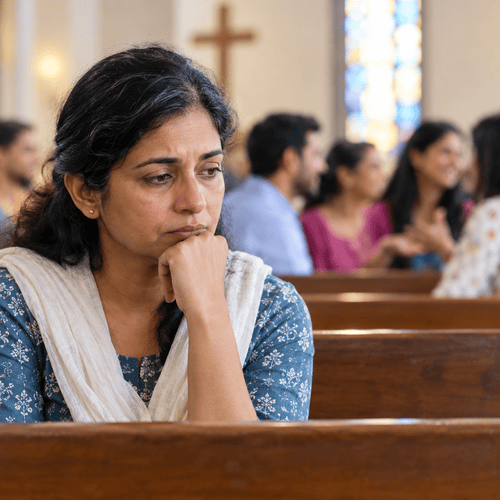
Maybe someone has betrayed you. Or a parent wounded you as a child. Or perhaps a spouse, a friend or even a pastor did something you cannot get out of your head. You’ve prayed. You’ve tried. Yet when you hear their name, something hard rises in your chest. So you whisper the words of quiet resignation we’re afraid to say out loud: “I can’t forgive them.”
If that’s you, this post is for you. We shall look carefully at what the Bible really says forgiveness is—and what it isn’t. You may find God’s asking something different from what you thought, and the thing you “can’t” do is possible after all.
This post is part of our series What Do We Do When…?, which takes the hard moments of the Christian life to Scripture and asks how God would have us respond. Other posts in the series ask what we do when God seems distant and silent, when God closes a door we prayed would open, when we don’t know what step to take next, when we fall into the same sin again, when life doesn’t go according to plan, when doubt and anxiety won’t let go and when we feel trapped in a meaningless existence…
First, What’s Forgiveness?
Before we ask how to forgive, we need to know what forgiveness is. Some of us are stuck trying to do something the Bible doesn’t ask of us.
The New Testament uses two main Greek words for forgiveness:
- Aphiēmi means “to release” or “to let go”. It was used for cancelling a debt: you tear up the bill and will not collect.
- Charizomai comes from charis, the word for grace. It means to give something freely, as a gift. Paul uses it in Ephesians 4:32 and Colossians 3:13.
Put simply, forgiveness means this: you cancel a debt that someone really owes you, and give up your right to make them pay. Forgiveness doesn’t pretend there was no debt. It takes sin seriously. That’s exactly why it costs so much.
Tim Keller said it plainly: “Forgiveness means refusing to make them pay for what they did.” But the cost doesn’t simply disappear: when we forgive, we absorb the loss ourselves instead of passing it back. That’s a kind of suffering—the kind Jesus chose at the cross.
Counsellor Jay Adams made another helpful point. Forgiveness, he said, is a promise, not a feeling. Feelings come and go like the weather; a promise is decided, then kept.
6 Things Forgiveness Isn’t
| FORGIVENESS IS NOT… | WHY NOT? | BIBLE |
|---|---|---|
| A warm feeling | It’s a decision of the will. Feelings often come later. | Matthew 18:35 |
| Forgetting | God knows everything, yet He “will remember their sin no more”. He chooses not to hold it against us. | Jeremiah 31:34 |
| Saying “it was nothing” | You can only forgive a real wrong. Excusing sin is not forgiving it. | Luke 17:3 |
| Trusting the person again straight away | Trust is rebuilt slowly, through changed behaviour. | Luke 3:8 |
| Always being friends again | Some people never repent. Some are not safe. | Romans 12:18 |
| Cancelling justice | Courts and the police still have a God-given role. | Romans 13:4 |
The Key: Forgiveness Has 2 Sides
Here many hurting Christians find freedom. Read everything the Bible says, and you notice something surprising. Some verses tell us to forgive with no conditions at all. Others connect forgiveness with the other person’s repentance. (Repentance means truly turning away from sin—being sorry, and changing direction.)
And whenever you stand praying, forgive, if you have anything against anyone, so that your Father also who is in heaven may forgive you your trespasses.
Mark 11:25
If your brother sins, rebuke him, and if he repents, forgive him, and if he sins against you seven times in the day, and turns to you seven times, saying, “I repent,” you must forgive him.
Luke 17:3–4
In Mark 11, there’s no condition. You forgive right there, while praying, alone with God. In Luke 17, there is a condition: “if he repents”. Is the Bible confused? No. These passages describe 2 sides of the same forgiveness.
The 2 Sides of Biblical Forgiveness
| Aspect | HEART FORGIVENESS | GRANTED FORGIVENESS |
|---|---|---|
| Where it happens | Between you and God | Between you and the person who hurt you |
| Condition | None. It is always required. | The person repents |
| What you do | Let go of revenge and bitterness, hand them to God and wish them good | Say “I forgive you” and treat the matter as closed |
| When | Now, today | When they turn and ask |
| Key verses | Mark 11:25; Ephesians 4:31–32 | Luke 17:3–4; Matthew 18:15 |
Then there’s a third stage, which is different again: reconciliation. This means the relationship is restored and trust is rebuilt, which needs proof over time: “Bear fruits in keeping with repentance” (Luke 3:8).
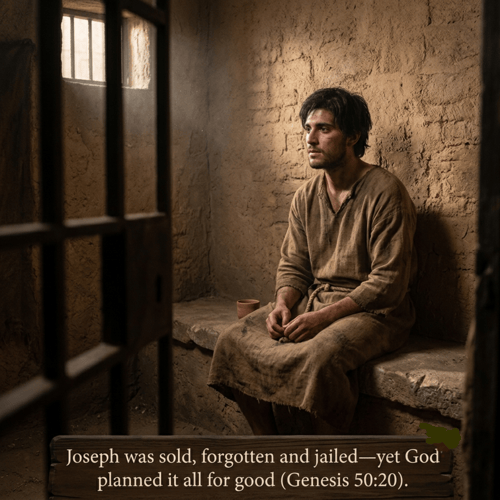
Joseph is a wonderful example. When the brothers who sold him into slavery came to Egypt, he didn’t run into their arms. He tested them first (Genesis 42–44). Only when Judah offered his own life for Benjamin did Joseph reveal himself and weep. Joseph had already let go of revenge. But he was wise enough to wait before he trusted.
THE ROAD TO FORGIVENESS
- Step 1—today: You forgive in your heart before God. No more revenge, no more bitterness.
- Step 2—when they repent: You tell them, “I forgive you,” and the debt is cancelled between you.
- Step 3—over time: As real change appears, trust and friendship can slowly be rebuilt.
New Testament scholar DA Carson strikes this balance in Love in Hard Places: Christians must always keep a forgiving heart, even towards people who never say sorry, yet full forgiveness—a relationship healed—needs repentance.
Why This Is the Right Way to Read the Bible
This isn’t a clever escape from a hard command. It’s the most faithful way of putting all the verses together:
- It follows God’s own pattern. Paul tells us to forgive “as God in Christ forgave you” (Ephesians 4:32). How does God forgive? He is “good and forgiving” (Psalm 86:5), ready to pardon before we even ask. Yet sinners receive His pardon through repentance and faith (Acts 3:19; 1 John 1:9). Our forgiveness copies His: a heart always ready, a pardon given to those who turn.
- It fits Jesus’ instructions. “If your brother sins against you, go and tell him his fault, between you and him alone. If he listens to you, you have gained your brother” (Matthew 18:15). Jesus would not send us to seek repentance if it did not matter.
- It keeps the goal in view. Chris Brauns, in Unpacking Forgiveness, warns when we treat forgiveness as only a private feeling, we forget where it is meant to lead: a relationship put right.
- It guards against bitterness. Can I stay angry until they apologise? No. The heart side is never optional: “Let all bitterness and wrath and anger and clamour and slander be put away from you” (Ephesians 4:31).
- It protects the weak. Telling a victim to “just forgive and move on” can leave them in danger. This view lets you forgive fully in your heart while still staying safe.
But What About…? 3 Hard Questions
“Jesus forgave His killers without them repenting.”
Read Luke 23:34 closely (we look at it more fully in Father, Forgive Them: Who Was Jesus Praying For?): “Father, forgive them, for they know not what they do.” Jesus did not say to the soldiers, “I forgive you.” He prayed to His Father to forgive them. That is heart forgiveness at its purest. And God answered that prayer! Weeks later, thousands in Jerusalem—some of whom had shouted “Crucify him!”—repented and were forgiven (Acts 2:36–41). Peter told them, “I know that you acted in ignorance… Repent therefore, and turn back, that your sins may be blotted out” (Acts 3:17, 19). Stephen prayed the same way as he died (Acts 7:60).
“Does Matthew 6:15 mean God won’t forgive me?”
But if you do not forgive others their trespasses, neither will your Father forgive your trespasses.
Matthew 6:15
This is a serious warning. But it does not mean we earn God’s forgiveness by forgiving others. It means those who have truly received mercy will show mercy. John Calvin, explaining the Lord’s Prayer, said our forgiving others is not the cause of God’s forgiveness. It is a sign that assures us we really belong to Him.
The Heidelberg Catechism (1563) agrees. It asks God to forgive us, since we are “fully determined” to forgive our neighbours—and it calls that determination evidence of God’s grace in us. Notice the word determined. It is about the will, not perfect feelings. That is good news for anyone who says, “I can’t.”
“Isn’t forgiveness really for my own benefit?”
Our culture says, “Forgive for you, not for them.” Bitterness does eat us up. But biblical forgiveness is not mainly self-help. We forgive because God first forgave us, and because we want good for the person who hurt us—even their salvation.
Why Do We Feel We “Can’t” Forgive?
Sometimes “I can’t” really means “I won’t.” But often something else is going on:
Why We Get Stuck—and What God Says
| WHAT WE THINK | WHAT IS REALLY HAPPENING | WHAT GOD SAYS |
|---|---|---|
| “I don’t feel forgiving.” | We are waiting for warm feelings that never come. | Forgiveness is a choice of the will (Matthew 18:35). |
| “It would let them off.” | Forgiving feels like saying the wrong did not matter. | God will judge fairly (Romans 12:19). |
| “They’ll hurt me again.” | We think forgiving means trusting again. | Trust must be earned (Luke 3:8). |
| “It still hurts too much.” | The wound is fresh and the pain is sharp. | Pour out your heart to Him (Psalm 62:8). |
| “What they did was worse.” | Their sin looks huge; ours looks small. | Remember your own debt (Matthew 18:21–35). |
| “They deserve to suffer.” | We are holding on to our right to repay. | “Never avenge yourselves” (Romans 12:19). |
That fifth reason deserves a closer look. Peter asked whether forgiving 7 times was enough. Jesus answered, “I do not say to you 7 times, but 70 times 7” (Matthew 18:22). Then He told a story. A servant owed his king 10,000 talents. 1 talent was about 20 years’ wages, so no one could ever repay it. The king cancelled it all. Then that servant threw a friend into prison over a 100 denarii—about a 100 days’ wages.
The king’s words cut deep: “Should not you have had mercy on your fellow servant, as I had mercy on you?” (Matthew 18:33). What others owe us is real. What we owe God was far greater.
A True Story: Corrie ten Boom
- 1944: The ten Boom family, Dutch Christians, are arrested for hiding Jewish people from the Nazis in their home in Haarlem.
- 1944: Corrie and her sister Betsie are sent to Ravensbrück concentration camp in Germany. Betsie dies there in December.
- 1947: After Corrie speaks in a church in Munich about God’s forgiveness, a man comes forward. She recognises him as one of the cruel guards from Ravensbrück. He says he has become a Christian, and he asks her to forgive him.
Corrie stood frozen. She felt only coldness, and her hand would not move. So she silently asked Jesus for help: she could lift her hand; He would have to supply the feeling. As she took the man’s hand, she said, warmth flooded through her. She later wrote: “Forgiveness is an act of the will, and the will can function regardless of the temperature of the heart.” The guard had repented. Corrie’s struggle wasn’t whether to forgive, but how. Her answer: obey first, and trust God with the feelings.
What to Do When You Can’t Forgive: 7 Steps
- Tell God the truth. Don’t pretend. The psalms are full of honest anger and pain (Psalms 55 and 109). “Pour out your heart before him; God is a refuge for us” (Psalm 62:8). He can handle your honesty.
- Name the debt. Be specific about what was done and what it cost. You cannot cancel a bill you have never read.
- Look at the cross. Remember the debt you owed God, and how Jesus paid it in full. Our forgiveness flows from His.
- Hand the case to God. “Beloved, never avenge yourselves, but leave it to the wrath of God, for it is written, ‘Vengeance is mine, I will repay, says the Lord’” (Romans 12:19). You are not saying the wrong does not matter, but that God will deal with it better than you can. Jesus Himself “continued entrusting himself to him who judges justly” (1 Peter 2:23).
- Make the promise—and make it again. Ken Sande, in The Peacemaker, describes forgiveness as four promises: not to dwell on the wrong, not to use it as a weapon, not to gossip about it, and not to let it stand between you. When the memory returns, renew the promise—one way of forgiving “seventy-seven times”.
- Pray for them. “Love your enemies, do good to those who hate you, bless those who curse you, pray for those who abuse you” (Luke 6:27–28). It is hard to keep hating someone you pray for.
- Seek peace, wisely. “If possible, so far as it depends on you, live peaceably with all” (Romans 12:18). If they repent, forgive gladly. If not, or if they are dangerous, keep your heart free while keeping your distance, and ask your church for help.
WHAT ABOUT ABUSE?
Forgiving an abuser never means staying in danger or keeping silent. Report crimes to the authorities.
- David spared King Saul’s life twice. “May the LORD avenge me against you, but my hand shall not be against you” (1 Samuel 24:12). Yet he never went back to live in Saul’s palace.
- Paul said of a man who harmed him: “the Lord will repay him according to his deeds. Beware of him yourself” (2 Timothy 4:14–15).
- Thomas Watson, the Puritan pastor, put it simply: we are bound to forgive an enemy, but we are not bound to trust him.
The Spirit Makes the Impossible Possible
You may still be thinking, “I can’t.” In one sense, you’re right: on our own, none of us can truly forgive deep wrongs. But you aren’t on your own. “It is God who works in you, both to will and to work for his good pleasure” (Philippians 2:13). The God who commands you to forgive also gives you the desire and the power to do it.
Forgiveness is rarely one moment. It’s more like a road. Some days the old anger will come back. When it does, go back to the cross. Remember “the Judge of all the earth” will always “do what is just” (Genesis 18:25). And watch carefully, so that no “root of bitterness” springs up in your heart (Hebrews 12:15).
After years of slavery and prison, Joseph could tell his brothers: “As for you, you meant evil against me, but God meant it for good” (Genesis 50:20). That is where this road leads: not pretending evil was not evil, but seeing that God is greater than the evil.
You may not be able to forgive today. But you can take the first step. Tell God the truth, and ask Him for the grace you do not have. He loves to answer that prayer.
Tough Questions, Honest Answers
How do I forgive someone who is dead?
When the person who hurt you has died, you can no longer talk to them or hear them say sorry. But the heart side of forgiveness is still open to you, because it happens between you and God. Tell Him honestly what they did and how much it hurt. Then hand the case to Him, knowing that “it is appointed for man to die once, and after that comes judgement” (Hebrews 9:27). You are not the judge; God is, and He is perfectly fair. Some people find it helps to write a letter they will never send, or to talk it through with a pastor.
Does the Bible tell us to forgive ourselves?
The Bible never uses the phrase “forgive yourself”. What it tells us to do is receive God’s forgiveness: “If we confess our sins, he is faithful and just to forgive us our sins” (1 John 1:9). If God, the highest Judge, has cleared you, you have no right to keep condemning yourself. When guilt keeps whispering, remember that “God is greater than our heart” (1 John 3:20). Regret is normal, but in Christ there is “no condemnation” (Romans 8:1).
Do I need to forgive God?
No. Forgiveness is for wrongs, and God has never wronged anyone: “all his ways are justice… just and upright is he” (Deuteronomy 32:4). What people usually mean is that they are angry or disappointed about something painful God allowed. That struggle is real, and the Bible gives you words for it in the psalms of lament and in the book of Job. The answer is not to forgive God but to trust Him again, even in the dark. Job said, “Though he slay me, I will hope in him” (Job 13:15).
How long does it take to forgive someone?
The decision to forgive can be made today. The feelings may take months or even years to catch up, especially after deep wounds. That does not make your forgiveness fake. Becoming more like Christ is a lifelong process, and forgiving is part of that growth. Each time the old anger returns, renew your promise and ask God again for grace. Be patient with yourself, but keep walking.
Should I tell someone I forgive them if they never apologised?
Usually it is wiser not to. Saying “I forgive you” to someone who does not think they did wrong can sound like an accusation, or make them think the wrong does not matter. For small hurts, it is often best simply to let it go: “it is his glory to overlook an offence” (Proverbs 19:11). For serious wrongs, Jesus tells us to go to the person privately and show them their fault, hoping to win them back (Matthew 18:15). Meanwhile, keep your heart free of bitterness before God.
How do I forgive a church or pastor who hurt me?
Church hurt is especially painful because it comes from people who should have known better. Start by separating Jesus from His people; the church is made up of forgiven sinners, but Jesus Himself never fails. Then follow the same steps as for any other wrong: be honest with God, hand the case to Him and pray for those involved. If a leader has sinned seriously or abused his position, report it to other elders, the wider church body or, if necessary, the authorities. Do not give up on church altogether, because the Bible warns against “neglecting to meet together” (Hebrews 10:25). Ask God to lead you to a faithful church where you can heal.
Can unforgiveness affect my physical health?
Many studies have linked long-held anger and resentment with stress, poor sleep and other health problems. The Bible noticed something similar long ago: “A tranquil heart gives life to the flesh, but envy makes the bones rot” (Proverbs 14:30). David also described how his bones “wasted away” when he hid his own sin (Psalm 32:3). Still, be careful: not every illness is caused by bitterness, and better health is not the main reason to forgive. We forgive because God has forgiven us and because we love our neighbour. Peace in the body is a welcome side-gift, not the goal.
Related Reads
- What Do We Do When God Seems Distant and Silent?
- What Do We Do When God Closes a Door We Prayed Would Open?
- What Do We Do When We Don’t Know What Step to Take Next?
- What Do We Do When We Fall Into the Same Sin Again?
- What Do We Do When Life Doesn’t Go According to Plan?
- What Do We Do When Doubt and Anxiety Won’t Let Go?
- What Do We Do When We Feel Trapped in Meaningless Existence?
- Father, Forgive Them: Who Was Jesus Praying For?
- When God Commands the ‘Impossible’—To Love Our Enemies
- Blessed Are the Peacemakers: Meaning of Matthew 5:9
- Already Forgiven? Does God Really Forgive Future Sins?
- Would Judas Have Been Forgiven If He Repented?
- The Doctrine of Providence: Does God Really Govern All Things?