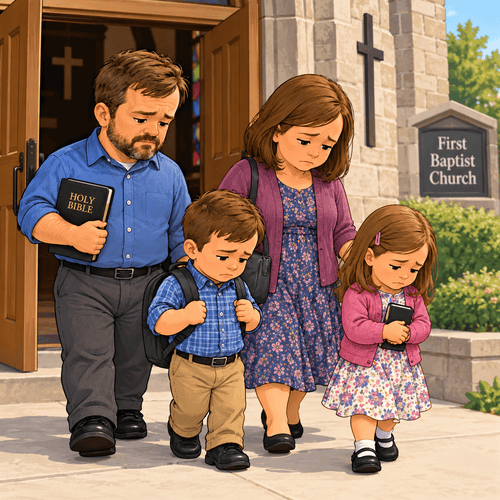

Imagine you stopped going to church from this Sunday. Would anything stop working? Would anyone miss a meal, a prayer, a kind word or a warm welcome at the door?
For many Christians, the honest answer is no. That should worry us.
Today, people tend to treat church like a restaurant. They walk in, get served, judge the food and leave. But the Bible doesn’t describe the church as a restaurant. It describes the church as a body—and a body has no customers. Every part has work to do.
So the real question isn’t whether we should serve the church. The Bible settles that. The real question is how. In this post, we shall see why every Christian must serve, face the strongest objection and explore the many ways we can serve today—whatever our age, gifts or situation.
KEY TERMS IN THIS POST
- Church: Not a building. It’s the people Jesus has saved, gathered together. In this post, we mostly mean our local church—the real group of believers we belong to.
- Serve/ministry: Both words mean doing good to others for Christ’s sake. ‘Ministry’ comes from a Latin word meaning ‘service’. It’s not only for pastors.
- Spiritual gift: An ability that God the Holy Spirit gives believers so they can help other believers.
- Edify: To build up. When the Bible talks about ‘building up the body’, it means helping fellow Christians grow strong in faith and love.
Why Every Christian Must Serve: The Bible’s Case
The Bible does not make this case with just one verse. It builds it like a chain. Each link is a clear text. Put them together, and the conclusion is very hard to escape.
- Link 1: You’re part of a body. Paul writes, ‘Now you are the body of Christ and individually members of it’ (1 Corinthians 12:27). A body has no spare parts. Paul even says that ‘the parts of the body that seem to be weaker are indispensable’ (12:22). ‘Indispensable’ means ‘you cannot do without it’. That includes the quiet, the shy and the unseen.
- Link 2: You’ve been given a gift. ‘To each is given the manifestation of the Spirit for the common good’ (1 Corinthians 12:7). Notice the word ‘each’. Not some. Not only the clever or the confident. Each believer.
- Link 3: Your gift is for other people. Peter writes, ‘As each has received a gift, use it to serve one another, as good stewards of God’s varied grace’ (1 Peter 4:10). A steward is a manager who looks after someone else’s property. Your gifts are not really yours. God has lent them to you to help His people. Jesus warned about the servant who buried his master’s money in the ground (Matthew 25:14–30).
- Link 4: Service flows from grace. We don’t serve to earn God’s love. ‘We are his workmanship, created in Christ Jesus for good works, which God prepared beforehand, that we should walk in them’ (Ephesians 2:10). Notice the order. First God saves us by grace (verses 8–9). Then we serve. Service is the fruit of salvation, never the price of it.
- Link 5: Jesus is our pattern. ‘For even the Son of Man came not to be served but to serve, and to give his life as a ransom for many’ (Mark 10:45). The night before He died, the King of heaven washed His disciples’ dirty feet. Then He said, ‘I have given you an example’ (John 13:15). If the Lord served, no task is beneath His people.
- Link 6: Christ organises our service. Jesus didn’t leave His church without order. He gave elders (also called pastors or overseers) to teach and lead, and deacons to organise practical care (Acts 6:1–6; 1 Timothy 3:1–13). These are offices—formal, recognised roles in the church. So members serve under the care of these leaders, not as lone rangers.
- Link 7: The church has always taught this. This isn’t a modern idea. The great Protestant statements of faith, written centuries ago, say exactly the same thing.
WHAT THE HISTORIC CONFESSIONS SAY
A confession is a written summary of what a church believes. A catechism is a teaching tool in question-and-answer form.
- Heidelberg Catechism (1563), Q&A 55: Explaining ‘the communion of saints’, it says every believer must know it is ‘his duty, readily and cheerfully to employ his gifts, for the advantage and salvation of other members’.
- Belgic Confession (1561), Article 28: Believers must join a church and build up their fellow believers ‘according to the talents God has given them’.
- Westminster Confession of Faith (1646), 26.2: Christians are ‘bound to maintain an holy fellowship and communion in the worship of God, and in performing such other spiritual services as tend to their mutual edification; as also in relieving each other in outward things’. (‘Outward things’ means practical needs such as food, money and help.)
Reformer John Calvin put it sharply—every blessing comes with a job attached:
‘Whatever benefits we obtain from the Lord have been entrusted to us on this condition: that they be applied to the common good of the church.’
John Calvin, Institutes of the Christian Religion, 3.7.5
The Strongest Objection: Is ‘Ministry’ Only for Pastors?
Some careful Bible teachers raise a serious question about Ephesians 4:11–12: ‘And he gave the apostles, the prophets, the evangelists, the shepherds and teachers, to equip the saints for the work of ministry, for building up the body of Christ.’
Most modern readers take this to mean pastors train ordinary Christians (‘the saints’), and then ordinary Christians do ‘the work of ministry’. But the old King James Version places commas between the phrases: ‘for the perfecting of the saints, for the work of the ministry, for the edifying of the body of Christ’. Read that way, all 3 jobs belong to the pastors. ‘The ministry’ then means the official work of preaching and the sacraments (baptism and the Lord’s Supper).
Presbyterian New Testament scholar T David Gordon argued for this older reading in a well-known 1994 journal article. His concern was real: if we’re not careful, pastors become mere managers and we forget how special the preaching office is.
2 Ways to Read Ephesians 4:12
| QUESTION | READING A: THE ‘EQUIPPING’ VIEW | READING B: THE OLDER ‘OFFICE’ VIEW |
|---|---|---|
| Who does ‘the work of ministry’? | All believers, trained by their pastors | Pastors and teachers |
| What does ‘ministry’ mean here? | Every kind of service in the church | The official work of preaching and the sacraments |
| What is it guarding? | That every Christian stays active | That the preaching office is not downgraded |
Here’s the key point: we don’t need to settle this debate to make our case. Even if Reading B is right, the same passage goes on to say the whole body grows ‘when each part is working properly’ (Ephesians 4:16). Each part. Working. And Romans 12:6–8 and 1 Peter 4:10–11 command every believer to use their gifts. The case for every Christian serving doesn’t hang on one comma. It stands on many texts.
Anglican theologian JI Packer summed it up simply: ‘Every-member ministry in the body of Christ is the New Testament ideal.’ Both sides can agree on two truths. The pastor’s preaching office is special, and every member has work to do. These truths are friends, not enemies.
IN SHORT
The question is not if you serve but how. God has given every believer a gift, a body to belong to and a Saviour to copy.
The Available Options: Ways to Serve the Church Today
Peter divides gifts into two broad groups: ‘whoever speaks… whoever serves’ (1 Peter 4:11). Packer noticed the same pattern in Romans 12—some gifts are gifts of speech, others are gifts of practical helpfulness. Most of us have a mix of both. Here are the main options the Bible gives.
Ways to Serve Our Local Church
| WAY TO SERVE | WHAT IT LOOKS LIKE IN PRACTICE | BIBLE BASIS |
|---|---|---|
| Faithful presence | Joining a local church, being there each week, singing and greeting others | Hebrews 10:24–25 |
| Prayer | Praying by name for our elders, members, missionaries and the sick | Ephesians 6:18–19 |
| Teaching the Word | Helping with children’s classes, leading a Bible study, reading the Bible with a new believer | 1 Peter 4:11; Colossians 3:16 |
| Older teaching younger | Mature believers guiding younger ones in faith, family and daily life | Titus 2:3–5 |
| Mercy | Taking meals to families in need, visiting the sick and widows, helping the deacons | Acts 6:1–6; James 1:27 |
| Hospitality | Inviting people for a meal, welcoming visitors, giving newcomers a friend | Romans 12:13; 1 Peter 4:9 |
| Giving | Giving regularly, generously and cheerfully to your church’s work | 2 Corinthians 9:6–7 |
| Practical help | Cleaning, repairs, sound and video, accounts, organising events | 1 Corinthians 12:28; Exodus 31:1–6 |
| One-another care | Encouraging, gently correcting and carrying each other’s burdens | Hebrews 3:13; Galatians 6:2 |
| Church office | Serving as an elder or deacon, for those called and qualified | 1 Timothy 3:1–13; Titus 1:5–9 |
| The wider church | Supporting missionaries, church planting and persecuted believers | 3 John 5–8; Hebrews 13:3 |
Serving Without a Title
Many Christians feel they’re not serving unless their name is on a rota (a list that shows who does which job and when). But most service in the New Testament has no title at all. The Bible is full of ‘one another’ commands: love one another, bear one another’s burdens (Galatians 6:2), encourage one another (Hebrews 3:13), forgive one another (Ephesians 4:32). None of these requires a badge or a committee.
Think of the woman who notices a visitor sitting alone and goes to sit with her. The man who fixes the leaking tap without being asked. The teenager who spends time with an elderly widow. Nobody may thank them on Sunday. But Jesus sees: ‘whoever gives one of these little ones even a cup of cold water… will by no means lose his reward’ (Matthew 10:42).
Finding Our Gift by Serving
Many Christians wait to discover their gift before they start serving. That usually gets things backwards. In the Bible, gifts are found in use, not in theory. We learn to swim in the water, not by reading about water.
- Start with a need. Look around your church. What needs doing? Who needs help? Begin there.
- Ask your elders. They know the church’s needs, and they know you. Ask them, ‘Where could I help?’
- Notice your joy. God often gives us a love for the work He equips us to do. But joy alone is not proof. The church’s confirmation matters more than our feelings.
- Stay humble. Some tasks fit no gift list. Someone still has to stack the chairs. Jesus washed feet.
Every Season of Life Can Serve
Our situation may limit what we can do. It never removes the call to serve.
Serving in Different Seasons of Life
| SEASON OF LIFE | WAYS WE CAN STILL SERVE |
|---|---|
| Young parents | Bringing children to church faithfully, leading family worship at home, opening your home even when it is noisy, praying during night feeds |
| Students and young adults | Helping with children’s work and practical tasks, welcoming newcomers, learning from older believers |
| Busy workers | Giving, weekend hospitality, faithful presence, using work skills such as accounts, repairs or IT for the church |
| Older believers | Guiding younger believers, praying, visiting, sharing stories of God’s faithfulness |
| The sick and housebound (unable to leave home) | A ministry of prayer, phone calls and letters of encouragement, and a living example of patient trust in God |
What About My Job? Serving in Daily Work
Your daily work matters to God. The Dutch theologian and prime minister Abraham Kuyper famously said:
‘There is not a square inch in the whole domain of our human existence over which Christ, who is Sovereign over all, does not cry: “Mine!”’
Abraham Kuyper, 1880
So when a Christian nurse cares for patients or a Christian builder works honestly, God is honoured. But Paul adds an important word: ‘as we have opportunity, let us do good to everyone, and especially to those who are of the household of faith’ (Galatians 6:10). Our work in the world doesn’t replace service in the church. The church is our spiritual family, and family comes first.
Our work skills can serve the church too. God filled craftsman Bezalel with His Spirit for skilled work (Exodus 31:1–6). An accountant can help the deacons, and an electrician can check the wiring.
What Stops Us Serving?
Few Christians refuse to serve outright. Something quieter usually holds them back.
Common Barriers to Serving
| BARRIER | WHAT IT SOUNDS LIKE | WHAT THE BIBLE SAYS |
|---|---|---|
| Consumer thinking | ‘What does this church offer me?’ | Jesus came ‘not to be served but to serve’ (Mark 10:45). |
| Pride | ‘That job is beneath me.’ | Jesus, the Lord of all, washed feet (John 13:14–15). |
| Comparison | ‘My gift isn’t as good as theirs.’ | The foot cannot say it is not part of the body (1 Corinthians 12:15–21). |
| Fear | ‘I will get it wrong.’ | We serve ‘by the strength that God supplies’ (1 Peter 4:11). |
| False humility | ‘I have nothing to offer.’ | ‘To each is given…’ (1 Corinthians 12:7). |
Serving With the Right Heart
Good service can come from bad motives. Peter tells us the true aim: ‘in order that in everything God may be glorified through Jesus Christ’ (1 Peter 4:11). Not our name. His.
CHECKING OUR HEARTS BEFORE WE SERVE
Let’s ask ourselves these 3 honest questions:
- Am I serving to be seen? Jesus warned against doing good ‘in order to be seen’ by others (Matthew 6:1).
- Am I serving to earn God’s favour? We are saved ‘by grace… not a result of works’ (Ephesians 2:8–9).
- Am I serving because I love Christ? ‘The love of Christ controls us’ (2 Corinthians 5:14). This is the right fuel.
Serving Under Our Elders’ Care
Some keen Christians start their own projects without talking to anyone. Their energy is good, but their method isn’t. ‘Obey your leaders and submit to them, for they are keeping watch over your souls’ (Hebrews 13:17). This isn’t about control. It’s about care, wisdom and unity. Before you start something new, speak to your elders. Serving through your church protects you and the people you serve.
This includes serving the wider church. Through your local church, you can support missionaries and help plant new churches (3 John 5–8). You can also stand with persecuted believers: ‘Remember those who are in prison, as though in prison with them’ (Hebrews 13:3). Praying for them and helping them is real service to the body of Christ.
So, How Will We Serve?
Let’s go back to the question at the start. If we disappeared tomorrow, would anything stop working? The goal here isn’t guilt. It’s joy. We don’t serve to become part of the body. We serve because we already are.
So let’s start small, and start this week. Let’s pray for our pastor by name. Welcome one stranger. Ask an elder, ‘Where can I help?’ Then keep going. The Son of Man came not to be served but to serve. Follow Him.
Tough Questions, Honest Answers
Are spiritual gifts tests biblical or reliable?
Spiritual gifts tests are questionnaires that claim to tell us what our gift is. The Bible never mentions them, and they often measure personality more than gifting. They can help us think, but they shouldn’t have the final word. In Scripture, gifts are confirmed as believers use them and the church recognises them (1 Timothy 4:14). Many tests also include gifts like new prophecy or tongues, which many careful Bible teachers believe ceased with the apostles. It’s wiser to serve where there’s a need and let your elders and fellow members help you see your strengths.
Can I serve in a church if I’m not a member?
Membership means formally joining a local church, making promises to it and coming under its leaders’ care. Some simple help, like making tea, may be open to regular attenders. But many churches rightly ask that people who teach, lead or work with children become members first. This is not unkind. Leaders ‘will have to give an account’ for the people in their care (Hebrews 13:17), so they need to know who is serving. If we want to serve more deeply, membership is the natural next step.
What roles can women serve in at church?
Women served richly in the early church. Phoebe served the church at Cenchreae (Romans 16:1), Priscilla helped explain the faith more fully to Apollos (Acts 18:26) and older women are told to train younger women (Titus 2:3–5). At the same time, the New Testament keeps the office of elder—the role of teaching and ruling with authority—for qualified men (1 Timothy 2:12; 3:1–7). This isn’t about worth, because men and women are equally made in God’s image and equally saved by grace (Galatians 3:28). Outside the office of elder, the doors are wide open: prayer, mercy, hospitality, teaching children and women, giving, administration and much more. Churches differ on whether women may serve as deacons, so ask your elders how your church understands this.
Is it wrong to take a break from serving at church?
No, not if the reason is right. Jesus told His tired disciples, ‘Come away by yourselves to a desolate place and rest a while’ (Mark 6:31). Illness, a new baby, caring for a parent or exhaustion can all be good reasons to step back for a season. But a break is different from stopping for good, so talk to your elders and plan your return. Even during a break, you can still pray, attend and encourage others.
How do I know if I’m called to be a pastor or elder?
Older Christian writers spoke of an ‘inward call’ and an ‘outward call’. The inward call is a growing, godly desire for the work (1 Timothy 3:1). The outward call is when the church tests you and confirms that you meet the qualities listed in 1 Timothy 3 and Titus 1, including the ability to teach. Feelings alone are not enough; the church must see it too. If you sense this desire, speak to your elders, serve faithfully now and let them test you over time.
Can a new Christian, or one struggling with sin, serve in church?
Yes—with wisdom. New believers can serve in simple ways from the start, such as welcoming people, setting out chairs and praying. But leadership roles need time, because an elder ‘must not be a recent convert’ (1 Timothy 3:6). Every Christian still struggles with sin, so struggling does not rule you out. Ongoing, unrepentant sin is different, especially in visible roles; it calls for repentance and loving care from your elders first. Service is not a reward for the perfect. It is how forgiven people love one another.
Should I keep serving if my church has hurt me, or I disagree with the leadership?
Church hurt is real, because every church is made up of sinners. First, ask whether the problem is a serious sin or a difference of opinion or taste. For personal wrongs, follow Jesus’ pattern and go to the person privately and humbly (Matthew 18:15). For disagreements, speak respectfully to your elders rather than complaining to others. If the problem is serious false teaching or abuse, it may be right to step back or leave—but seek wise counsel first. Whatever happens, remember that Christ ‘loved the church and gave himself up for her’ (Ephesians 5:25).
Related Reads
- What Does It Mean to Be Spiritually Mature?
- What Are Spiritual Gifts and How Do I Find Mine? A Biblical Guide
- What Does It Mean That the Church Is the Body of Christ?
- Household of God: What It Means to Belong to the Church
- Do I Really Need Church? What Do I Lose If I Stay Away?
- Reformed Church Eldership: The Role and its Qualifications
- Can Women Be Pastors and Deacons? What the Bible Says
- A Royal Priesthood: Why Does Peter Address Believers Thus?
- Gathered and Scattered Church: Why God’s People Need Both
- Is It Ever Okay to Leave a Church? What Does the Bible Say?