
Salvation can feel like a single moment—the instant someone “gets saved.” Scripture describes something richer: a sequence, unfolding from eternity past to eternity future, in which God’s grace moves a sinner from spiritual death to everlasting glory through a series of distinct, connected steps. Theologians call this sequence the Ordo Salutis—Latin for “order of salvation.” It isn’t a formula for earning grace. It’s a map of how grace that’s entirely God’s initiative actually reaches, transforms, and finally glorifies a human life.
Understanding this order does more than satisfy curiosity. It shows why no step can be skipped, why assurance doesn’t depend on your own effort, and why the whole process—start to finish—belongs to God.
The short answer
The Ordo Salutis is the biblical, logical sequence of God’s saving work in a believer’s life: election, calling, regeneration, conversion (repentance and faith), justification, sanctification, and glorification. Each step grounds the next, and Scripture teaches that God completes every stage He begins (Romans 8:29–30).
The Seven Steps, at a Glance
| STEP | WHAT HAPPENS | KEY TEXT |
|---|---|---|
| 1. Election | God chooses a people for salvation before creation, based on grace alone | Ephesians 1:4 |
| 2. Calling | The gospel is proclaimed and the Spirit summons the elect to respond | Romans 10:14 |
| 3. Regeneration | The Spirit gives spiritual life to one who was spiritually dead | John 3:3; Ezekiel 36:26 |
| 4. Conversion | The believer responds in repentance and faith | Mark 1:15 |
| 5. Justification | God declares the believer righteous through Christ’s imputed righteousness | 2 Corinthians 5:21 |
| 6. Sanctification | The believer is progressively conformed to Christ’s likeness | Philippians 2:12–13 |
| 7. Glorification | The believer is fully and finally transformed, free from sin forever | Romans 8:30 |
Step 1: Election
The sequence begins not in time but in eternity, in the settled purpose of God. “He chose us in him before the foundation of the world, that we should be holy and blameless before him” (Ephesians 1:4). Election isn’t God rewarding foreseen goodness in the elect—it precedes any action on their part, good or bad. It rests entirely on God’s own grace and purpose. Romans 8:29–30 traces the whole chain forward from this single point: “those whom he predestined he also called, and those whom he called he also justified, and those whom he justified he also glorified.” Every later step in the Ordo Salutis flows out of this first, unconditional choice. We examine the biblical case for it at length in Unconditional Election: Why God’s Choice Is Entirely His Own, and the eternal, pre-temporal plan behind it in The Covenant of Redemption: A Guide to the Pactum Salutis.
Step 2: Calling
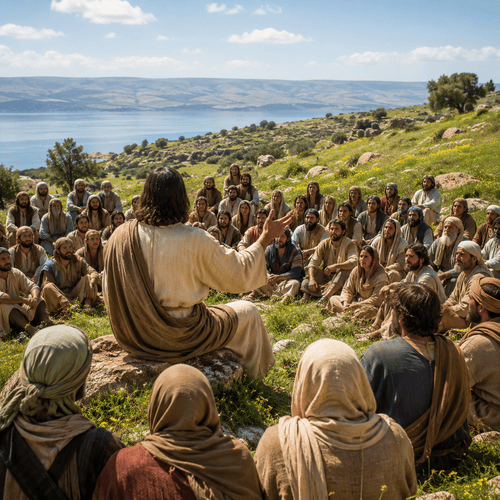
God ordains not only the end of salvation but the means: the preaching of the gospel. “How then will they call on him in whom they have not believed? And how are they to believe in him of whom they have never heard? And how are they to hear without someone preaching?” (Romans 10:14). This calling has two dimensions—the outward call, the gospel as it’s preached to everyone indiscriminately, and the effectual, inward call, the Spirit’s work drawing the elect specifically to respond. Ordinary believers proclaiming an extraordinary message is, remarkably, God’s chosen method for reaching those He has chosen.
Step 3: Regeneration
Before a person can respond to God in faith, something has to change beneath the level of choice itself. Regeneration is the Spirit’s sovereign, prior work of making the spiritually dead spiritually alive. Jesus told Nicodemus plainly: “Truly, truly, I say to you, unless one is born again, he cannot see the kingdom of God” (John 3:3). Ezekiel had already described the same transformation centuries earlier: “I will give you a new heart, and a new spirit I will put within you” (Ezekiel 36:26). This new birth isn’t a reward for faith—it’s the necessary precondition of faith. Nobody regenerates themselves any more than a corpse can decide to breathe.
Step 4: Conversion
Where regeneration is entirely God’s work, conversion is where the believer’s response enters the picture—though even this response is enabled by the regeneration that precedes it. Conversion has two inseparable halves: repentance, turning away from sin, and faith, turning toward Christ in trust. Jesus summarised both in a single call: “The time is fulfilled, and the kingdom of God is at hand; repent and believe in the gospel” (Mark 1:15). Genuine conversion isn’t mere regret over consequences—it’s a real reorientation of the whole person, evidenced by a transformed direction of life.
Step 5: Justification
Justification is a legal verdict, not a moral makeover. It’s God’s declaration that a believer is righteous—not because they’ve become sinless, but because Christ’s righteousness has been credited to their account. Paul states the exchange plainly: “For our sake he made him to be sin who knew no sin, so that in him we might become the righteousness of God” (2 Corinthians 5:21). This declaration happens once, is received through faith alone, and settles the believer’s legal standing before God permanently. For the fuller biblical case, see Salvation: By Faith Alone or by Works? The Biblical Answer.
Step 6: Sanctification
Where justification is a single, completed declaration, sanctification is a lifelong process. It’s the ongoing work of the Spirit conforming the believer to Christ’s likeness—real growth in holiness, marked by real progress and real struggle. Paul holds both divine and human agency together in a single sentence: “Work out your own salvation with fear and trembling, for it is God who works in you, both to will and to work for his good pleasure” (Philippians 2:12–13). Sanctification doesn’t earn or secure salvation—it’s the visible fruit of a salvation already secured.
Step 7: Glorification
The final step is the one every other step has been building toward: the believer’s complete, final, and permanent transformation into Christ’s likeness, free from sin, suffering, and death forever. Romans 8:30 closes the chain exactly where it began, in God’s unbroken purpose: “those whom he justified he also glorified.” Notice the tense—already accomplished, though not yet experienced. Because every step in the Ordo Salutis is God’s work, Paul can speak of glorification as settled fact rather than a hoped-for possibility.
Why the Order Matters
It would be easy to treat this as an academic sequence with no bearing on ordinary faith. In fact, the order carries real pastoral weight.
- It roots assurance outside yourself. If your salvation depended on your own unaided choice at step one, its security would only ever be as strong as your resolve. Because the chain begins in God’s election and ends in God’s glorification, with every link forged by Him, no step depends on your ability to sustain it.
- It explains why regeneration precedes faith. Scripture never asks the spiritually dead to raise themselves. Understanding that regeneration comes first protects against the exhausting, backwards idea that saving faith is something you must first generate in your own strength.
- It keeps justification and sanctification from being confused. Conflating the two produces either legalism (treating ongoing holiness as the ground of acceptance) or licence (treating holiness as optional once justified). Keeping them distinct, yet inseparably connected, guards against both errors.
How Other Traditions Order It Differently
Not every Christian tradition arranges these steps identically, and the differences aren’t trivial—they reflect real theological disagreement about where the decisive agency in salvation lies.
- Arminian theology places a conditional element earlier in the chain: election is based on God foreseeing who would freely believe, grace can be resisted, and those united to Christ can potentially fall away. The order still runs from calling to glorification, but human response is woven into the causal chain rather than simply following from it.
- Roman Catholic theology treats justification as an ongoing process bound up with the sacraments, beginning at baptism and cooperating with human works throughout life, rather than a single, once-for-all legal declaration received by faith alone.
- Eastern Orthodox theology tends to de-emphasise a strict causal order altogether, favouring theosis—a lifelong process of union with God involving ongoing cooperation between divine grace and human freedom—over a linear sequence of discrete steps.
The Reformed order set out above reflects the conviction, worked out across the whole TULIP framework, that grace is not merely offered but effectual at every stage—see What Is TULIP Calvinism? The Five Points Explained for how this order and the five points interlock.
A Story of Grace From Beginning to End
Trace the chain from election to glorification and one thing becomes unmistakable: at no point does the burden of completing your own salvation fall on you. God chose before the world began; God calls through the gospel; God regenerates the dead heart; God declares the believer righteous; God sanctifies through the Spirit; God glorifies at the end. Your response—repentance and faith—is real and necessary, but it’s the Spirit-enabled response to a salvation authored and finished by God, not your contribution to a project still in doubt. That’s not dry theology. It’s the shape of the good news itself.
Tough Questions, Honest Answers
What is the Ordo Salutis?
The Ordo Salutis, Latin for “order of salvation,” is the logical sequence of steps through which God’s grace moves a person from spiritual death to eternal glory: election, calling, regeneration, conversion, justification, sanctification, and glorification.
Do these seven steps happen at separate moments in time?
Not necessarily. Election happened in eternity past, and glorification will happen at the end of the age, but regeneration, conversion, and justification can occur close together, even in a single experience of coming to faith. The order describes logical and causal priority—what grounds what—more than a strict timetable.
Why does regeneration come before conversion rather than after?
Because Scripture describes unregenerate people as spiritually dead (Ephesians 2:1), and the dead cannot generate their own spiritual life or faith. The Spirit’s regenerating work is what makes a genuine response of repentance and faith possible in the first place, not a reward given after that response.
What’s the difference between justification and sanctification?
Justification is a single, completed legal declaration—God pronouncing the believer righteous through Christ’s imputed righteousness. Sanctification is the ongoing, lifelong process of actually becoming holier in practice. One is a verdict; the other is a journey that follows from it.
Does the Ordo Salutis mean I have to earn my way through each step?
No—this is precisely what the order guards against. Every step but conversion is explicitly God’s work, and even conversion is enabled by the regeneration that precedes it. The sequence describes how grace unfolds, not a checklist of human achievements.
How does the Ordo Salutis differ between Calvinist and Arminian theology?
In Reformed theology, God’s grace at each step is effectual—it accomplishes what it sets out to do, and nothing can ultimately obstruct it. In Arminian theology, grace enables but doesn’t guarantee the outcome at several points, particularly election (based on foreseen faith) and calling (which can be resisted).
Can someone move backwards through the Ordo Salutis—for example, lose their justification?
In Reformed theology, no. Because the whole chain is grounded in God’s unconditional election and carried by His power at every stage, Romans 8:30 speaks of glorification as already secured for those God justified. This is the biblical basis for the doctrine of the perseverance of the saints.
Related Reads
- What Is TULIP Calvinism? The Five Points Explained
- Unconditional Election: Why God’s Choice Is Entirely His Own
- The Covenant of Redemption: A Guide to the Pactum Salutis
- What Is God’s Foreknowledge? Why It’s Far More Than Knowing the Future
- Salvation: By Faith Alone or by Works? The Biblical Answer
- Assurance of Salvation: How Can I Know I’m Truly Saved?
- Why Does God Choose Some for Salvation and Not Others?
- What Does the Bible Say About Sin and Its Consequences?