
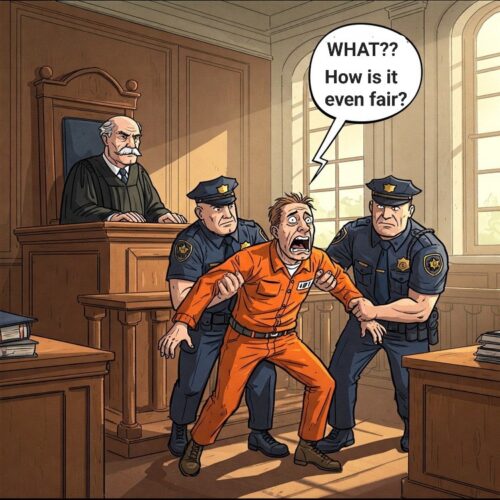
We’ve all heard the comforting side of predestination—that God lovingly chooses His people for salvation. But what about the flip side? If God predestines some to salvation, does He also predestine others to damnation? And if so, how is that even fair?
These questions touch on one of Christianity’s most difficult doctrines: reprobation. Many Christians prefer to avoid this topic altogether, but we do ourselves and our faith a disservice by ignoring what Scripture teaches, even when it challenges our sensibilities. The Reformed tradition offers coherent, biblically-grounded answers that deserve a fair hearing—even if they challenge our intuitions.
What Is Reprobation?
Before diving in, let’s clarify what we mean. Reprobation is God’s eternal decree regarding those not chosen for salvation. In Reformed theology, it’s God’s decision to pass over some individuals, leaving them in their sins and ordaining them to face the consequences of their rebellion. Double predestination refers to the view that God actively chooses some for salvation (election) and, in some sense, others for condemnation (reprobation).
In traditional Reformed teaching, reprobation involves two aspects:
- Preterition: God’s “passing over” or not choosing some for salvation.
- Condemnation: God’s judicial act of condemning sinners for their sins.
What Does the Bible Actually Teach?
The doctrine of reprobation isn’t built on a single proof text but emerges from several key passages.
- Romans 9:14-23 presents the potter’s absolute freedom with the clay: “What if God, desiring to show his wrath and to make known his power, has endured with much patience vessels of wrath prepared for destruction, in order to make known the riches of his glory for vessels of mercy…?” (vv. 22-23)
- Jude 4 mentions certain people who were “long ago designated for this condemnation.”
- 1 Peter 2:8 speaks of those who disobey the word as being “destined to” or “appointed to” stumble.
- Proverbs 16:4 states plainly: “The LORD has made everything for its purpose, even the wicked for the day of trouble.”
- In Matthew 11:25-26, Jesus Himself thanks the Father for hiding things from some and revealing them to others, saying this was the Father’s “gracious will.”
The hardening of Pharaoh’s heart (Exodus 9:16 & Romans 9:17) serves as a paradigm of God raising someone up specifically to display His power through judgement. These passages, taken together, strongly suggest God’s active role not just in salvation but also in those who aren’t saved.
How Is God Active in Reprobation?
Here’s where we need careful precision. Reformed theologians have historically emphasised an asymmetry in double predestination, and they hold together two further distinctions: asymmetry between election and reprobation, and dual causality between God’s decree and human choice.
| ASPECT | IN ELECTION | IN REPROBATION |
|---|---|---|
| God’s action | Active. God intervenes to save sinners who deserve condemnation, changing their hearts and drawing them to Himself. | Passive (“preterition”). God justly passes over sinners, leaving them to their freely chosen rebellion. |
| Cause of the outcome | God is the direct, efficient cause—He produces righteousness in the elect. | God is the permissive, limiting cause. Sinners sin willingly, from their own desires, and are condemned for choices they genuinely made. |
| What it reveals | God’s mercy and compassion. | God’s holiness and justice. |
| Who bears responsibility? | God alone, by grace—no one merits salvation. | The sinner alone, for real guilt—no one is condemned for a sin they didn’t commit. |
Think of it like this: all of humanity has fallen into a pit of sin. God, in His mercy, reaches down and rescues some (the elect). Those left in the pit (the reprobate) can’t complain of injustice—they’re simply receiving what their sin deserves, while others receive unmerited mercy. God doesn’t inject new evil into their hearts or force them to sin; He permits them to follow their own sinful desires to their natural conclusion. Consider Pharaoh: God hardened Pharaoh’s heart (Romans 9:17-18), yet Pharaoh hardened his own heart repeatedly. Both are true. God’s sovereignty and human responsibility coexist, even if the mechanism transcends our full comprehension.
But Doesn’t This Make God Unjust?
This is the objection that echoes through the centuries. Paul anticipated it in Romans 9:14: “Is there injustice on God’s part?” His answer is emphatic: “By no means!”
Justice requires giving what’s deserved, not what’s desired. Since all humanity has rebelled against God, all deserve condemnation. No one has a rightful claim on God’s mercy—it’s freely given grace, not an obligation. God would be perfectly just to condemn everyone. That He chooses to save anyone demonstrates astonishing grace.
THE PARDON ANALOGY
If a governor pardons ten prisoners on death row but not the eleventh, has he wronged the eleventh? No—that prisoner receives exactly what justice demands. The injustice would be expecting the governor to pardon everyone, or claiming the eleventh prisoner deserved a pardon the others got. Election showcases God’s mercy; reprobation demonstrates His justice. Neither involves injustice.
The potter has rights over the clay. Paul addresses this directly with the potter-and-clay analogy (Romans 9:19-21). The creature has no standing to charge the Creator with injustice. God has absolute rights over His creation—He can make from the same lump of clay “one vessel for honourable use and another for dishonourable use” (Romans 9:21). This isn’t arbitrary tyranny; it’s the prerogative of a sovereign God who defines justice itself. We don’t stand above God, judging His actions by an independent standard. He is the standard.
God’s revealed will and hidden decree. Reformed theology distinguishes between God’s revealed will (what He commands) and His decretive will (what He ordains). God genuinely commands all people everywhere to repent (Acts 17:30). He takes no pleasure in the death of the wicked (Ezekiel 33:11). The gospel offer is real and sincere to all who hear it. Yet the reprobate reject these authentic offers of grace—they aren’t rejecting something unavailable to them, but what’s genuinely offered. Their condemnation comes from refusing Christ, not from being unable to accept an offer never truly made.
God’s Ultimate Purpose: The Display of His Glory
Romans 9:22-23 reveals the larger framework: “What if God, desiring to show His wrath and to make known His power, has endured with much patience vessels of wrath prepared for destruction, in order to make known the riches of His glory for vessels of mercy?” Both election and reprobation display different aspects of God’s character—His justice and His mercy, His wrath and His grace. The full spectrum of God’s attributes is revealed through both: vessels of wrath demonstrate His holiness and justice; vessels of mercy showcase His compassion and grace. This isn’t divine sadism but the outworking of a purpose that magnifies God’s complete character.
This view coheres with the Bible’s consistent emphasis on God’s sovereignty. Ephesians 1:11 tells us God “works all things according to the counsel of his will.” Psalm 115:3 declares, “Our God is in the heavens; he does all that he pleases.” Most importantly, it maintains the entirely gratuitous nature of grace—salvation is truly unmerited, and no one can claim God owed them salvation or that they somehow earned or deserved it more than others.
Why This Doctrine Matters
The doctrine of reprobation will never be popular. It confronts our human pride and autonomy. It humbles us before divine mystery. It reminds us salvation belongs to the Lord entirely.
Yet it also offers profound comfort. The God who rules over salvation also rules over damnation. Nothing happens outside His control or beyond His purposes. Even the darkest realities of human experience—persistent unbelief, hardened hearts, rejection of truth—fall within His sovereign plan. Why do some respond to the gospel while others, hearing the same message, remain unmoved? Why do some cultures widely embrace Christianity while others remain largely resistant? Without some doctrine of reprobation, these realities become harder to explain.
SO DOES GOD CHOOSE WHO GOES TO HELL?
In the Reformed view, yes—God determined the reprobate’s fate by His sovereign decree. But He did so justly, leaving them in their self-chosen rebellion and condemning them for real sins they willingly committed. This isn’t arbitrary cruelty but the coordination of divine sovereignty and human responsibility, displaying both perfect justice and amazing grace. Is it just? Absolutely. No one receives injustice from God’s hand. Some receive mercy; others receive justice.
For believers, this doctrine should produce profound gratitude—salvation is pure grace, nothing in us merited it. It should fuel evangelism—we don’t know who the elect are, so we proclaim Christ to all. And it should lead to worship of a God whose wisdom and justice far exceed our own, whose ways are higher than our ways (Isaiah 55:8-9), and whose glory shines through both mercy and judgement.
Tough Questions, Honest Answers
If God chooses who goes to hell, why evangelise at all?
Because God has ordained not just the ends (who will be saved) but also the means (how they will be saved). He has chosen to use human messengers as His primary instrument for calling the elect to salvation, making our evangelistic efforts the very channel through which His predestination is fulfilled. We don’t know who the elect are, so we proclaim the gospel to everyone. Far from making evangelism pointless, election provides the only guarantee that evangelism will bear genuine, lasting fruit—preaching is the instrument God has chosen to call His elect (Romans 10:14-17).
Doesn’t reprobation make God the author of sin?
No. Reformed theology carefully distinguishes between God ordaining that sin will occur and God committing sin Himself or forcing others to sin against their will. God decreed to permit sin, which displays His justice and makes redemption necessary, but humans sin from their own desires. James 1:13 is clear: “God cannot be tempted with evil, and he himself tempts no one.” With good, God is the direct cause—He produces righteousness in us. With evil, He is the permissive, limiting cause—He ordains its boundaries but doesn’t produce it. We produce evil from our own corrupted wills.
How can God hold people responsible for rejecting a salvation they were never chosen to receive?
The non-elect aren’t condemned for rejecting a salvation never offered to them, but for their actual sins against God’s law. Every person who hears the gospel receives a genuine offer of salvation; the fact that only the elect will respond doesn’t make the offer itself insincere. The inability of fallen humans to respond to God stems from their own sinful nature, not from any impediment placed by God, making their rejection truly culpable. Think of it medically: a doctor offers medicine to sick patients. Some refuse treatment and die. They’re responsible for refusing the cure, even though the doctor only chose to persuade certain patients effectively.
How can we know if we’re elect or reprobate? Doesn’t this doctrine lead to paralysing doubt?
Scripture never encourages us to begin with the question of election but rather with the finished work of Christ and His free offer of salvation. The evidence of election isn’t found in speculating about God’s hidden decrees but in responding to His revealed commands: repent and believe the gospel. No one wondering “Am I elect?” is demonstrating the reprobate’s indifference—that very concern suggests the Spirit’s work. Those who’ve placed their faith in Christ can have assurance of their election based on the Spirit’s work in their lives, manifested in faith, love, and growing holiness. “Whoever comes to me I will never cast out” (John 6:37) is an absolute promise.
Isn’t the Reformed view just Calvinism? Why should I accept one man’s interpretation over others?
“Calvinism” is a nickname, not an accurate description. These doctrines didn’t originate with John Calvin—they were taught by Augustine (4th-5th century), affirmed by the Reformers (Luther, Zwingli, Calvin, Knox), and codified by international church councils like Dort (1618-19). The Westminster Confession (1646), the Belgic Confession (1561), and the Canons of Dort represent the consensus of Reformed churches across nations, not one man’s opinion. The question isn’t “Why accept Calvin?” but “What does Scripture teach?” Romans 9, Ephesians 1, John 6, and Acts 13:48 (“as many as were appointed to eternal life believed”) must be reckoned with.
What about 2 Peter 3:9, which says God is “not willing that any should perish”? Doesn’t that contradict predestination?
Context matters enormously here. 2 Peter 3:9 says God is patient, “not wishing that any should perish, but that all should reach repentance.” Reformed theologians offer two compelling interpretations. First, “any” refers to any of the elect—God is patient because not all of His chosen ones have come to repentance yet; this fits the context, which addresses believers and God’s patience with His people. Second, it can express God’s revealed will—He genuinely takes no pleasure in the death of the wicked (Ezekiel 33:11) and commands all to repent. This doesn’t contradict His decretive will, just as a judge may take no pleasure in sentencing a criminal while still ordaining that justice be done.
What about children who die in infancy? Are some of them reprobate?
Reformed theologians have historically affirmed God graciously receives into heaven those who die in infancy. While Scripture doesn’t explicitly address this question, passages speaking of God’s particular care for children (Matthew 19:14) and the basis of judgement being according to deeds (Revelation 20:12) suggest those who die before moral accountability may be specially dealt with in God’s mercy. We can entrust such little ones to the just and merciful Judge of all the earth.
If reprobation is real, how do you explain deathbed conversions?
Deathbed conversions actually affirm rather than contradict the doctrine of election. The timing of one’s conversion—whether early in life or at its very end—is irrelevant to the eternal decree of God. A person converted in their final moments was no less elect from eternity than one saved in childhood; God simply appointed different moments for their effectual calling.
Related Reads
- Unveiling Reprobation: Does Scripture Truly Teach This Difficult Doctrine?
- Why Does God Show Grace to Some Sinners and Send Others to Hell?
- If God Ordained Evil, Why Am I Accountable? Find Bible Answers
- The Calvinist View of Human Free Will: Are We Truly Free?
- Why Did God Harden Pharaoh’s Heart? The Reformed View
- Can God Be Truly Sovereign and Man Be Free? The Biblical Perspective