Why would God give us the same history twice?
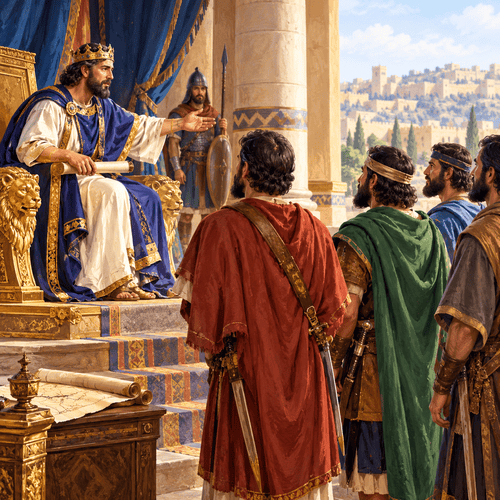
Read 1 Samuel through 2 Kings, then turn to 1 and 2 Chronicles, and you’ll get a strong sense of déjà vu. Saul dies on Mount Gilboa. David becomes king. Solomon builds the temple. The kingdom splits. Jerusalem falls to Babylon. It’s the same story, told by a second writer.
But look closely and the two accounts don’t match word for word. Chronicles leaves out some of the most famous scenes in Samuel and Kings. It adds whole chapters you won’t find there. Now and then the numbers differ. In one place Samuel says God moved David to count Israel, while Chronicles says Satan did.
Sceptics see these differences as proof that the Bible contradicts itself. Many Christians simply skip Chronicles, thinking it’s a dull rerun. Both miss something precious. In this article we’ll see why God gave His people two histories, what each one was written to do, and how to handle the differences honestly.
THE SHORT ANSWER
Samuel–Kings was written during the exile to explain why Israel lost its land: the people and their kings broke God’s covenant.
Chronicles was written after the return from exile to show the survivors who they still were: God’s people, heirs of His promise to David, called to worship at His temple.
Same events, different questions. Most differences come from that difference in purpose. A few small number differences are slips made by later copyists, not errors in what God first gave.
Two Histories at a Glance
Samuel and Kings belong together. They form one long story from the birth of the prophet Samuel to the fall of Jerusalem. Chronicles covers much of the same ground but starts much earlier and ends a little later.
| Detail | Samuel–Kings | Chronicles |
|---|---|---|
| When written | Finished during the exile, after about 561 BC | After the return from exile, around 450–400 BC |
| First readers | Jews living as captives in Babylon | Jews rebuilding life in Jerusalem and Judah |
| Big question | Why did we lose everything? | Are we still God’s people? |
| Starts with | The birth of Samuel (1 Samuel 1) | Adam (1 Chronicles 1:1) |
| Ends with | King Jehoiachin freed from a Babylonian prison | Cyrus’s decree: “Let him go up” |
| Main focus | Both kingdoms, the prophets and the covenant broken | Judah, David’s royal line and the temple |
| Place in the Hebrew Bible | The “Former Prophets” | The very last book of the “Writings” |
Samuel–Kings: A History Written for Exiles
Imagine sitting by the rivers of Babylon (Psalm 137:1). The temple is ash. The king is a prisoner. God had promised David a throne that would last forever (2 Samuel 7:16), yet now there is no throne at all. Has God failed?
Samuel–Kings answers with a firm no. God hasn’t failed; His people have. Again and again the writer shows kings who did “what was evil in the sight of the LORD”. He records the prophets God sent to warn them—Nathan, Elijah, Elisha, Isaiah and others. Then he explains the fall of the northern kingdom in plain words: it happened “because the people of Israel had sinned against the LORD their God” (2 Kings 17:7).
That’s why Samuel–Kings tells David’s sins in full. David’s adultery with Bathsheba, the murder of Uriah and the bloody revolt of Absalom are all there. Even Israel’s greatest king needed mercy. A people in exile needed to see that the exile was not bad luck. It was God’s just judgement.
Yet the last scene holds a spark of hope:
And in the thirty-seventh year of the exile of Jehoiachin king of Judah, in the twelfth month, on the twenty-seventh day of the month, Evil-merodach king of Babylon, in the year that he began to reign, graciously freed Jehoiachin king of Judah from prison.
2 Kings 25:27
David’s line is still alive. It sits at a foreign king’s table, but it hasn’t been wiped out. (For why that line mattered so much, see The Curse of Jeconiah—Jehoiachin is the same man.)
Chronicles: A History Written for Rebuilders
Now move forward about a century. Cyrus of Persia has let the Jews go home (538 BC). A small, poor community is trying to rebuild the temple and the city. They have no king. They are surrounded by enemies. And they wonder: after all that has happened, does God still want us?
Chronicles answers with a loud yes. It opens with nine chapters of family trees, from Adam right down to families living in Jerusalem after the exile (1 Chronicles 9). The message: you belong to a story that began with the human race itself. You are not an accident left over from a disaster. You are Israel.
Then Chronicles focuses on two great gifts God gave His people: the house of David and the house of God. It spends chapter after chapter on David’s plans for the temple and on the singers, priests and gatekeepers he organised (1 Chronicles 22–29). These were exactly the things the returned exiles needed: a pattern for worship and a reason to hope for the promised Son of David.
KEY TERMS
The Chronicler: the name scholars give the unknown author of 1 and 2 Chronicles. Jewish tradition says it was Ezra.
Parallel passages: places where two books tell the same event, such as 2 Samuel 24 and 1 Chronicles 21.
The exile: the years Judah spent captive in Babylon, from the fall of Jerusalem in 586 BC until Cyrus let the Jews return in 538 BC.
Original manuscripts: the very first copies written by the biblical authors. We now have copies of copies.
What Chronicles Leaves Out—and What It Adds
The Chronicler clearly had Samuel and Kings in front of him. Large parts of Chronicles copy them almost word for word. So what he leaves out and what he adds tell us a great deal about his purpose.
| Left out of Chronicles | Found only in Chronicles |
|---|---|
| Saul’s reign (only his death is told, 1 Chronicles 10) | David’s careful preparations for the temple (1 Chronicles 22; 28–29) |
| David and Bathsheba (2 Samuel 11–12) | The orders of priests, Levites, singers and gatekeepers (1 Chronicles 23–26) |
| Absalom’s revolt (2 Samuel 13–19) | King Abijah’s sermon to the northern tribes (2 Chronicles 13) |
| Solomon’s foreign wives and idols (1 Kings 11) | Jehoshaphat sending singers ahead of his army (2 Chronicles 20) |
| Most of the northern kingdom’s history | Hezekiah’s great Passover for all Israel (2 Chronicles 30) |
| Most of the stories of Elijah and Elisha | Manasseh’s repentance in Babylon (2 Chronicles 33:10–17) |
Is the Chronicler covering up David’s and Solomon’s sins? No. He takes for granted that his readers already know Samuel and Kings. He even points them to other records for the full story (1 Chronicles 29:29). And he doesn’t hide every failure. He tells us David couldn’t build the temple because he had “shed much blood” (1 Chronicles 22:8). He gives a whole chapter to David’s sinful census (1 Chronicles 21). He shows good kings like Asa, Joash and Uzziah falling badly at the end of their lives.
The Chronicler isn’t writing a cover-up. He’s writing a sermon from history. He chooses the scenes that speak most directly to his readers’ needs.
THINK ABOUT IT: FOUR GOSPELS, TWO HISTORIES
We don’t think Matthew, Mark, Luke and John contradict each other because each tells Jesus’ story in his own way. Each Gospel writer chose his material for his readers. John even says Jesus did many other signs “which are not written in this book” (John 20:30).
Samuel–Kings and Chronicles work the same way. God gave us more than one inspired witness so we could see the same events from more than one angle.
The Chronicler’s Great Message: Seek the LORD
If one verse sums up Chronicles, it is God’s answer to Solomon’s prayer at the temple. It appears only in Chronicles:
if my people who are called by my name humble themselves, and pray and seek my face and turn from their wicked ways, then I will hear from heaven and will forgive their sin and heal their land.
2 Chronicles 7:14
Watch for the word “seek” and you will find it everywhere in Chronicles. The prophet Azariah tells King Asa, “The LORD is with you while you are with him. If you seek him, he will be found by you, but if you forsake him, he will forsake you” (2 Chronicles 15:2). Kings who seek God are blessed. Kings who forsake Him meet trouble, often quickly.
The clearest example is Manasseh, the worst king Judah ever had. Kings records his evil and says it helped seal Judah’s doom (2 Kings 21:10–15; 24:3–4). Chronicles adds something Kings doesn’t tell us:
And when he was in distress, he entreated the favour of the LORD his God and humbled himself greatly before the God of his fathers. He prayed to him, and God was moved by his entreaty and heard his plea and brought him again to Jerusalem into his kingdom. Then Manasseh knew that the LORD was God.
2 Chronicles 33:12–13
Do the two books contradict each other? Not at all. Kings explains the national disaster: the damage Manasseh did to Judah couldn’t be undone (2 Kings 23:26). Chronicles shows personal grace: even Manasseh could be forgiven when he repented. For returned exiles who carried the guilt of their fathers, that was exactly the news they needed. If God could restore Manasseh, He could restore them.
The Number Differences: What’s Really Going On?
Most differences between the two histories come from the authors’ different purposes. But a small number are differences in numbers. Here are the best-known ones.
| Passages | The difference | Likely explanation |
|---|---|---|
| 2 Samuel 24:9; 1 Chronicles 21:5 | 1,300,000 or 1,570,000 fighting men | Different groups counted; Joab never finished the count (1 Chronicles 21:6; 27:24) |
| 2 Samuel 10:18; 1 Chronicles 19:18 | 700 or 7,000 chariots | A copyist’s slip with a number |
| 1 Kings 4:26; 2 Chronicles 9:25 | 40,000 or 4,000 horse stalls | A copyist’s slip; 4,000 fits Solomon’s 1,400 chariots (1 Kings 10:26) |
| 2 Kings 8:26; 2 Chronicles 22:2 | Ahaziah was 22 or 42 when he became king | A copyist’s slip; some ancient translations of Chronicles read 22 or 20 |
| 2 Kings 24:8; 2 Chronicles 36:9 | Jehoiachin was 18 or 8 | A digit lost in copying; some Hebrew copies and the Greek of Chronicles read 18 |
| 2 Samuel 21:19; 1 Chronicles 20:5 | Elhanan killed “Goliath” or “Lahmi the brother of Goliath” | The text of Samuel was probably damaged in copying; Chronicles keeps the original |
Why would numbers go wrong so easily? Hebrew scribes copied by hand, often from worn scrolls. Numbers carry no meaning in context the way words do, so a slip is hard to spot. Some scholars think numbers were sometimes written with signs or letters that look very alike. One small slip could turn 18 into 8 or 4,000 into 40,000.
Notice what these slips have in common. None of them touches any teaching of the faith. None changes what we believe about God, sin or salvation. And we can see them only because God preserved both accounts side by side. A forger trying to cover his tracks would have made the numbers agree. Honest scribes copied what they had in front of them, even when it looked awkward. (For two of these cases in detail, see 22 or 42: How Old Was Ahaziah When He Became King?)
WHAT INERRANCY DOES—AND DOESN’T—CLAIM
Christians confess that “all Scripture is breathed out by God” (2 Timothy 3:16). Inerrancy means that what God breathed out—the original writings—is true in all it affirms.
It doesn’t claim that every copyist in 3,000 years made no mistakes. The Westminster Confession (1646) says the Scriptures were “by his singular care and providence, kept pure in all ages”. God has kept His Word so pure that, by comparing copies, we can still find the original wording of these passages.
Case Study: Who Moved David to Count Israel?
The best-known difference between the two histories isn’t about numbers at all. 2 Samuel 24:1 says the LORD “incited David” to number Israel. 1 Chronicles 21:1 says “Satan stood against Israel and incited David to number Israel.”
This case shows the Chronicler’s method well. He doesn’t deny what Samuel says; his readers knew Samuel well. Instead he adds a layer. Behind David’s proud decision stood an enemy who wanted to harm Israel, and behind the enemy stood God, who used even Satan’s malice to judge sin and lead David to the place where the temple would be built (1 Chronicles 21:28–22:1). Samuel shows the King on the throne. Chronicles shows the adversary at work under Him. Both are true.
We’ve written a full article on this question, with the Hebrew word study and a table comparing both chapters verse by verse: Who Incited David’s Census: God or Satan?
How to Read the Two Histories Together
So how should a Christian use these books? Here are some simple guidelines.
- Read Samuel–Kings first. It is the fuller story. Chronicles assumes you know it.
- Then read Chronicles as a reflection. Ask: what did the Chronicler choose to highlight, and why would that encourage people rebuilding after a disaster?
- Use a parallel guide. Many study Bibles list the matching passages in the margin. Reading them side by side shows how carefully the Chronicler worked.
- Don’t flatten the differences. Each book’s own emphasis is part of what God wants to teach. Let Kings warn you and Chronicles call you back.
- Look for Christ. Both books leave you waiting for a King from David’s line who will never fail. That King has come.
Where Both Histories Point: The Son of David
Samuel–Kings ends with David’s heir freed but still in Babylon. Chronicles ends with Cyrus telling God’s people, “Let him go up” (2 Chronicles 36:23)—the last words of the Hebrew Bible in its traditional order. Neither book ends with a son of David on the throne. Both leave the reader looking forward.
Matthew’s Gospel picks up exactly where they leave off. Like Chronicles, it opens with a family tree. And like Chronicles, that family tree runs through David to the One who will reign forever: “Jesus Christ, the son of David, the son of Abraham” (Matthew 1:1). Jesus is the greater Solomon who builds God’s true house (John 2:19–21). He is the King who never needs a second history to explain His failures, because He has none.
When Jesus spoke of the martyrs from “the blood of Abel to the blood of Zechariah” (Luke 11:51), He was likely naming the first and last murders in the Hebrew Bible, from Genesis to 2 Chronicles 24:20–22. Chronicles closes the Old Testament story. Jesus opens the next chapter.
5 THINGS TO REMEMBER
1. Samuel–Kings was written for exiles to explain why God judged His people.
2. Chronicles was written for returned exiles to assure them they were still God’s people.
3. Most differences come from the authors’ different purposes, not contradictions.
4. A few number differences are copying slips, and none affects any doctrine.
5. Both histories point forward to Jesus, the Son of David.
Conclusion: Two Witnesses, One Faithful God
God didn’t give us the history of Israel twice by accident. One account helped a broken people understand their past. The other helped them face their future. Read together, they show us both God’s justice and His mercy—the God who judges sin and the God who forgives a repentant Manasseh.
So the next time someone tells you the Bible contradicts itself because Kings and Chronicles differ, smile. You’ve just been handed an invitation to read two inspired histories side by side—and to meet the faithful God who stands behind them both.
Tough Questions, Honest Answers
Who wrote 1 and 2 Chronicles?
The books don’t name their author. Jewish tradition, recorded in the Talmud, says Ezra wrote Chronicles, and the end of 2 Chronicles is repeated almost word for word at the start of Ezra (2 Chronicles 36:22–23; Ezra 1:1–3). Many scholars today speak simply of “the Chronicler”, a priest or Levite who wrote after the exile. His family trees run several generations past Zerubbabel (1 Chronicles 3:19–24), so he wrote no earlier than the 400s BC. Whoever he was, the church has always received his work as God’s Word.
Why is Chronicles the last book of the Hebrew Bible?
In the Hebrew Bible, the books are arranged in three parts: the Law, the Prophets and the Writings. Chronicles is the final book of the Writings, so it closes the whole collection. Our English Bibles follow the order of the ancient Greek translation, which put Chronicles straight after Kings. The order of the books isn’t inspired, but the Hebrew order is worth knowing. It means the Old Testament ends with a call to go up and rebuild, waiting for the coming King.
Did the Chronicler invent the stories Kings leaves out?
No. The Chronicler names his sources again and again: the records of Samuel the seer, Nathan the prophet, Gad the seer (1 Chronicles 29:29), the prophecy of Ahijah and the visions of Iddo (2 Chronicles 9:29), and others. These records are now lost, but his readers could check them. Archaeology has also confirmed details found in Chronicles, such as Hezekiah’s water tunnel (2 Chronicles 32:30) and Sennacherib’s attack on Judah. The Chronicler was a careful historian, not a novelist.
Do copying mistakes mean the Bible isn’t really God’s Word?
No. God inspired the original writings, not every later copy. Because we have thousands of ancient manuscripts and translations, scholars can usually spot a copying slip and recover the original wording. The slips that remain are mostly small number differences like those in the table above. Not one Christian teaching depends on them. Through these copies God has given His church a Bible we can trust completely. For more, see Do Textual Variants Undermine the Bible’s Reliability?
Is 2 Chronicles 7:14 a promise for my country today?
Be careful here. God spoke these words to Solomon about Israel, the nation bound to Him by covenant, and the “land” was the land He had given them. No modern nation stands in that covenant place today. But the principle behind the verse still holds for God’s people, the church: when we humble ourselves, pray, seek His face and turn from sin, God hears and forgives (1 John 1:9). Pray it for your church first, and for your nation as you pray for its people to turn to Christ.
Which should I read first, Kings or Chronicles?
Read 1 and 2 Samuel and 1 and 2 Kings first. They give the fuller story, and Chronicles assumes you know it. Then read Chronicles slowly, perhaps with a study Bible that marks the parallel passages. Ask what the Chronicler adds, what he leaves out and why. You’ll find that he often makes the spiritual lesson of a familiar story much clearer.
Does Chronicles teach that all suffering is punishment for sin?
Chronicles does show God often bringing quick blessing on kings who sought Him and quick trouble on those who forsook Him. But it never claims that every hardship is a punishment. Good King Josiah died in battle (2 Chronicles 35:20–24), and other books, such as Job, show righteous people suffering for reasons they couldn’t see. Chronicles teaches a true pattern, not a rule for judging every sufferer. When trouble comes, the right response is to seek God, not to accuse ourselves or others.
Related Reads
- Who Incited David’s Census: God or Satan?
- 22 or 42: How Old Was Ahaziah When He Became King?
- King Ahaziah’s Death: Are the Bible Accounts Contradictory?
- Megiddo Or Jerusalem: Where Did King Josiah Die?
- Do Textual Variants Undermine the Bible’s Reliability?
- Jesus in 1 Chronicles: How David’s Story Points to Christ
- Where Is Jesus in 2 Chronicles? 10 Clear Signposts
- The Curse of Jeconiah: Why His Name Is in Jesus’ Genealogy