Everyone dies. Kings and beggars, young and old—all of us will one day breathe our last. And in those final minutes, something about a person often comes to the surface. The mask comes off. What a man really trusts, he usually shows at the end.
For 2,000 years, Christians have faced that hour. Some were burned at the stake. Some were drowned, beheaded or hanged. Others simply grew old and weak in their own beds. Yet again and again, the words they left behind sound the same note: not terror, but trust. Not boasting, but hope.
In this post we gather dozens of these brief testimonies—from the Bible, from the early martyrs, from pastors and missionaries, and from ordinary believers. Then we ask the most important question: why could they die like this? The answer isn’t that they were braver than others. The answer is Jesus Christ.
This is the main post in our series Famous Last Words. The rest of the series looks closely at believers in the Bible whose final words still speak today: Stephen, Paul, David, Jacob, Joseph and Simeon.
IN SHORT
The pattern: Dying Christians across 20 centuries speak of peace, of Christ, of mercy and of going home.
The reason: Jesus has broken the power of death for everyone who belongs to Him (Hebrews 2:14–15).
The comfort: Our hope rests on Christ’s finished work, not on how bravely—or how clearly—we speak at the end.
Why Last Words Matter
People have always paid attention to last words. A dying person has little reason to pretend. There’s no reputation left to protect. And no one left to impress. So final words often reveal what a person has been leaning on all along.
- Last words show the heart. Jesus said, “out of the abundance of the heart the mouth speaks” (Matthew 12:34). At death, the treasure of the heart tends to spill out.
- Last words test our hope. It’s easy to say “I trust God” on a sunny afternoon. It’s a different thing to say it with your last breath.
- Last words are not a ticket. No one is saved by a good final speech. We’re saved by grace through faith in Christ (Ephesians 2:8–9). Some true believers die suddenly, silently or confused. We shall come back to this below.
So we read these testimonies as evidence, not as requirements. They show what the gospel does when life is stripped down to its last minutes.
The Bible’s Own Last Words
The pattern begins in Scripture itself. Notice how the dying saints of the Bible look forward—to God’s promise, to His salvation, to His Son.
| WHO | FINAL WORDS | REFERENCE |
|---|---|---|
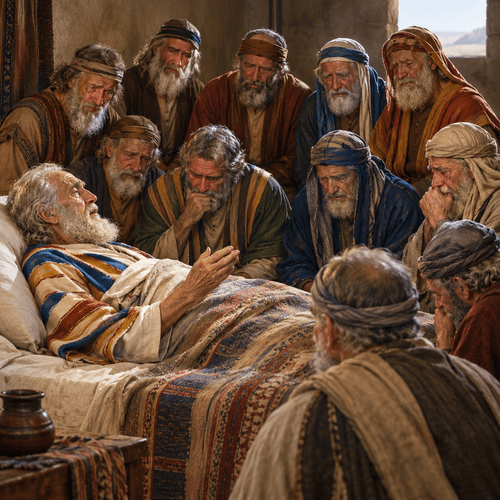
| Jacob | “I wait for your salvation, O LORD.” | Genesis 49:18 |
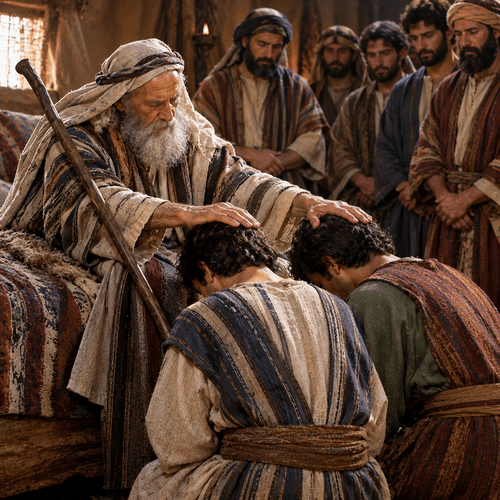
| Joseph | “I am about to die, but God will visit you and bring you up out of this land.” | Genesis 50:24 |
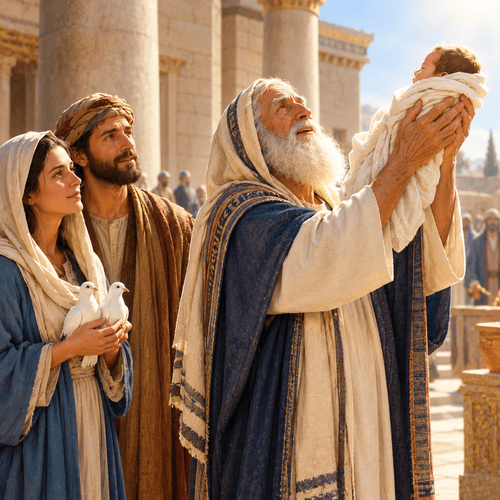
| Simeon | “Lord, now you are letting your servant depart in peace, according to your word; for my eyes have seen your salvation.” | Luke 2:29–30 |
| Jesus | “Father, into your hands I commit my spirit!” | Luke 23:46 |
| Stephen | “Lord Jesus, receive my spirit.” … “Lord, do not hold this sin against them.” | Acts 7:59–60 |
| Paul | “I have fought the good fight, I have finished the race, I have kept the faith.” | 2 Timothy 4:7 |
Look closely at Stephen. As the stones fell, he prayed almost the same two prayers Jesus prayed on the cross: he handed his spirit over to God, and he asked forgiveness for his killers. Luke then tells us, “And when he had said this, he fell asleep” (Acts 7:60). That’s how the Bible speaks of a believer’s death. It is real, but it’s sleep, not ruin. Ever since Stephen, Christians have been dying with the words of Jesus on their lips.
Why Christians Can Die Like This
Before we hear more voices, we need to see the foundation under them. Christian peace at death isn’t wishful thinking. It rests on 5 solid truths.
- Death is a real enemy. The Bible never pretends death is natural or nice. Death came into the world through sin (Romans 5:12), and Paul calls it “the last enemy to be destroyed” (1 Corinthians 15:26). Christians grieve and feel pain. Their peace isn’t denial.
- Christ has defeated that enemy. Jesus died and rose “that through death He might destroy the one who has the power of death, that is, the devil, and deliver all those who through fear of death were subject to lifelong slavery” (Hebrews 2:14–15). The fear of death is a chain. Christ breaks it.
- The sting has been removed. “The sting of death is sin” (1 Corinthians 15:56). Because Christ carried our sin, death can still touch us, but it can no longer poison us. “Thanks be to God, who gives us the victory through our Lord Jesus Christ” (1 Corinthians 15:57).
- Nothing can separate us from God’s love. Paul lists “death” first among the things that cannot separate believers “from the love of God in Christ Jesus our Lord” (Romans 8:38–39).
- Death brings us home. For the Christian, “to die is gain” (Philippians 1:21), because it means to “depart and be with Christ, for that is far better” (Philippians 1:23).
The Heidelberg Catechism (1563) begins with the same comfort. It asks, “What is thy only comfort in life and death?” and answers that I, “with body and soul, both in life and death, am not my own, but belong unto my faithful Saviour Jesus Christ.” That is the secret behind every testimony in this post. They belonged to Someone stronger than death.
Martyrs Who Faced the Fire
Some of the clearest testimonies come from Christians who were killed for their faith. They had a choice. They could deny Christ and perhaps have lived a little longer. They chose Christ.
Timeline of Martyrs’ Last Words
- AD 155—Polycarp of Smyrna. Told to curse Christ, the old bishop replied: “Eighty and six years have I served Him, and He hath done me no wrong. How then can I blaspheme my King who saved me?”
- AD 177—Blandina of Lyons. A slave girl tortured for hours, she kept repeating one sentence that gave her strength: “I am a Christian.”
- AD 203—Perpetua of Carthage. A young mother, she called to her brother before entering the arena: “Stand fast in the faith, and love one another.”
- 1415—Jan Hus. Burned at Constance, the Czech preacher sang as the flames rose: “Christ, Son of the living God, have mercy on me.”
- 1528—Patrick Hamilton. Scotland’s first Protestant martyr prayed at the stake: “Lord Jesus, receive my spirit”—the very words of Stephen.
- 1536—William Tyndale. The man who gave England the Bible in its own language was strangled and burned. His final prayer: “Lord, open the King of England’s eyes.”
- 1554—Lady Jane Grey. Only 16 or 17 years old when beheaded, she said, “Lord, into thy hands I commend my spirit.”
- 1555—John Bradford. Chained to the same stake as a young apprentice, John Leaf, he said: “Be of good comfort, brother; for we shall have a merry supper with the Lord this night.”
- 1555—Hugh Latimer. To his friend Nicholas Ridley as the fire was lit: “Be of good comfort, Master Ridley, and play the man. We shall this day light such a candle, by God’s grace, in England, as I trust shall never be put out.”
- 1556—Thomas Cranmer. Having signed papers denying his faith out of fear, he took it all back at the end. He held his right hand in the fire first—the “unworthy right hand” that had signed—and died praying, “Lord Jesus, receive my spirit.”
- 1661—James Guthrie. The Scottish minister, hanged in Edinburgh, looked beyond his own death to the future of Christ’s church in his land.
- 1666—Hugh McKail. A young preacher of about 26, he said farewell to sun, moon and stars, then cried: “Welcome God and Father; welcome sweet Jesus Christ… welcome glory; welcome eternal life; and welcome death!”
- 1685—Margaret Wilson. An 18-year-old tied to a stake in the sea at Wigtown, she is remembered singing Psalm 25 and reciting Romans 8 as the tide rose.
- 1934—John and Betty Stam. Young missionaries captured in China, they were beheaded together. John’s last letter echoed Philippians 1:20—that Christ might be glorified “whether by life or by death.”
- 1945—Dietrich Bonhoeffer. Led out to be hanged by the Nazis, the German pastor sent a final message to a friend: “This is the end—for me the beginning of life.”
Notice what’s missing. These martyrs don’t curse their enemies. Many pray for them. They do not cling to life. They speak of supper with the Lord, of light, of glory and of new beginnings. Only people who truly believe Jesus rose from the dead talk like this as they die.
Pastors and Preachers on Their Deathbeds
Most Christians don’t die as martyrs. They die slowly, from illness or old age. These deaths test faith in a quieter way: long nights, pain and weakness. Here, too, the same hope shines.
- Martin Luther (1546). His friend Justus Jonas asked if he’d die standing firm on Christ and the doctrine he’d preached. Luther answered clearly: “Yes.” A note found in his pocket summed up his whole theology: “We are beggars. This is true.”
- John Calvin (1564). In great pain, he often repeated words from the Psalms. His friend Theodore Beza heard him say: “Thou bruisest me, O Lord, but it is enough for me that it is thy hand.”
- John Knox (1572). He asked his wife to read John 17 to him, “where I cast my first anchor.” His last words were, “Now it is come.”
- Thomas Hooker (1647). A friend said, “You are going to receive the reward of your labours.” Hooker replied, “Brother, I am going to receive mercy.”
- Samuel Rutherford (1661). Near the end he cried out, “O for a well-tuned harp!” His joyful dying words about the glory of “Immanuel’s land” later inspired a well-known hymn.
- John Owen (1683). Told that his book on the glory of Christ was going to the printer, he said: “The long-wished-for day is come at last, in which I shall see that glory in another manner than I have ever done.”
- John Bunyan (1688). The author of The Pilgrim’s Progress told his friends: “Weep not for me, but for yourselves. I go to the Father of our Lord Jesus Christ.”
- Richard Baxter (1691). In great physical suffering he said, “I have pain… but I have peace, I have peace.” Asked how he was, he answered, “Almost well.”
- Matthew Henry (1714). The Bible commentator told a friend that a life spent serving God and walking with Him is “the most comfortable and pleasant life that one can live in this present world.”
- Isaac Watts (1748). The hymn-writer said he could lie down at night with comfort, not caring whether he woke “in this world or another.”
- Jonathan Edwards (1758). Dying after a failed smallpox vaccination, his final words to those around him were: “Trust in God, and ye need not fear.”
- John Newton (1807). The former slave-trader who wrote “Amazing Grace” said: “My memory is nearly gone, but I remember two things: that I am a great sinner, and that Christ is a great Saviour.”
- Charles Spurgeon (1892). The great London preacher is reported to have told his wife, Susannah Spurgeon, “Oh, wifey, I have had a blessed time with my Lord.”
- Dwight L Moody (1899). Waking from sleep he said: “Earth recedes; heaven opens before me… If this is death, it is sweet! There is no valley here.”
- J Gresham Machen (1937). Dying of pneumonia in North Dakota, he sent a telegram to his colleague John Murray: “I’m so thankful for the active obedience of Christ. No hope without it.”
Missionaries Who Died Far From Home
Some of the most moving testimonies come from those who left home to carry the gospel to other lands—several of them to India.
- Henry Martyn (1812). After translating the New Testament into Urdu and Persian, he died alone in Tokat, in modern Turkey, aged 31. One of his last journal entries says he thought “with sweet comfort and peace of my God,” and longed for the day when “time” would “give place to eternity.”
- William Carey (1834). After 40 years in Bengal, Carey said to the young missionary Alexander Duff: when I am gone, do not speak of Dr Carey, “speak of Dr Carey’s Saviour.”
- Adoniram Judson (1850). Weak and close to death after decades in Burma, he said he would go “with the gladness of a boy bounding away from school.”
- Graham Staines (1999). The Australian missionary and his sons Philip and Timothy were burned to death in their car in Odisha. We don’t know his last words. But his widow, Gladys Staines, soon told the world she had forgiven the killers—the same spirit Stephen showed in Acts 7.
What They Said—and Didn’t
Put all these voices side by side and a clear pattern appears. The same five themes come up again and again.
| THEME | WHAT IT SOUNDS LIKE | EXAMPLES |
|---|---|---|
| Committing the soul to God | “Into your hands…” / “Lord Jesus, receive my spirit.” | Jesus, Stephen, Hamilton, Lady Jane Grey, Cranmer |
| Resting on mercy, not merit | “I am going to receive mercy.” / “A great sinner… a great Saviour.” | Hooker, Newton, Luther, Machen |
| Peace in pain | “I have pain… but I have peace.” | Baxter, Calvin |
| Longing to see Christ | “I shall see that glory…” / “Heaven opens before me.” | Owen, Moody, Martyn, Bonhoeffer |
| Forgiving enemies | “Do not hold this sin against them.” | Stephen, Tyndale, the Staines family |
Now notice what is never said. Not one of these believers says, “I have been good enough,” or “God owes me heaven.” The greatest scholars and preachers among them talk like beggars. Luther called himself a beggar. Hooker expected mercy, not a reward. Machen, a brilliant scholar, put all his hope in Christ’s perfect obedience counted for him. This is the gospel of grace on display.
Someone may say, “But people of other religions, or no religion, can also die calmly.” That is true. Calmness alone proves nothing. The difference lies in what these Christians were calm about. Their peace was not based on their own goodness, on fate, or on getting used to the idea. It was based on a Person—a crucified and risen Saviour who had gone through death before them and come out the other side. That is a hope anchored in history, not in feelings.
When Believers Die Quietly, Confused or Afraid
Here we must be honest and pastoral. Not every Christian dies with beautiful words. Some die suddenly. Some are unconscious. Some suffer from dementia. Some even pass through dark fears at the end.
- John Calvin spent his last days quoting Scripture, but when he actually died, Beza tells us it was without a word or even the slightest movement.
- Robert Murray M’Cheyne (1843), the godly Scottish pastor, died at 29 in the confusion of high fever. His friend Andrew Bonar recorded that he simply lifted his hands, as if to give the blessing, and then breathed his last.
- William Cowper (1800), who wrote hymns like “God Moves in a Mysterious Way,” struggled with deep depression and died under a heavy cloud of fear. Yet his cousin John Johnson noted a look of calm, almost holy surprise on his face after death.
YOUR LAST WORDS AREN’T YOUR TICKET TO HEAVEN
A believer’s safety does not depend on how clearly or bravely he speaks at the end. It depends on the grip of Christ. Jesus said of His sheep, “I give them eternal life, and they will never perish, and no one will snatch them out of my hand” (John 10:28).
If your loved one died confused, silent or afraid, take heart. God’s promise was holding them even when they could no longer hold on.
A Word of Caution: Beware of Deathbed Legends
Christians love these stories. But love for the truth means we must be careful. Over the years, some dramatic deathbed stories have spread that are simply not reliable.
The best-known example is the claim that Charles Darwin turned back to Christ on his deathbed. This story came from a woman called Elizabeth Hope in 1915. Darwin’s daughter, Henrietta Litchfield, later denied it firmly. Similar horror stories about the deaths of famous unbelievers, such as Voltaire, often come from his enemies and are hard to prove.
We do not need legends. The gospel stands on the empty tomb, not on rumours. That is why this post uses testimonies recorded by eyewitnesses and friends wherever possible. True words, carefully handled, are more than enough.
How to Prepare for Your Own Last Words
One day each of us will speak our last sentence. Most of us will not know it is the last one. So how can we prepare?
- Trust Christ today. The thief on the cross shows that it is never too late while there is breath (Luke 23:43). But no one is promised tomorrow. Come to Christ now.
- Fill your memory with Scripture. Notice how many dying believers quoted the Psalms and the words of Jesus. What you store up now will come out later.
- Make peace with people now. Do not leave forgiveness and apology for the deathbed.
- Tell your family where your hope is. Some believers write a letter to be read after they die. It can be a powerful last witness.
- Do not fear the moment itself. The same Lord who walked with them will walk with you: “Even though I walk through the valley of the shadow of death, I will fear no evil, for you are with me” (Psalm 23:4).
Conclusion: Precious in His Sight
From Jacob’s bed in Egypt to a prison yard in Nazi Germany, from the fires of Smithfield to a burning car in Odisha, the testimony is the same. Believers in Christ have faced the worst death can do—and they have faced it with hope.
That hope was not in themselves. It was in the One who said, “I am the resurrection and the life. Whoever believes in me, though he die, yet shall he live” (John 11:25). And it is precious to God: “Precious in the sight of the LORD is the death of his saints” (Psalm 116:15).
The question this post leaves with every reader is simple: what will your last words rest on? If they rest on Christ, then like Moody you may find that there is no valley here—only a door into His presence.
Tough Questions, Honest Answers
What were the seven last sayings of Jesus on the cross?
The four Gospels record seven sayings: “Father, forgive them” (Luke 23:34); “Today you will be with me in paradise” (Luke 23:43); “Woman, behold, your son” (John 19:26); “My God, my God, why have you forsaken me?” (Matthew 27:46); “I thirst” (John 19:28); “It is finished” (John 19:30); and “Father, into your hands I commit my spirit” (Luke 23:46). Together they show forgiveness, salvation, love, the cost of our sin, real human suffering, a completed work and perfect trust.
Do dying people really see heaven, angels or loved ones?
Many families report such moments, and Stephen did see “the Son of Man standing at the right hand of God” (Acts 7:56). But the Bible never promises visions to every believer, and the dying mind can also be affected by illness and medicine. We should not build our hope on experiences. Our hope rests on God’s promises, which are sure whether or not anything is seen.
What happens to a Christian the moment they die?
The believer’s soul goes at once to be with Christ. Paul says to be “away from the body” is to be “at home with the Lord” (2 Corinthians 5:8). The Westminster Shorter Catechism (1647) puts it well: the souls of believers are made perfect in holiness and “do immediately pass into glory,” while their bodies rest until the resurrection.
Is it a sin for a Christian to be afraid of dying?
No. Jesus Himself was “greatly distressed and troubled” in Gethsemane (Mark 14:33). Fear of pain, of the unknown or of leaving loved ones is human. Christ came to free us from the slavery of that fear (Hebrews 2:15), but freedom often grows slowly. Bring your fear honestly to God; it is not a sign that you are lost.
Can a person be saved on their deathbed?
Yes. The thief on the cross trusted Christ in his final hours and heard, “Today you will be with me in paradise” (Luke 23:43). Salvation is by grace, not by years of service. But this is no reason to delay. Many people die without warning, and a hardened heart rarely softens at the end. “Now is the day of salvation” (2 Corinthians 6:2).
What Bible verses can I read to a dying loved one?
Short, familiar passages work best. Good choices include Psalm 23, Psalm 46, Psalm 121, John 14:1–6, Romans 8:31–39, 1 Corinthians 15:51–57, 2 Corinthians 4:16–5:8 and Revelation 21:1–5. Hearing is often one of the last senses to fade, so read slowly and calmly, and pray aloud even if they cannot respond.
Will we recognise our loved ones in heaven?
Scripture gives good reason to think so. David expected to go to his dead child (2 Samuel 12:23). Moses and Elijah were recognised at the Transfiguration (Matthew 17:3). Paul comforts grieving believers with the promise that we will be “together” with them and with the Lord (1 Thessalonians 4:17). Heaven will not erase who we are; it will perfect us.
Related Reads
- Stephen’s Last Words: “Lord Jesus, Receive My Spirit”
- Paul’s Last Words: “I Have Fought the Good Fight”
- David’s Last Words: The King Who Looked for a Better King
- Jacob’s Last Words: “I Wait for Your Salvation, O LORD”
- Joseph’s Last Words: “God Will Surely Visit You”
- Simeon’s Last Words: “Now You Are Letting Your Servant Depart in Peace”
- What Were Jesus’ Final Words on the Cross?
- What Happens to Our Souls When We Die?
- The Inevitability of Death: Why Must We Prepare for It?
- Letter to the Church at Smyrna: Faithful Unto Death
- What Does the Thief on the Cross Teach Us About Salvation?
- Do Near-Death Experiences Prove Heaven? Habermas and the Bible
- No Hope Without It: Why Christ’s Active Obedience Matters