Peter was sure he’d never fall. ‘Though they all fall away because of you,’ he told Jesus, ‘I will never fall away’ (Matthew 26:33). A few hours later, he swore he didn’t even know Jesus. And he did so three times.
Here’s the frightening part: Peter didn’t see it coming. Most backsliders don’t. Nobody wakes up one morning and says, ‘Today I will walk away from God.’ It happens slowly and quietly, one small step at a time. By the time we notice, we’re a long way from home.
So how does a Christian catch himself backsliding? What are the signs of backsliding? And once he sees it, how does he get back? And here’s the best news: if you’re a true child of God, He will not leave you lost.
What Is Backsliding?
To backslide simply means to slide backwards. In the Bible, it describes a believer who turns away from God and drifts back towards sin and his old way of life.
The word comes mostly from older translations like the King James Version; the ESV usually says ‘faithless’ or ‘apostasy’. Proverbs puts it like this: ‘The backslider in heart will be filled with the fruit of his ways’ (Proverbs 14:14).
There’s a beautiful play on words in Jeremiah 3:22: ‘Return, O faithless sons; I will heal your faithlessness.’ In Hebrew, ‘return’ and ‘faithless’ share the same root, shuv, meaning ‘to turn’. The same word names the problem and the cure.
KEY TERM: BACKSLIDING
Backsliding is a season when a true believer’s love for God grows cold. He prays less, obeys less and may fall into serious sin. It can last for a time—but God always brings His true children back.
Notice the word ‘drift’ in Hebrews 2:1: ‘Therefore we must pay much closer attention to what we have heard, lest we drift away from it.’ A boat doesn’t need a storm to drift. It only needs someone to stop rowing.
Can a True Christian Really Backslide?
Yes, and the Bible is honest about it. David was called a man after God’s own heart, yet he committed adultery and murder. Peter walked with Jesus for 3 years, yet he denied Him.
The Westminster Confession of Faith, written in 1646, says true believers may ‘fall into grievous sins; and for a time continue therein’. ‘Grievous’ means very serious. It gives 4 reasons:
- Satan’s temptations. The devil works hard to pull believers away from God (1 Peter 5:8).
- The pull of the world. Pleasure, money and people’s approval slowly win our hearts (1 John 2:15).
- Sin still living inside us. Even after we’re born again, our old sinful nature is still there, fighting against the Holy Spirit (Galatians 5:17).
- Neglecting the means of grace. These are the ordinary ways God feeds our souls: the Bible, prayer, worship, the Lord’s Supper and Christian fellowship. Neglect them and the soul starves.
The Confession also warns that backsliders grieve the Holy Spirit, lose their joy, wound their consciences and hurt others.
Puritan John Owen warned: ‘Be killing sin or it will be killing you.’ Sin never stands still.
Backsliding Isn’t the Same as Falling Away
Backsliding isn’t the same as everyday sin. It’s also very different from apostasy, which means walking away from Christ completely and for ever. This table shows 4 things people often mix up.
Table 1: Everyday Sin, Backsliding, Spiritual Dryness and Apostasy Compared
| Aspect | EVERYDAY SIN | BACKSLIDING | SPIRITUAL DRYNESS | APOSTASY |
|---|---|---|---|---|
| Who | Every believer, every day (1 John 1:8) | True believers, for a season | True believers, for a season | False believers, never truly born again |
| What it looks like | Daily failures that we confess and fight | Love grows cold; sin settles in; prayer is neglected | God feels far away while we still seek Him | A full and final rejection of Christ |
| How it ends | Forgiven as we confess (1 John 1:9) | God brings them back, often through discipline | God’s felt presence returns in His time | No return—they ‘were not of us’ (1 John 2:19) |
| Bible example | Paul’s struggle (Romans 7) | David and Peter | The writer of Psalm 88 | Judas |
Spiritual dryness isn’t always backsliding. Sometimes God feels distant even when we walk closely with Him. (See our post, What Do We Do When God Seems Distant and Silent?) The difference: in dryness, we’re still seeking God; in backsliding, we’ve stopped.
The clearest contrast is Peter and Judas. Both failed Jesus on the same night. But Peter ‘went out and wept bitterly’ (Luke 22:62) and came back. Judas felt sorry but never turned back, and he was lost. Paul explains the difference: ‘For godly grief produces a repentance that leads to salvation without regret, whereas worldly grief produces death’ (2 Corinthians 7:10).
WHY DID PETER COME BACK WHEN JUDAS DIDN’T?
Jesus had already prayed for Peter: ‘Simon, Simon, behold, Satan demanded to have you, that he might sift you like wheat, but I have prayed for you that your faith may not fail. And when you have turned again, strengthen your brothers’ (Luke 22:31–32).
Jesus said ‘when’, not ‘if’. Peter’s return depended on Christ’s prayer, not on Peter’s strength.
Wrong Answers About Backsliding
There are 2 common mistakes. 1 makes backsliding too dangerous. The other makes it too safe.
Mistake 1: “A Backslider Loses His Salvation”
Some teach that a believer who falls into sin can lose his salvation. But Jesus says of His sheep, ‘I give them eternal life, and they will never perish, and no one will snatch them out of my hand’ (John 10:28). And Paul is sure ‘that he who began a good work in you will bring it to completion at the day of Jesus Christ’ (Philippians 1:6).
What about the Bible’s strong warnings? They are real, but they are one of the ways God keeps His people safe. A father shouts, ‘Stop! The road!’ to save his child, not because the child is already lost. God’s warnings wake true believers up and bring them back.
This is why Robert Charles (RC) Sproul preferred to call this doctrine the ‘preservation’ of the saints rather than the ‘perseverance’ of the saints. We keep going only because God keeps us. The Puritan Thomas Manton said that a backslider may lose ‘peace of conscience, and joy in the Holy Spirit; but the estate itself is undefeatable’. We may lose the feeling of being saved. We cannot lose the salvation itself.
Mistake 2: “Backsliding Is No Big Deal”
Other people go to the opposite extreme. They say, ‘Once saved, always saved—so it does not matter how I live.’ Some even speak of ‘carnal Christians’ who can live in sin all their lives.
The Bible says otherwise: ‘No one born of God makes a practice of sinning, for God’s seed abides in him’ (1 John 3:9). And God disciplines His children: ‘For the Lord disciplines the one he loves, and chastises every son whom he receives’ (Hebrews 12:6). To ‘chastise’ means to correct, sometimes painfully. A true believer cannot drift away happily for ever. God will not allow it.
So if someone drifts for years with no discomfort, no discipline and no desire to return, the Bible tells him, ‘Examine yourselves, to see whether you are in the faith’ (2 Corinthians 13:5). The Scottish theologian John Murray put it sharply: ‘The perseverance of the saints reminds us very forcefully that only those who persevere to the end are truly saints.’
How Do Believers Catch Themselves Backsliding?
Honestly? Usually they don’t. God catches them. Sin is deceitful—it tells us everything is fine—so God uses several tools to wake His children up.
6 Ways God Wakes Us Up
- His Word. David had hidden his sin for about a year. Then the prophet Nathan told him a story and said, ‘You are the man!’ (2 Samuel 12:7). God still uses sermons and Bible passages this way.
- A troubled conscience. David later wrote, ‘For when I kept silent, my bones wasted away through my groaning all day long. For day and night your hand was heavy upon me’ (Psalm 32:3–4). An uneasy heart means God has not let go.
- Ordinary events. For Peter, it was a rooster: ‘And immediately, while he was still speaking, the rooster crowed’ (Luke 22:60). God can use anything.
- The look of Jesus. ‘And the Lord turned and looked at Peter’ (Luke 22:61). Often it is not anger that breaks our hearts, but the love of Christ.
- Painful discipline. ‘Before I was afflicted I went astray, but now I keep your word’ (Psalm 119:67). Sometimes God allows trouble to turn us around.
- Other Christians. ‘But exhort one another every day, as long as it is called “today,” that none of you may be hardened by the deceitfulness of sin’ (Hebrews 3:13). To ‘exhort’ means to warn and encourage.
Signs of Backsliding to Watch For
Octavius Winslow, a 19th-century English pastor, showed in his book on spiritual decline that it nearly always begins in secret, in neglect of private prayer, long before others can see it. ‘Let us test and examine our ways, and return to the LORD!’ (Lamentations 3:40).
A SIMPLE SELF-CHECK: AM I DRIFTING FROM GOD?
- Prayer: Has my private prayer become rushed, dry or missing?
- Bible: Do I read Scripture less, or find it boring?
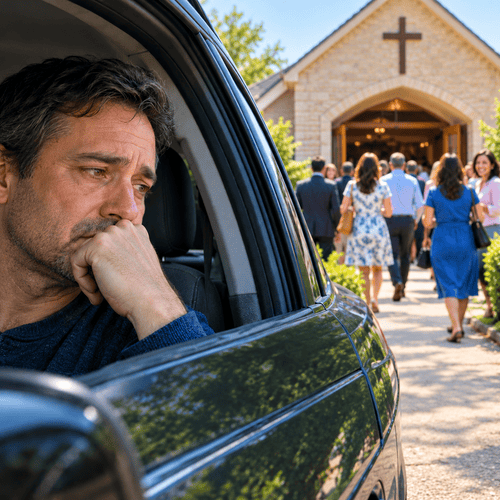
- Church: Has Sunday worship become optional for me?
- Sin: Do I now excuse sins that once made me sad?
- Friends: Do I avoid Christians who might challenge me?
- Delight: Do other things now excite me more than Christ (Revelation 2:4)?
Several ‘yes’ answers? Do not panic—but do not ignore it. Your concern is itself a sign that God is at work in you.
How David Slid: 1 Small Step at a Time
David’s fall in 2 Samuel 11–12 shows how slowly backsliding works:
- Step 1—Idleness: ‘In the spring of the year, the time when kings go out to battle … David remained at Jerusalem’ (2 Samuel 11:1). He was not where he should have been.
- Step 2—Looking: From his roof, he saw Bathsheba bathing, and he kept looking.
- Step 3—Taking: He found out who she was, sent for her and slept with her.
- Step 4—Hiding: When she became pregnant, he tried to cover it up.
- Step 5—Murder: When the cover-up failed, he arranged for her husband Uriah to be killed.
- Step 6—Silence: For around a year, David said nothing—until Nathan came.
No step looked like the last step. That is how drift works.
How Do Believers Get Back?
The way home is simple, though it’s not easy. Jesus gave it to the church in Ephesus, which had drifted from its first love: ‘Remember therefore from where you have fallen; repent, and do the works you did at first’ (Revelation 2:5).
Table 2: Christ’s 3 Steps Home (Revelation 2:5)
| Step | What it means | What it looks like |
|---|---|---|
| 1. Remember | Think back to how close you once were to God | Like the prodigal, who ‘came to himself’ (Luke 15:17) |
| 2. Repent | Turn away from sin and back to God, with real sorrow | Name your sin plainly to God, as David did: ‘I have sinned against the LORD’ (2 Samuel 12:13) |
| 3. Return | Go back to the habits that once fed your soul | Pray, read the Bible, worship and come to the Lord’s Table |
Come to Christ First, Not to Self-Improvement
Many backsliders think, ‘I must fix myself first, then I can come back to God.’ That is backwards. We do not clean ourselves up and then come to Christ. We come to Christ to be cleaned.
John wrote, ‘But if anyone does sin, we have an advocate with the Father, Jesus Christ the righteous’ (1 John 2:1). An advocate is someone who speaks for you in court. Jesus is already speaking for you. And ‘If we confess our sins, he is faithful and just to forgive us our sins and to cleanse us from all unrighteousness’ (1 John 1:9).
DON’T WAIT UNTIL YOU FEEL BETTER
‘If you tarry till you’re better, you will never come at all.’—Joseph Hart, hymn writer (1759)
To ‘tarry’ means to wait. Nobody ever feels worthy. Come now.
Use the Words God Gives You
God even gives us the words: ‘Take with you words and return to the LORD’ (Hosea 14:2). Psalm 51, which David wrote after Nathan’s visit, is a perfect prayer for a returning heart: ‘Restore to me the joy of your salvation, and uphold me with a willing spirit’ (Psalm 51:12).
The young Scottish pastor Robert Murray M’Cheyne gave wise advice: ‘For every look at yourself, take ten looks at Christ.’ Real repentance looks honestly at sin, but it looks at the Saviour even more. The Puritan Thomas Watson added, ‘Till sin be bitter, Christ will not be sweet.’
Be Honest About What Comes Next
- Confess to others where needed. If your sin hurt others or was public, confess to them too. ‘Therefore, confess your sins to one another and pray for one another, that you may be healed’ (James 5:16).
- Put things right where you can. Return what you took and correct the lies you told. This is called restitution.
- Accept that some consequences may stay. God forgave David completely: ‘The LORD also has put away your sin; you shall not die’ (2 Samuel 12:13). But his family still suffered. Forgiveness removes the guilt, but not always the scars.
- Expect God to use you again. After Peter’s denial, Jesus asked him three times, ‘Do you love me?’ and three times told him to care for His sheep (John 21:15–17). Weeks later, Peter preached at Pentecost.
In The Bruised Reed, his much-loved book on Christ’s gentleness, the Puritan Richard Sibbes wrote: ‘There is more mercy in Christ than sin in us.’
How to Stay Close
Better still, don’t drift at all. Keep rowing.
- Guard your secret life with God. Daily prayer and Bible reading are not extras. They are food.
- Stay close to your church. Hebrews 3:13 says we need daily encouragement. A lone sheep is easy prey.
- Keep your eyes on Christ. Love for Him, not fear of failure, is your strongest protection.
The Father Is Running
Jesus told the story of a son who wasted everything and then came home: ‘But while he was still a long way off, his father saw him and felt compassion, and ran and embraced him and kissed him’ (Luke 15:20).
The father did not wait at the door with his arms folded. He ran. That is God’s heart towards His backsliding children. Through Hosea, He promises, ‘I will heal their apostasy; I will love them freely, for my anger has turned from them’ (Hosea 14:4).
If you have drifted, the very fact that you are worried is a good sign. It means the Holy Spirit is still at work in you. Turn around today. Your Father is already running towards you.
Tough Questions, Honest Answers
Is backsliding the same as the unpardonable sin?
No. Jesus spoke of one sin that ‘never has forgiveness’: blasphemy against the Holy Spirit (Mark 3:29). This is not one bad act or a season of drifting. It is a hard, settled rejection of the Spirit’s clear witness to Christ, like the Pharisees who said Jesus’ miracles came from Satan. A person who has committed this sin does not want to return to God. So if you are afraid you have committed it, that fear itself shows you have not. Backsliders can and do come back—David and Peter prove it.
What does Hebrews 6:4–6 mean for someone who has backslidden?
Hebrews 6 speaks of people who ‘have once been enlightened’ and ‘have tasted the heavenly gift’, and then ‘have fallen away’. It says it is impossible ‘to restore them again to repentance’. This describes apostasy—a full rejection of Christ—not a believer’s temporary fall. These people enjoyed many blessings in the church but were never truly changed, like land that drinks the rain yet only grows thorns (Hebrews 6:7–8). The writer then tells his readers, ‘yet in your case, beloved, we feel sure of better things—things that belong to salvation’ (Hebrews 6:9). The warning is meant to wake people up, not to crush true believers.
Is there a prayer a backslider can pray to return to God?
There is no magic prayer, because God looks at the heart, not the words. But the Bible gives us excellent words to borrow. Psalm 51 is David’s prayer after his great fall, and Psalm 32 describes the relief of confession. Hosea 14:2 even gives a short prayer: ‘Take away all iniquity; accept what is good.’ You could pray simply: ‘Father, I have drifted from You and sinned against You. Thank You that Jesus died for this sin. Forgive me, change my heart and restore to me the joy of Your salvation.’ What matters is turning honestly to God and trusting in Christ.
Should a backslidden believer take the Lord’s Supper?
Paul says, ‘Let a person examine himself, then, and so eat of the bread and drink of the cup’ (1 Corinthians 11:28). The Supper is not for perfect people. It is for sinners who trust Christ and are turning from their sin. So a backslider who has repented should come gladly, because the Supper is one of God’s ways of strengthening weak faith. But someone who is still holding on to known sin, with no plan to turn from it, should not come carelessly. If you are unsure, speak to your pastor or elders before the next communion service.
How can I help a friend or family member who is backsliding?
Start by praying for them, just as Jesus prayed for Peter. Then speak to them honestly and gently: ‘you who are spiritual should restore him in a spirit of gentleness. Keep watch on yourself, lest you too be tempted’ (Galatians 6:1). Do not lecture or shame them; ask questions and really listen. Stay in their life, even if they push you away for a while. James promises that whoever brings back a wanderer ‘will save his soul from death’ (James 5:20). If the sin is serious and continues, ask your church leaders to help, as Jesus taught in Matthew 18:15–17.
Does a backslider need to be baptised again?
No. Baptism is a sign and seal of God’s promise, and God’s promise does not wear out when we fail. Paul speaks of ‘one Lord, one faith, one baptism’ (Ephesians 4:5). In Scripture, God’s people who fell and returned were restored through repentance and forgiveness, not by repeating a sign. A returning believer does not need a new start; he needs a renewed walk with God. So instead of seeking a second baptism, come back to the Lord’s Table and to the fellowship of the church.
Why does God allow His children to backslide at all?
This is partly a mystery, but the Bible gives some answers. God sometimes lets us see how weak we are, so that we stop trusting ourselves; Peter learned this after boasting that he would never fall. Our falls also show how great God’s grace is, for ‘where sin increased, grace abounded all the more’ (Romans 5:20). Restored backsliders often become gentler with others who struggle, which is why Jesus told Peter to ‘strengthen your brothers’ after he turned back. None of this makes sin good. Or safe. But it shows us God can bring good even out of our worst failures (Romans 8:28).
Related Reads
- What Does It Mean to Be Spiritually Mature?
- Apostasy vs. Backsliding: What Happens When Sheep Stray?
- Perseverance of the Saints: Why True Believers Cannot Finally Fall Away
- Can Believers Lose Salvation? What Does Hebrews 6 Teach?
- The Unpardonable Sin: What is the Blasphemy Against the Spirit?
- Assurance of Salvation: How Can I Know I’m Truly Saved?
- Letter to the Church in Ephesus: Right Doctrine, Lost Love
- Letter to the Church at Laodicea: When Lukewarm Is Worse Than Cold
- Grace in Motion: Why Did the Prodigal’s Father Run?
- Coping With Failure as a Christian: Hope From David and Peter
- Prayerlessness and Spiritual Dryness: Does the Bible Offer a Remedy?
- What Do We Do When God Seems Distant and Silent?