“Is Jesus God?” is the most consequential question in the history of religion. If the answer is yes, a carpenter from Nazareth is the creator of the universe—and how you respond to him defines everything. If the answer is no, Christianity collapses at its foundation. There’s no comfortable middle ground. What makes this unusual is that it isn’t merely a theological debate. Jesus made specific, historically verifiable claims. His first-century Jewish hearers understood exactly what He was saying—and picked up stones to kill Him for it. The early church worshiped Him as God within two decades of the crucifixion, long before any council or creed. The evidence is there. Let’s examine it.
Why this question matters more than any other
Most religious disagreements are matters of interpretation. This one isn’t.
The deity of Christ is the load-bearing claim of Christianity. Remove it and the entire structure falls. Jesus didn’t arrive merely as a great moral teacher to help people live better lives. He came making claims that, if false, would make Him either a deliberate deceiver or a dangerous lunatic. CS Lewis put the logic starkly: a man who says the things Jesus said isn’t leaving you the option of calling Him simply a good teacher. He’s either Lord, liar, or lunatic.
So when we ask “Is Jesus God?”, we’re not doing abstract theology. We’re asking whether a first-century Jew from Galilee was telling the truth about His own identity. And everything downstream of that answer changes.
Jesus accepted worship—and He knew exactly what that meant
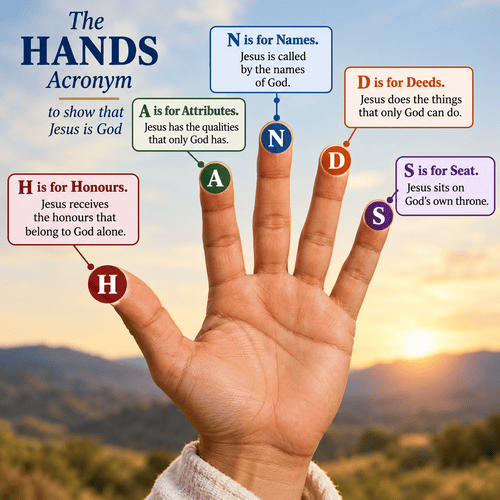
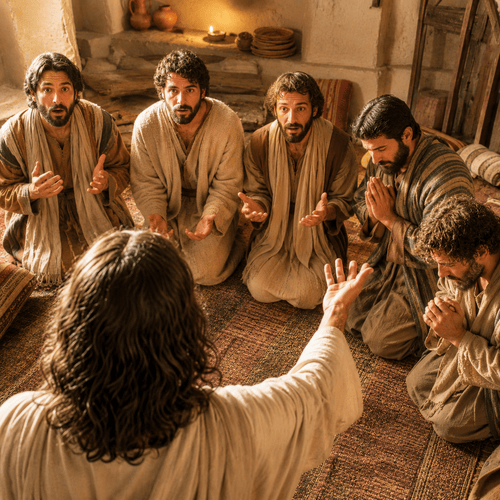
Start here, because it’s the most basic test. In first-century Judaism, the prohibition against worshipping anyone other than God was absolute. The Hebrew Scriptures are saturated with it. When the apostle John falls at the feet of an angel in Revelation, the angel stops him immediately: “You must not do that! I am a fellow servant… Worship God” (Revelation 22:9). When Cornelius bows before Peter, Peter pulls him to his feet: “Stand up; I too am a man” (Acts 10:26). Every godly figure in the Bible refuses worship. Every single one.
Jesus does the opposite.
- After Jesus walks on water, the disciples worship him—and he says nothing to correct them (Matthew 14:33).
- Thomas, face to face with the risen Jesus, cries out “My Lord and my God!” (John 20:28). Jesus doesn’t say “Thomas, you’ve gone too far.” He commends him.
- The magi worship the infant Jesus, and he accepts it (Matthew 2:11).
- A healed leper worships him; he accepts it (Matthew 8:2).
- Women grasp his feet and worship him at the resurrection (Matthew 28:9).
A pious first-century Jew who wasn’t God would have been horrified by this. Jesus wasn’t horrified. He received divine honour as His due—which is either the behaviour of God incarnate, or the behaviour of a deeply deluded fraud.
The “I AM” statements: Jesus speaks in the voice of God
In John’s Gospel, Jesus makes a series of startling statements beginning with the words “I AM”—a construction that would have stopped every Jewish reader cold. In Exodus 3:14, when Moses asks God His name, God replies: “I AM WHO I AM.” The divine name YHWH is linguistically rooted in this self-designation. “I AM” was sacred ground. No faithful Jew would plant himself there without knowing exactly what he was doing.
Jesus does it repeatedly:
| Statement | Reference | What it claims |
|---|---|---|
| “I am the bread of life” | John 6:35 | He is the source of spiritual sustenance—a role Scripture assigns to God |
| “I am the light of the world” | John 8:12 | God is called the light of Israel (Isaiah 60:19–20) |
| “Before Abraham was, I AM” | John 8:58 | Pre-existence and the divine name in a single sentence |
| “I am the resurrection and the life” | John 11:25 | Only God raises the dead |
| “I am the way, the truth, and the life” | John 14:6 | He is the exclusive path to the Father |
The reaction to “Before Abraham was, I AM” is decisive. John records the crowd immediately picked up stones to kill Him (John 8:59). Under Jewish law, blasphemy was a capital offence. They weren’t confused by an obscure theological point—they understood exactly what He had said. You don’t reach for stones because someone claims to be spiritually significant. You reach for stones because someone claims to be God.
The titles he claimed—what did they actually mean?
The titles Jesus accepted carry enormous freight that gets lost in our modern ears.
Son of God doesn’t mean “a being somewhat less than God.” In its first-century Jewish context, it implied a unique, intimate relationship with the Father that carried the weight of equality of nature. When the Jewish leaders accuse Jesus of “making Himself equal with God” in John 5:18, they’re responding to His use of “my Father”—not because the phrase was unusual, but because His usage implied a oneness with God they found blasphemous.
Lord (Greek: kyrios) was the word the Septuagint—the Greek Old Testament—used to translate the divine name YHWH. When the New Testament writers call Jesus “Lord,” they’re applying God’s own title to him. Paul’s great confession in Philippians 2:9–11 says every knee will bow and every tongue confess that Jesus Christ is Lord—a direct quotation from Isaiah 45:23, where it refers to YHWH himself.
Messiah/Christ was understood by some Jews as a royal title, but Jesus consistently fills it with far more than kingship. In Mark 14:61–64, the high priest asks: “Are you the Christ, the Son of the Blessed?” Jesus replies: “I am, and you will see the Son of Man seated at the right hand of Power, and coming with the clouds of heaven.” The high priest tears his robes and cries “Blasphemy!”—not because a king had turned up, but because a man was claiming to share God’s own throne.
What his disciples said—and what it cost them
The apostles weren’t confused about who Jesus was. The New Testament is unambiguous:
John 1:1 — “In the beginning was the Word, and the Word was with God, and the Word was God.” John identifies Jesus (the Word made flesh, v.14) with the very being of God.
Colossians 1:15–17 — “He is the image of the invisible God… for by him all things were created… all things were created through him and for him.”
Hebrews 1:3 — “He is the radiance of the glory of God and the exact imprint of his nature.”
Philippians 2:6 — Jesus, “though he was in the form of God, did not count equality with God a thing to be grasped.”
Scholars note the Philippians 2 passage (vv.6–11) is almost certainly a pre-Pauline hymn—meaning the early church was singing about the divine Christ within 20 years of the crucifixion, before Paul’s letters were even written. This isn’t a doctrine that evolved slowly over centuries. It was there from the very beginning.
And the disciples didn’t merely write these things—they died to defend them. Peter was crucified. Paul was beheaded. James was killed with the sword. Thomas, by early church tradition, was martyred in India. People die for things they believe to be true. No one dies for something they know to be a lie. The apostles were in a position to know whether the resurrection had happened—and they paid with their lives rather than deny it.
The evidence outside the New Testament
You don’t have to take the Bible’s word for it. Non-Christian sources confirm the early church worshipped Jesus as God—and did so from very early on.
- Pliny the Younger (c. AD 112): The Roman governor of Bithynia wrote to Emperor Trajan describing Christians in his province. He reports they “sing hymns to Christ as to a god” (carmen Christo quasi deo dicere). This is Roman bureaucratic documentation, not theology—confirming worship of Jesus as God was widespread within 80 years of his death.
- Ignatius of Antioch (c. AD 107): Writing to several churches on his way to martyrdom, Ignatius refers to Jesus repeatedly as “God in the flesh” and “our God Jesus Christ.” Ignatius was a disciple of the apostle John. If the apostles hadn’t taught the deity of Christ, Ignatius wouldn’t have been dying for it.
- The Council of Nicaea (AD 325): Often presented as the moment the church invented Christ’s divinity. This is historically false. Nicaea didn’t debate whether Jesus was God—both sides agreed on that. The debate was about how the Son related to the Father within the Godhead. The church didn’t vote Jesus into divinity; it clarified what it had always believed.
The hard texts—what sceptics use, and how to read them honestly
Any credible case for Christ’s deity has to face the passages that seem to point the other way. Here are the main ones:
| Passage | The sceptic’s reading | The fuller answer |
|---|---|---|
| Mark 10:18 — “Why do you call me good? No one is good but God alone.” | Jesus is denying he is God. | He’s inviting the rich young ruler to think carefully about who he’s talking to—not denying divinity, but raising the question. If Jesus is God, the statement is perfectly consistent. |
| John 14:28 — “The Father is greater than I.” | The Father outranks Jesus, so they can’t be equal. | Jesus is speaking of His role in the incarnation, not His nature. The Son voluntarily submitting to the Father doesn’t negate equality of essence—just as a son working under his father’s authority doesn’t make them different species. |
| Revelation 3:14 — Jesus is “the beginning of God’s creation.” | Jesus is the first created being. | The Greek word (archē) means “source” or “origin” as much as “first in sequence.” Paul uses almost identical language in Colossians 1:18 to mean Christ is the source of creation, not its first item. |
None of these passages, read carefully and in context, dislodges the overwhelming testimony of the rest of the New Testament. Selective quotation works in a debate. It doesn’t work as history.
Is believing Jesus is God the same as believing in two Gods?
This is the question that hangs behind all the others, and it deserves a straight answer: no.
Christianity isn’t polytheism. The New Testament is as insistent on monotheism as the Old Testament—“Hear, O Israel: the Lord our God, the Lord is one” (Deuteronomy 6:4) is never contradicted. What the New Testament reveals is that the one God exists as three persons: Father, Son, and Holy Spirit. Not three Gods. One God, whose being is richer and more complex than our categories allow for.
The word “Trinity” doesn’t appear in the Bible, but the reality does—from the baptism of Jesus, where all three persons appear simultaneously (Matthew 3:16–17), to Paul’s benediction in 2 Corinthians 13:14: “The grace of the Lord Jesus Christ and the love of God and the fellowship of the Holy Spirit be with you all.”
The Trinity isn’t a contradiction. It’s a mystery—the kind of mystery you’d expect if you were trying to describe the inner life of an infinite God in finite human language.
Tough Questions, Honest Answers
Doesn’t John 14:28 say “the Father is greater than I”? Doesn’t that mean Jesus isn’t equal to God?
Yes, Jesus says this—and He means it. But the statement is about role, not nature. In the incarnation, the eternal Son voluntarily took on human limitations and submitted to the Father’s authority. This is what theologians call the economic subordination of the Son—His functional role in the plan of salvation. It doesn’t negate equality of nature, which the rest of John’s Gospel asserts clearly: “I and the Father are one” (John 10:30); “Whoever has seen me has seen the Father” (John 14:9); “Before Abraham was, I AM” (John 8:58).
If Jesus is God, why did He pray to the Father? Was He praying to himself?
Not at all. The Trinity isn’t one person wearing three masks—it’s one God in three distinct, genuinely related persons. The Father and the Son are distinct persons in an eternal relationship of love. When Jesus prays to the Father, He is doing what the second person of the Trinity does by nature: relating in love to the first. This is what the Trinitarian relationship looks like from the inside. It may be difficult to picture, because we have no analogy in human experience—but that doesn’t make it self-contradictory.
Didn’t the Council of Nicaea in AD 325 invent the idea that Jesus is God?
No—and this is one of the most persistent myths in popular religion. Nicaea didn’t debate whether Jesus was divine; both Arius (who lost) and Athanasius (who won) agreed He was. The debate was about whether the Son was of the same divine substance as the Father (homoousios) or merely similar (homoiousios). The council settled the question; it didn’t invent the doctrine. Documents from well before Nicaea—Ignatius of Antioch (c. AD 107), Polycarp (c. AD 110), Justin Martyr (c. AD 150)—show consistent, unambiguous belief in the full deity of Christ.
What about Muslims and Jehovah’s Witnesses who say Jesus never claimed to be God?
They’re right that Jesus rarely said “I am God” in precisely those words—but that’s the wrong standard. First-century Jews communicated identity through actions and titles, not formal propositions. When Jesus forgives sins (a divine prerogative—Mark 2:7), accepts worship, claims to share God’s throne, speaks with the “I AM” voice of YHWH, and teaches on His own authority rather than saying “Thus says the Lord,” He is doing what no faithful Jew would do unless He believed Himself to be God. The Jewish leaders who tried to stone and crucify Him understood this clearly. Their charge was blasphemy, not confusion.
Did the disciples believe Jesus was God from the beginning, or is this a later development?
From the very beginning. The Philippians 2 hymn—almost certainly composed before AD 50, making it earlier than Paul’s letters—describes Jesus as existing “in the form of God” before the incarnation. Paul’s letters in the AD 50s treat the full deity of Christ as received tradition, not new teaching. The Gospel of John’s prologue (“In the beginning was the Word, and the Word was God”) isn’t a late theological innovation but the church articulating what it had believed since the resurrection. Roman governor Pliny confirms in AD 112 that Christians were already worshipping Christ as God. There’s no early non-divine Jesus followed by a later theological upgrade. The deity of Christ is present from the start.
Can’t Jesus just be a great moral teacher without being God?
This is the most popular middle position—and it doesn’t survive scrutiny. A man who claimed to forgive sins, accepted worship, identified Himself with the divine name of God, and declared Himself the final judge of all humanity at the last day isn’t making the claims of a moral teacher. He’s making the claims of God—or of a lunatic. As CS Lewis wrote: “You can shut him up for a fool, you can spit at him and kill him as a demon, or you can fall at his feet and call him Lord and God. But let us not come with any patronising nonsense about his being a great human teacher. He has not left that option open to us.”
Related Reads
- Did Jesus Rise from the Dead? The Historical Case for the Resurrection
- How Did Jesus Die? What Doctors Say About the Cross
- Is the Bible Historically Reliable? Here’s What the Evidence Shows
- Is Christianity Rational?
- The Kalam Cosmological Argument: Does the Universe Need a Creator?
- The Moral Argument for God’s Existence: The Case, Objections, and Answers
- Do Christians and Muslims Worship the Same God? Yahweh vs Allah Explained
- Oneness Pentecostalism vs the Trinity: A Biblical Response
- Did the Disciples Invent Jesus's Divinity?
- How Does the HANDS Acronym Help Explain Jesus Is God?
- Jesus in the Quran vs the Bible: Who Gets Jesus Right?
- What Is Progressive Christianity? Is It Still the Christian Faith?