Mount Zion is more than a place. It began as a small, rocky ridge in Jerusalem that King David captured about 3,000 years ago. By the end of the Bible, it has become something much bigger—a name for the whole people of God, gathered around Jesus Christ.
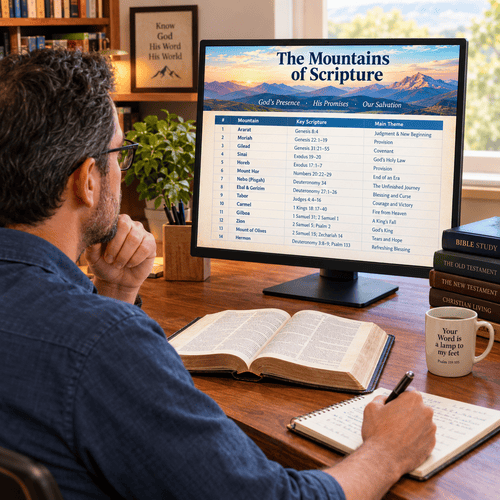
This post is part of our Mountains of Scripture series on Old Testament mountains that carry New Testament meaning. We have already looked at Mount Moriah, where Abraham offered Isaac, and Mount Sinai, where God gave the law. Zion pairs naturally with Sinai, because Hebrews 12:18–24 sets the two side by side and says: you have not come to Sinai, but you have come to Zion.
Below we trace Zion’s story through both Testaments and answer the main objections. Our conclusion: in Scripture, Zion moves from a hill to a people.
MOUNT ZION AT A GLANCE
What it was: the Jebusite fortress that David captured and renamed ‘the city of David’ (2 Samuel 5:7).
What it became: the place God chose to live among His people, where the King ruled and the temple stood (Psalm 132:13–14).
What it means now: the heavenly city where Jesus reigns, and the church that already belongs to it (Hebrews 12:22; Galatians 4:26).
Where Was Mount Zion?
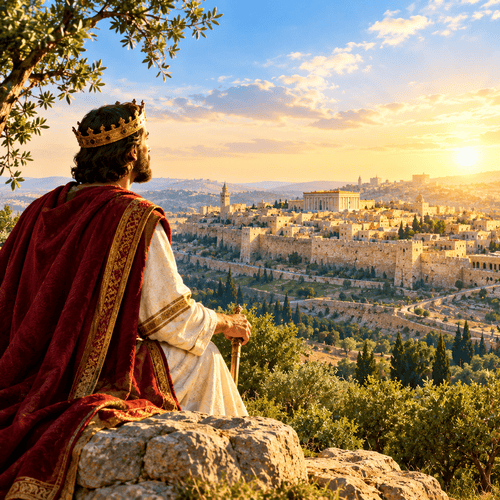
Zion was first the name of a Canaanite stronghold on the south-eastern ridge of Jerusalem. The Jebusites who lived there thought no one could take it. David took it anyway: ‘Nevertheless, David took the stronghold of Zion, that is, the city of David’ (2 Samuel 5:7).
But the name did not stay small. As the Bible’s story moves forward, ‘Zion’ grows to cover more and more:
| STAGE | WHAT “ZION” MEANT | KEY TEXT |
|---|---|---|
| David’s capture | The fortress on the south-eastern ridge | 2 Samuel 5:7 |
| The ark arrives | David’s royal city, where the ark of God rested | 2 Samuel 6:12; 1 Kings 8:1 |
| Solomon’s temple | The temple hill, built on Mount Moriah just north of David’s city | 2 Chronicles 3:1; Psalm 132:13 |
| The prophets | All of Jerusalem, and then its people (‘daughter of Zion’) | Isaiah 1:8; 52:1–2 |
| The New Testament | The heavenly city, and the church gathered around Christ | Hebrews 12:22–23 |
Notice that 2 Chronicles 3:1 places the temple on Mount Moriah. So the hill where Abraham was ready to sacrifice his son became part of ‘Zion’, the place where Israel offered sacrifices for centuries. The mountains in this series are not separate stories. They are chapters in one story. (Today’s tourist ‘Mount Zion’ is a different hill—see the FAQs.)
Zion in the Old Testament: Four Big Ideas
In the Psalms and the Prophets, Zion carries four big ideas. Each one prepares us for the New Testament.
- God’s chosen home. Zion was not only David’s choice. It was God’s. ‘For the LORD has chosen Zion; he has desired it for his dwelling place: “This is my resting place forever; here I will dwell, for I have desired it”’ (Psalm 132:13–14). The God who walked with Adam in Eden now settled among His people.
- The King’s throne. In Psalm 2 the nations plot against God and His anointed King. God answers: ‘As for me, I have set my King on Zion, my holy hill’ (Psalm 2:6). Zion is where God’s chosen King rules.
- The joy of the whole earth. Psalm 48 calls Zion ‘the joy of all the earth’ and ‘the city of the great King’ (48:2). Zion was not a tall mountain. It was great because of who lived there.
- A mother of the nations. Psalm 87 names Israel’s old enemies—Egypt (called ‘Rahab’), Babylon, Philistia, Tyre and Cush—and then says people from these nations will be counted as born in Zion: ‘And of Zion it shall be said, “This one and that one were born in her”’ (87:5). Long before Pentecost, the Old Testament expected Gentiles to become Zion’s children.
The prophets add one more thread: a future day when Zion becomes the centre of a worldwide pilgrimage. ‘It shall come to pass in the latter days that the mountain of the house of the LORD shall be established as the highest of the mountains … and all the nations shall flow to it … For out of Zion shall go the law, and the word of the LORD from Jerusalem’ (Isaiah 2:2–3).
A small hill cannot hold every nation. The New Testament shows how this happens.
Even in the Old Testament, Zion Is a People
The Old Testament itself already uses ‘Zion’ for people, not just a place.
- God calls His people ‘Zion’. In Isaiah 51:16 God speaks of ‘saying to Zion, “You are my people.”’
- ‘Daughter of Zion’ is a name for the people. The prophets often address the people of Jerusalem this way (Isaiah 1:8; Zechariah 9:9).
- Zion goes into exile. After Babylon burned the temple in 586 BC, Isaiah calls to the exiles: ‘loose the bonds from your neck, O captive daughter of Zion’ (Isaiah 52:2). The hill stayed in Jerusalem. Zion was in chains in Babylon.
When the temple lay in ruins, God’s promises to Zion did not die. They were never finally tied to stones, but to God’s presence with His people.
How the New Testament Reads Zion
The New Testament ties every one of these threads to Jesus:
Timeline: Zion’s Story in the New Testament
- The King arrives (Matthew 21:5). Jesus rides into Jerusalem on a donkey, and Matthew quotes Zechariah: ‘Say to the daughter of Zion, “Behold, your king is coming to you, humble, and mounted on a donkey.”’ The King of Psalm 2 has come to Zion.
- The cornerstone is laid (1 Peter 2:4–6). Peter quotes Isaiah 28:16: ‘Behold, I am laying in Zion a stone, a cornerstone chosen and precious.’ That stone is Christ. Believers are ‘living stones’ built on Him into ‘a spiritual house’ (2:5).
- The King is enthroned (Acts 2:30–36; 13:33). Peter says that when Jesus rose and ascended, God seated David’s Son on David’s throne. Paul applies Psalm 2—the ‘I have set my King on Zion’ psalm—to the resurrection (Acts 13:33). Jesus reigns now, and He reigns from heaven.
- The word goes out from Zion (Luke 24:47; Acts 1:8). Isaiah said the word of the Lord would go out from Jerusalem. Jesus sent His disciples to preach repentance and forgiveness ‘to all nations, beginning from Jerusalem.’ The nations ‘flow’ to Zion by coming to Christ through the gospel.
- David’s fallen tent is rebuilt (Acts 15:16–17). At the Jerusalem Council, James quotes Amos 9:11–12: God will ‘rebuild the tent of David that has fallen … that the remnant of mankind may seek the Lord, and all the Gentiles who are called by my name.’ James says this is happening as Gentiles believe. The rebuilt house of David is the church.
- The Jerusalem above (Galatians 4:25–26). Paul contrasts two mothers. Hagar stands for Mount Sinai and ‘the present Jerusalem, for she is in slavery with her children.’ ‘But the Jerusalem above is free, and she is our mother.’ Paul links the earthly city of his day with Sinai, not Zion.
- The Lamb on Zion (Revelation 14:1). ‘Then I looked, and behold, on Mount Zion stood the Lamb, and with him 144,000 who had his name and his Father’s name written on their foreheads.’ Though the nations rage (Psalm 2:1), the King stands firm on Zion with His people.
- The city comes down (Revelation 21:9–10). An angel says to John, ‘Come, I will show you the Bride, the wife of the Lamb.’ Then he shows him ‘the holy city Jerusalem coming down out of heaven from God.’ The angel promised a bride and showed a city. Zion’s final form is a people.
Two Mountains Side by Side: Hebrews 12:18–24
Hebrews 12 is the clearest Zion passage in the New Testament, and it builds directly on Sinai. The writer first describes Sinai’s terror (12:18–21). Then he turns: ‘But you have come to Mount Zion and to the city of the living God, the heavenly Jerusalem’ (12:22).
| MOUNT SINAI (12:18–21) | MOUNT ZION (12:22–24) |
|---|---|
| ‘What may be touched’—an earthly mountain | ‘The heavenly Jerusalem’ |
| Blazing fire, darkness, gloom and storm | ‘The city of the living God’ |
| A trumpet blast that brought terror | ‘Innumerable angels in festal gathering’—a joyful feast |
| Even an animal that touched the mountain had to die | ‘The assembly of the firstborn who are enrolled in heaven’ |
| Moses said, ‘I tremble with fear’ | ‘Jesus, the mediator of a new covenant’ |
| The people begged to hear no more words | ‘Sprinkled blood that speaks a better word than the blood of Abel’ |
Three things stand out:
- Both mountains are about meeting God. Sinai was where Israel met God and received His covenant. Zion is where we meet God now. The real question of Hebrews is not ‘Which hill?’ but ‘Which covenant?’
- The contrast is distance versus welcome. At Sinai, God’s holiness kept sinners back. At Zion, the same holy God—‘God, the judge of all’ (12:23)—welcomes sinners, because Jesus’ blood has been sprinkled for them. Abel’s blood cried out for justice (Genesis 4:10). Jesus’ blood cries out for mercy.
- The warning is real. Straight after this, Hebrews says: ‘See that you do not refuse him who is speaking’ (12:25). Greater privilege brings greater responsibility.
Why We Say Zion Has Moved From a Hill to a People
Some Christians believe that the Old Testament promises about Zion will be fulfilled mainly in an earthly Jerusalem, during a thousand-year reign of Christ after His return. This view is called dispensationalism, and it has been taught by scholars such as John F. Walvoord and Charles C. Ryrie. We respect these brothers, but we believe the New Testament points another way, for six reasons.
- The apostles tell us how to read Zion. We do not have to guess what Psalm 2, Isaiah 28 or Amos 9 mean. Peter, Paul, James and the writer of Hebrews apply each one to Christ and His church. O. Palmer Robertson makes this case at length in The Israel of God: once the reality has come in Christ, Scripture never sends us back to the shadows.
- ‘You have come’ means now. In Hebrews 12:22, the Greek verb (proselēlythate) is in the perfect tense. It describes something that happened in the past and whose result continues today. Christians are not waiting to arrive at Zion. They are already there. The same verb describes Israel’s real arrival at Sinai (12:18), so this is no mere picture. Hebrews uses it for drawing near to God in worship (4:16; 10:22).
- The temple has moved to Christ and His people. Zion mattered because God lived there. But Jesus called His own body the temple (John 2:19–21). Paul says the church is growing into ‘a holy temple in the Lord … a dwelling place for God by the Spirit’ (Ephesians 2:21–22). Where God dwells, there is Zion. Gregory K. Beale traces this theme from Eden onwards in The Temple and the Church’s Mission.
- Jesus said the place would stop mattering. Jesus told the Samaritan woman: ‘the hour is coming when neither on this mountain nor in Jerusalem will you worship the Father’ (John 4:21). True worshippers worship ‘in spirit and truth’ (4:23). A return to one holy hill would turn back Jesus’ own clock.
- The prophets were never speaking only about geography. Isaiah said Zion would become ‘the highest of the mountains’ (Isaiah 2:2). Yet the Mount of Olives, right next door, is higher than the temple hill. Isaiah was speaking about honour and importance, not height in metres. That picture is fulfilled as people from every nation bow to Zion’s King.
- The patriarchs were looking for this city all along. Abraham ‘was looking forward to the city that has foundations, whose designer and builder is God’ (Hebrews 11:10), and God ‘has prepared for them a city’ (11:16). The heavenly Zion is not God’s Plan B. It is what His promises aimed at from the start. ‘For here we have no lasting city, but we seek the city that is to come’ (13:14).
Answering Common Objections
- ‘Isn’t this replacement theology?’ No. Replacement would mean God threw Israel away and started a new, unrelated people. The New Testament teaches something else. There is one olive tree. Gentile believers are grafted into it, and Jewish believers belong to it naturally (Romans 11:17–24). The first citizens of the heavenly Zion were Jews. Zion was not replaced. It was enlarged, just as Psalm 87 promised. Many who hold this view, including Charles Hodge and John Murray, also expected a great future turning of Jewish people to Christ (Romans 11:25–26). That hope fits perfectly: they will come to the same Zion we have come to, through ‘the Deliverer’ who comes ‘from Zion’ (11:26).
- ‘Doesn’t Revelation 14:1 describe a real mountain in Israel?’ Revelation is full of symbols—a seven-horned Lamb, a beast from the sea. The 144,000 in chapter 14 are those ‘redeemed from the earth’ (14:3) and ‘from mankind as firstfruits’ (14:4). The beast’s followers in chapter 13 carry his name; the Lamb’s people carry His. The contrast is between two peoples, not two pieces of land. And Hebrews has already told us where Mount Zion is: in heaven, with angels and ‘the spirits of the righteous made perfect’ (Hebrews 12:23).
- ‘What about God’s promises to David?’ God promised David a Son who would reign forever (2 Samuel 7:12–16). That promise is being kept—in Jesus, who reigns right now at God’s right hand (Acts 2:30–36). A heavenly throne is not less than an earthly one.
- ‘So is Zion only “spiritual”?’ No. Heavenly does not mean unreal. The heavenly Jerusalem will come down to a renewed earth (Revelation 21:1–2), and God will live with His people there for ever. Zion does not shrink into an idea; it fills the new creation.
What Mount Zion Means for You Today
- You belong. If you trust in Christ, your name is ‘enrolled in heaven’ (Hebrews 12:23). As Psalm 87 says, it is written of you: ‘This one was born there.’
- You can come boldly. You do not stand shaking at the foot of Sinai. You come to God through Jesus’ blood, which speaks forgiveness.
- Your worship is never small. A tiny church meeting in a rented room joins ‘innumerable angels in festal gathering.’
- Your city cannot be shaken. Earthly Jerusalem fell to Babylon and later to Rome. But we are ‘receiving a kingdom that cannot be shaken’ (Hebrews 12:28).
- Your mission is Zion’s mission. The word still goes out from Zion to the nations—and it goes through us.
Conclusion: The Hill That Became a People
Mount Zion began as a captured fortress. It became God’s home, His King’s throne and the joy of all the earth. In Jesus, that promise has come true. The King is enthroned. The cornerstone is laid. People from every nation are being born in Zion.
You don’t need a plane ticket to reach Mount Zion. You need Jesus. Through Him, ‘you have come.’
Tough Questions, Honest Answers
What does the word “Zion” mean?
Scholars are not certain. The Hebrew word Tsiyyon may come from a root meaning ‘fortress’ or ‘stronghold’, which fits its first use for the Jebusite citadel. Others link it to a word for a dry or bare place. The Bible never explains the name. What matters more is how Scripture fills it with meaning: Zion is the place where God chose to live with His people.
Where is Mount Zion today, and is it the same as the Temple Mount?
Not quite. Today, the hill called ‘Mount Zion’ is the south-western hill just outside the Old City walls, near the Zion Gate. It holds the Dormition Abbey, the traditional Upper Room and the so-called Tomb of David. But the name moved there long after David’s time; by the first century, the historian Josephus already linked David’s city with the western hill. Archaeologists place David’s original Zion on the lower south-eastern ridge, now called the City of David. In the Bible, ‘Zion’ later took in the Temple Mount as well.
Who are the 144,000 standing with the Lamb on Mount Zion?
Christians read this in two main ways. Some see 144,000 literal Jewish believers in the end times. Others, including Gregory K. Beale, see a symbolic number for the whole people of God: 12 tribes × 12 apostles × 1,000, a number of fullness (compare Revelation 21:12–14). In Revelation 7, John hears the number 144,000 (7:4) and then sees ‘a great multitude that no one could number, from every nation’ (7:9). This matches 5:5–6, where John hears of a Lion and sees a Lamb. What he hears is explained by what he sees.
Is Christian Zionism biblical?
Christian Zionism is the belief that the modern return of Jewish people to the land, and the State of Israel, fulfil biblical prophecy, and that Christians should support them on that basis. The word ‘Zionism’ itself was first used in 1890 for a political movement. Christians hold a range of views about modern politics, and that is a separate question. The theological question is where the Bible places the fulfilment of Zion’s promises—and the New Testament places it in Christ and His people (Hebrews 12:22; Galatians 4:26). Christians should love Jewish people and pray for their salvation (Romans 10:1), which comes only through Zion’s King.
Will the temple be rebuilt on Mount Zion?
Some Christians expect a third temple in Jerusalem before Christ returns. But the New Testament says the true temple is Christ (John 2:21) and His church (1 Corinthians 3:16). Hebrews teaches that Christ ‘offered for all time a single sacrifice for sins’ (10:12), so animal sacrifices can never again be part of God’s plan. Whatever buildings may rise in Jerusalem, God’s dwelling place is already being built—out of living stones.
Is “Zion” in Mormonism or Rastafari the same as the Bible’s Zion?
No. In Latter-day Saint teaching, Zion can mean ‘the pure in heart’, and also a future New Jerusalem to be built in Jackson County, Missouri. In Rastafari, Zion usually means Ethiopia or Africa as a promised homeland, in contrast with ‘Babylon’, the oppressive West. Both borrow the Bible’s word but give it a new meaning. In Scripture, Zion is always defined by the presence of the God of Israel and His anointed King, Jesus Christ.
Why do Christians sing about “marching to Zion”?
Because Zion is where the church is going—and, in a real sense, where it already is. Isaac Watts wrote ‘Come, We That Love the Lord’ in 1707, and Robert Lowry later added the refrain ‘We’re marching to Zion’ (1867). John Newton’s ‘Glorious Things of Thee Are Spoken’ (1779) is based on Psalm 87. These hymns capture the Bible’s ‘already and not yet’: we have come to Zion (Hebrews 12:22), and we still seek the city that is to come (13:14).
Related Reads
- Mountains in the Bible: From Eden to the New Jerusalem
- Mount Moriah in the Bible: Araunah’s Threshing Floor and Why It Matters
- Mount Sinai in Arabia: What Paul Meant in Galatians 4:25
- Mount Carmel in the Bible: Elijah’s Fire and the Cross of Christ
- Mount of Olives in the Bible: Where the King Wept and the Glory Returns
- Mount Nebo (Pisgah): The Law, the Promise and Rest Christ Gives
- Mount Ararat in the Bible: Where Judgement Ended and Rescue Began
- Mount Hermon in the Bible: Dew, Watchers and the Gates of Hell
- Mounts Gerizim and Ebal: Blessing, Curse and the Cross
- Is the Church the New Israel? Fulfilment, Not Replacement
- Bible Mystery: Who Are the 144,000 Really?
- Covenant Theology Vs Dispensationalism: Bible Frameworks Explained
- Will There Be a Third Jewish Temple in Jerusalem?
- The Pilgrim’s Progress: Journeying Through the Psalms of Ascent